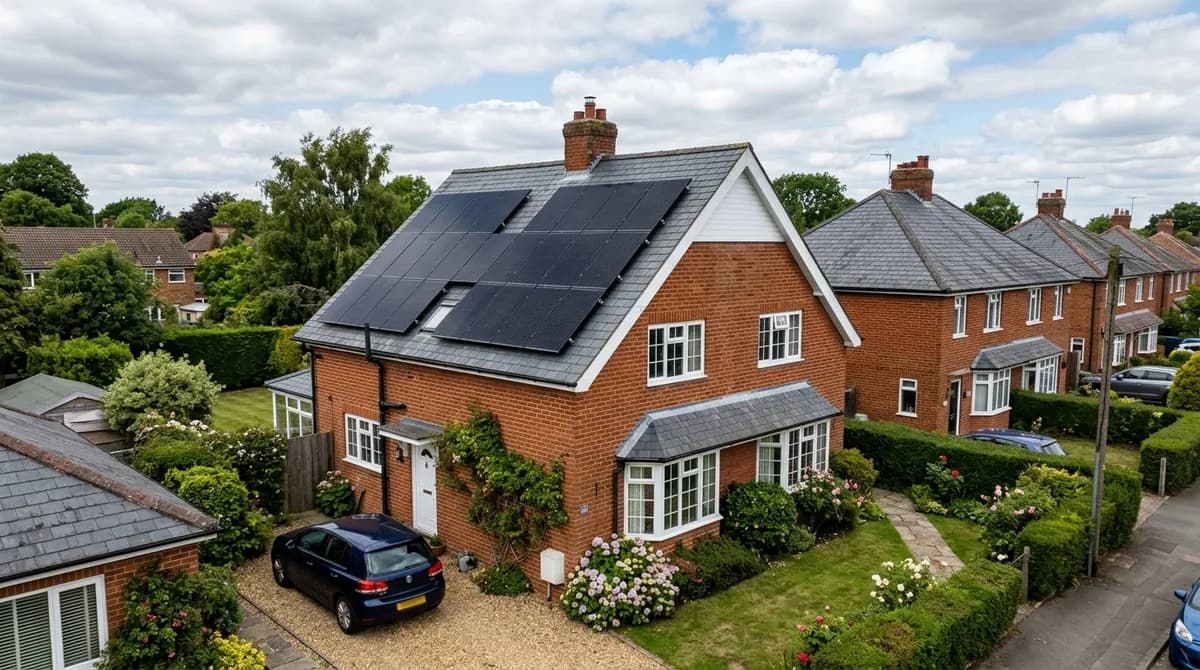
How Much Does Insulation Cost in 2026?
Loft insulation costs between £300 and £600 for a typical house. Cavity wall insulation runs £400 to £700. External wall insulation is more involved at £8,000 to £22,000. Many homeowners qualify for free or subsidised insulation through government schemes - check before paying full price.
£300+
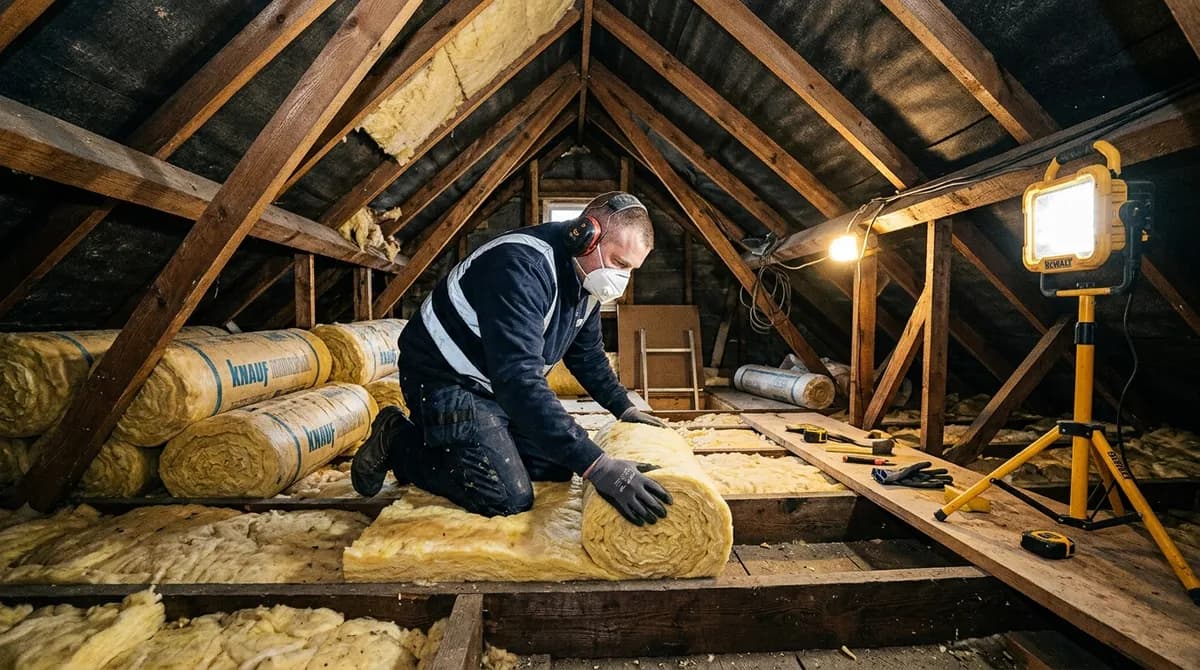
Loft insulation
£400+
Cavity wall
£8,000+
External wall
Up to £315
Annual savings
Prices updated April 2026 · Based on industry data and contractor submissions.
Building Regulations apply to insulation work. New insulation installations must meet Part L (Conservation of fuel and power) of the Building Regulations. Grant-funded installations must use a TrustMark registered installer accredited to PAS 2030. Find current grant help through the gov.uk energy-saving guide and see the Energy Saving Trust insulation guide for independent advice.
Insulation Prices at a Glance
Prices below cover supply and installation by a professional installer. Loft insulation assumes a typical 40 to 50m² loft area. Cavity and solid wall prices are for a semi-detached house unless stated.
Loft insulation (mineral wool rolls)
270mm laid between and over joists - most common and cost-effective
£450
£300 to £600
Loft insulation (blown-in)
Loose-fill mineral wool or cellulose blown into hard-to-reach loft spaces
£600
£400 to £800
Cavity wall insulation
Mineral wool, polystyrene beads, or foam injected into wall cavity
£550
£400 to £700
External wall insulation (EWI)
Insulation boards fixed to exterior walls with render or cladding finish
£12,000
£8,000 to £22,000
Internal wall insulation (IWI)
Insulated plasterboard or stud wall with insulation fixed to internal walls
£6,000
£4,000 to £8,000
Floor insulation (suspended timber)
Mineral wool or rigid boards fitted between floor joists
£800
£500 to £1,200
Spray foam loft insulation
Open or closed-cell foam sprayed onto roof underside - check mortgage implications
£1,800
£1,200 to £2,500
Flat roof insulation
Rigid insulation boards above or below the roof deck
£2,500
£1,500 to £4,000
Insulation Cost per Square Metre
| Insulation Type | Total / m² |
|---|---|
| Mineral wool rolls (loft) | £8 to £16 |
| Blown-in loft insulation | £12 to £22 |
| Cavity wall injection | £8 to £16 |
| External wall insulation | £90 to £180 |
| Internal wall insulation | £50 to £100 |
| Rigid floor insulation boards | £20 to £40 |
| Spray foam (open-cell) | £25 to £45 |
| Spray foam (closed-cell) | £45 to £75 |
Prices include VAT. Insulation work on residential properties is charged at 0% VAT under certain energy-saving criteria, or 5% reduced rate for some installations - your installer should confirm the applicable rate.
Get Free Insulation Quotes
Compare prices from trusted local insulation installers near you. Fill in a few details and receive up to 4 free, no-obligation quotes.
Loft Insulation Cost
Loft insulation is the single most cost-effective energy-efficiency improvement you can make to a UK home. Most heat rises, and an uninsulated loft allows around a quarter of it to escape through the roof.
Quick answer
Loft insulation costs £300 to £600 for mineral wool rolls in a standard three-bedroom semi. Blown-in insulation for awkward spaces costs £400 to £800. Spray foam is pricier at £1,200 to £2,500 but carries mortgage risk. Topping up existing insulation from 100mm to 270mm costs just £200 to £400.
| House Type | Mineral Wool | Blown-in |
|---|---|---|
| Mid-terrace | £250 to £400 | £350 to £550 |
| Semi-detached | £300 to £600 | £400 to £800 |
| Detached | £400 to £750 | £550 to £1,000 |
| Bungalow | £350 to £650 | £450 to £850 |
The recommended thickness for loft insulation under current Building Regulations is 270mm of mineral wool. The first layer (100mm) goes between the joists, and the second layer (170mm) goes across the top of them to eliminate cold bridges.
Cavity Wall Insulation Cost
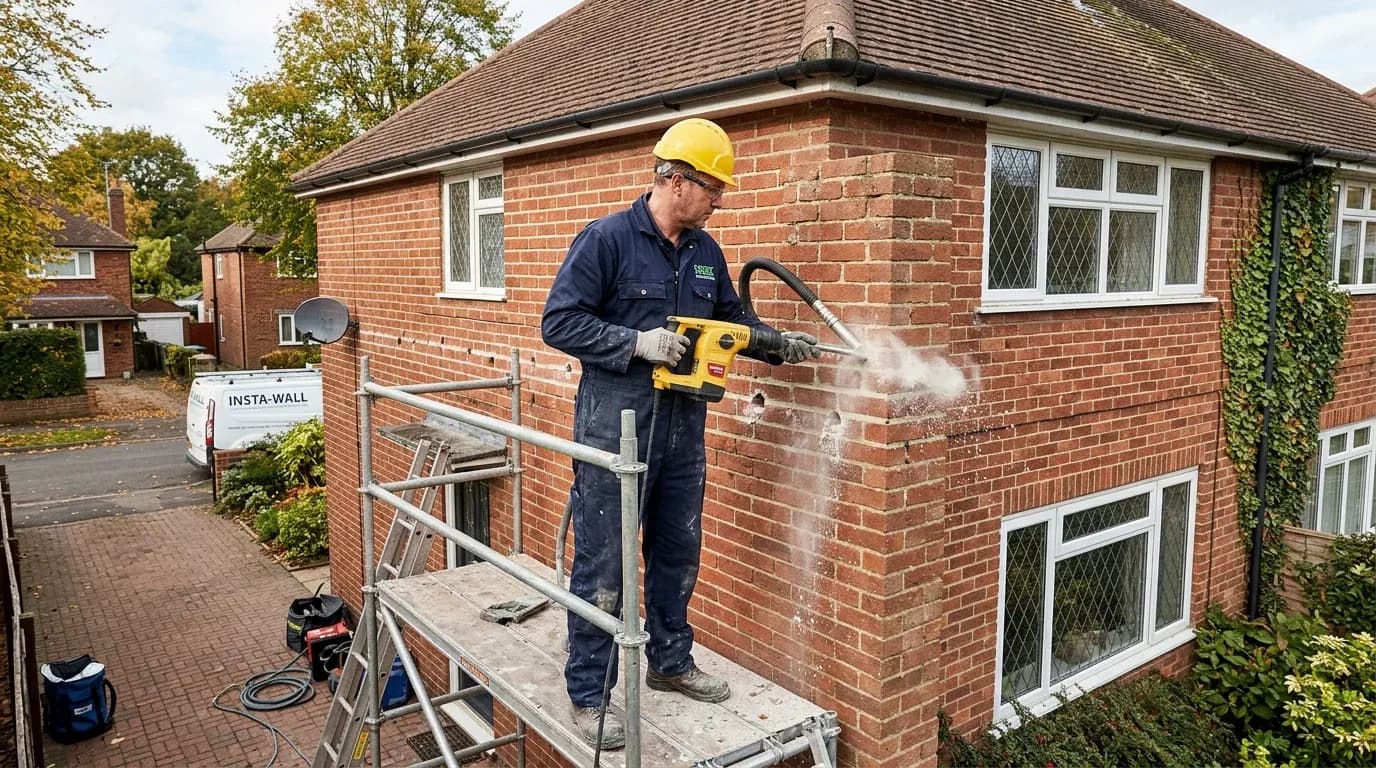
Cavity wall insulation is injected into the gap between the inner and outer layers of an external wall. Most UK homes built between the 1930s and 1990s have unfilled cavities that can be insulated. The job typically takes two to three hours and is one of the least disruptive home improvements you can have done.
| House Type | Cost Range |
|---|---|
| Mid-terrace | £300 to £500 |
| End terrace | £350 to £600 |
| Semi-detached | £400 to £700 |
| Detached | £600 to £1,000 |
| Bungalow (detached) | £400 to £650 |
Not all cavities are suitable for filling. Properties in exposed or severely wind-driven rain locations, buildings with damaged or deteriorating mortar joints, and some timber-framed houses may not be appropriate for cavity wall insulation. A pre-installation survey should identify any issues. If cavity fill goes wrong, dampness can result - always use a CIGA-registered installer who provides a 25-year guarantee.
External Wall Insulation Cost
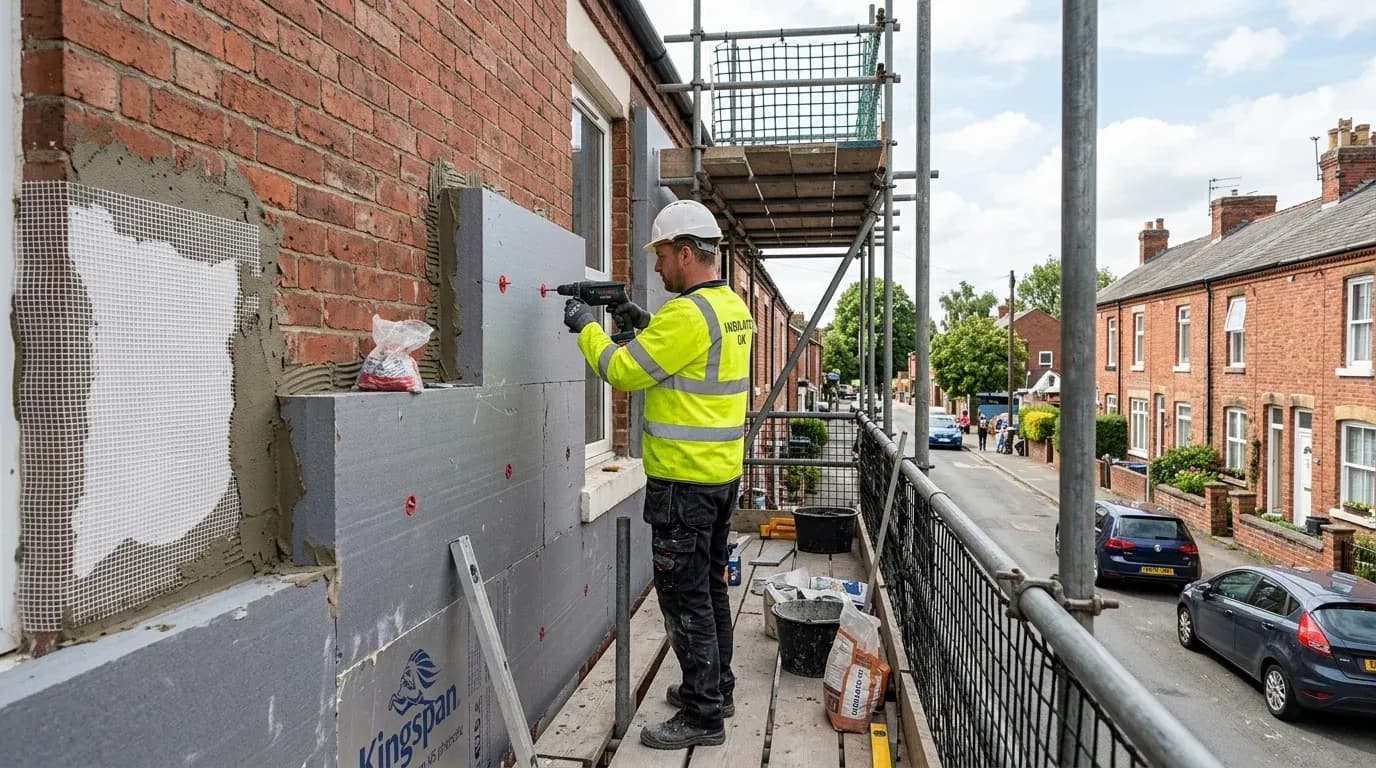
External wall insulation (EWI) is designed for solid-walled properties - typically those built before the 1930s - that have no cavity to fill. Rigid insulation boards are fixed to the outside of the building, then finished with render, cladding, or brick slips. It is the most expensive type of home insulation but delivers the largest energy savings for solid-walled homes.
Mid-terrace
Less external wall area, so lower cost
£5,000 to £9,000
Semi-detached
Most common property type for EWI
£8,000 to £15,000
Detached
Largest wall area, scaffolding on all sides
£12,000 to £22,000
EWI changes the external appearance of your property. In conservation areas or on listed buildings, you may need planning permission from your local council. Check before commissioning work.
Energy Savings and Payback Periods
Insulation pays for itself through lower energy bills. The figures below are based on Energy Saving Trust estimates for a gas-heated semi-detached house, adjusted for current energy prices.
| Insulation Type | Annual Saving | Payback |
|---|---|---|
| Loft insulation (0 to 270mm) | £220 to £315 | 1 to 3 years |
| Loft top-up (100mm to 270mm) | £20 to £30 | Under 2 years |
| Cavity wall insulation | £185 to £285 | 2 to 4 years |
| External wall insulation | £260 to £420 | 20 to 40 years |
| Internal wall insulation | £190 to £310 | 15 to 30 years |
| Floor insulation | £40 to £70 | 8 to 15 years |
Savings based on a gas-heated, semi-detached house. Actual savings depend on property size, heating system, and energy tariff. Source: Energy Saving Trust estimates, adjusted for 2026 energy prices.
Government Insulation Grants in 2026
Two main government schemes can help cover the cost of home insulation. Checking eligibility before paying privately could save you hundreds or even thousands of pounds.
Warm Homes: Local Grant
The council-delivered scheme for lower-income homeowners and private renters in EPC bands D to G. It replaces the Great British Insulation Scheme, which closed to new applicants on 31 March 2026. It covers insulation and heating upgrades, and now includes on-gas-grid homes with a household income under about £36,000. Apply through your local council. The scheme runs until 31 March 2028.
Find energy grants on GOV.UKECO4 (Energy Company Obligation)
Aimed at low-income, fuel-poor, and vulnerable households, and open until 31 December 2026. Covers a wider range of measures including loft, cavity wall, solid wall, and floor insulation, plus heating upgrades. Eligibility is based on receiving certain benefits (Universal Credit, Pension Credit, Child Benefit with low income, etc.) or having a household income below a threshold. Your energy supplier or a local authority can refer you.
Learn about ECO4 on OfgemTip: Even if you do not qualify for a full grant, some energy suppliers offer part-funded insulation at reduced rates. It is always worth asking - the worst they can say is no.
What Affects the Cost of Insulation?
Property type and size
A detached house has more external wall area than a semi or terrace, so it costs more to insulate. Bungalows have more roof area relative to their floor space, which can increase loft insulation costs. Larger properties simply have more surface area to cover.
Wall construction (cavity vs solid)
This is the biggest factor for wall insulation. Cavity walls are cheap to fill - £400 to £700 for a semi. Solid walls need either external or internal insulation, which costs ten to twenty times more. Check your wall type before getting quotes: if your bricks are laid in an alternating pattern (stretcher bond), you likely have a cavity. If you see a mix of header and stretcher bricks, the walls are probably solid.
Access and existing insulation
Easy loft access and a clear, empty loft space makes the job faster and cheaper. If the loft is boarded, storage needs moving, or there is no loft hatch, add extra time and cost. For cavity walls, anything blocking access to the external walls - conservatories, attached garages, dense planting - can complicate the drilling.
Insulation material
Mineral wool is the cheapest and most common for lofts. Blown-in cellulose or mineral wool suits awkward spaces. Rigid PIR boards offer better insulation per millimetre but cost more. Spray foam provides the best thermal performance but is the most expensive and carries mortgage implications. For cavities, mineral wool fibre, polystyrene beads, and polyurethane foam are all used - each with different cost and performance profiles.
Your location
Labour costs vary across the UK. London and the South East tend to run 20 to 30% above the national average. The North East, Wales, and Scotland are typically 8 to 12% below. Material costs are the same everywhere - it is the labour component that shifts.
Scaffolding (for external wall insulation)
EWI always requires scaffolding. For a standard two-storey semi, expect £800 to £1,500 for scaffolding hire. Three-storey properties or those with difficult access will cost more. Scaffolding is usually included in EWI quotes but worth confirming.
Spray Foam Insulation: What You Need to Know
Spray foam loft insulation costs between £1,200 and £2,500 for a typical house. It provides excellent thermal performance, but it has become one of the most controversial types of home insulation in the UK.
Mortgage lender concerns
Several major UK mortgage lenders - including Nationwide, Halifax, and some Santander products - have restrictions on properties with spray foam insulation applied to the underside of the roof. The concern is that spray foam can mask timber defects and prevent surveyors from inspecting the roof structure. This can make your property harder to sell or remortgage. The Royal Institution of Chartered Surveyors (RICS) has also flagged potential issues.
If you choose spray foam
Use only BBA-certified products installed by a PAS 2030-accredited contractor. Get written documentation confirming the product, its certification, and a guarantee. Open-cell spray foam is generally viewed more favourably than closed-cell by lenders.
Alternatives to consider
Mineral wool rolls between and over joists remain the safest and most cost-effective option for most lofts. Blown-in insulation works well for hard-to-reach areas. Neither causes mortgage issues.
Insulation Costs by Region
Average prices for cavity wall insulation on a semi-detached house by UK region. Loft insulation varies less by region because the job is quicker and less labour-intensive.
| Region | Average Cost | vs National |
|---|---|---|
| London | £650 | +30% |
| South East | £580 | +16% |
| East of England | £550 | +10% |
| South West | £530 | +6% |
| Midlands | £500 | Average |
| Yorkshire | £470 | -6% |
| North West | £480 | -4% |
| North East | £440 | -12% |
| Scotland | £460 | -8% |
| Wales | £450 | -10% |
Based on industry data. Prices for cavity wall insulation on a semi-detached house, fully installed.
How to Get Your Insulation for Less
Insulation is already one of the best-value home improvements. These tips can cut the cost further or eliminate it entirely.
Check if you qualify for free insulation first
The Great British Insulation Scheme closed to new applicants on 31 March 2026. The ECO4 scheme, open until 31 December 2026, covers households on qualifying benefits, and the Warm Homes: Local Grant helps lower-income homeowners in EPC bands D to G through their local council. Contact your energy supplier or council before paying privately - you could save the entire cost of loft or cavity wall insulation.
Get three quotes from PAS 2030 installers
PAS 2030 accreditation means the installer meets the government standard for energy-efficiency retrofitting. It is a requirement for grant-funded work, and a strong quality indicator for private work too. Prices between installers can vary by 30 to 50% for the same job, so always compare.
Start with loft insulation - it has the best return
Loft insulation is the cheapest to install and delivers the biggest energy savings relative to cost. If your budget is limited, do the loft first, then cavity walls, then look at solid wall options later. Most of the heat lost through a roof can be stopped with a few hundred pounds of mineral wool.
DIY loft insulation is straightforward
Laying mineral wool rolls in a loft is a job most people can do themselves in a few hours. The material costs around £150 to £250 for a typical loft. You need a dust mask, gloves, and long sleeves - mineral wool is itchy. The key is to lay the first layer between the joists, then the second layer across them at right angles.
Combine insulation with other energy-efficiency work
If you are already having a new boiler fitted or upgrading your central heating, adding insulation at the same time is sensible. A well-insulated house means your new boiler works less hard, runs more efficiently, and lasts longer. Some installers offer bundle deals for combined work.
Avoid spray foam unless you have done your research
Spray foam insulation has caused problems for homeowners trying to sell or remortgage. Several major lenders will not lend on properties where spray foam has been applied directly to the underside of the roof. If you want to use it, choose a BBA product, use a CIGA-registered installer, and get written confirmation that the product will not affect your mortgage.
You may qualify even if you are not on benefits
ECO4 Flex, also called LA Flex, lets your local council set its own eligibility rules on top of the standard benefits-based route. This means many households that are not claiming any benefits still qualify for grant-funded insulation, usually on the grounds of a low household income, a health condition made worse by a cold home, or living in a lower EPC band. You apply through your council rather than your energy supplier, so it is worth checking your council's scheme even if a benefits check has already ruled you out.
Lag the hot-water cylinder and exposed pipes
A hot-water cylinder jacket costs about £15 to £30 and saves roughly £50 a year, which makes it the cheapest quick win of the lot. Fit an 80mm jacket over any older cylinder, then slide foam lagging over the exposed hot-water pipes in your loft or airing cupboard. Both take minutes to do yourself and pay for themselves within the first year.
Comparing quotes is the simplest way to pay less
Getting three or four quotes and comparing them is how most homeowners avoid overpaying. It takes a couple of minutes, with no obligation.
Get my free quotesWhat to Expect: The Insulation Installation Process
The process varies by insulation type. Loft insulation is the quickest - usually done in a few hours. Cavity wall takes half a day. External wall insulation is a multi-week project.
- 1
Survey and assessment
A qualified installer will inspect your property to determine which types of insulation are suitable. For cavity walls, they check the cavity width, wall condition, and exposure level. For lofts, they assess access, existing insulation, and any obstacles (water tanks, wiring, pipes). This survey is usually free if you proceed with the work.
- 2
Grant eligibility check
If the installer is TrustMark-registered, they can check your eligibility for the Warm Homes: Local Grant or ECO4 scheme during the survey. If you qualify, the paperwork is handled for you and the installation may be fully funded.
- 3
Installation day - loft insulation
Mineral wool rolls are carried up through the loft hatch and laid between the joists, then a second layer is laid across them at right angles. Any gaps around pipes, cables, and the loft hatch itself are carefully filled. The job takes 2 to 4 hours for a typical house. You do not need to leave the property.
- 4
Installation day - cavity wall insulation
Small holes (around 22mm diameter) are drilled in the mortar joints of the external wall, typically at 1-metre intervals across the wall. Insulation material is injected under pressure until the cavity is full. The holes are then filled and pointed to match the existing mortar. The whole job takes 2 to 3 hours.
- 5
Post-installation check and certification
The installer should check for any draughts, gaps, or issues. For grant-funded work, the installation is lodged with TrustMark and you receive a guarantee certificate (25 years for cavity wall via CIGA). Keep this documentation - you will need it if you sell the property.
Frequently Asked Questions
How much does loft insulation cost in the UK?
Loft insulation typically costs between £300 and £600 for a standard three-bedroom semi-detached house using mineral wool rolls laid between and over the joists. This assumes a loft area of around 40 to 50 square metres. If your loft already has some insulation, topping it up to the recommended 270mm depth costs less - usually £200 to £400. Blown-in insulation for hard-to-reach areas costs £400 to £800.
How much does cavity wall insulation cost?
Cavity wall insulation costs between £400 and £700 for a typical semi-detached house. A mid-terrace house costs less at around £300 to £500, while a detached house costs £600 to £1,000. The insulation is injected through small holes drilled in the outer wall, which are then filled and pointed to match. The job usually takes half a day.
How much does external wall insulation cost?
External wall insulation (EWI) is significantly more expensive than cavity or loft insulation. Expect to pay £8,000 to £15,000 for a semi-detached house and £12,000 to £22,000 for a detached house. The system involves fixing insulation boards to the outside of the property, then applying a render or cladding finish. It is the best option for solid-walled properties that have no cavity to fill.
Is spray foam insulation a good idea?
Spray foam loft insulation has become controversial in the UK. While it provides excellent thermal performance, several mortgage lenders now refuse to lend on properties with spray foam in the roof space because it can mask roof timber defects and make future surveys difficult. If you are considering selling your property in the future, spray foam could complicate the sale. The Royal Institution of Chartered Surveyors (RICS) has raised concerns about its use. If you do choose spray foam, make sure it is BBA-certified and installed by a PAS 2030-accredited contractor.
Can I get free insulation through a government scheme?
Yes, government schemes can help cover the cost of insulation. The Great British Insulation Scheme (GBIS) closed to new applicants on 31 March 2026. Lower-income homeowners and private renters in EPC bands D to G can now apply through their local council under the Warm Homes: Local Grant, which runs until March 2028. The ECO4 scheme, open until 31 December 2026, funds loft, cavity wall, and solid wall insulation for households on qualifying benefits or in fuel-poor homes. Contact your energy supplier or your council to check eligibility.
How long does insulation take to pay for itself?
Loft insulation has the fastest payback - typically 2 to 3 years based on current energy prices for a house with no existing loft insulation. Cavity wall insulation pays back in around 3 to 5 years. External wall insulation takes much longer - 15 to 25 years without a grant - which is why government funding is often needed to make it financially viable. Floor insulation sits at around 5 to 8 years.
How much does floor insulation cost?
Suspended timber floor insulation costs between £500 and £1,200 for a typical house, depending on access. If there is a crawl space beneath the floor, an installer can fit rigid insulation boards or mineral wool between the joists from below - quicker and less disruptive. If the floor needs to be lifted, costs rise to £800 to £1,500. Solid concrete floor insulation is rarely done as a standalone job because it means raising the floor level, which affects doors, skirting boards, and kitchen units.
What thickness of loft insulation do I need?
Current Building Regulations recommend 270mm of mineral wool loft insulation for new installations. Many older homes have just 100mm or less, which was the standard in the 1980s. Topping up from 100mm to 270mm is straightforward and cost-effective - the first 100mm does the most work, but bringing it up to 270mm still delivers meaningful energy savings. The rolls are laid in two layers: one between the joists and one across them to eliminate cold bridges.
Does insulation affect my EPC rating?
Yes, significantly. Loft and cavity wall insulation can improve an EPC rating by one or two bands. A property rated E could move to a C or D with proper insulation. The government has proposed raising the minimum EPC standard for privately rented properties to a C rating, though this has been repeatedly delayed and the current minimum remains E. Regardless, a better EPC rating adds value when selling, buyers are increasingly aware of running costs.
Is internal wall insulation worth it?
Internal wall insulation (IWI) is an alternative to external wall insulation for solid-walled properties. It costs less - typically £4,000 to £8,000 for a whole house - but it reduces room sizes by 50 to 100mm per insulated wall. It also means temporarily removing and refitting skirting boards, radiators, light switches, and sockets. IWI makes most sense when external wall insulation is not possible - for example, in conservation areas, listed buildings, or flats where you do not control the external walls.

Written by Chris Kervin, Co-Founder, Less.co.uk
Last updated: · Pricing based on industry data and verified contractor submissions · Methodology