How Much Do Solar Panels Cost in 2026?
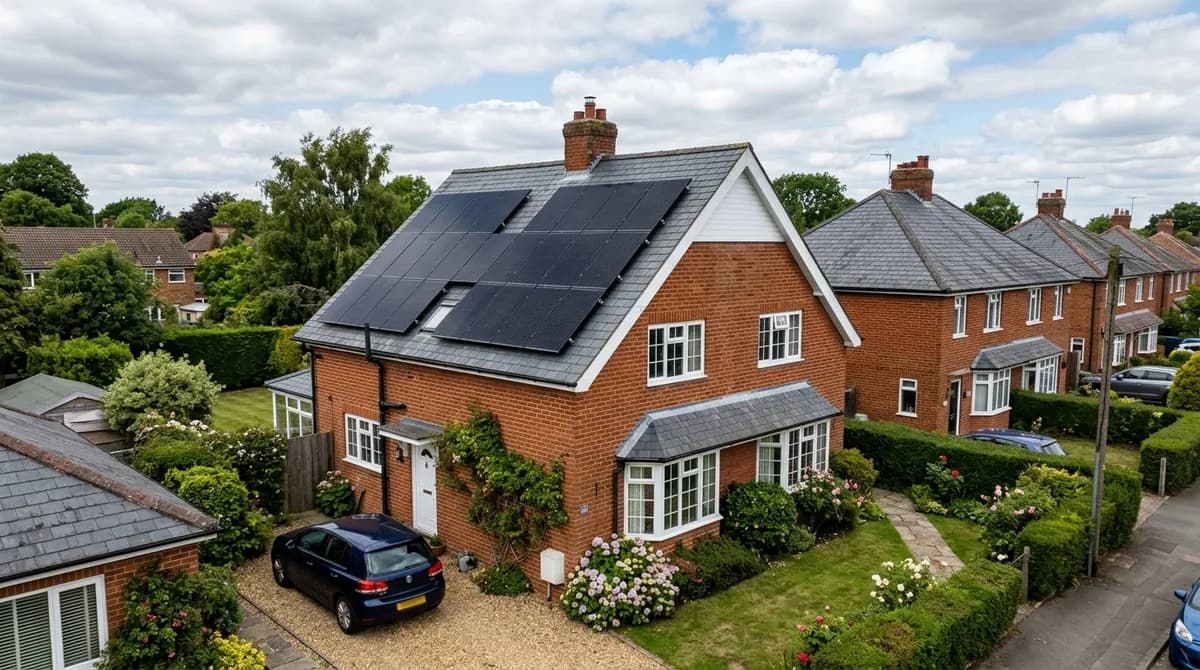
Solar panel cost in the UK runs from £5,000 to £11,000 for a fully installed system, which is what most homeowners pay. A 4kW setup for a 3-bed house costs around £6,000 to £8,000, and with 0% VAT on residential installations, there has never been a better time to go solar.
£7,000
Average 4kW system
£500 to £900
Annual savings
9 to 13 yrs
Payback period
0%
VAT rate
Prices updated April 2026 · Based on industry data and contractor submissions.
Use an MCS-certified installer. MCS certification is required to qualify for the Smart Export Guarantee and the 0% VAT rate. It also ensures the installation meets industry standards. Check the MCS installer database before accepting a quote. For independent guidance, see the Energy Saving Trust solar guide.
Solar Panel Costs by System Size
Prices include supply, installation, scaffolding, and electrical connection by an MCS-certified installer. All at 0% VAT for residential properties.
3kW system
7 to 8 panels · 1 to 2 bed flat or small house
£5,500
£4,500 to £6,500
4kW system
10 to 12 panels · 3 bed semi-detached
£7,000
£6,000 to £8,000
5kW system
12 to 14 panels · 3 to 4 bed detached
£8,500
£7,500 to £9,500
6kW system
14 to 16 panels · 4+ bed detached
£10,000
£8,500 to £11,000
Prices have dropped significantly. Solar panel costs fell roughly 20% between 2023 and 2025, with the average cost per installed kilowatt now around £1,750 to £2,100. The 0% VAT rate, in place since 2022 and running until 31 March 2027, saves roughly £350 to £500 compared to the 5% reduced rate that would otherwise apply.
Get Free Solar Panel Quotes
Compare prices from trusted local solar panel installers near you. Fill in a few details and receive up to 4 free, no-obligation quotes.
Monocrystalline vs Polycrystalline Panels
The vast majority of residential installations now use monocrystalline panels. They cost more per panel but produce more electricity per square metre - meaning you need fewer of them.
Monocrystalline
£250 to £400 per panelEfficiency: 20 to 23%
Most popular. Higher efficiency means fewer panels needed for the same output.
Polycrystalline
£180 to £300 per panelEfficiency: 15 to 18%
Cheaper but lower efficiency. You need more panels to match the same output, so savings are smaller than they look.
Solar Battery Storage Cost
A battery stores surplus electricity generated during the day for use in the evening. Without one, around 50 to 60% of your solar output gets exported to the grid at a fraction of the retail price. With a battery, you can self-consume 70 to 80% of what you generate.
3kWh
Small system / minimal evening use
£2,200
£1,800 to £2,800
5kWh
Average 2 to 3 bed household
£3,500
£2,800 to £4,200
10kWh
Larger household / high evening use
£5,000
£4,000 to £6,000
13.5kWh (Tesla Powerwall 3)
Large home / maximum self-consumption
£10,000
£8,500 to £12,000
Battery adds to the payback period. While a battery increases your self-consumption, it also adds £2,000 to £8,000 to the upfront cost. The battery itself typically pays for itself in 8 to 12 years. If your budget is tight, install panels first and add storage later.
How Many Solar Panels Do I Need?
The number of panels depends on your electricity usage, roof space, and the wattage of each panel. Most modern residential panels produce 400 to 450W each.
| House Size | Annual Usage | System Size | Cost |
|---|---|---|---|
| 1 to 2 bed | 2,000 kWh | 3kW | £5,000 to £6,500 |
| 3 bed | 3,100 kWh | 4kW | £6,000 to £8,000 |
| 4 bed | 4,200 kWh | 5 to 6kW | £7,500 to £11,000 |
| 5+ bed | 5,500+ kWh | 6kW+ | £8,500 to £12,000+ |
Based on 400W monocrystalline panels. Actual panel count depends on individual panel wattage and available roof space.
Annual Savings and Payback Period
Savings depend on how much of the generated electricity you use yourself (self-consumption) versus how much you export. Electricity you use directly saves you the full retail rate - currently around 24p/kWh. Surplus exported to the grid earns 3 to 15p/kWh through the Smart Export Guarantee.
| System | Bill Saving | Payback |
|---|---|---|
| 3kW | £400 to £550 | 10 to 14 years |
| 4kW | £500 to £750 | 9 to 13 years |
| 5kW | £650 to £900 | 9 to 12 years |
| 6kW | £750 to £1,050 | 9 to 12 years |
Smart Export Guarantee (SEG)
The SEG requires large energy suppliers to pay you for exported electricity. Rates vary widely - from around 3p/kWh to 15p/kWh. Some suppliers offer variable "agile" tariffs that track wholesale prices, which can pay more during peak demand. You need an MCS-certified installation and a smart meter to qualify. See our grants and incentives guide for full details.
Work out your actual savings
The figures above are UK averages. Your real savings depend on your roof orientation, local sunshine hours, and how much electricity you use during the day. Try our energy savings calculator to get a personalised estimate based on your property.
Solar Panel Installation Cost: Labour Breakdown
Installers normally quote one all-in price of £5,000 to £11,000 rather than splitting the labour out separately. This is roughly how that day or two of work breaks down.
| Trade | Cost |
|---|---|
| MCS-certified solar installer (2-person team) | £1,000 to £2,500 |
| Scaffolding (erect and dismantle) | £300 to £500 |
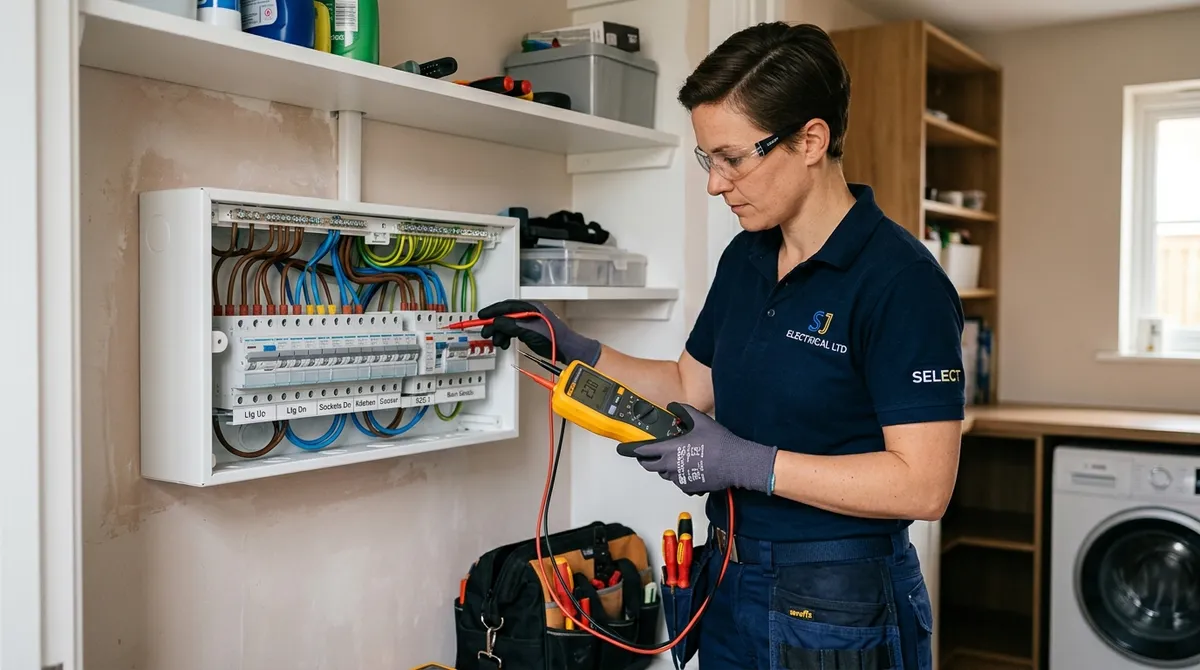
| Electrician (consumer unit connection) | £200 to £400 |
| Building control notification (if required) | £0 to £250 |
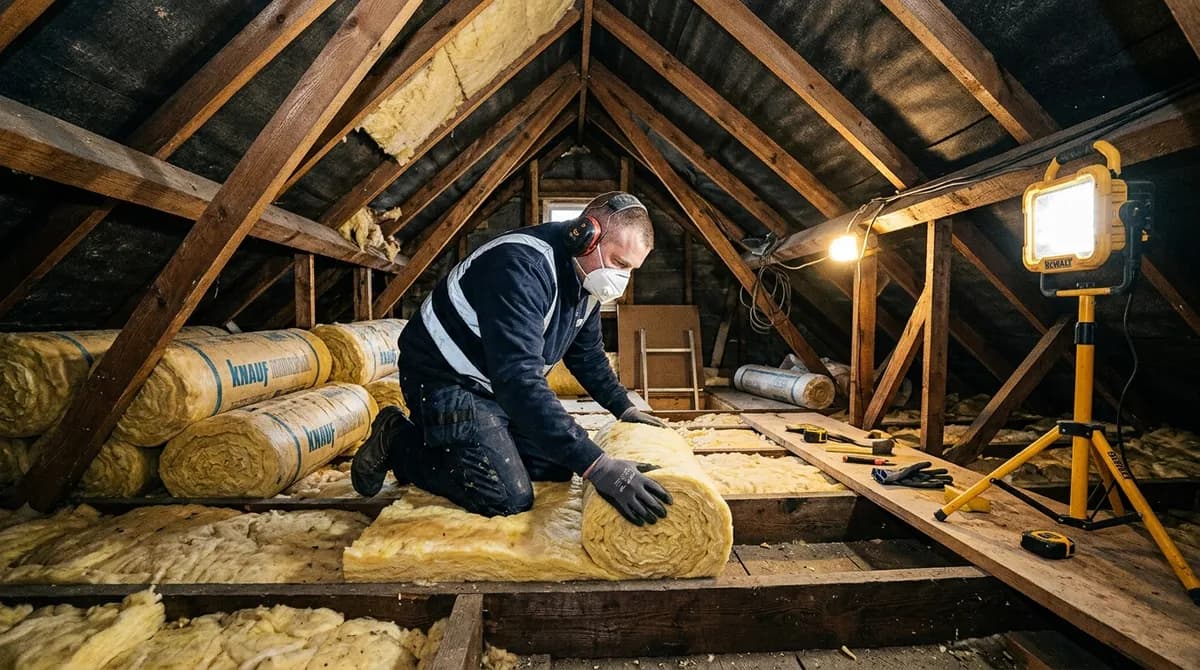
Most solar installers quote a single all-in price covering panels, mounting, inverter, scaffolding, and electrical connection. Labour typically accounts for 20 to 30% of the total cost.
What Affects the Cost of Solar Panels?
System size
The biggest factor. A 3kW system costs roughly half of what a 6kW system costs. Size your system to match your electricity usage - an oversized system generates more surplus for export, but the SEG pays far less per kWh than you save by using the electricity yourself.
Roof orientation and pitch
South-facing roofs at a 30 to 40 degree pitch produce the most electricity. East or west-facing roofs generate around 15 to 20% less. North-facing roofs are rarely suitable. Some installers will split panels across east and west-facing roof slopes to capture morning and afternoon sun - this works well but requires slightly more panels.
Panel quality and brand
Budget panels from lesser-known manufacturers cost less upfront but may degrade faster. Premium brands like SunPower, LG, and Jinko offer higher efficiency and longer performance warranties (25 years is standard). The difference in cost between budget and premium panels for a 4kW system is typically £500 to £1,000.
Inverter type
A string inverter (£400 to £800) is the standard choice - it converts DC from all panels through one unit. Microinverters (£100 to £200 per panel) sit behind each panel and optimise output individually, which helps if some panels are partially shaded. Microinverters cost more overall but can increase output by 5 to 15% on shaded roofs.
Scaffolding requirements
Standard scaffolding for a two-storey house costs £300 to £500. If your property has difficult access - a narrow alley, a tall three-storey wall, or a complex roof shape - scaffolding can run to £600 to £800. Some bungalow installations can be done from ladders, removing this cost entirely.
Your location
Labour costs are highest in London and the South East (10 to 20% above the national average) and lowest in the North East, Wales, and Scotland. Sunlight hours also vary - a 4kW system in Cornwall produces roughly 20% more electricity annually than the same system in Glasgow.
Installation Requirements
Not every roof is suitable for solar panels. A good installer will assess these factors during the site survey.
Roof orientation
South-facing is ideal and produces maximum output. East and west-facing roofs work well, especially split across both sides. North-facing roofs generally produce too little to be worthwhile.
Roof angle
The optimal pitch for the UK is 30 to 40 degrees. Flat roofs work too - panels are mounted on tilted frames, though this adds to the cost and the frames may need planning permission if visible from a highway.
Shading
Trees, neighbouring buildings, chimneys, and dormers can all cast shadows that reduce output. Even partial shading on one panel can reduce the output of the entire string. Microinverters or optimisers help mitigate this.
Structural condition
Your roof needs to be in good structural condition. Solar panels add around 10 to 15kg per square metre. If your roof needs repairs or replacement in the next 5 to 10 years, sort that out first - removing and refitting panels later costs £500 to £1,500.
Electrical capacity
Your consumer unit needs a spare way for the solar circuit. Older consumer units may need upgrading (£150 to £350) to accommodate the solar connection safely.
Solar Panel Costs by Region
Average installed prices for a 4kW system by UK region, plus estimated annual output based on local sunlight hours.
| Region | Average Cost | vs National |
|---|---|---|
| London | £8,200 | +17% |
| South East | £7,500 | +7% |
| South West | £7,200 | +3% |
| East of England | £7,100 | +1% |
| Midlands | £7,000 | Average |
| North West | £6,600 | -6% |
| Yorkshire | £6,500 | -7% |
| North East | £6,200 | -11% |
| Wales | £6,400 | -9% |
| Scotland | £6,300 | -10% |
Based on industry data for a 4kW monocrystalline system, fully installed. Annual output assumes south-facing roof at 30 to 35° pitch.
How to Get Your Solar Panels for Less
Solar panels are already cheaper than they have ever been, but there are ways to cut the cost further and speed up your return on investment.
Get at least three quotes from MCS-certified installers
Solar installation prices vary significantly between companies - sometimes by 30% or more for the same system. Only use MCS-certified installers, as this is required for the Smart Export Guarantee and the 0% VAT rate. Ask each to quote on the same system size so you can compare fairly.
Skip the battery if your budget is tight
A battery adds £2,000 to £8,000 to the upfront cost and extends the payback period. If you work from home or use most electricity during the day, you will self-consume a high percentage of your solar output without a battery. You can always add one later when prices drop further.
Take advantage of the 0% VAT
Residential solar panel installations have 0% VAT until 31 March 2027, after which the rate reverts to 5% (not 20%). Because solar would otherwise be charged at the 5% reduced rate, the 0% relief saves roughly £350 to £500 on a typical installation. Make sure your installer is applying it - it should show clearly on the invoice.
Pick the best SEG tariff - they are not all the same
Smart Export Guarantee rates range from under 3p/kWh to 15p/kWh depending on the supplier and tariff type. Some offer variable rates that track wholesale prices - these can pay more but fluctuate. Fixed-rate tariffs give certainty. Octopus Energy, EDF, and British Gas tend to offer the most competitive rates. You are not tied to your existing energy supplier for SEG.
Install in winter or early spring for shorter lead times
Solar installers are busiest between April and September. Booking your installation for late winter or early spring often means shorter waiting times and occasionally better pricing. The panels still generate useful output during winter months - just less than in summer.
Maximise self-consumption to speed up payback
The electricity you use directly from your panels saves you the full retail rate (around 24p/kWh), while exported electricity only earns you 3 to 15p/kWh via the SEG. Run your washing machine, dishwasher, and other high-draw appliances during the day when the panels are generating. A timer on these appliances costs nothing and meaningfully increases your savings.
Own the panels rather than leasing your roof
With a lease, rent-a-roof or power purchase agreement (PPA), a company installs the panels at no upfront cost but keeps the Smart Export Guarantee income, so you only benefit from the daytime electricity you use. These deals also tie a long agreement to your roof that can hold up a house sale, as buyers and their solicitors regularly query it. If you can pay outright or borrow at a low rate, owning the panels keeps both the bill savings and the export payments.
Be wary of high-interest doorstep solar finance
Some firms that cold-call or knock door to door push their own finance to close the sale on the day, and the interest is often far higher than a standard personal loan. Do not sign anything on the first visit. Get the system priced on its own, then compare paying outright, a bank loan and any 0% purchase deal before you commit.
Fit a solar diverter to use surplus power for hot water
A solar diverter such as a myenergi Eddi or Marlec iBoost sends surplus power to your immersion heater instead of exporting it for a few pence per kWh. It heats the hot water cylinder with electricity you would otherwise sell cheaply, so on sunny days you use little or no gas or grid electricity for your hot water. A diverter costs roughly £250 to £450 fitted and only suits homes with a hot water cylinder, not a combi boiler.
Comparing quotes is the simplest way to pay less
Getting three or four quotes and comparing them is how most homeowners avoid overpaying. It takes a couple of minutes, with no obligation.
Get my free quotesWhat to Expect: The Installation Process
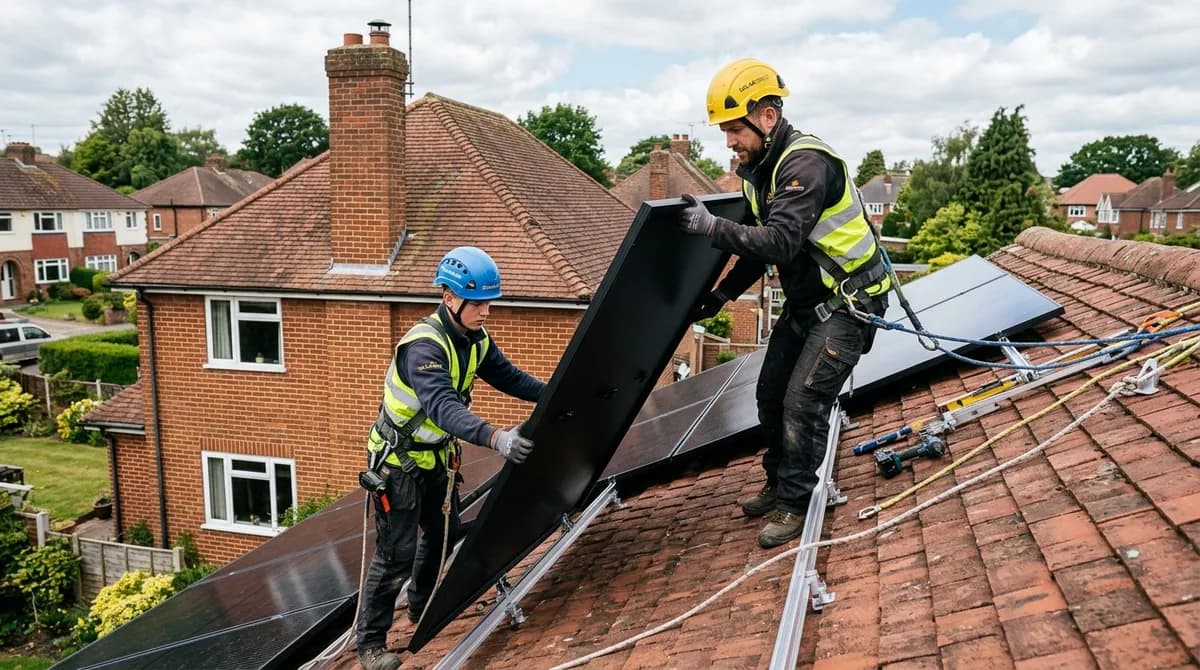
A standard solar panel installation takes 1 to 2 days once the scaffolding is up. Here is the typical sequence.
- 1
Site survey
An MCS-certified installer visits your property to assess the roof condition, orientation, shading, and electrical setup. They will design the system layout and provide a detailed quote. This should be free and without obligation.
- 2
Scaffolding
Scaffolding goes up, usually the day before the installation or first thing on installation day. A standard two-storey scaffold takes a few hours to erect.
- 3
Mounting system
Roof hooks are fixed to the rafters (not just the tiles), and aluminium mounting rails are secured to the hooks. The installer will check for any roof tile issues while they are up there.
- 4
Panel installation
Panels are clipped onto the mounting rails and connected in series. DC cabling is run down through the roof space to the inverter location - usually next to the consumer unit inside the house.
- 5
Inverter and electrical connection
The inverter is wall-mounted, connected to the panels and to your consumer unit. The system is tested, generation meter fitted, and the installer runs through the monitoring setup with you.
- 6
Certification and SEG registration
The installer provides MCS certification and registers your system. They should also help you apply for the Smart Export Guarantee with your chosen supplier. Scaffolding is dismantled - usually the same day or the following day.
Frequently Asked Questions
How much do solar panels cost in the UK?
Solar panels cost between £5,000 and £11,000 installed for a typical UK home in 2026. A 3kW system costs around £5,000 to £6,500, a 4kW system runs £6,000 to £8,000, and a larger 6kW system sits at £8,500 to £11,000. Prices have dropped roughly 20% since 2023. Battery storage adds £2,000 to £8,000 on top.
What does the solar panel installation cost include?
A quoted solar panel installation cost of £5,000 to £11,000 is normally an all-in price. It covers the panels, the mounting rails and roof hooks, the inverter, scaffolding, the electrical connection to your consumer unit, MCS certification and registration for the Smart Export Guarantee. Battery storage is priced separately and adds £2,000 to £8,000. Before you compare quotes, check that scaffolding and any consumer unit upgrade are included rather than added later.
How many solar panels do I need for a 3-bed house?
A typical 3-bed house in the UK needs a 4kW system, which works out to around 10 to 12 solar panels depending on the wattage of each panel. Modern panels produce 400 to 450W each, so a 4kW system needs roughly 10 panels. This covers the average annual electricity consumption of around 3,100 kWh.
Do solar panels save money on electricity bills?
Yes. A 4kW solar panel system in the UK typically saves £500 to £750 per year on electricity bills, depending on how much electricity you use during daylight hours. With a battery to store excess energy, savings increase to £700 to £1,000 per year. You can also earn £75 to £150 per year by exporting surplus electricity through the Smart Export Guarantee.
What is the payback period for solar panels?
The payback period for solar panels in the UK is typically 10 to 14 years without a battery, or 12 to 17 years with battery storage included. This depends on your electricity usage, how much you self-consume, SEG export income, and your location - homes in southern England get more sunshine and see faster payback.
Do I need planning permission for solar panels?
Most domestic solar panel installations fall under permitted development rights and do not need planning permission. You will need permission if the panels project more than 200mm from the roof surface, if they are higher than the highest part of the roof, if your home is a listed building or in a conservation area, or if the installation is on a flat roof and visible from a highway. In Scotland, slightly different rules apply - check with your local planning authority.
How long do solar panels last?
Modern solar panels typically last 25 to 30 years, though many continue producing electricity well beyond that at reduced efficiency. Most manufacturers guarantee at least 80% output after 25 years. Inverters have a shorter lifespan - typically 10 to 15 years - so budget for one inverter replacement during the lifetime of the panels.
Is it worth adding a battery to solar panels?
A battery lets you store electricity generated during the day for use in the evening, increasing the proportion of solar energy you self-consume from around 40% to 70 to 80%. Whether it is worth the extra £2,000 to £8,000 depends on your usage pattern. If you are out during the day and use most electricity in the evening, a battery makes more sense. The payback period for the battery alone is typically 8 to 12 years.
Do solar panels work in cloudy weather?
Yes, solar panels still generate electricity on cloudy days - just less of it. A typical UK panel produces around 10 to 25% of its peak output on an overcast day. The UK receives enough sunlight for solar panels to be worthwhile even in northern regions. Annual output varies from around 750 kWh per kWp in Scotland to 1,000 kWh per kWp in southern England.
Are solar panels VAT-free in the UK?
Yes. Since April 2022, residential solar panel installations have attracted 0% VAT. This applies to both the panels and the installation labour. The VAT relief is currently confirmed until March 2027. It also covers battery storage systems installed at the same time as solar panels.
What is the Smart Export Guarantee?
The Smart Export Guarantee (SEG) is a government-backed scheme that requires large energy suppliers to pay you for surplus electricity you export to the grid. Tariff rates vary by supplier - typically 3p-15p per kWh in 2026. Octopus Energy, EDF, and British Gas are among those offering competitive SEG rates. You need an MCS-certified installation and a smart meter to qualify.

Written by Chris Kervin, Co-Founder, Less.co.uk
Last updated: · Pricing based on industry data and MCS installer quotes · Methodology