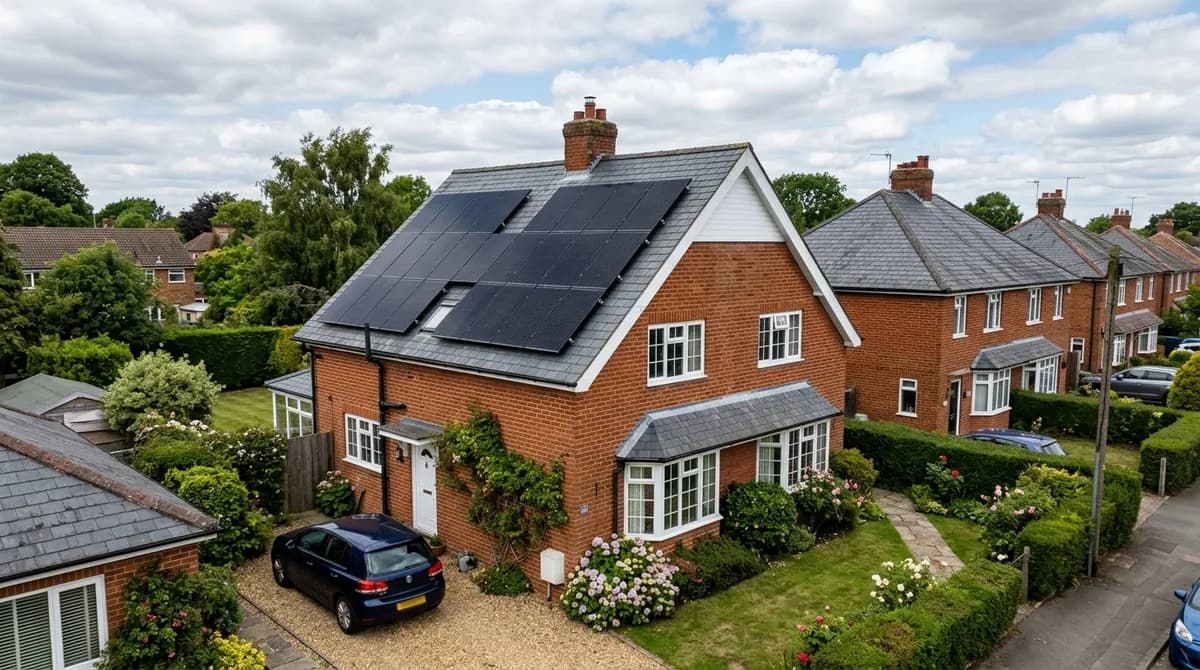
Roof Replacement Cost UK 2026: How Much Does a New Roof Cost?
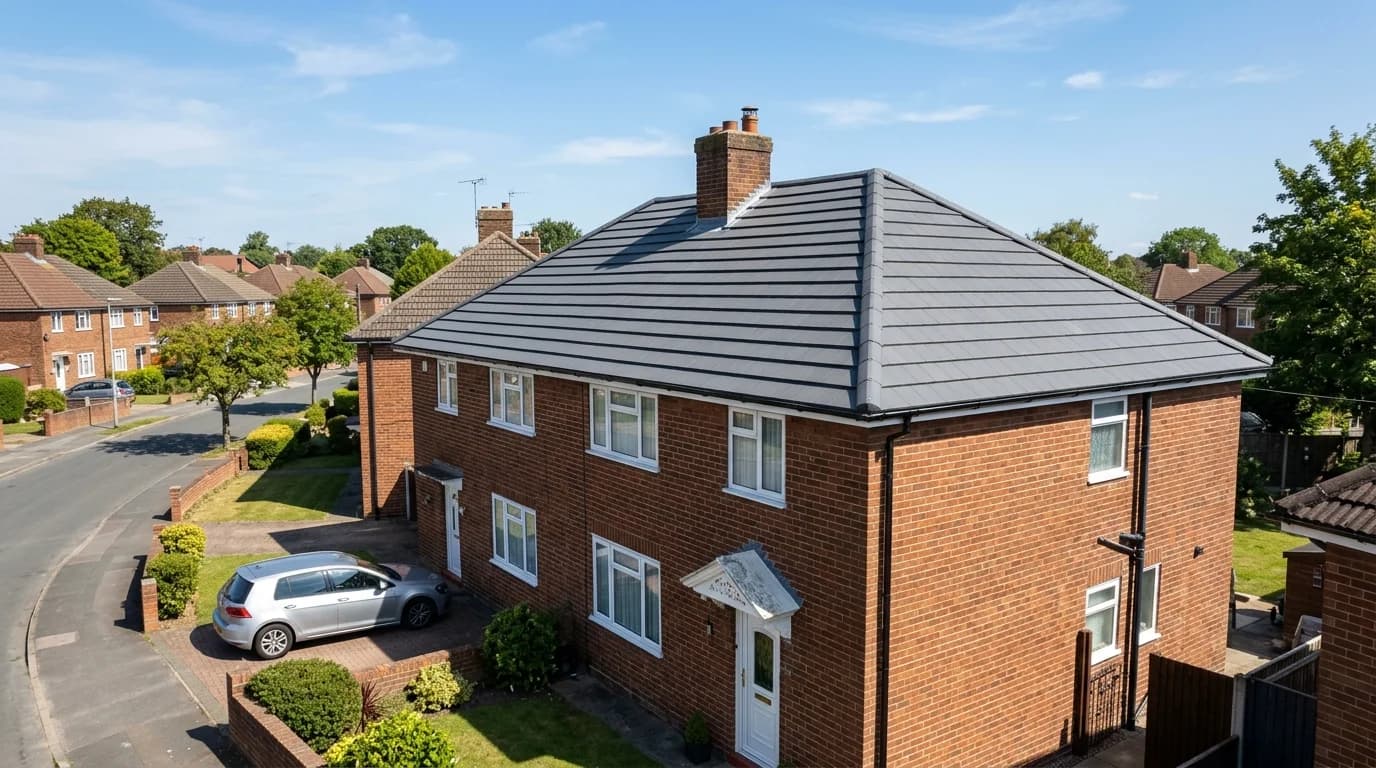
Roof replacement cost in the UK is typically £5,500 to £12,000 for a full strip and re-tile on a standard semi-detached, and the average new roof cost sits around £8,500. A terraced house roof replacement can come in under £5,000, while large detached houses with complex roof structures can exceed £18,000. What you actually pay comes down to roof area, tile type, and where in the country you live, so the guide below breaks the cost of a roof replacement down by property type, by material, and by region.
£8,500
Average cost
£6,000+
Tile replacement from
£3,500+
Flat roof from
3 to 7 days
Typical timeline
Prices updated April 2026 · Based on industry data and contractor submissions.
All roof work should be done by a competent, properly insured roofer. Flat roofs and any work that touches load-bearing structural elements need Building Regulations approval. Use a contractor registered with the National Federation of Roofing Contractors (NFRC) or the TrustMark scheme - membership is vetted and gives you a route for complaint if things go wrong.
Roof Replacement Costs at a Glance
These roof replacement cost UK figures cover a complete strip and re-roof including removal of the old covering, new battens and breathable membrane, and laying new tiles or a flat roof system. Scaffolding is typically included unless stated.
Strip and re-tile (terraced/semi)
Concrete or clay tiles, standard pitch, fascias not included
£6,500
£4,500 to £9,000
Strip and re-tile (detached)
Larger roof area, may include hipped sections
£10,000
£7,500 to £15,000
Flat roof replacement (up to 30 sq m)
GRP fibreglass or torch-on felt, standard garage or extension
£3,800
£2,800 to £5,500
Flat roof replacement (30 to 60 sq m)
Larger flat roof area, multi-layer membrane system
£5,500
£4,000 to £8,000
Slipped tiles, small leak, ridge tile rebed
£350
£150 to £700
Complete roof overhaul
Re-tile plus new fascias, soffits, and guttering
£13,500
£9,000 to £20,000
Prices based on industry data. Actual costs vary depending on roof size, tile type, pitch, and location.
For a broader look at what roofing work involves and how to find a reliable contractor, see our full roofing guide for UK homeowners.
Get Free Roofing Quotes
Compare prices from trusted local roofers near you. Fill in a few details and receive up to 4 free, no-obligation quotes.
Detailed Roofing Guides
Dive deeper into costs for specific roof types.
What Affects the Cost of a New Roof?
Roof size and pitch
The bigger and steeper the roof, the more tiles you need and the longer the job takes. High-pitched roofs are slower to work on safely and use more tiles per square metre than a shallow pitch. Hipped roofs - with slopes on all four sides rather than two - are considerably more complex to strip and re-tile than a simple gable-ended roof.
Tile type: concrete, clay, or natural slate
Concrete interlocking tiles are the most affordable choice and last 30 to 50 years with very little fuss. Clay tiles cost 20 to 40% more and tend to suit older properties better aesthetically. Welsh slate is a different proposition entirely - it can last well over a century, looks wonderful, but costs two to three times as much as concrete and needs skilled labour to lay properly.
Flat vs pitched roof
Flat roofs use completely different materials - torch-on felt, EPDM rubber membrane, or GRP fibreglass. GRP has become the standard for new flat roofs because it's laid as a seamless sheet, which means fewer joints and fewer opportunities for leaks. The trade-off versus a pitched roof is lifespan: expect 20 to 25 years from GRP versus 40 to 50 from a properly tiled pitched roof.
Scaffolding requirements
Scaffolding is almost always needed for a full re-roof and adds £500 to £1,200 to the total. On terraced houses in tight rows, or properties with tricky access, it can cost more. Some roofers include it in the overall price; others quote it separately. Always check what's included before comparing quotes - it's an easy way for a low headline price to hide the real cost.
Fascias, soffits, and guttering condition
Roofers often spot rotten or damaged fascias and soffits while they're up on the scaffold. If yours need replacing, do it now. Once the scaffolding comes down you're paying to put it back up again - typically another £500 to £1,200 - just for a job that could have been done as part of this one.
Location
Where you live makes a real difference. London roofers typically charge around 35% above the national average; in the North East and Wales it's 10 to 16% below. The tiles and materials cost much the same wherever you buy them - it's the day rate for labour that shifts the overall price.
Replacing gutters at the same time?
If the scaffolding is already up for a roof job, it makes sense to sort out your gutteringat the same time. You'll save on scaffold hire and get both jobs done in one go. See our full guttering cost guide for prices by material and property size.
Roof Replacement Cost by Property Type
The cost of a roof replacement follows roof area more than anything else, and roof area follows the property. A terraced house with a simple gable roof is a completely different job to a four-bed detached with hipped sections and multiple valleys, and a bungalow spreads a fairly large roof over a single storey. Here is what a full strip and re-tile with concrete interlocking tiles typically costs by house type.
| Property | Typical Roof Area | Replacement Cost |
|---|---|---|
| 2-bed terrace | 40 to 50 m² | £4,000 to £6,500 |
| 3-bed semi | 50 to 70 m² | £5,500 to £9,000 |
| 3-bed detached | 70 to 90 m² | £7,000 to £12,000 |
| 4-bed detached | 90 to 120 m² | £9,000 to £16,000 |
| Bungalow | 60 to 100 m² | £6,000 to £13,000 |
Prices assume concrete interlocking tiles, standard pitch, scaffolding included. Clay or slate tiles will add 20-100% to these figures.
Roof Replacement Cost per Square Metre
Roofers price a re-roof by the square metre of roof surface, not by the footprint of the house. For a strip and re-tile with concrete interlocking tiles, the rate runs from £75/sqm in the North East up to £120/sqm in London, with the Midlands at £89/sqm sitting on the national average. Scaffolding is included in those rates. The full regional breakdown is further down this page.
How to work out your roof area
- Measure the length of the roof along the ridge, then measure the slope from the eaves up to the ridge. Multiply the two together and you have the area of one face.
- Add the faces up. A simple gable roof has two, a hipped roof has four, and dormers, porches and garage roofs are extra on top of that.
- Do not use the floor area of the house. A pitched roof is always bigger than the ground it sits on, and the steeper the pitch, the wider that gap gets.
If you would rather not get a ladder out, the property table above is a fair stand-in: roughly 50 to 70 m² for a three-bed semi and 90 to 120 m² for a four-bed detached.
Two things shift the rate per square metre. Awkward access, a steep pitch, or a roof cut about with valleys, chimneys and dormers all push it up, because the job simply goes slower. Large, straightforward roofs often work out a little cheaper per square metre, as the fixed cost of scaffolding and setting up is spread across more area. That is why a bungalow and a semi with the same roof area can be quoted differently.
Roof Replacement Cost Calculator
A national average only gets you so far. Our free roof replacement cost calculator asks for your roof type, the covering you want, your roof area (measured yourself or picked from your property type), whether scaffolding and new fascias are needed, and your postcode. It returns an estimate with the costs broken out, priced for your region rather than for the country as a whole.
It takes about a minute and there is nothing to sign up for. The point of it is to give you a number to hold your quotes against, so you can tell a fair price from a chancer.
Open the roofing cost calculatorRoof Repair vs Full Replacement
Not every roof problem needs a full replacement. Knowing when a repair will do - and when it is just putting off the inevitable - can save you thousands. Our separate roof repair cost guide breaks the repair side down job by job.
Minor repairs
Repair£150 to £500
Slipped tiles, small flashing repairs, ridge tile rebedding. Always worth repairing - these are quick fixes that a decent roofer can sort in a morning.
Moderate damage
Repair if under 30 years£500 to £2,000
Several areas of wear, patchy felt failure, isolated timber decay. If the roof is under 30 years old and the structure is sound, targeted repairs usually make sense.
Major structural issues
ReplaceFull replacement
Widespread tile failure, sagging ridge line, extensive timber rot, or daylight visible from multiple points in the loft. At this stage, patching individual areas rarely holds for long - a full replacement is almost always better value.
Rule of thumb: if the cost of repairs exceeds 30% of what a full roof replacement would cost, replacing the lot is usually the smarter move. You get a completely new roof with a proper guarantee, rather than a patchwork that may need more attention within a few years.
Additional Costs to Budget For
These extras regularly appear alongside roofing quotes. Ask about each one before work begins.
| Extra Item | Typical Cost |
|---|---|
| Scaffolding hire | £500 to £1,200 |
| Fascias and soffits replacement | £800 to £2,500 |
| Guttering replacement | £400 to £1,200 |
| Chimney repointing | £200 to £600 |
| Velux window fitting | £600 to £1,200 |
| Building Regs notification (structural changes) | £300 to £700 |
Roofing Costs by Region
Average price per square metre for a tile re-roof (strip and re-tile with concrete interlocking tiles), by UK region.
| Region | Price per sq m | vs National |
|---|---|---|
| London | £120/sqm | +35% |
| South East | £105/sqm | +18% |
| East of England | £98/sqm | +10% |
| South West | £95/sqm | +7% |
| Midlands | £89/sqm | Average |
| Yorkshire | £80/sqm | -10% |
| North West | £82/sqm | -8% |
| North East | £75/sqm | -16% |
| Scotland | £80/sqm | -10% |
| Wales | £78/sqm | -12% |
Based on industry data. Per sq m rates for strip and re-tile with concrete interlocking tiles, scaffolding included.
How to Get Your New Roof for Less
Roofing is one of the trades where doing a little homework upfront makes a real difference to the final bill.
Get at least three quotes
Roofing prices vary more than almost any other trade, and rogue traders are a real problem in this sector. Three quotes from NFRC-registered roofers will quickly show you what the work should actually cost in your area. If one quote comes in much lower than the others, ask why - it usually means something has been left out.
Check whether a repair is enough before replacing
Some roofers will push for a full replacement when the roof is actually fixable. A few hundred pounds of repairs - rebedding ridge tiles, replacing a handful of slates, patching felt - can buy years on a roof that's structurally fine. Ask any roofer who recommends a full job to show you why from the loft space as well as outside. If they can't give you a clear answer, get a second opinion.
Choose concrete tiles over clay or slate
Concrete interlocking tiles last just as long as clay in most cases, for 30 to 50% less money. Unless your local planning authority specifies a particular material - which is common in conservation areas - there's rarely a practical reason to pay the premium for clay. Natural slate looks brilliant but adds thousands to the bill and needs more skilled labour to lay correctly.
Time it for spring or early autumn
Summer is peak season for roofers - they're busy, they know it, and prices reflect that. Early spring or early autumn tends to give you better availability and sometimes a keener price. Winter is worth avoiding if you can: cold temperatures affect mortar setting and adhesives, and a job that gets rained off repeatedly takes longer than it should.
Bundle fascias and guttering with the roofing job
Scaffolding costs £500 to £1,200 and has to go up whether you're replacing three tiles or the entire roof. If your fascias, soffits, or gutters are looking tired, do it all at the same time. Paying for scaffolding twice - once for the roof and again a year later for the fascias - costs far more than bundling it into one job.
Check NFRC membership before hiring
The NFRC (National Federation of Roofing Contractors) is the main trade body for roofing in the UK. Member companies are vetted and must carry proper insurance. A quick check at nfrc.co.uk before you agree to anything takes thirty seconds. TrustMark and Which? Trusted Traders are also worth looking for, though NFRC is the one that matters most specifically for roofing.
Check your buildings insurance before paying for storm damage
If your roof was damaged by a storm, a fallen tree, or another sudden accident, the repair may be a buildings insurance claim rather than a job you pay for yourself. Check your policy and photograph the damage before you arrange any work, as insurers usually want to see it before a repair goes ahead. Wear and tear that has built up over years is not normally covered, but one-off storm or accidental damage often is, so it is worth a call to your insurer before reaching for your own money.
Comparing quotes is the simplest way to pay less
Getting three or four quotes and comparing them is how most homeowners avoid overpaying. It takes a couple of minutes, with no obligation.
Get my free quotesWhat to Expect: The Roofing Process
A standard strip and re-tile on a semi-detached takes 3 to 5 working days. Here is the typical sequence.
- 1
Survey and quote
Any roofer worth hiring will come out and look at the job before pricing it - from the loft as well as the outside. They should be checking the timber condition, the state of the flashings around chimneys and any roof windows, and the fascias. If someone gives you a price over the phone based on photos alone, treat it with caution.
- 2
Scaffolding erection
Scaffolding usually goes up the day before the roofers start. On a semi it typically covers the side and rear elevations. There will be some disruption to access - the side path or rear gate may be blocked while it's up - so it's worth letting your neighbours know in advance, particularly if they share the access.
- 3
Strip out old roof covering
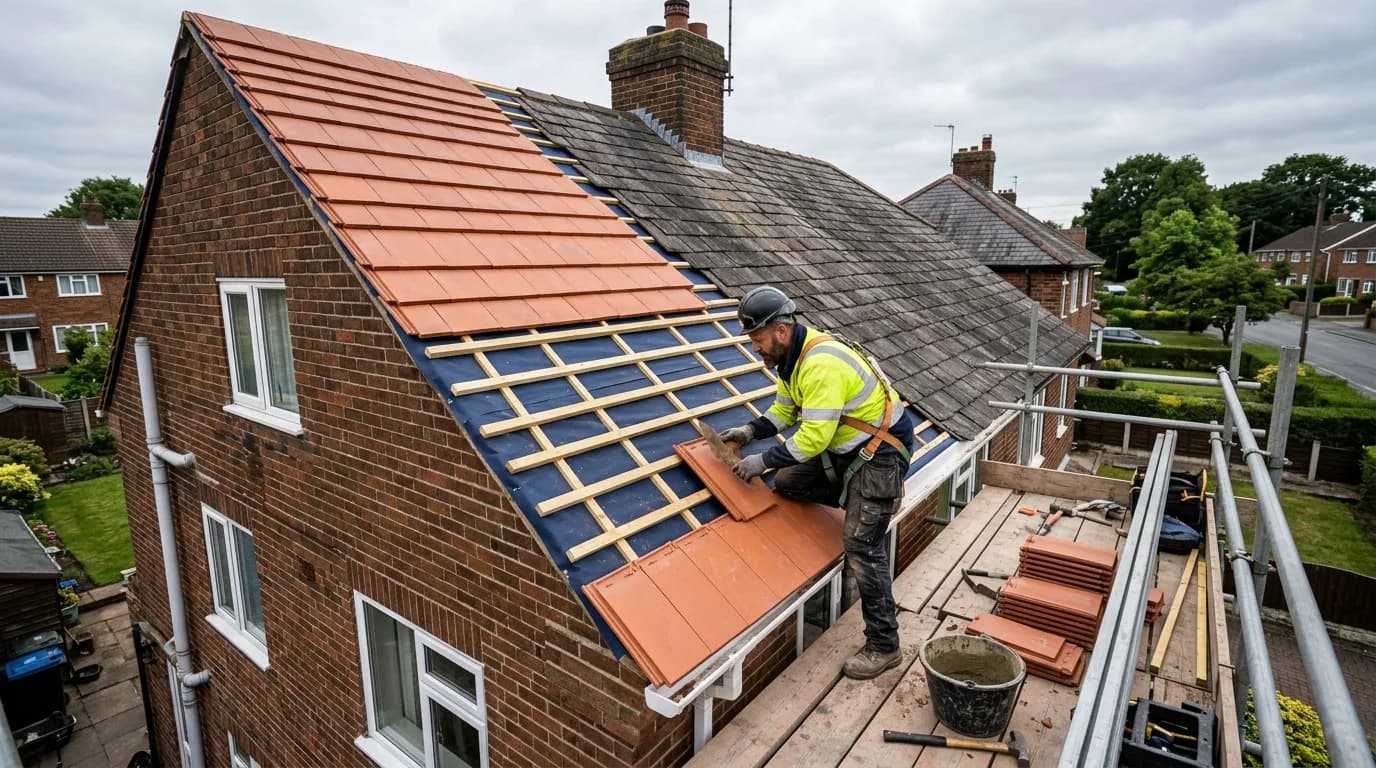
The old tiles come off and go into a skip or builders' bag. Once the roof is stripped back, the roofer can see what's going on underneath - rot, woodworm, broken rafters. Most of the time it's fine; occasionally it isn't. This is the stage where unexpected extra costs can come up, which is why a good roofer will have mentioned the possibility at the survey stage.
- 4
New battens and breathable felt membrane
New battens go onto the rafters at the correct spacing for whatever tile has been chosen. Beneath the battens, a breathable underlay membrane is laid over the rafters - it lets moisture from the loft escape outward while keeping wind-driven rain out. It's a big improvement on the old bitumen felt that was standard in most houses built before the 1990s, which can't breathe and degrades over time.
- 5
Tile or slate laying and ridge capping
Tiles go on from the eaves upward in rows. Flashings around chimneys, party walls, and skylights are replaced with lead or mortar - these are often where old roofs leak, so this step matters. Ridge tiles are either mortar-bedded or mechanically fixed at the top. Verge and hip tiles get pointed off as the last tiling stage.
- 6
Scaffolding removal and site clear-up
Once the work is done, the scaffold comes down and the site is cleared. Walk around the job with the roofer before they leave - check the ridge line, the flashings, and around any chimneys or skylights. NFRC-registered contractors typically offer a 10-year workmanship guarantee; make sure you get this in writing before they go.
Frequently Asked Questions
How much does a new roof cost in the UK?
Roof replacement cost for a standard semi-detached house in the UK is typically £5,500 to £12,000. A small terraced house can come in under £5,000. A large detached property with a complex roof structure, hipped sections, or natural slate can exceed £18,000. The average across all property types is around £8,500.
How much does a roof replacement cost per square metre?
For a strip and re-tile with concrete interlocking tiles, roof replacement cost per square metre runs from around £75/sqm in the North East to £120/sqm in London, with the Midlands at £89/sqm sitting on the national average. Those rates include scaffolding. Measure the roof slope rather than the floor area of the house, because a pitched roof always covers more surface than the ground it sits on.
How much does it cost to replace a roof on a terraced house?
A two-bed terrace has roughly 40 to 50 m² of roof, and a full strip and re-tile usually costs £4,000 to £6,500. Terraces are cheaper than most house types because the roof is small and often a simple gable shape with no hipped sections. The one thing that can push the price up is access: on a tight row of terraces, getting scaffolding in place is harder and the scaffolder may charge more for it.
Do I need planning permission to replace my roof?
Like-for-like roof covering replacement is usually permitted development, so no planning permission is needed. If you live in a conservation area or a listed building, check with your local planning authority first - the materials and appearance may need to match what's already there. Any structural changes to the roof timbers need Building Regulations approval, whatever your planning status.
How long does a new roof last?
The average lifespan of a roof depends almost entirely on what it is covered with. Concrete roof tiles typically last 30 to 50 years with proper maintenance. Clay tiles and natural slate can last 60 to 100 years or more if laid correctly. Felt flat roofs last around 10 to 20 years depending on the type (torch-on felt at the lower end, GRP fibreglass at the upper end). A well-installed modern flat roof with quality membrane can last 25 years or more.
What are the signs that I need a new roof?
The most obvious signs are damp patches on ceilings or in the loft, missing or slipped tiles, cracked ridge tiles, and daylight visible from the loft space. Moss and lichen growth can cause tiles to lift over time, which is worth keeping an eye on. A sagging roof line usually means a structural problem rather than just a surface one. A few slipped tiles can often be sorted with a repair rather than a full replacement - get a roofer up to have a proper look before agreeing to anything.
Is a flat roof cheaper than a pitched roof?
For smaller areas - a garage or single-storey extension, say - a flat roof replacement is usually cheaper, typically £2,800 to £5,500 versus the higher end of pitched tile costs. The catch is lifespan: a well-laid pitched roof lasts twice as long as most flat roofs and needs less maintenance over its life. On larger areas the cost gap narrows quite a bit, so it's worth getting quotes for both if your situation allows it.
What is the best roofing material for a UK home?
For most UK homes, concrete interlocking tiles are the sensible default. They last 30 to 50 years, cost a fraction of slate, and need very little upkeep. Clay tiles look a bit more traditional and can outlast concrete, but cost noticeably more. Natural Welsh slate is beautiful and can last well over a century if properly maintained - but it costs two to three times the price of concrete. For flat roofs, GRP fibreglass has become the go-to material, mainly because the seamless finish means fewer leak points than older felt systems.
How long does it take to replace a roof?
A semi-detached strip and re-tile typically takes 3 to 5 working days, once the scaffolding is up. A detached house with hipped sections or chimney stacks usually runs 5 to 7 days. Scaffolding goes up the day before work starts and comes down a day or two after the roofers finish. You will hear them working but the house stays habitable throughout.
Can I stay in my house while the roof is being replaced?
Yes, in almost all cases. The work happens outside via scaffolding - the roofers aren't coming through the house. It's noisy, and there will be some mess on the day the old tiles come off, but you can stay put. If structural work means part of the roof needs to be left open overnight, a good roofer will tell you in advance and sheet it over properly. It's worth asking about this when you get quotes.
What time of year is the cheapest to replace a roof?
Early spring and early autumn tend to be the best value. Summer is peak season, roofers are booked up, and prices reflect it. Winter work is possible and plenty of roofers carry on through it, but cold weather affects how mortar sets and how adhesives cure, and a job that keeps getting rained off drags on longer than it should. Booking a few weeks ahead in a quieter month usually gets you better availability and a keener price than ringing round in July.
Can you claim for a new roof on your house insurance?
It depends on what caused the damage. Buildings insurance normally covers sudden one-off events such as storm damage, a fallen tree, or impact damage, and a claim in those circumstances is worth pursuing. What it does not cover is wear and tear: a roof that has simply reached the end of its life is your bill, not the insurer's. Photograph the damage before anyone touches it and ring your insurer before arranging repairs, because most policies want to see the damage or send a loss adjuster before work goes ahead.
Do I need my neighbour's permission to re-roof a semi-detached or terraced house?
For a straightforward strip and re-tile of your own half of the roof, no. Where it gets more involved is the party wall between you: if the work means cutting into it or altering it, the Party Wall etc. Act 1996 applies and you have to serve notice on your neighbour first. Scaffolding is the other thing to sort out early, because if it needs to stand on their land or overhang their garden, you need them to agree to it. Telling them what is happening and roughly how long it will take costs nothing and heads off most of the arguments.

Written by Chris Kervin, Co-Founder of Less.co.uk
Last updated: · Pricing based on industry data and verified contractor submissions · Methodology