Home Insulation: Types, Grants & How to Choose
This guide walks you through working out which insulation your home actually needs, from loft and cavity wall to solid wall systems, then how to check for grants and pick a trusted installer. Costs vary a lot - loft insulation starts from around £300 and cavity wall from £400 - so head to our insulation cost guide for full prices. The Energy Saving Trust has a useful overview of all the types too.
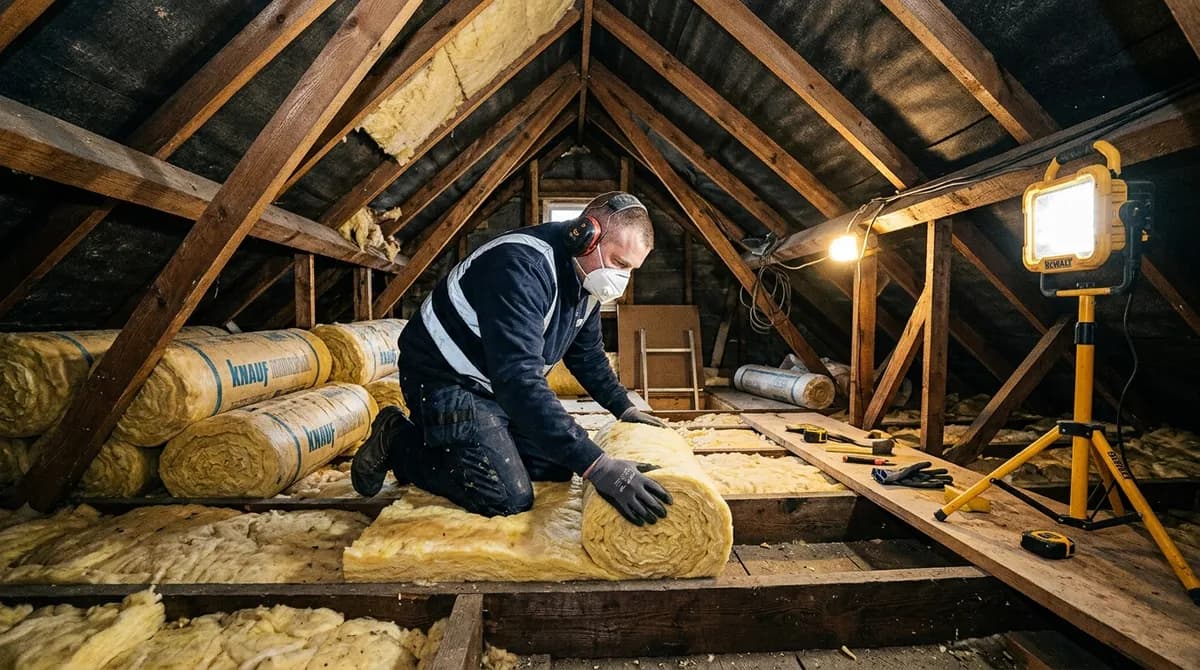
Insulation must meet Building Regulations Part L. All new insulation installations must comply with minimum thermal performance standards. Government-funded work requires a TrustMark-registered, PAS 2030-accredited installer. Spray foam insulation can affect mortgage valuations - read the full guide before choosing this option.
Quick answer
How much does home insulation cost?
Loft insulation costs £300 to £600 for a typical house using mineral wool rolls. Cavity wall insulation costs £400 to £700 for a semi-detached house. External wall insulation is significantly more at £8,000 to £22,000. Many homeowners qualify for free or heavily subsidised insulation through ECO4 or the Warm Homes: Local Grant run by their council.
View the full insulation cost guideTypes of home insulation
Different parts of your home lose heat at different rates. The roof accounts for around 25% of heat loss, walls around 35%, floors about 15%, and windows around 10%. Here are the main types of insulation and when each makes sense.
Loft insulation
The easiest and cheapest to install. Mineral wool rolls are laid between and over the ceiling joists to a depth of 270mm. If your loft is used for storage, you can raise the floor above the insulation using loft legs and boarding. Blown-in insulation is an alternative for awkward spaces. Suitable for virtually all homes with a loft.
£300 to £600
Cavity wall insulation
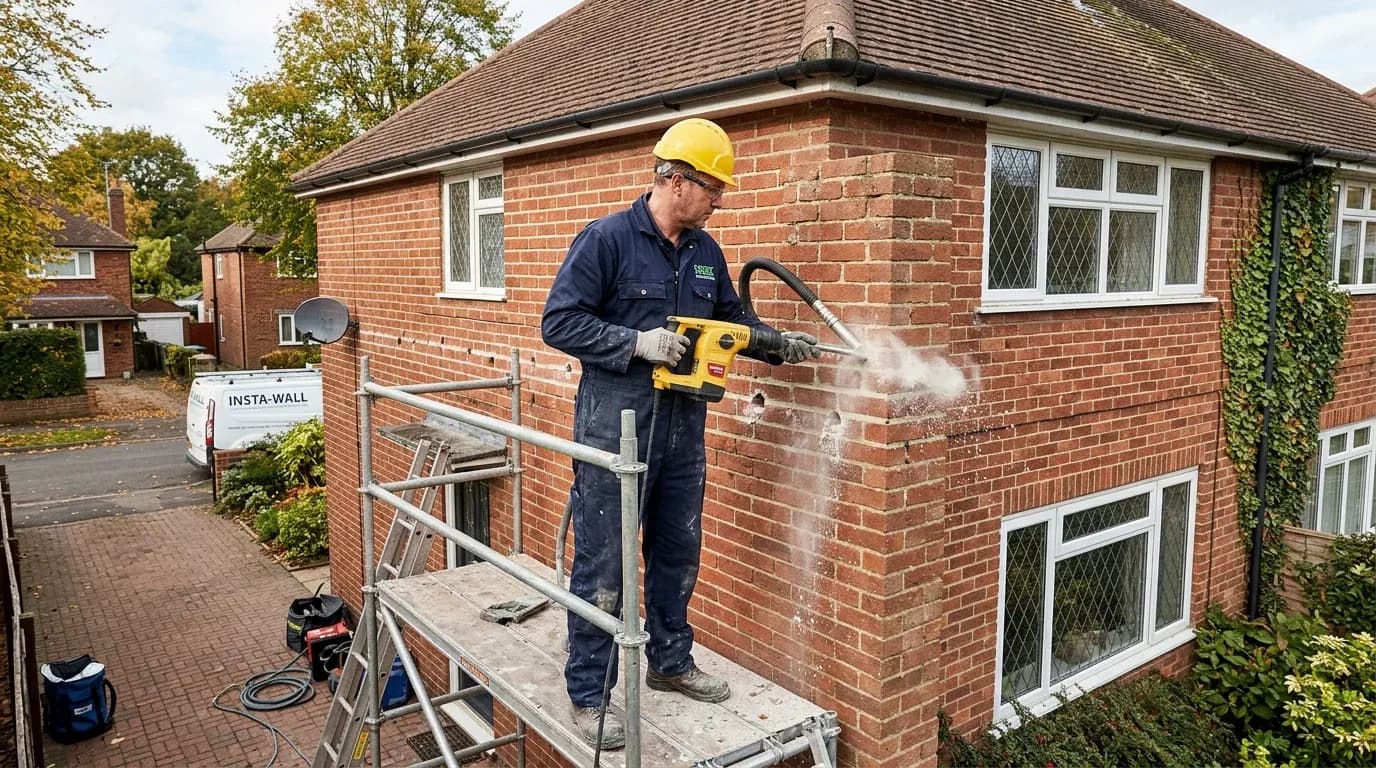
Insulation material is injected into the gap between the inner and outer walls through small holes drilled in the external mortar joints. The holes are filled and pointed afterwards. Most houses built between the 1930s and 1990s have unfilled cavities. The job takes a couple of hours and causes minimal disruption.
£400 to £700
External wall insulation (EWI)
For solid-walled homes with no cavity to fill. Rigid insulation boards are fixed to the outside of the property and covered with render or cladding. It transforms the appearance of the building, improves weatherproofing, and delivers the biggest energy savings - but it is expensive and may require planning permission in some areas.
£8,000 to £22,000
Internal wall insulation (IWI)
An alternative to EWI for solid-walled properties. Insulated plasterboard or a stud wall with insulation is fitted to the inside of external walls. Cheaper than EWI but reduces room sizes and requires moving skirting boards, radiators, and sockets. Best suited to properties where external changes are not permitted - listed buildings, conservation areas, or flats.
£4,000 to £8,000
Floor insulation
Suspended timber floors can be insulated from below if there is a crawl space, or from above by lifting the floorboards. Rigid insulation boards or mineral wool are fitted between the joists. Solid concrete floors are rarely insulated as a standalone job because it means raising the floor level. Floor insulation makes the biggest difference in ground-floor rooms that feel cold underfoot.
£500 to £1,200
Spray foam insulation
Applied to the underside of the roof or between wall studs. It expands to fill gaps and provides excellent thermal performance. However, spray foam applied to the roof can cause problems with mortgage lenders and surveyors. Several lenders will not lend on properties with spray foam in the loft. If you are considering this option, read our full guide on the risks before proceeding.
£1,200 to £2,500
Government insulation grants
Before paying for insulation privately, check whether you qualify for free or subsidised installation. Two main schemes are available in 2026.
Warm Homes: Local Grant
The Great British Insulation Scheme closed to new applicants on 31 March 2026. Its replacement is the Warm Homes: Local Grant, run by local councils for lower-income homeowners and private renters whose home is in EPC band D to G. It covers insulation and heating measures and runs until 31 March 2028. You apply through your local council, and the gov.uk 'find ways to save energy' service will point you to the schemes your home qualifies for.
ECO4 (Energy Company Obligation)
Aimed at low-income and vulnerable households and open until 31 December 2026. It covers a wider range of insulation measures plus heating system upgrades. If you receive Universal Credit, Pension Credit, Child Tax Credit, or certain other benefits, you may qualify. Your energy supplier or local authority can tell you if you are eligible.
Things to think about before you insulate
What type of walls does your house have?
This determines which wall insulation is possible. Look at the brickwork pattern: if all bricks are laid lengthways (stretcher bond), you almost certainly have cavity walls. If you see a mix of long bricks and short bricks in the same row, the walls are likely solid. Your EPC certificate should also state the wall type.
How much loft insulation do you already have?
Get up into the loft and measure it. If you have less than 100mm, a full installation is worthwhile. If you have 100mm-200mm, a top-up to 270mm is a smaller but still worthwhile job. If you already have 270mm or more, your loft is fine - look at walls and floors instead.
Do you use your loft for storage?
You can still insulate a loft that is used for storage. Loft legs raise the boarding above the insulation so that the mineral wool is not compressed (which would reduce its effectiveness). If you want a proper loft conversion with living space, that is a different type of insulation - you would insulate between and under the rafters instead of on the loft floor.
Ventilation matters
Insulation reduces heat loss but it also reduces natural ventilation. In a well-insulated home, you need adequate ventilation to prevent condensation and mould. Make sure loft vents (soffit and ridge vents) are not blocked by insulation. In rooms, trickle vents in windows and extractor fans in kitchens and bathrooms become more important after insulating.
How to find a good insulation installer
Check for PAS 2030 accreditation
PAS 2030 is the government-backed quality standard for energy-efficiency retrofit work. Any installer doing grant-funded insulation must hold this accreditation. For private work, it is not mandatory but it is a strong quality indicator. PAS 2030 installers are registered with TrustMark.
Ask about CIGA registration for cavity wall work
The Cavity Insulation Guarantee Agency (CIGA) provides a 25-year guarantee for cavity wall insulation. If the installer is not CIGA-registered, you will not get this independent guarantee. Always check that cavity wall work comes with CIGA backing - it protects you if problems develop later.
Get at least three quotes
Insulation quotes can vary significantly. For cavity wall work, some companies quote per metre of wall area, others quote a flat rate by house type. Make sure you are comparing the same scope. Ask what material they will use, whether scaffolding is included, and what guarantee is provided.
Check for BBA-certified materials
The British Board of Agrement (BBA) certifies insulation products for performance and durability. Ask what product the installer will use and check that it holds a current BBA certificate. This is especially important for spray foam and cavity fill materials.
Insulation guides
Insulation cost calculator
Energy savings calculator
Insulation cost guide
New boiler cost guide
Central heating cost guide
Double glazing cost guide
Cavity Wall Insulation Cost
Solid Wall Insulation Cost
Loft Insulation Cost
Floor Insulation Cost
Roof Insulation Cost
Spray Foam Insulation Cost
Draught Proofing Cost
Common questions about home insulation
How do I know if my home needs insulation?
An EPC (Energy Performance Certificate) will tell you what insulation your property has and what it is missing. The gov.uk EPC register lets you check any property's rating for free. You can also do some basic checks yourself: if your loft has less than 270mm of insulation (about the height of a ruler standing on its end), it could do with topping up. For walls, if your house was built before 1990 and has cavity walls, there is a good chance they are unfilled. Solid-walled houses (typically pre-1930s) have no cavity at all and lose more heat than any other wall type.
What is the most cost-effective insulation to install?
Loft insulation using mineral wool rolls is the cheapest to install and delivers the fastest payback - typically under three years. If your loft is already partially insulated, topping it up from 100mm to the recommended 270mm costs as little as £200 and still makes a meaningful difference. Cavity wall insulation is the next best investment, paying back in three to five years. Solid wall insulation costs significantly more but delivers the biggest energy savings for properties that have no cavity.
Is it worth insulating if I already have some loft insulation?
Yes, if your existing insulation is less than 270mm thick. Many homes have 100mm or even 50mm of insulation installed decades ago. Topping up to the current recommended 270mm is cheap (£200 to £400) and still reduces heat loss meaningfully. The first 100mm does the most work, but there is a clear benefit to bringing it up to modern standards.
Will insulation make my house too warm in summer?
Not usually. Insulation works by slowing the transfer of heat - in winter it keeps warmth in, and in summer it helps keep excessive heat out. Loft insulation in particular helps prevent the roof space from turning into an oven and radiating heat down into the rooms below. Proper ventilation in the loft (via soffit vents and ridge vents) is important to prevent overheating and moisture build-up regardless of the season.
Can I install loft insulation myself?
Yes. Laying mineral wool rolls in a loft is a straightforward DIY job. You need a dust mask (FFP3 rated), gloves, long sleeves, and a board to kneel on across the joists. Lay the first layer (100mm) between the joists, then the second layer (170mm) across them at right angles. Avoid compressing the material - it works by trapping air, so squashing it reduces its effectiveness. If you are topping up existing insulation, lay the new layer directly on top.
Quote service coming soon
Get free quotes from insulation installers near you
Free, no obligation. Read the cost guide first so you know what a fair price looks like before anyone gives you a number.
Compare real quotes for your job
Prices move a lot with your postcode, the access on site and the spec you choose. Get up to 3 free quotes from vetted local tradespeople and see what yours actually comes to, with no obligation to book.