Draught Proofing Cost 2026
Draught proofing a typical 3-bed home costs £50 to £150 DIY or £200 to £500 professionally fitted. It is not glamorous, but it is one of the cheapest and most effective ways to cut your heating bills. Most households save £50 to £150 a year, meaning it often pays for itself within a single winter.
£50-£150
DIY whole house
£200-£500
Professional
£50-£150
Annual saving
Under 2 yrs
Payback
Prices updated April 2026 · Based on industry data and contractor submissions.
Quick answer
How much does draught proofing cost?
Draught proofing a whole 3-bed house costs £50 to £150 if you do it yourself, or £200 to £500 for a professional to do the lot. Individual jobs are cheap: a window costs £3 to £8 in materials, a door £10 to £20, and a chimney balloon £15 to £25. The annual energy saving of £50 to £150 means it pays for itself faster than almost any other home improvement.
Draught Proofing Prices at a Glance
DIY prices are for materials only. Professional prices include labour and materials.
| Job | DIY Cost | Professional |
|---|---|---|
| Windows (per window, brush strips/foam) | £3 - £8 | £15 - £25 |
| External doors (per door, brush strips + threshold) | £10 - £20 | £30 - £60 |
| Letterbox draught excluder | £5 - £10 | inc. with door |
| Chimney balloon/cap | £15 - £25 | £30 - £50 |
| Loft hatch seal | £5 - £15 | £30 - £50 |
| Floorboard gaps (per room) | £15 - £30 | £50 - £100 |
| Whole house (typical 3-bed) | £50 - £150 | £200 - £500 |
Prices based on 2026 UK averages. Actual costs may vary by supplier and region.
Where to Draught Proof Your Home
Draughts come in through every gap where warm air can escape and cold air can sneak in. Here are the main culprits, roughly in order of how much heat they waste.
Open chimneys
If you have a fireplace you never use, the chimney is acting like an open window. A chimney balloon (an inflatable plug that sits in the flue) costs £15 to £25 and stops warm air pouring out. Chimney caps are a more permanent solution at £30 to £50 fitted. This is usually the single biggest quick win.
External doors
The gaps around and under external doors are a major source of heat loss. Brush strips along the bottom, foam or rubber seals around the frame, and a threshold strip across the bottom of the door are the standard fixes. Budget £10 to £20 in materials per door, or £30 to £60 per door professionally fitted.
Windows
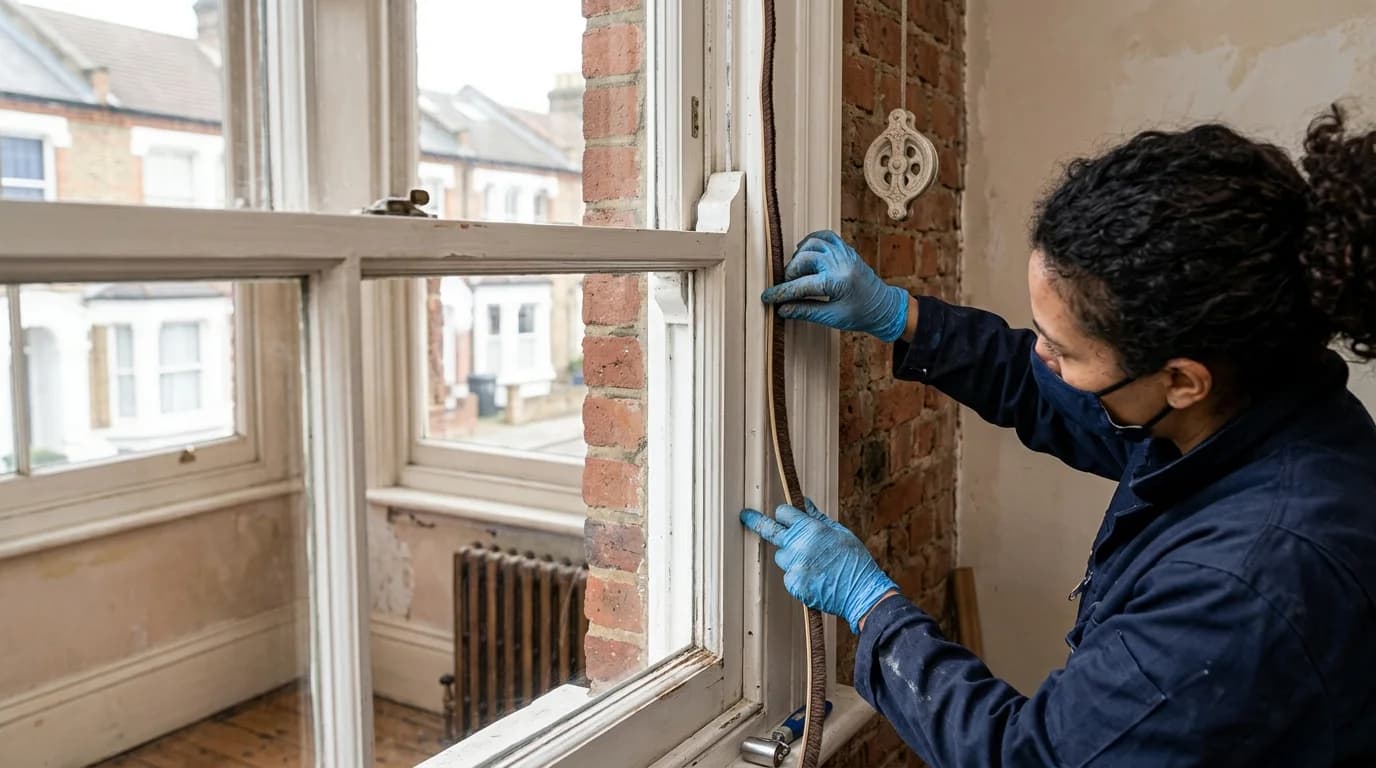
Older windows, particularly timber sash windows, tend to develop gaps as the frames shrink and warp over time. Self-adhesive foam strips are the cheapest fix (£3 to £8 per window). For sash windows, brush pile strips fitted into the frame are more effective and longer-lasting but cost more and are trickier to fit yourself.
Floorboards
Suspended timber floors with gaps between the boards let cold air rise from the void below. A flexible filler squeezed into the gaps is the most common fix (£15 to £30 per room in materials). For larger gaps, thin strips of timber can be tapped in and sanded flush.
Letterboxes and keyholes
A standard letterbox lets in a surprising amount of cold air. A simple flap or brush cover on the inside costs £5 to £10 and takes five minutes to fit. Keyhole covers are a couple of pounds each.
Loft hatches
The loft hatch is often overlooked, but if it does not seal properly, warm air rises straight into the loft. Foam strip around the frame and a latch to pull the hatch down tightly costs £5 to £15 in materials.
How Much Can You Save?
Draught proofing will not transform your energy bills on its own, but it is one of the best returns on investment of any home improvement. The savings are immediate and the cost is low.
DIY draught proofing (whole house)
Cost: £50-£150 · Saves: £50-£150/year · Payback: under 1 year
Professional draught proofing
Cost: £200-£500 · Saves: £50-£150/year · Payback: 1-3 years
Bigger savings together: Draught proofing works best as part of a package. Combine it with loft insulation and cavity wall insulation and the combined annual saving can reach £300 to £500 for a typical 3-bed house. Use our energy savings calculator to estimate your potential saving.
How to Get Your Draught Proofing for Less
This is already one of the cheapest home improvements going, but here is how to get even more value from it.
Do it yourself and save 70%+
Most draught proofing is genuinely easy DIY. Self-adhesive foam tape, brush strips, and letterbox covers are all available from any hardware shop and need nothing more than a tape measure and a screwdriver. A full afternoon is enough to do the whole house. The materials cost a fraction of what a professional charges.
Start with the chimney
An unused open chimney lets out as much warm air as leaving a window open all day. A chimney balloon (£15 to £25) plugs into the flue and stops the warm air escaping. It is the single biggest quick win in most older houses. Just remember to remove it before you light a fire.
Combine with insulation for the biggest impact
Draught proofing on its own saves £50 to £150 a year. Pair it with loft insulation and cavity wall insulation and the combined saving can top £500 a year. The three together cost less than most single home improvement projects.
Use the right product for each gap
Foam strips work well on windows that stay shut. For doors that open and close frequently, brush strips or rubber seals last much longer. Floorboard gaps need a flexible filler that can expand and contract with the wood. Using the right material for each job means it lasts years rather than months.
How much could you save on energy?
Use our energy savings calculator to see how much draught proofing, insulation, and other upgrades could save you each year. Takes about 60 seconds.
Try the CalculatorUseful resources
- Energy Saving Trust: Draught-proofing, Guide to draught-proofing your home and estimated savings
- Building Regulations Part L, Energy efficiency requirements for existing buildings
What to Expect: The Draught Proofing Process
Draught proofing is one of the cheapest and easiest energy-saving improvements. A professional can do a whole house in half a day, and most of it is straightforward DIY.
- 1
Draught audit
Walk around the house on a windy day checking for draughts around windows, doors, the loft hatch, letterbox, floorboards, and around pipe penetrations. A smoke pencil or incense stick helps pinpoint gaps.
- 2
Window draught proofing
Self-adhesive foam strips or brush strips are fitted into the window frame rebates. Sash windows may need specialist brush-pile strips fitted into routed grooves.
- 3
Door draught proofing
Brush or rubber strips are fitted to door frames, and a draught excluder or brush strip is fitted to the bottom of external doors. Letterbox covers and keyhole covers are also fitted.
- 4
Chimney and flue sealing
Unused chimneys are sealed with a chimney balloon, chimney cap, or purpose-made draught excluder. This can save significant heat, an open chimney loses as much warmth as leaving a window open.
- 5
Floor and skirting board gaps
Gaps between floorboards are filled with flexible filler or sealant. Gaps between skirting boards and the floor or wall are sealed with decorator's caulk.
- 6
Loft hatch and service penetrations
The loft hatch is fitted with compression seal strips and clips to hold it tight. Gaps around pipes, cables, and extractor fans are sealed with expanding foam or mastic.
Frequently Asked Questions
How much does draught proofing cost?
Professional draught proofing for a typical 3-bedroom home costs between £200 and £500 in 2026. If you do it yourself, materials cost £50 to £150. Individual jobs like draught-proofing a single window cost £3 to £8 in materials or £15 to £25 professionally fitted. Draught proofing is one of the cheapest energy upgrades available, with a payback period of under 2 years in most cases.
Is draught proofing worth it?
Yes. Draught proofing typically saves £50 to £150 a year on heating bills for a 3-bedroom home. Since the whole house can be done for £50 to £500, the payback period is often under 2 years, sometimes within a single winter. It also makes your home noticeably more comfortable by stopping cold air blowing in around windows, doors, and floorboards.
Can I draught proof my home myself?
Absolutely. Most draught proofing is straightforward DIY work. Self-adhesive foam strips for windows cost a few pounds each, brush strips for doors are easy to fit with a screwdriver, and letterbox covers simply screw onto the inside of the door. The only jobs that need more care are floorboard gaps (where a flexible filler works well) and chimneys (where a chimney balloon or cap is the usual solution). No specialist tools or qualifications are needed.
What are the biggest sources of draughts in a house?
The biggest draught sources are external doors and windows (especially older sash windows), letterboxes, keyholes, open chimneys, gaps around floorboards, loft hatches, and pipework holes where pipes pass through walls or floors. An unused open chimney can let out as much heat as leaving a window open all day. Doors and windows together account for the largest share of draught-related heat loss in most homes.
Should I draught proof my windows or replace them?
Draught proofing existing windows is far cheaper and often surprisingly effective. New double glazing for a whole house costs £4,000 to £8,000, while draught proofing those same windows costs under £100 in materials. If your windows are structurally sound but draughty, start with draught proofing. If they are rotten, broken, or single-glazed with no option to add secondary glazing, replacement makes more sense.

Written by Chris Kervin, Co-Founder, Less.co.uk
Last updated: · Pricing based on industry data · Methodology
Want to save even more on energy?
Draught proofing is just the start. Sign up to our newsletter for more ways to cut your energy bills and save money on home improvements.
Get Money-Saving TipsFree newsletter. Unsubscribe anytime.
Compare real quotes for your job
Prices move a lot with your postcode, the access on site and the spec you choose. Get up to 3 free quotes from vetted local tradespeople and see what yours actually comes to, with no obligation to book.