How Much Does Central Heating Cost in 2026?
A new central heating system cost depends on the size of your property and what is already in place. Installing a full system in a 3-bedroom house with no existing heating costs between £3,500 and £6,000 including a new boiler, radiators, and all pipework. The radiator replacement cost alone is lower if you already have a working system, and adding radiators to an existing setup or upgrading specific components costs significantly less.
£4,500
Avg full system
£150
Radiator only from
£6,000+
With new boiler
3 to 5 days
Installation time
Prices updated April 2026 · Based on industry data and contractor submissions.
Gas Safe registered engineers only. All gas central heating work must be carried out by a Gas Safe registered engineer. It is illegal to carry out gas work without being registered. Always check your engineer's Gas Safe ID card before any work begins. Verify any engineer at gassaferegister.co.uk.
Central Heating Prices at a Glance
So how much does central heating cost for the most common jobs? Prices below cover the typical central heating installation cost in UK homes, carried out by Gas Safe registered engineers including all labour and standard materials. If you are also looking at new boiler costs, bundling the two together usually works out cheaper.
| Job Type | Average Cost | Price Range |
|---|---|---|
| Full central heating installation (3-bed, no existing system) | £4,500 | £3,500 to £6,000 |
| Full system including new combi boiler | £6,500 | £5,000 to £9,000 |
| New radiator supply and fit (per radiator) | £250 | £150 to £400 |
| Full set of radiators (10 radiators, existing system) | £2,200 | £1,500 to £3,000 |
| Power flush (sludge removal) | £450 | £300 to £600 |
| Thermostatic radiator valves (full set) | £600 | £400 to £900 |
Prices include labour and standard materials. Smart thermostat, magnetic filter, and zone controls are priced separately under additional costs.
Get Free Central Heating Quotes
Compare prices from Gas Safe registered engineers near you. Fill in a few details and receive up to 4 free, no-obligation quotes.
Central Heating Cost by System Type
The total cost of a new central heating system depends heavily on the type of system you choose. A straightforward gas central heating installation cost sits at the lower end, while wet underfloor heating cost is higher upfront but can save money over the long run. Here is how the main options compare.
| System Type | Typical Cost |
|---|---|
| Gas central heating (full system) | £3,000 to £6,500 |
| Combi boiler swap + new radiators | £2,500 to £4,500 |
| Radiators only (new throughout) | £1,500 to £3,000 |
| Underfloor heating (wet, ground floor) | £3,000 to £5,000 |
| Underfloor heating (electric, per room) | £400 to £800 per room |
| Smart heating controls | £200 to £600 |
All prices include fitting. Gas work must be carried out by a Gas Safe registered engineer.
What Affects the Cost of Central Heating?
Number of rooms and radiators
The more radiators required, the higher the material and labour cost. A standard 3-bedroom semi typically needs 8 to 10 radiators. Each additional radiator adds roughly £150 to £400 to the total depending on size, valve type, and how easily the pipework can reach it. Radiators in difficult-to-access locations - such as large open-plan spaces or extensions - take longer to connect and cost more.
Whether a new boiler is required
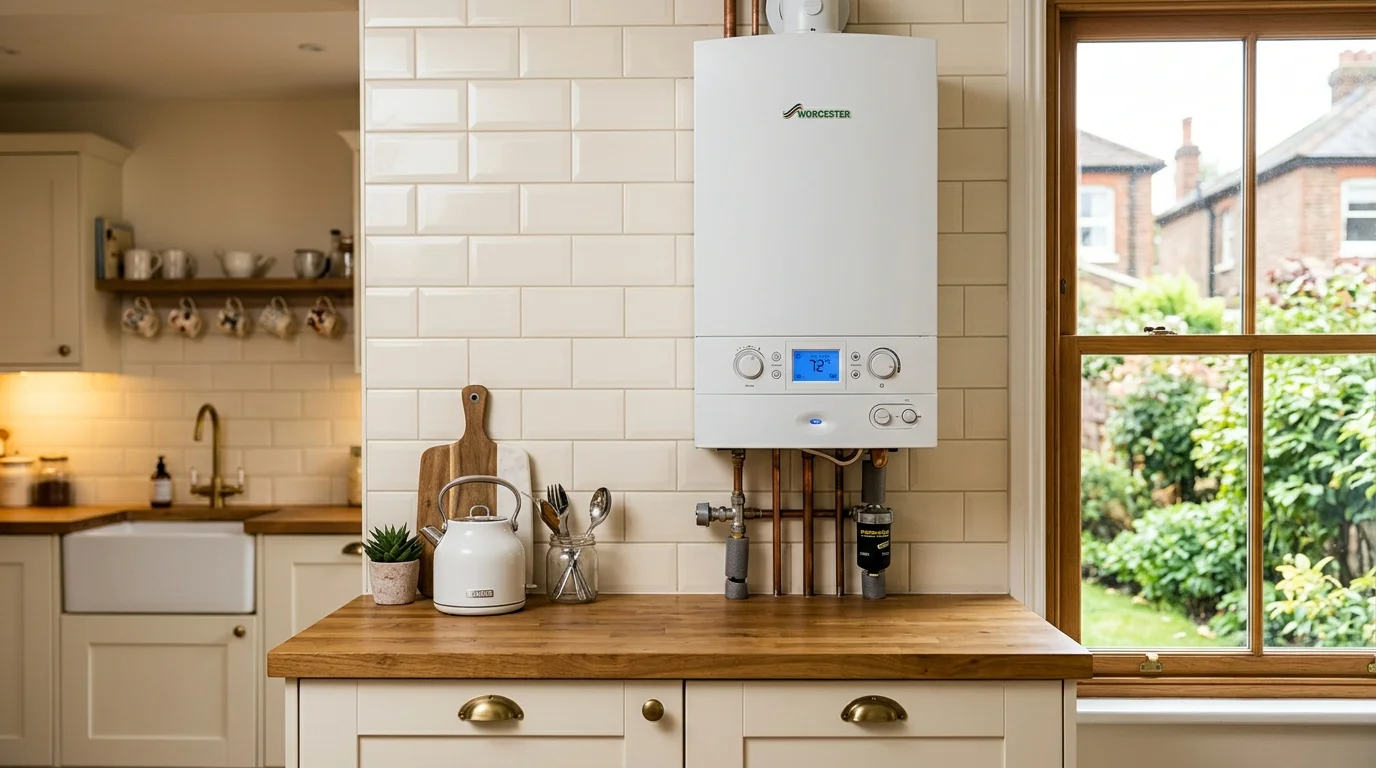
If you are adding central heating to a property with no existing boiler, or replacing an old one at the same time, the boiler is often the largest single cost. A new combi boiler adds £1,500 to £3,500 to the project. Doing both together saves on labour and system commissioning compared to scheduling them separately.
Existing pipework condition
In properties with no central heating at all, all pipework needs to be first-fixed through floors and walls before radiators can be fitted. This is the most labour-intensive part of the job. In properties where central heating is being extended or upgraded, the condition of existing copper pipework determines whether it can be reused or needs replacing. If there are signs of sludge, a power flush is strongly recommended before connecting new components.
Property size and layout
Larger properties cost more to heat and require larger boilers and more radiators. Properties with solid floors (rather than suspended timber) require pipework to be chased into the floor or run surface-mounted, adding time and cost. Older properties with thick walls can also complicate pipework runs.
System controls and thermostat type
A basic programmer and room thermostat is the entry-level option and is included in most standard quotes. Upgrading to a smart thermostat (£130 to £250 extra) or a full zoned system with separate controls upstairs and downstairs (£200 to £500 extra) adds cost but pays back over time through lower heating bills.
Location
Gas Safe engineers charge different day rates depending on where they are based. London engineers typically charge 25 to 30% more than the national average. Yorkshire, the North East, and Wales are generally the most affordable regions. See the full regional breakdown below.
Underfloor Heating vs Radiators
Deciding between underfloor heating and radiators? Both have their place, and many homes end up with a mix of both. Here is how they stack up in practice.
Radiators
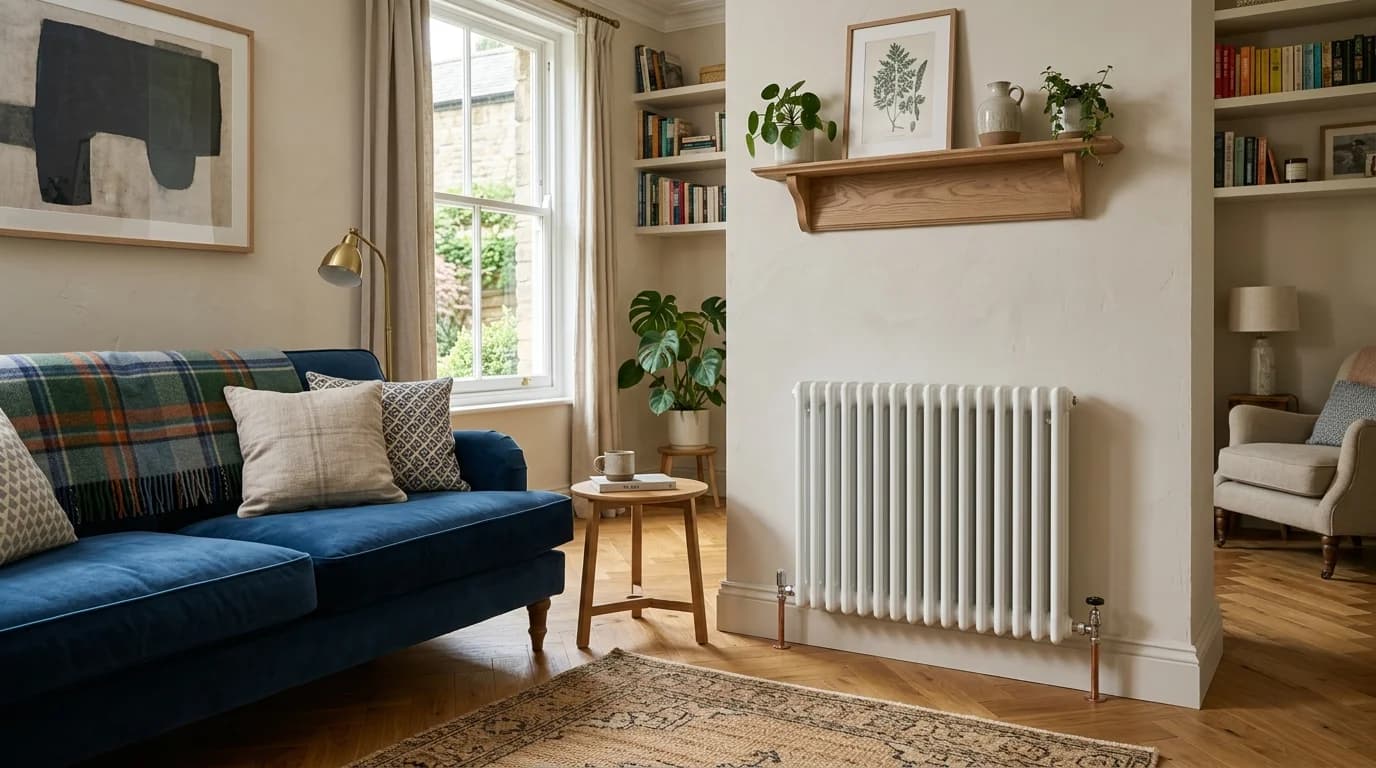
Cheaper to install, faster to heat a room, and straightforward to retrofit into any property. The radiator replacement cost for a full house (8 to 12 radiators) typically comes in at £1,500 to £3,000. They do take up wall space and can create uneven heat distribution in larger rooms, but for most UK homes they remain the practical default.
Wet underfloor heating
More efficient over the long term, frees up wall space entirely, and distributes heat evenly across the floor. The underfloor heating cost for wet systems on a ground floor runs £3,000 to £5,000. The catch is that it is best installed during a renovation or new build - retrofitting into an existing property means lifting floors and adding screed, which adds time and cost. Works particularly well with heat pumps.
Electric underfloor heating
Cheap to install at £400 to £800 per room, but more expensive to run than wet systems or radiators. Best suited to small areas where you want warm feet - bathrooms, en suites, and hallways. Not practical as a whole-house heating solution unless you are happy with higher electricity bills.
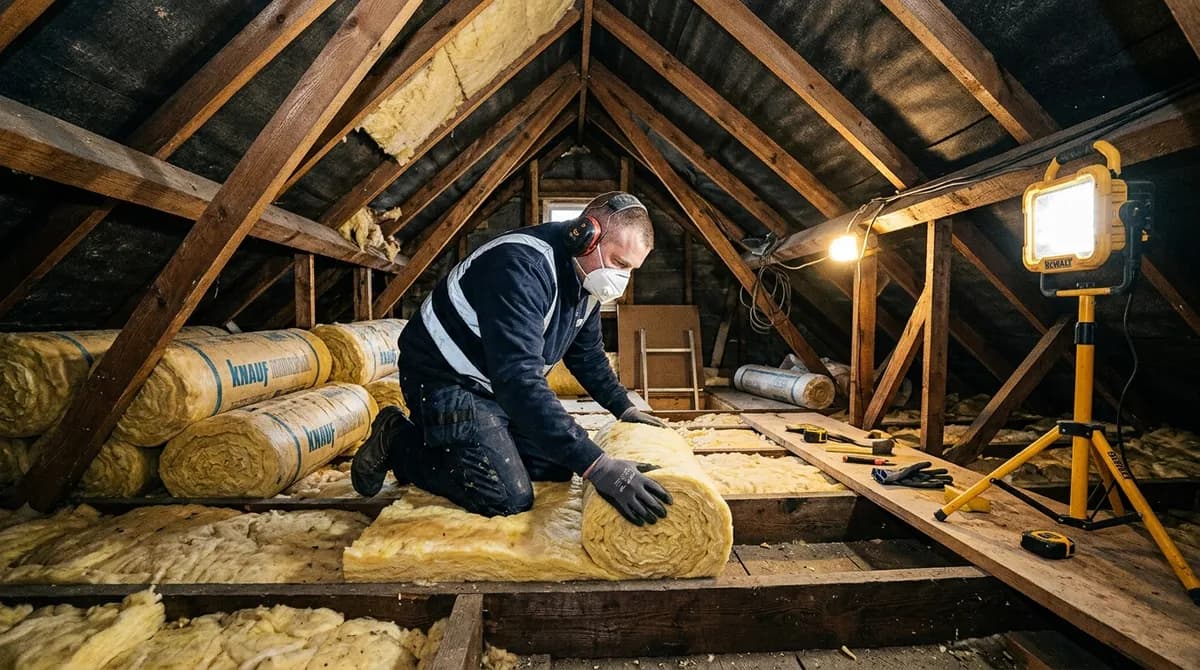
Worth knowing: underfloor heating works best in well-insulated homes. If your property has poor insulation, the system has to work much harder and the efficiency savings disappear. Pairing underfloor heating with a heat pump in a well-insulated home is one of the most efficient setups you can get - but the upfront investment is significant.
Smart Heating Controls - Are They Worth It?
Smart thermostats from the likes of Nest, Hive, and Tado have gone from novelty to near-standard in new central heating installations. But do the numbers actually add up?
Smart thermostat (Nest, Hive, Tado)
Supply and installation costs £150 to £300 fitted. Most households save £75 to £150 per year through better scheduling, geofencing (turning heating off when nobody is home), and being able to adjust the temperature from your phone rather than leaving it on all day. The payback period is typically 1 to 2 years.
Smart TRVs (per radiator)
Smart thermostatic radiator valves cost £40 to £70 each and let you control individual radiators from an app. They are particularly worth it for rooms you do not use every day - spare bedrooms, home offices, or dining rooms. Rather than heating the whole house to the same temperature, you only heat the rooms you are actually in. Payback period is usually 1 to 3 years depending on how many rooms you can turn down.
Our take: a smart thermostat is close to a no-brainer for any new central heating installation - the savings are real and the payback is fast. Smart TRVs are worth adding to 3 to 4 rooms you use less often. Going overboard and fitting one on every single radiator has diminishing returns.
Additional and Hidden Costs
These items are not always included in the base installation quote but are worth budgeting for - some are highly recommended. If your system needs flushing, see our full guide to power flush costs.
| Extra Item | Typical Cost |
|---|---|
| Magnetic system filter (e.g., Magnaclean) | £100 to £200 |
| Smart thermostat (Nest, Hive, tado°) | £130 to £250 |
| Zone controls (upstairs/downstairs) | £200 to £500 |
| Underfloor heating (electric, per room) | £400 to £800 |
| Annual boiler service plan | £80 to £150/year |
Annual boiler servicing is strongly recommended to maintain your warranty and catch faults early.
Central Heating Prices by Region
Where you live has a real impact on what you will pay. These are average installed prices for a full central heating system (boiler and 10 radiators) in a 3-bedroom property.
| Region | Average Cost | vs National |
|---|---|---|
| London | £5,800 | +29% |
| South East | £5,200 | +16% |
| East of England | £4,900 | +9% |
| South West | £4,700 | +4% |
| Midlands | £4,500 | Average |
| Yorkshire | £4,100 | -9% |
| North West | £4,200 | -7% |
| North East | £3,900 | -13% |
| Scotland | £4,100 | -9% |
| Wales | £4,000 | -11% |
Based on industry data. Prices for a full central heating installation including new boiler and 10 radiators.
How to Get Your Central Heating for Less
Smart planning and a few well-timed decisions can save you several hundred pounds - and reduce your ongoing heating bills significantly.
Get at least three quotes
Prices for the same central heating job can vary by 30% or more between heating engineers in the same area. Get at least three written quotes so you can compare like for like, including system design, materials, and labour. The cheapest is not always the best, check reviews, ask for references, and make sure the quote includes everything.
Get a power flush before adding new radiators
If your existing system has sludge - common in systems over 10 years old - installing new radiators or a new boiler without first cleaning the system is a false economy. Sludge will damage new components within a few years. A power flush costs £300 to £600 and can extend the life of a new boiler by several years, as well as keeping your warranty valid.
Add a smart thermostat
A smart thermostat costs £130 to £250 to install but typically saves £100 to £150 per year on heating bills. Many energy suppliers offer incentives or subsidised installation. Over 5 years, a smart thermostat can more than pay for itself - and some qualify for free installation through energy efficiency schemes.
Turn down the boiler flow temperature
Lowering a combi boiler's flow temperature to about 50 to 55C typically cuts gas use by 6 to 9 per cent, which is roughly £70 to £120 a year, with no loss of comfort in most homes. It costs nothing and you can do it yourself on the boiler controls. Turn the flow temperature dial down, then give the house a day or two to settle before adjusting again.
Ask for hydraulic balancing and weather compensation
Ask the installer to hydraulically balance the system so every radiator gets the right flow, and to set up weather compensation if the boiler supports it. Both are free or low cost when done at installation, and they cut running costs by letting the boiler run cooler and more efficiently. Put the request in writing before work starts so it is not skipped at commissioning.
Zone your system properly
Splitting your heating into separate zones - typically upstairs and downstairs - means you only heat the parts of the house you are using. Proper zoning can reduce heating bills by 10 to 15% compared to a single-zone system. It adds some cost upfront (£200 to £500 for zone controls) but pays back quickly.
Bundle with boiler replacement
If your boiler also needs replacing, getting both jobs done at the same time saves on labour. The engineer is already on site, the system is already drained down, and the commissioning process is done once rather than twice. Doing them separately can cost £400 to £800 more in total.
Check ECO4 eligibility
The government's ECO4 scheme may provide free or heavily subsidised central heating installation if you are on qualifying benefits such as Universal Credit, Pension Credit, or child tax credits. It is worth checking eligibility before paying full price - some households qualify for a fully funded installation. Check at gov.uk or contact your energy supplier.
Book in spring or summer
Heating engineers are quietest from April to August, when fewer boilers are breaking down. You will get more competitive quotes during this period and shorter waiting times. Avoid September to January when demand peaks and prices can be 10-15% higher for the same work.
Comparing quotes is the simplest way to pay less
Getting three or four quotes and comparing them is how most homeowners avoid overpaying. It takes a couple of minutes, with no obligation.
Get my free quotesWhat to Expect: The Central Heating Installation Process
Here is how a full central heating installation typically runs from the first visit to final commissioning.
- 1
Gas Safe survey and quote
A registered engineer visits to assess the property, confirm radiator positions, check the gas supply capacity, and agree on the boiler location. This is also when you discuss controls - thermostat type, zones, and any smart home integration.
- 2
Pipework first fix and radiator positions
Pipework is run through floors, walls, and ceilings to each radiator position. This is the most disruptive part of the job. Floors may need to be lifted temporarily, and some surface-mounted pipework may be needed in areas where this is not possible.
- 3
Boiler installation
The boiler is fitted and connected to the gas supply and flue. The gas supply is pressure-tested before any connections are made to the heating system. This stage typically takes half a day for a standard combi boiler.
- 4
Second fix connections and radiator fitting
Radiators are hung on brackets and connected to the pipework. Thermostatic radiator valves (TRVs) are fitted. The system is filled and all connections are checked for leaks before the first test run.
- 5
System commissioning and controls setup
The engineer commissions the boiler, bleeds all radiators, balances the system to ensure even heat distribution, and sets up the controls and thermostat. You will receive a Benchmark Commissioning Certificate - keep this safe for warranty purposes. Your engineer notifies Gas Safe and Building Control as required.
Frequently Asked Questions
How much does central heating cost to install in the UK?
Installing a full central heating system - boiler, radiators, thermostats, and all pipework - in a 3-bedroom house with no existing system typically costs between £3,500 and £6,000. Adding a new combi boiler to the package brings the total to £5,000 to £9,000. If you already have a partial system and are adding radiators or upgrading components, costs are significantly lower.
Does central heating work have to be done by a Gas Safe engineer?
Yes. Any work on gas appliances or gas pipework must be carried out by a Gas Safe registered engineer - it is a legal requirement under the Gas Safety (Installation and Use) Regulations 1998. You can verify any engineer's registration on the Gas Safe Register website using their registration number. Always ask to see their Gas Safe ID card before work begins.
How long does a central heating system last?
A well-maintained central heating system should last 15 to 25 years. Radiators can last 20+ years if not corroded internally. The boiler is typically the component that needs replacing first - modern gas boilers last 10 to 15 years with annual servicing. Pipework, when properly installed in copper, should last the lifetime of the property.
What type of boiler is best for central heating?
For most UK homes, a combi boiler is the most practical choice - it provides heating and hot water on demand with no need for a separate hot water cylinder. System boilers suit larger homes with higher hot water demand (two or more bathrooms). If you are adding central heating to a property with an existing hot water cylinder, a system boiler may be the better fit. Ask your Gas Safe engineer which type suits your property's layout and hot water usage.
Do I need a power flush before installing new radiators?
If your existing pipework or boiler contains sludge - a black magnetic residue that builds up over time - a power flush is strongly recommended before adding new radiators or a new boiler. Installing new components into a dirty system causes them to degrade quickly and can void warranty. A power flush costs £300 to £600 and is money well spent if there are signs of contamination such as cold spots on radiators or noisy pipes.
Is a smart thermostat worth adding to a central heating system?
Yes, for most households. A smart thermostat typically costs £130 to £250 to supply and fit, and can save £100 to £150 per year on heating bills by learning your schedule and allowing remote control from a smartphone. Many energy suppliers offer incentives or cashback on smart thermostat installation. Some models - such as Nest and Hive - also receive software updates that improve efficiency over time.
How long does a central heating installation take?
A full central heating installation in a property with no existing system typically takes 3 to 5 days. Adding 10 radiators to an existing system takes 1 to 3 days. A straight boiler replacement takes 1 to 2 days. More complex jobs - converting from one system type to another, or working in a larger property - can take up to a week.
Should I consider a heat pump instead of a gas boiler?
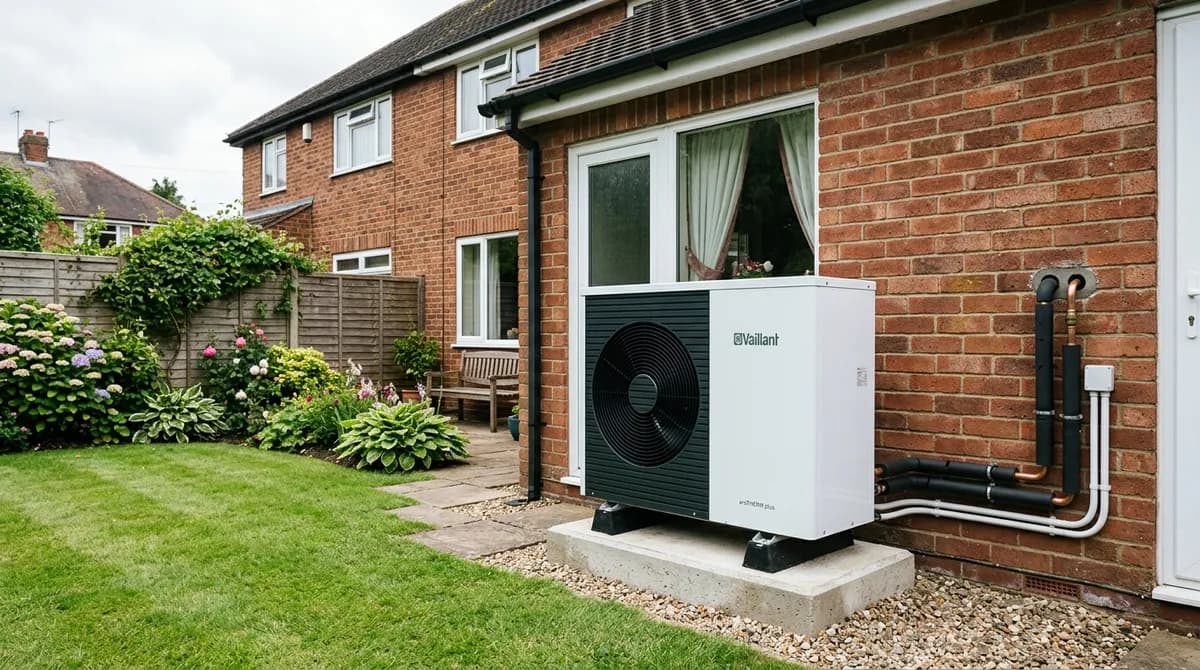
A heat pump can significantly reduce long-term running costs compared to gas, but requires a well-insulated home to operate efficiently and costs more upfront - typically £8,000 to £18,000 installed, though the government's Boiler Upgrade Scheme offers a £7,500 grant. If your home is well-insulated and you are planning to stay for many years, it is worth getting a heat pump assessment alongside gas quotes. For poorly insulated properties, gas central heating currently remains the more practical choice.
How much does underfloor heating cost compared to radiators?
Wet underfloor heating for the ground floor of a typical 3-bed house costs £3,000 to £5,000 installed. Electric underfloor heating is cheaper to install at £400 to £800 per room but costs more to run. A full set of new radiators for the same property costs £1,500 to £3,000. Radiators are cheaper upfront, but underfloor heating is more efficient long-term in well-insulated homes.

Written by Chris Kervin, Co-Founder, Less.co.uk
Last updated: · Pricing based on industry data and verified contractor submissions · Methodology