How Much Do Double Glazed Windows Cost in 2026?
Double glazed windows cost £350 to £600 each for a standard uPVC casement, supply and fit, and £3,000 to £8,000 to do a whole house. Replacing all the windows in a typical 3-bedroom semi-detached costs between £3,500 and £7,500 for uPVC. A three-panel bay window is £800 to £1,500 on its own. What you actually pay comes down to frame material, glass specification, and the number of openings.
Or try the double glazing calculator
£5,500
Average full house
£350
Per window from
uPVC
Cheapest frame
1 to 3 days
Typical timeline
Prices updated April 2026 · Based on published trade rates and UK market data.
New windows must comply with Building Regulations Part L (energy efficiency) and Part Q (security). In conservation areas or listed buildings, permitted development rights for windows may be restricted - check with your local planning authority before proceeding. Always use a FENSA or CERTASS registered installer to ensure compliance is certified correctly.
Double Glazed Windows Cost at a Glance
These double glazing prices are for supply and installation including removal of old windows, FENSA certification, and waste disposal unless otherwise noted. All figures reflect typical UK costs in 2026.
uPVC casement window (standard)
Supply and fit, white, standard opening, A-rated
£450
£350 to £600
uPVC bay window
Three-panel bay, supply and fit, white
£1,100
£800 to £1,500
Aluminium casement window
Supply and fit, anthracite grey or black, A-rated
£750
£550 to £1,100
Timber casement window
Hardwood or softwood, supply and fit, painted
£900
£650 to £1,400
Full house (3-bed semi, uPVC)
Typically 8 to 10 windows, supply and fit
£5,500
£3,500 to £7,500
Full house (3-bed semi, aluminium)
Typically 8 to 10 windows, supply and fit
£8,500
£6,000 to £12,000
Prices based on industry data. Actual costs depend on window count, size, specification, and location.
Get Free Double Glazing Quotes
Tell us about your windows and local installers will get in touch with prices. Free, with no obligation to book.
Your details go to our quote partner, Leads.work, who pass them to a few local firms that cover your area. They'll contact you about the job, which may include a phone call. It's free for you, and we're paid a referral fee. How your details are used
Double Glazed Windows Cost by House Size
One of the most common questions is "how much does double glazing cost for my whole house?" The answer depends largely on property size and how many windows you have. These estimates are for standard uPVC casement double glazed windows, supply and fit.
| Property Type | Typical Windows | Estimated Cost (uPVC) |
|---|---|---|
| 2-bed flat | 4 to 6 windows | £2,000 to £3,500 |
| 2-bed terrace | 6 to 8 windows | £2,500 to £4,500 |
| 3-bed semi | 8 to 12 windows | £4,000 to £7,000 |
| 3-bed detached | 10 to 14 windows | £5,000 to £9,000 |
| 4-bed detached | 12 to 18 windows | £6,000 to £12,000 |
Prices are for uPVC casement windows, supply and fit. Aluminium or timber frames will cost considerably more. Bay windows, sash windows, and non-standard sizes add to the total.
Cost to replace all the windows in a 3 bed house
A 3 bed semi usually has 8 to 12 windows, which puts a full uPVC replacement at £4,000 to £7,000. A 3 bed detached tends to have 10 to 14 windows and comes in at £5,000 to £9,000. The window count matters more than the bedroom count, so before you ring anyone, walk round the house and count every opening, including the landing, the bathroom, and anything in a porch or utility. Two 3 bed houses on the same street can differ by several windows, and that is most of the gap between one quote and another.
Cost to replace all the windows in a 4 bed house
A 4 bed detached typically has 12 to 18 windows and costs £6,000 to £12,000 in uPVC. Larger properties also tend to have the things that push the price up: bay windows at the front, bigger openings, and second floor windows that need scaffolding or a tower to reach safely. Move to aluminium and you are adding 50 to 80% on top. On a job this size the per window price is genuinely negotiable, so ask each installer to break the quote down opening by opening rather than giving you one figure.
uPVC vs Aluminium vs Timber Windows
Frame material is the single biggest factor in the cost of new windows. Here is how the three main options stack up against each other.
| Feature | uPVC | Aluminium | Timber |
|---|---|---|---|
| Cost per window | £300 to £600 | £500 to £900 | £600 to £1,200 |
| Lifespan | 20 to 25 years | 30 to 40 years | 30 to 60 years (with maintenance) |
| Maintenance | Virtually none | Virtually none | Regular painting/staining |
| Look | Modern, wide frames | Slim, contemporary | Traditional, premium |
| Best for | Most homes, best value | Modern builds, slim sightlines | Period properties, conservation areas |
For most UK homeowners, uPVC offers the best balance of price and performance. The cost of uPVC windows has stayed competitive because it dominates the market - installers stock it, factories run it at scale, and the margins are tight. Aluminium is worth the premium if you want a contemporary look with slim sightlines, especially on a new build or modern extension. Timber is the go-to for period properties and conservation areas where planning rules often require it.
What Affects the Cost of Double Glazing?
Frame material: uPVC, aluminium, or timber
Frame material drives the cost more than anything else. uPVC is the most common and affordable choice, and it performs well thermally with almost no upkeep needed. Aluminium costs 50 to 80% more and looks considerably better - slimmer sight lines and a crisper finish that suits modern homes. Timber costs the most and needs regular painting or staining to stay weathertight, but is often the only option that gets planning approval on period properties and conservation areas.
Glass specification
Standard double glazing has two panes of glass, argon gas fill, and a Low-E coating that reflects heat back into the room. Each upgrade adds cost: triple glazing adds a third pane (and significant weight), acoustic glazing uses a laminated inner pane to dampen road noise, and solar control glass cuts heat gain in south-facing rooms. Most homes do fine with good-quality standard units - the upgrades are worth considering if you have a specific problem to solve.
Number and size of windows
More windows means higher material costs, but the labour cost per window drops on a larger job. Bay windows cost the most to fit - they're bigger, heavier, and take longer to install correctly. Small casements are at the cheaper end. Always ask for a per-window breakdown in your quote rather than just a total price; it makes it much easier to compare across different installers.
Window style
Casement windows - hinged on one side - are the most common style and the cheapest to manufacture. Tilt-and-turn windows open in two ways and cost a bit more. Sash windows are a different matter: they're considerably more expensive, especially in timber, because of the counterbalance mechanism and the skill needed to fit them well. Bay windows take longer to install than a standard window and typically cost two to three times as much per opening.
Installation complexity and accessibility
Upper floor windows need scaffolding or a tower for safe access, which adds to the cost. Awkward situations - a window above a conservatory roof, or a property with very restricted side access - take longer and cost more. Non-standard openings need made-to-measure frames rather than stock sizes, which adds lead time and cost. Flag any unusual access situations when getting quotes so there are no surprises on the day.
Additional Costs to Budget For
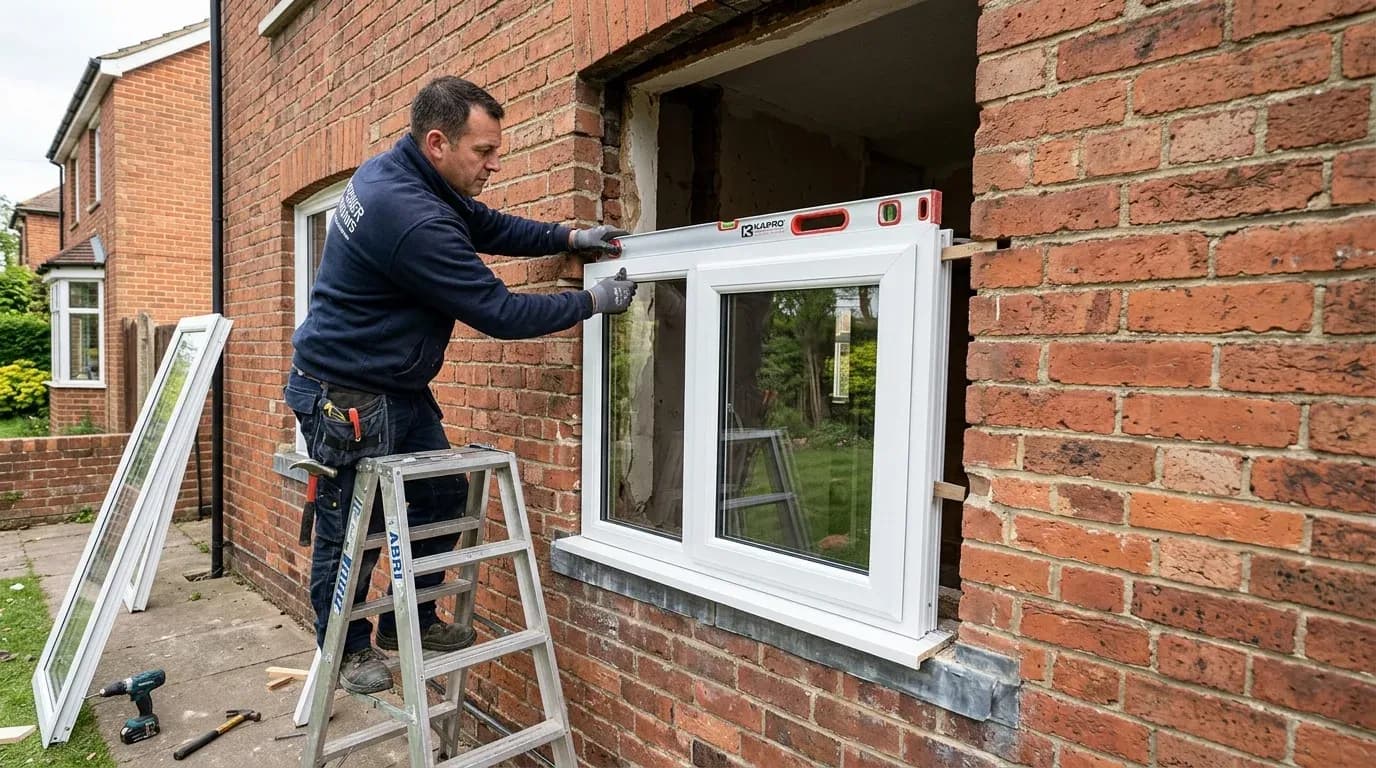
Many homeowners add doors or other glazed elements when replacing windows - here is what to expect.
| Extra Item | Typical Cost |
|---|---|
| Composite or uPVC front door | £800 to £2,000 |
| Patio or French doors | £1,500 to £4,000 |
| Bifold doors | £2,000 to £6,000 |
| Fitting only (customer supply) | Deduct ~30% |
| FENSA certificate | Included |
| Waste removal | Usually included |
Ways to Cut the Cost of New Double Glazed Windows
A full replacement is not always the right answer. Three options worth pricing up before you commit to the whole house.
Replace the glass, not the whole window
Condensation trapped between the panes means the sealed unit has failed, not the frame. If the frames still open and close properly, lock securely, and the seals around them are sound, a glazier can swap the glass unit and leave the frame in place. It is considerably cheaper than a new window and it is a quick job. Worth getting a glazier to look before you let a window company quote you for a full replacement, because they will rarely suggest it themselves.
Buy the windows yourself and pay for fitting only
Some installers will fit windows you have sourced yourself, which takes roughly 30% off a supply and fit price. The catch is that made-to-measure windows cannot be returned if the sizes are wrong, and the measuring is on you. Get the fitter to check your measurements before you order anything, and agree in writing who is responsible if a unit arrives damaged or the wrong size.
Do the house in stages
You lose some of the volume discount, but doing the front elevation this year and the back next year spreads the cost and avoids finance charges. Ask the installer to note the exact frame profile and colour on your paperwork so the second batch matches the first. If your property is listed or in a conservation area and replacement is restricted, secondary glazing is usually the cheaper route to warmer, quieter rooms.
Double Glazing Costs by Region
Double glazing cost in the UK varies by region. These are average prices for a full house replacement (3-bedroom semi-detached, uPVC, 8 to 10 windows) by area.
| Region | Average Cost | vs National |
|---|---|---|
| London | £6,800 | +23% |
| South East | £6,200 | +13% |
| East of England | £5,900 | +7% |
| South West | £5,700 | +4% |
| Midlands | £5,500 | Average |
| Yorkshire | £5,000 | -9% |
| North West | £5,100 | -7% |
| North East | £4,800 | -13% |
| Scotland | £5,000 | -9% |
| Wales | £4,900 | -11% |
Based on industry data. Full house uPVC replacement, 3-bed semi, supply and fit.
Triple Glazing - Is It Worth the Extra Cost?
Triple glazing comes up in almost every double glazing conversation. Here is the honest picture.
Triple glazed units cost 25 to 30% more than equivalent double glazed units. On a full house of uPVC windows, that typically adds £1,000 to £2,500 to the bill. The trouble is, the energy savings are marginal in most UK homes - we are talking a few pounds per year on heating bills, not the hundreds that some salespeople imply.
Worth considering if:
- + You live near a busy road and noise is the main concern
- + North-facing rooms that feel particularly cold
- + New build where the upgrade cost is only slightly more
Probably not worth it if:
- - Retrofit situation - the extra spend rarely pays back
- - Your loft or walls are uninsulated - fix those first
- - You are on a tight budget - the difference buys better insulation elsewhere
The honest advice? If you have not already insulated your loft and cavity walls, spend the money there first. Those improvements save far more energy per pound spent than upgrading from double to triple glazing. The exception is noise - if road noise is genuinely affecting your quality of life, triple glazing makes a noticeable difference that double glazing alone cannot match.
How to Get Your Double Glazing for Less
Double glazing is one of the most price-negotiable home improvements - here is how to use that to your advantage.
Use independent local installers, not just nationals
The big nationals - Everest, Anglian and the like - spend a fortune on TV advertising and run a commission-driven sales model. That cost lands in your quote. A local independent installer doesn't have those overheads and is usually more flexible on spec and price. Get at least one local quote alongside any nationals. You may be surprised by the difference.
Time your purchase for January
If your existing windows are holding out, it's worth waiting for the January lull. National companies run their best deals in winter because order books go quiet. Local independents are more likely to sharpen their pencil on price too. On a full house job, timing it right can knock 10 to 20% off the cost versus ordering in summer.
Triple glazing is rarely worth the extra cost in the UK
Triple glazed units cost around 25 to 30% more than equivalent double glazed units and the energy saving difference is small in the UK climate. The payback from bills alone can take 25+ years. Good double glazing with a Low-E coating, argon fill, and warm-edge spacer bar gets you most of the thermal benefit at a much lower price. Save the triple glazing conversation for a very exposed rural plot or somewhere with a serious noise problem.
uPVC vs aluminium - know the trade-off
Aluminium genuinely does look better than uPVC - slimmer frames, sharper lines - and it lasts longer. But it costs 50 to 80% more, which is a lot on a full house. If you've got a modern property and you're planning to stay for ten years or more, it can be worth the premium. If you're doing up a rental or selling in the next few years, uPVC is fine. Don't let a pushy salesperson frame an aluminium upgrade as if it's the obvious choice.
Always verify FENSA registration
This is non-negotiable. An unregistered installer can't issue a FENSA certificate, which means when you come to sell your house, you'd have to apply to the council for retrospective Building Regulations approval - a process that costs time, money, and can delay a sale. Takes 30 seconds to check: fensa.org.uk. Do it before you agree to anything.
Get three quotes and negotiate on the whole-house price
Window prices are negotiable to an unusual degree - more so than most home improvements. On a full house job, installers have plenty of room on the per-window price when the volume is there. Get three quotes, tell each installer what the others have come in at (roughly), and ask them to sharpen their pencil. It works.
Comparing quotes is the simplest way to pay less
Getting three or four quotes and comparing them is how most homeowners avoid overpaying. It takes a couple of minutes, with no obligation.
Get my free quotesWhat to Expect: The Double Glazing Process
A typical full house installation takes 1 to 3 days. Here is how it works from first contact to FENSA certificate.
- 1
Survey and quote
A surveyor comes out to measure every opening and go through the spec - frame colour, glass type, handle style. This is your chance to ask exactly what you're getting: brand of unit, U-value, energy rating, and what the workmanship guarantee covers. Whatever you do, don't sign on the day of the first visit. Take the quote away, compare it properly, and come back to them.
- 2
Measure up
Once you've accepted a quote, a technician comes back to take the final precise measurements before anything goes into production. Made-to-measure windows can't be returned or exchanged if the measurements are wrong, so this stage matters. Some installers do the survey and final measure in one visit; others separate them.
- 3
Manufacturing (3 to 4 weeks for made-to-measure)
Your windows go into production - usually 3 to 4 weeks for a full made-to-measure order at a UK factory. Your existing windows stay put throughout. You'll get an installation date once manufacturing is confirmed. If timescale matters, ask upfront how long it takes - some installers can turn around stock sizes faster.
- 4
Installation day
The team usually works one room at a time so the house isn't open to the elements all at once. Old frames come out, new ones go in and are sealed, hardware gets adjusted and tested. On a full house job they'll typically start at the top and work down. It's a full day's work for a small team - expect some noise and light dust but nothing that makes the house uninhabitable.
- 5
FENSA certificate issued
Your installer registers the completed work with FENSA and you get a certificate confirming Building Regulations compliance. Put it with the rest of your house paperwork - deeds, boiler service records, planning permissions. FENSA holds a central record too, so solicitors can verify it independently, but it's still worth having the physical certificate when you come to sell.
Frequently Asked Questions
How much does double glazing cost in the UK?
The price depends mainly on how many windows you're replacing, what frame material you choose, and the glass spec. A single standard uPVC casement window typically costs £350 to £600 supply and fit. Replacing all windows in a 3-bedroom semi-detached with uPVC frames averages £3,500 to £7,500. Aluminium frames cost considerably more - a full house replacement usually runs £6,000 to £12,000.
How much do double glazed windows cost per window?
Double glazed windows cost £350 to £600 per window for a standard uPVC casement, £550 to £1,100 in aluminium, and £650 to £1,400 in timber, all supply and fit. A three-panel uPVC bay window is £800 to £1,500 because it is bigger and takes longer to fit properly. Across a whole house, most jobs land between £3,000 and £8,000. Ask every installer for a per-window breakdown rather than one total figure. It makes quotes far easier to compare.
How much does it cost to replace windows in a 3 bed house in the UK?
A 3 bed semi with 8 to 12 windows costs £4,000 to £7,000 to do in uPVC, supply and fit. A 3 bed detached usually has 10 to 14 windows and comes in at £5,000 to £9,000. Count every opening in the house before you ask for quotes, including the landing, bathroom, and anything in a porch, because the window count drives the total far more than the number of bedrooms does. Bay windows and any upstairs opening that needs scaffolding will push you towards the top of the range.
How much does it cost to replace all the windows in a 4 bed house?
Expect £6,000 to £12,000 for a 4 bed detached in uPVC, based on 12 to 18 windows supplied and fitted. Aluminium frames cost 50 to 80% more than uPVC, so the same house in aluminium is a much bigger number. On a job this size the per window price has room in it, so get three quotes and ask each installer to break the price down opening by opening rather than handing you a single total.
How much do double glazed windows cost supply only?
If you buy the windows yourself and pay an installer for fitting only, you can expect to take roughly 30% off a supply and fit price. It is only worth doing if you are confident about the measurements, because made-to-measure windows cannot be returned if the sizes are wrong. Agree in writing who carries the cost if a unit turns up damaged or does not fit, and check the fitter can still register the work for a FENSA certificate.
Do I need planning permission for new double glazing?
For most homes, replacing windows is permitted development - no planning permission needed. If you're in a conservation area, AONB, or a listed building, check with your local council before ordering anything. The style, material, and colour of the windows may be restricted to match the character of the area. Whatever your planning status, windows have to meet Building Regulations Part L for energy efficiency and Part Q for security - a FENSA-registered installer deals with this for you automatically.
How long does double glazing last?
The sealed glass units in good quality double glazing typically last 20 to 35 years before they start to fail - condensation between the panes is the usual sign. uPVC frames hold up well but can yellow and go brittle after 20-odd years in direct sunlight. Aluminium frames age more gracefully and tend to last longer. Worth knowing: if your frames are still sound, you can often just replace the glass units rather than the whole window, which is considerably cheaper.
Is uPVC or aluminium double glazing better?
uPVC is the most common choice in the UK for good reason - it's affordable, low maintenance, and performs well thermally. Aluminium costs 50 to 80% more but the difference in appearance is noticeable: slimmer frames, sharper sight lines, and a look that suits modern and contemporary homes much better than uPVC. It also holds its colour and shape over time. For most Victorian and Edwardian semis though, uPVC does the job and nobody can tell the difference from the street.
Is triple glazing worth the extra cost?
For most UK homes, triple glazing isn't worth the extra cost. The UK climate simply isn't cold enough for the additional pane to pay back in energy savings - we're not Norway. Triple glazed units also weigh considerably more, which puts extra strain on hinges and frames over time. That said, if you're on a particularly exposed or cold site, or noise is your main concern rather than heat loss, there's a reasonable case for it.
What is FENSA and why does it matter?
FENSA is the government-authorised scheme that lets registered installers self-certify their work complies with Building Regulations, so you don't have to involve the council. Once the job is done, you get a FENSA certificate. Hang on to it - solicitors ask for it when you sell. Without it you'd have to apply to your local council for retrospective approval, which is a headache nobody needs. Check your installer is registered before you sign anything: fensa.org.uk.
How much can I save on energy bills with double glazing?
Switching from single glazing to A-rated double glazing saves around £140 a year on energy bills for a typical semi, and more for a detached home, according to the Energy Saving Trust. Replacing old double glazing with new units is less dramatic - expect £30 to £100 a year depending on what you're starting from. Honestly, most people notice the draught reduction and the quieter rooms more than the bill saving. The financial payback takes years either way, but the comfort improvement is immediate.
When is the best time of year to buy double glazing?
January and February are the quiet months, and the big national companies know it - that's when they run their biggest promotions. Independent local installers are also more flexible on price when their order books aren't full. Summer is the most expensive time. Autumn can be decent value too. One more thing: those 'today only' offers that salespeople push are rarely today only. Take your time, get multiple quotes, and don't let anyone pressure you into signing on the day.
Free, with no obligation to book.

Reviewed by Chris Kervin, Less.co.uk Home Improvement Costs Specialist
Last updated: · Pricing based on published trade rates and UK market data · Methodology