How Much Does a Loft Conversion Cost in 2026?
A dormer loft conversion - by far the most popular type - costs £32,000 to £55,000 fully converted. A basic Velux conversion starts around £22,000. Mansard conversions start at £50,000 and up.
£28,000
Velux conversion
£42,000
Dormer conversion
£62,000
Mansard conversion
8 to 12 weeks
Typical timeline
Prices updated April 2026 · Based on published trade rates and UK market data.
Building Regulations approval is required for all loft conversions. Many conversions also require fire door upgrades on the floors below. Check the Planning Portal for current Permitted Development rules and GOV.UK for Building Regulations guidance. For semi-detached and terraced properties, see the Party Wall Act 1996 guidance.
Loft Conversion Prices at a Glance
Prices include structural work, roofing, insulation, staircase, and basic internal finishing. En suite, full decoration, and flooring are typically quoted separately.
Velux/rooflight conversion
Windows fitted into existing roof slope - no change to roofline
£28,000
£22,000 to £38,000
Rear dormer conversion
Most popular type - box dormer to the rear
£42,000
£32,000 to £55,000
Hip-to-gable conversion
Extends hipped roof to create a gable end - more floor space
£45,000
£35,000 to £60,000
L-shaped dormer (terraced/semi)
Rear and side dormers combined - maximum space
£52,000
£40,000 to £68,000
Mansard conversion
Near-vertical walls on rear slope - most space, highest cost
£62,000
£50,000 to £80,000
Excludes VAT, professional fees, en suite bathroom, and planning costs.
Get Free Loft Conversion Quotes
Compare prices from local loft conversion specialists near you. Fill in a few details and get free quotes, with no obligation to book.
Your details go to our quote partner, Leads.work, who pass them to a few local firms that cover your area. They'll contact you about the job, which may include a phone call. It's free for you, and we're paid a referral fee. How your details are used
Detailed Loft Conversion Guides
Dive deeper into costs for specific conversion types.
Additional Costs to Budget For
| Item | Typical Cost |
|---|---|
| En suite bathroom | £3,500 to £8,000 |
| Staircase (if not included) | £1,500 to £4,000 |
| Juliet balcony | £1,200 to £3,000 |
| Structural engineer | £500 to £1,200 |
| Building Regulations application | £400 to £900 |
| Party wall surveyor (if applicable) | £700 to £1,500 |
| Fire doors (floors below) | £150 to £400 per door |
Is Your Loft Suitable for Conversion?
Before you get too far into planning, there are five things worth checking. Most loft conversion companies will do a free assessment, but you can get a rough idea yourself first.
Head height
You need at least 2.2 metres from the top of the ceiling joists to the ridge at the highest point. If you have that, a conversion is likely workable. Under 2.2 metres and it gets difficult - though a dormer can sometimes recover enough height to make it viable.
Roof structure
Cut timber roofs (traditional individual rafters) are straightforward to convert. Trussed roofs - the W-shaped prefabricated frames found in many post-1960s houses - need the trusses replaced with steel beams and new rafters, which is more complex and adds to the cost.
Access and staircase
The staircase has to go somewhere, and it takes space from the floor below. The most common position is above the existing staircase, but that isn't always possible. Work out where the stairs will go early - losing a bedroom or a chunk of a landing is a deal-breaker for some people.
Services in the loft
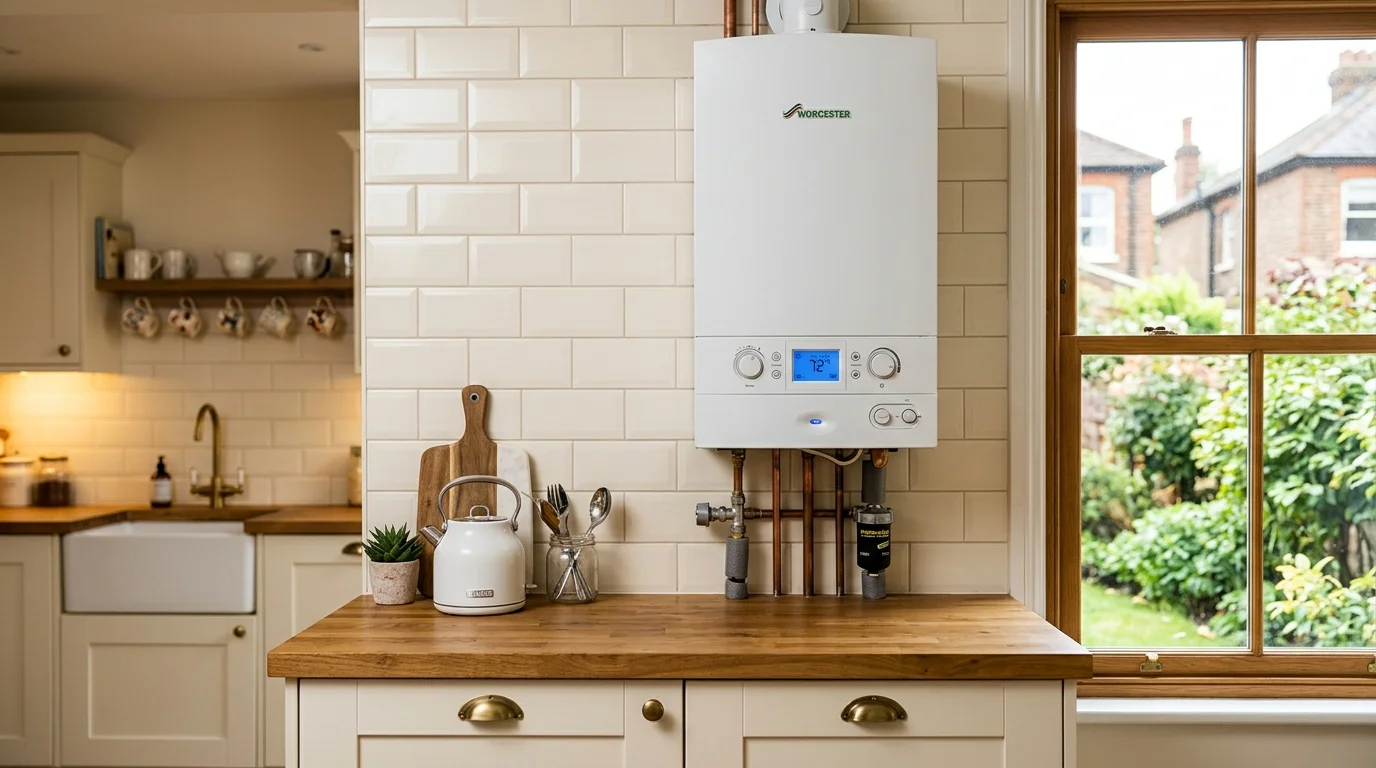
If your water tank lives in the loft, it'll need relocating - usually to an airing cupboard on the floor below, or you can switch to a combi boiler and remove it entirely. A chimney breast running through the loft needs structural work if you want to remove it for more space.
Planning constraints
Most loft conversions fall under Permitted Development, but if you live in a listed building, a conservation area, or an area subject to an Article 4 direction, you'll almost certainly need planning permission. This doesn't stop you converting - it just means more paperwork and potentially a different design to satisfy the planning officer.
Loft Conversion Cost Per Square Metre
The cost per square metre depends heavily on the type of conversion. A Velux conversion typically runs £800 to £1,200 per m² because the roof structure stays largely untouched. A dormer conversion - which involves building out from the roof slope - comes in at £1,200 to £2,000 per m².
Quick calculation example
A standard rear dormer on a semi-detached house typically creates around 25 m² of usable floor space. At £1,500 per m² (a reasonable mid-range figure), that works out at roughly £37,500 for the structural conversion. Add an en suite (£5,000) and a staircase (£2,500) and the total comes to around £45,000.
These per-metre figures are useful for rough budgeting, but every loft is different. Get a specialist to assess yours - they'll give you a much tighter number once they've seen the roof structure, access, and services.
Cost by Property Type
The type of property you live in determines which conversion makes the most sense - and what it's likely to cost.
| Property | Common Conversion | Typical Cost |
|---|---|---|
| Terraced house | Rear dormer | £35,000 to £50,000 |
| Semi-detached | Rear dormer or hip-to-gable | £38,000 to £55,000 |
| Detached | L-shaped dormer | £40,000 to £65,000 |
| Bungalow | Mansard or dormer | £45,000 to £75,000 |
Prices are for a standard rear dormer or equivalent. London and the South East will be higher - see regional prices above.
Free, with no obligation to book.
Bungalow Loft Conversion Cost
Bungalows are often the best candidates for a loft conversion because you effectively double the living space - turning a one-storey property into a two-storey home. Expect to pay £30,000 to £65,000 depending on the type of conversion and the size of the bungalow.
Dormer conversion on a bungalow
Most popular option - rear dormer adds a full upper floor
£35,000 to £55,000
Hip-to-gable + rear dormer (common on 1930s bungalows)
Extends hipped roof to gable, then adds dormer for maximum space
£40,000 to £60,000
Mansard conversion on a bungalow
Near-vertical walls on the rear - the most living space possible
£45,000 to £65,000
Key Considerations for Bungalow Conversions
Planning permission is more commonly required
Converting a bungalow loft changes the roof profile significantly, which often takes the work outside Permitted Development limits. Budget extra time for a planning application.
Staircase placement is critical
You're losing ground floor space for the staircase - in a bungalow, that matters more because there's no upper floor to absorb the loss. Work out the staircase position early and make sure it doesn't eat into a key room.
Head height is often better than in houses
Bungalow roofs tend to have a steeper pitch than two-storey houses, which means more usable headroom in the loft. Many bungalows have excellent conversion potential that their owners don't realise.
Fire escape windows may be needed
The new first floor will need adequate means of escape. Building Control will typically require fire escape windows in the loft bedrooms and may also require fire doors and a protected stairwell.
The value uplift is the highest of any property type
Doubling the living space of a bungalow can add 20 to 25% to the property's value - the strongest return of any property type. In many areas, the conversion pays for itself in added value alone.
Loft Conversion vs Extension: Which Is Better Value?
If you need more space, a loft conversion and an extension are the two main options. Here is how they compare on cost, disruption, and return on investment.
| Factor | Loft Conversion | Extension |
|---|---|---|
| Average cost | £25,000 to £55,000 | £20,000 to £65,000 |
| Timeline | 6 to 10 weeks | 10 to 16 weeks |
| Planning permission | Usually not needed (PD) | Often not needed for single-storey rear |
| Value added | 10 to 20% | 5 to 15% |
| ROI | 150 to 200% | 120 to 150% |
| Disruption | Moderate (work mostly above) | High (loss of garden, noise, mess) |
| Garden impact | None | Reduces garden size |
| Best for | Extra bedroom, home office, en suite | Kitchen-diner, open-plan living |
On pure return on investment, loft conversions generally come out ahead. You are working within the existing footprint of the house, there is no garden lost, and the disruption is considerably less than a ground-floor extension. If what you need is an extra bedroom, a home office, or a master suite with en suite, a loft conversion is hard to beat for value.
That said, extensions give you ground-floor space that a loft cannot - a bigger kitchen, an open-plan living area, or a downstairs bedroom for accessibility. The right choice depends on what you actually need, not just the numbers. See our full extension cost guide for a detailed breakdown.
What Affects the Cost of a Loft Conversion?
Conversion type
The type of conversion is the biggest single cost driver. Velux conversions are cheapest because the roof structure is barely touched. Dormers require structural work and roofing. Mansards require rebuilding much of the rear roof slope - more scaffolding, more materials, more time.
Size of the loft
The floor area you end up with depends on the pitch of your roof, the size of your house, and the conversion type. Larger lofts with better pitch give more usable space for the same fixed costs. Most dormer conversions in a standard semi-detached create a usable room of 20 to 30 sq m.
En suite and bathroom work
Adding an en suite to a loft bedroom typically adds £3,500 to £8,000 to the project. It requires extending the soil stack (usually a significant undertaking), tiling, and fitting the suite. If an en suite is definitely on the plan, include it in the main conversion - retrofitting later is much more expensive.
Staircase design
The staircase to the new loft often has to fit into a tight space. Standard staircases cost £1,500 to £2,500 fitted. Space-saving alternating tread or ship's ladder stairs can work in very constrained spaces but aren't suitable for Building Regs compliance in all situations - discuss with your Building Control officer.
Location
London loft conversions cost 35 to 45% more than the national average, largely due to labour rates. The materials - Velux windows, timber, insulation - cost the same everywhere. It is the skilled labour rate that varies, and loft conversions are particularly labour-intensive.
Need to budget for a new staircase?
Every loft conversion needs a staircase, and the cost varies a lot depending on the design and space available. See our full staircase cost guide for a detailed breakdown of prices by style, material, and complexity.
Does a Loft Conversion Add Value?
Yes - a loft conversion typically adds 10 to 20% to a property's value, making it one of the strongest returns of any home improvement. On a £300,000 home, that's £30,000 to £60,000 of added value against a typical investment of £30,000 to £55,000.
Value uplift by property type
Bungalow
Effectively doubles usable floor space - the biggest proportional gain
+20 to 25%
Terraced house
Floor space is most constrained, so an extra room makes a real difference
+15 to 20%
Semi-detached
Strong uplift, especially with a dormer or hip-to-gable conversion
+12 to 18%
Detached
Already has more space, so the proportional gain is smaller
+10 to 15%
Value by conversion type
Rear dormer
Best ROI for most homes
Strikes the right balance between cost and usable space gained
Velux / rooflight
Adds less value
Still limited headroom in parts - buyers notice
Mansard
Highest absolute value add
But also the highest cost - ROI depends on local property prices
How does loft conversion ROI compare?
| Improvement | Typical ROI |
|---|---|
| Loft conversion | 150 to 200% |
| House extension | 120 to 150% |
| New kitchen | 80 to 100% |
| New bathroom | 60 to 80% |
When a loft conversion does not add value
Not every loft conversion pays for itself. Conversions that result in cramped rooms with insufficient headroom, poor staircase placement that ruins the layout of the floor below, missing an en suite where buyers would expect one, or cheap finishes that look obviously budget - these can actually put buyers off rather than attract them. The key is creating a room that feels like a proper part of the house, not an afterthought.
“Estate agents consistently rank loft conversions as the best return-on-investment home improvement in the UK. A well-finished loft bedroom with en suite can be the difference between a quick sale and a property that sits on the market.”
What to Expect: The Build Process
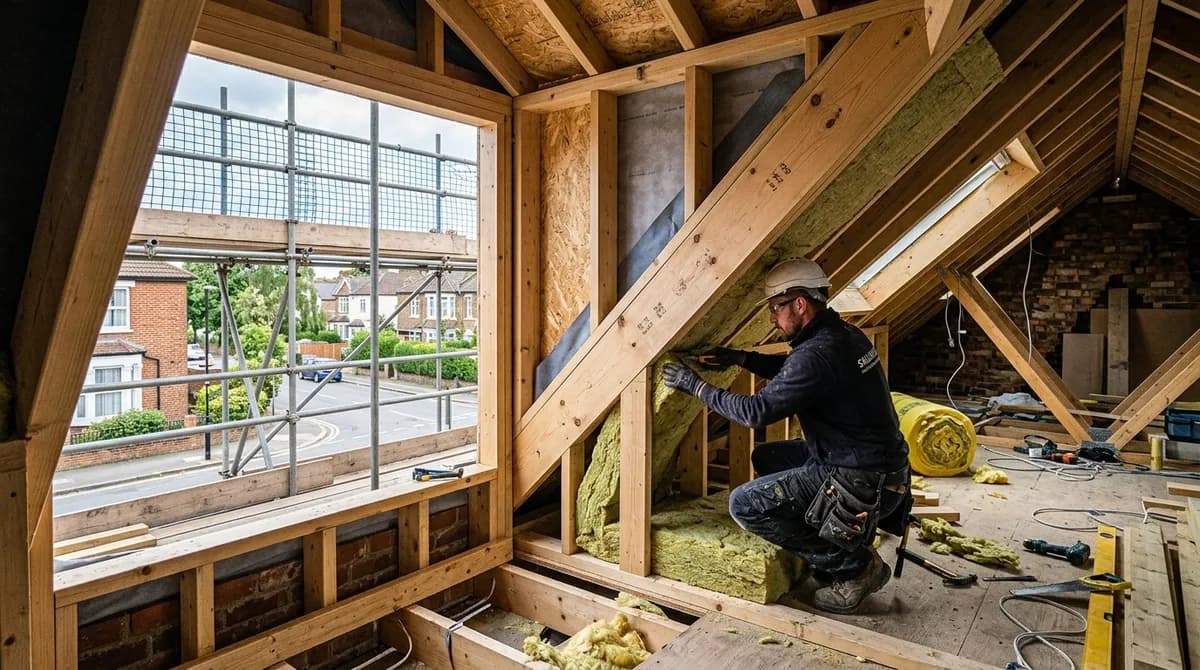
A dormer loft conversion typically takes 8 to 12 weeks from scaffolding going up to the final Building Control sign-off. Here's what happens at each stage.
- 1
Survey and design (1 to 2 weeks)
An architect or specialist loft conversion company surveys your loft. They check head height, roof structure, and access points, then produce drawings. Most specialist firms offer this assessment for free.
- 2
Planning and Building Regs (6 to 8 weeks)
Plans are submitted to Building Control for approval. Most rear dormers fall under Permitted Development, but it is always worth checking with your council first. If you live in a semi-detached or terraced house, you may need a party wall agreement with your neighbour - start this early as it can add weeks.
- 3
Scaffolding and access (1 to 2 days)
Scaffolding goes up around the property and access is created through the roof. This is the point where the project becomes visible from outside. Expect some noise and disruption for a day or two.
- 4
Structural steelwork (2 to 3 days)
Steel beams are installed to support the new floor and replace any roof timbers that need to be removed. This is heavy, noisy work - the steel itself is craned or manually carried into position.
- 5
Dormer construction (1 to 2 weeks)
The new dormer walls, roof, and windows are installed. Once this stage is done, the loft is weathertight and the work moves inside. Rain is no longer a concern.
- 6
First fix (2 to 3 weeks)
Electrics, plumbing, stud walls, insulation, and boarding are all completed during first fix. The staircase is installed at this stage too. Your home will feel like a building site during this period.
- 7
Second fix and finishing (2 to 3 weeks)
Plastering, painting, flooring, bathroom fit-out (if you are having an en suite), skirting boards, and doors. This is when the space starts to look and feel like a real room.
- 8
Building Control sign-off
Building Control carries out a final inspection and issues a completion certificate. Keep this document safe - you will need it when you sell the property. Without it, buyers' solicitors will flag the conversion as potentially non-compliant.
Loft Conversion Costs by Region
Average prices for a rear dormer conversion, fully completed, by UK region.
| Region | Average Cost | vs National |
|---|---|---|
| London | £62,000 | +40% |
| South East | £53,000 | +20% |
| East of England | £49,000 | +11% |
| South West | £47,000 | +7% |
| Midlands | £44,000 | Average |
| Yorkshire | £40,000 | -9% |
| North West | £41,000 | -7% |
| North East | £37,000 | -16% |
| Scotland | £40,000 | -9% |
| Wales | £39,000 | -11% |
How to Get Your Loft Conversion for Less
Get at least three quotes
Prices for the same loft conversion can vary by 30% or more between loft conversion specialists in the same area. Get at least three written quotes so you can compare like for like, especially the structural work, which is where costs diverge most. The cheapest is not always the best, check reviews, ask for references, and make sure the quote includes everything.
Get quotes from loft conversion specialists
General builders often quote higher on loft conversions because it's not their core work. Specialist loft conversion companies do dozens of these jobs a year - they're faster, more efficient, and often cheaper than a general contractor tackling an unfamiliar job.
Start the Building Regulations process early
Building Regs approval can take 4 to 8 weeks. Submit your full plans application before appointing a builder so the paperwork is in place when work starts. Delays caused by waiting for Building Control approval mid-project add to costs.
Choose a dormer over a mansard if budget is tight
A mansard costs 30 to 50% more than a standard dormer for a similar floor area. Unless you're in a conservation area where the planning authority requires a mansard, a dormer conversion gives most of the same space for significantly less money.
Defer the en suite if budget is tight
The structural shell of the conversion - dormer, insulation, staircase, floor - is the expensive fixed cost. An en suite can be added later once the plumbing first fix is in place. Ask your builder to include the soil pipe and water supply runs during the main conversion so the en suite is easy to add without disruption later.
Check whether the 5% VAT rate applies
If your loft conversion creates a separate self-contained dwelling, for example a flat with its own entrance, the work can qualify for the reduced 5% VAT rate instead of the standard 20%. The reduced rate also applies where a property has stood empty for two or more years. Your builder charges the rate, so ask them to confirm your VAT status in writing before you accept the quote.
Confirm Permitted Development with a certificate, not a planning application
Most loft conversions fall under Permitted Development and do not need planning permission. Rather than assuming you need a full planning application, apply for a Lawful Development Certificate, which costs £274 and gives you written proof from the council that your conversion is lawful. It avoids the cost and delay of a planning route you may not need, and buyers' solicitors will ask for it when you sell.
Comparing quotes is the simplest way to pay less
Getting three or four quotes and comparing them is how most homeowners avoid overpaying. It takes a couple of minutes, with no obligation.
Get my free quotesFrequently Asked Questions
How much does a loft conversion cost in the UK?
A basic Velux (roof light) loft conversion costs around £22,000 to £38,000. A rear dormer conversion - the most popular type - costs £32,000 to £55,000. A full mansard conversion starts at £50,000 and can exceed £75,000. Prices include structural work, insulation, staircase, and basic fit-out but typically exclude full bathroom and bedroom finishing.
Do I need planning permission for a loft conversion?
Many loft conversions fall under Permitted Development (PD) and don't need planning permission, provided they meet size limits (40 cubic metres for terraced houses, 50 cubic metres for detached and semi-detached). Mansard conversions and those on houses in conservation areas, listed buildings, or flats always require planning permission. Building Regulations approval is required for all loft conversions regardless of PD status.
How long does a loft conversion take?
A Velux conversion takes 4 to 6 weeks. A dormer conversion takes 8 to 12 weeks. A mansard or full wrap-around conversion can take 14 to 20 weeks. Most of the structural work happens outside the house (dormer structure, roofing), which means you can usually live in the property during the conversion.
Does a loft conversion add value to a house?
Yes - a well-executed loft conversion is one of the highest-return home improvements available. Adding a bedroom (especially a master bedroom with en suite) can add 10 to 20% to a property's value. In higher-value areas, this often exceeds the cost of the conversion. The return is most reliable when the conversion creates a proper habitable bedroom with a fixed staircase, adequate headroom, and natural light.
What is the minimum headroom for a loft conversion?
Building Regulations require a minimum headroom of 2.2 metres at the highest point of the usable floor area. In practice, most loft conversion specialists want to see at least 2.4 metres from floor to ridge before recommending a conversion. Measure from the top of the ceiling joists (not the finished floor) to the underside of the ridge beam for the most accurate assessment.
What is the difference between a dormer and a Velux loft conversion?
A Velux (roof light) conversion fits windows into the existing roof slope without changing the roofline. It's the cheapest option but provides less usable floor space. A dormer conversion adds a box structure to the roof slope, creating vertical walls and a flat or pitched roof section - significantly more floor area and headroom. Dormers are more expensive but give a much more usable room.
Does a loft conversion need a fire door?
Building Regulations require that a loft conversion creates a protected escape route from the new storey to an external door. In practice, this means fitting fire doors on all habitable rooms on the floors below the conversion, and sometimes installing a self-closing fire door to the loft itself. An automatic sprinkler system in the loft can be used as an alternative to upgrading all the doors below in some circumstances - your Building Control officer will confirm what's required.
Can all lofts be converted?
Not all lofts are suitable. The main requirements are sufficient headroom (at least 2.2m to the ridge), a suitable roof pitch, and enough floor area to create a usable room. Hipped roofs (sloping on all four sides) provide less space than gable-end roofs. Some older properties have complicated roof structures with lots of internal timbers that make conversion difficult or expensive. A specialist loft conversion company will assess suitability for free in most cases.
Free, with no obligation to book.

Written by Chris Kervin, Co-Founder of Less.co.uk
Last updated: · Pricing based on published trade rates and UK market data · Methodology