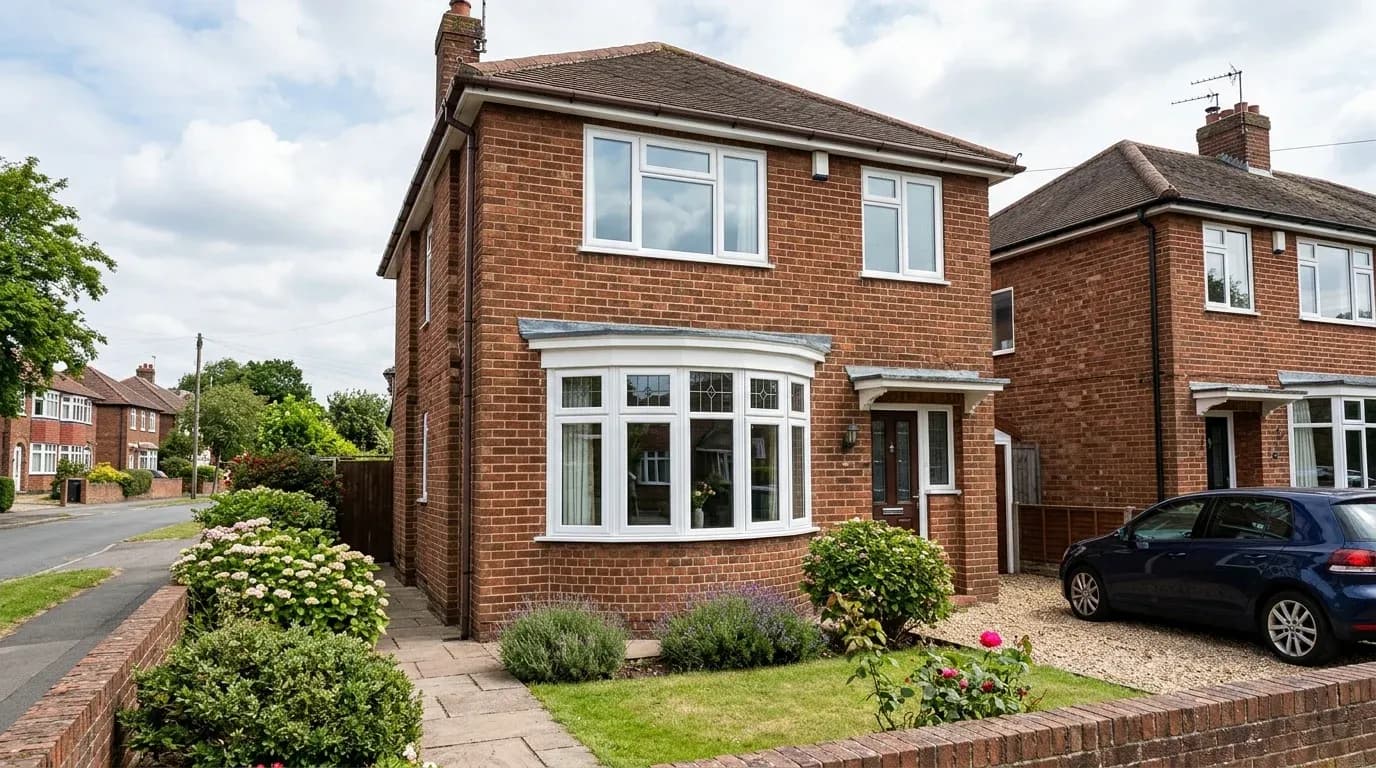
How Much Does a Heat Pump Cost in 2026?
Most UK homeowners pay between £8,000 and £18,000 for an air source heat pump, fully installed. After the £7,500 Boiler Upgrade Scheme grant, that drops to as little as £2,500 to £10,500 out of pocket. Ground source systems cost more but run cheaper.
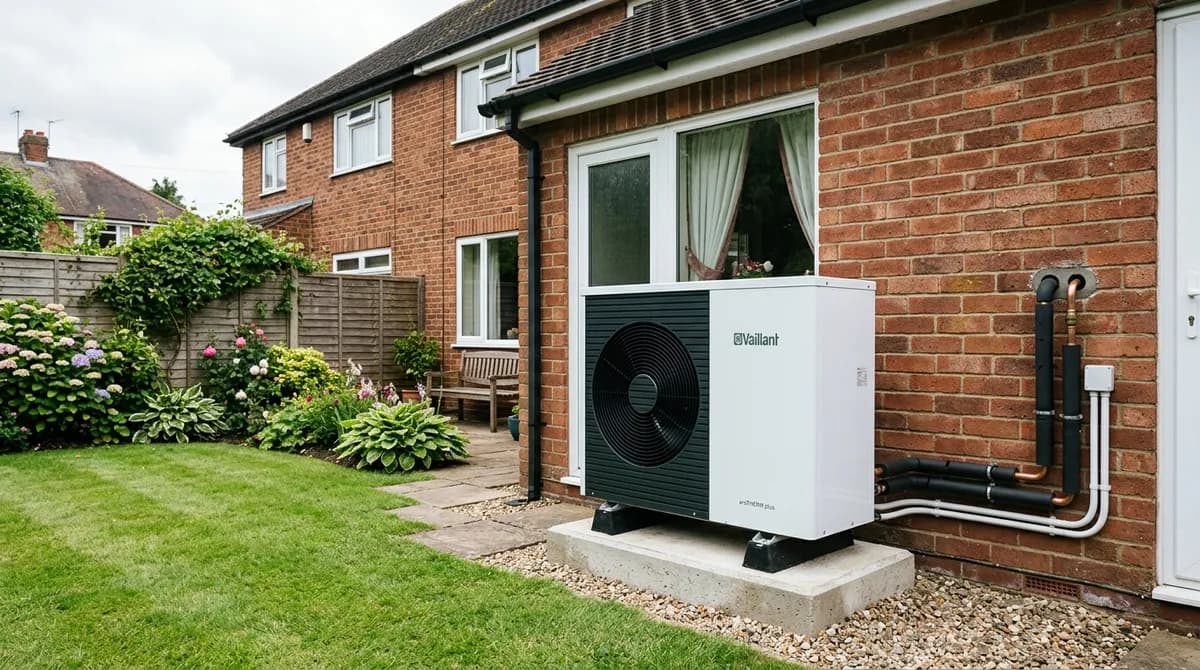
£8k-£18k
ASHP installed
£2.5k+
After BUS grant
£15k-£35k
GSHP installed
2 to 5 days
Install time
Prices updated April 2026 · Based on industry data and contractor submissions.
Heat pumps must be installed by an MCS-certified installer. MCS certification is required to qualify for the Boiler Upgrade Scheme grant and ensures the system is designed and installed to industry standards. Electrical work must comply with Building Regulations Part P.
Heat Pump Prices at a Glance
Prices below cover the full installed cost - including the heat pump unit, hot water cylinder, pipework, controls, and commissioning by an MCS-certified installer.
Air source heat pump (ASHP)
Most popular - outdoor unit extracts heat from air
£12,000
£8,000 to £18,000
After £7,500 grant: £2,500 to £10,500
Ground source heat pump (GSHP)
Underground loops - higher efficiency, higher install cost
£24,000
£15,000 to £35,000
After £7,500 grant: £7,500 to £27,500
Hybrid heat pump
Heat pump + existing boiler working together
£5,500
£4,000 to £8,000
Air-to-air heat pump
Heating and cooling - no hot water
£3,500
£2,000 to £5,000
After £2,500 grant: £0 to £2,500
Air source (air-to-water) and ground source systems get the full £7,500 Boiler Upgrade Scheme grant. Air-to-air heat pumps now qualify too, at £2,500, as long as they replace a fossil-fuel system. Hybrid heat pumps are still not covered.
Labour Cost Breakdown
| Trade | Cost |
|---|---|
| MCS-certified heat pump installer | £2,000 to £4,500 |
| Electrician (dedicated circuit, consumer unit) | £300 to £600 |
| Plumber (radiator upgrades, cylinder) | £400 to £1,000 |
| Groundworks (GSHP trenches) | £3,000 to £8,000 |
| Borehole drilling (GSHP vertical) | £8,000 to £15,000 |
Labour is typically included in the installed price. Groundworks and borehole drilling only apply to ground source heat pump installations.
Get Free Heat Pump Quotes
Compare prices from trusted local heat pump installers near you. Fill in a few details and receive up to 4 free, no-obligation quotes.
Running Costs: Heat Pump vs Gas Boiler
Annual heating costs for a typical 3-bedroom semi-detached house with reasonable insulation. Based on Ofgem energy price cap rates (April 2026).
| Heating System | Annual Cost |
|---|---|
Air source heat pump (COP 3.0) Based on 12,000 kWh heat demand at 24.5p/kWh electricity | £850 to £1,200 |
Ground source heat pump (COP 4.0) More efficient year-round due to stable ground temperature | £700 to £950 |
Gas boiler (90% efficiency) Based on 12,000 kWh heat demand at 6.8p/kWh gas + standing charge | £900 to £1,300 |
Oil boiler (90% efficiency) Oil prices vary significantly - can be higher in winter | £1,200 to £1,800 |
Electric boiler / storage heaters Direct electric heating - no efficiency multiplier | £2,400 to £3,200 |
Why running costs are close to gas: Electricity costs roughly 3.5 times more per kWh than gas (24.5p vs 6.8p). But a heat pump with a COP of 3.0 produces 3 kWh of heat from 1 kWh of electricity - which largely offsets the price difference.
Heat pumps pull ahead on running costs when paired with solar panels, a battery, or a time-of-use tariff. If you are replacing an oil or LPG boiler, the savings are immediate and significant.
COP Ratings - What They Mean for Your Bills
COP (Coefficient of Performance) tells you how much heat a heat pump produces per unit of electricity. Higher COP means lower running costs.
COP 2.5
250% efficientFor every 1 kWh of electricity, you get 2.5 kWh of heat
Below average - older or poorly sized units
COP 3.0
300% efficientFor every 1 kWh of electricity, you get 3.0 kWh of heat
Good - typical for a well-installed ASHP
COP 3.5
350% efficientFor every 1 kWh of electricity, you get 3.5 kWh of heat
Very good - well-insulated home, quality install
COP 4.0+
400%+ efficientFor every 1 kWh of electricity, you get 4+ kWh of heat
Excellent - typical for ground source systems
Manufacturers quote COP at specific test conditions (usually 7°C outside, 35°C flow temperature). Real-world seasonal COP (called SCOP or SPF) is lower because outdoor temperatures vary. A heat pump rated at COP 4.0 in test conditions typically achieves an SPF of 3.0 to 3.5 over a full year in the UK.
What Affects the Cost of a Heat Pump?
Property size and heat loss
A small, well-insulated 2-bed terrace might need a 5 kW unit (£7,000 to £10,000 installed). A large 4-bed detached house with older insulation could need a 16 kW unit (£14,000 to £18,000). The heat pump is sized to match your property's heat demand - bigger homes with more heat loss need bigger, more expensive units.
Insulation levels
A poorly insulated house needs a larger heat pump and may need radiator upgrades, both of which add cost. Cavity wall and loft insulation alone can reduce the size of heat pump you need by 20 to 30%. Many installers will recommend insulation upgrades before fitting a heat pump.
Existing heating system
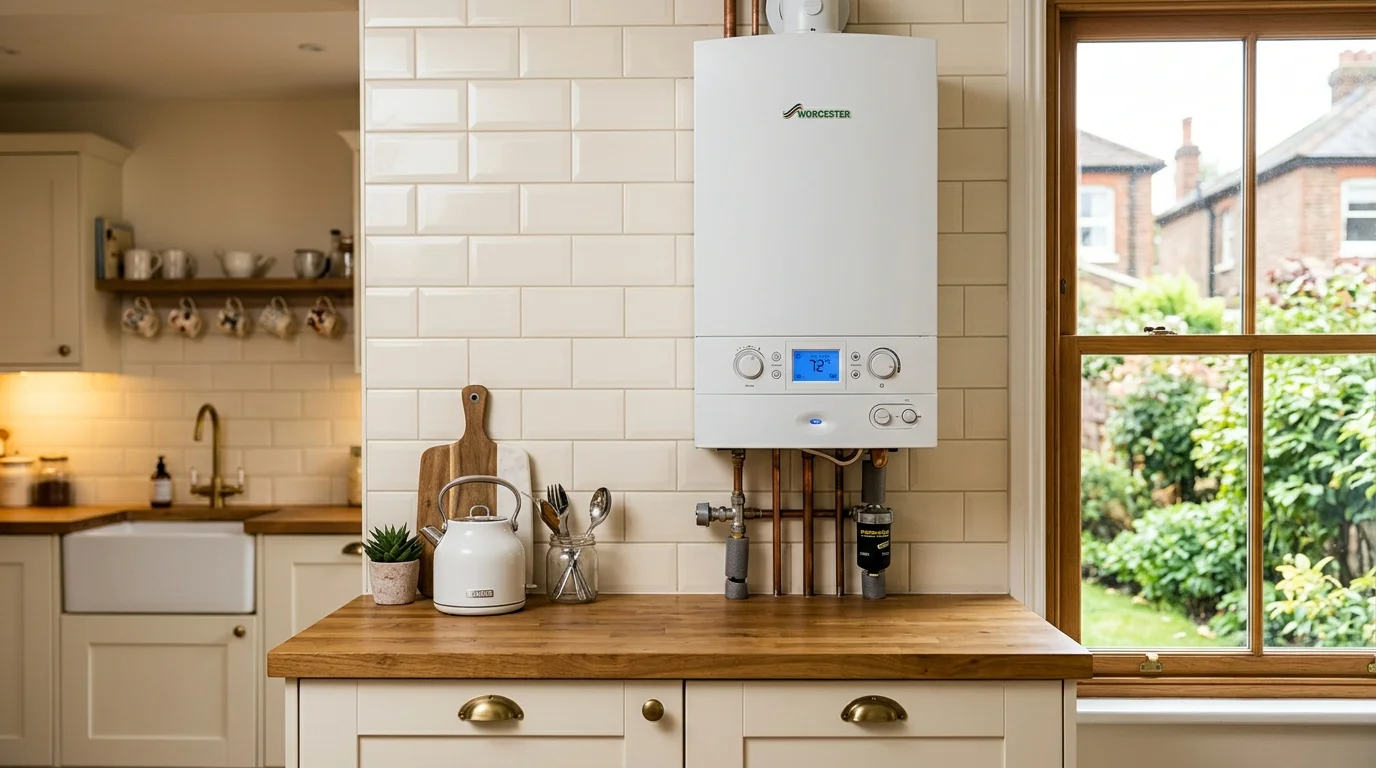
If you have a combi boiler, you will need a hot water cylinder (£800 to £1,500) since heat pumps cannot produce instant hot water the way a combi can. If your radiators are small, you may need to upgrade some or all of them to work with the lower flow temperatures a heat pump uses. Underfloor heating is ideal and needs no upgrading.
Air source vs ground source
Air source heat pumps are cheaper to install because there is no groundwork. Ground source systems cost more upfront but achieve higher COPs (3.5 to 4.5 vs 2.5 to 3.5) and have lower running costs. Ground source makes most financial sense for larger properties with high heat demand and available garden space.
Brand and model
Premium brands like Vaillant, Daikin, and Mitsubishi command higher prices than budget options. A Vaillant Arotherm Plus, for example, typically costs £2,000 to £3,000 more than equivalent lower-end models. The price difference reflects build quality, noise levels, warranty length, and seasonal efficiency.
Your location
Installation costs are highest in London and the South East, where labour rates run 15 to 20% above the national average. Rural properties may also pay more due to installer travel time. The heat pump unit itself costs the same wherever you are.
Additional Costs to Budget For
These extras are not always included in the headline price. Check what your quote covers before signing.
| Extra Item | Typical Cost |
|---|---|
| Hot water cylinder (if replacing combi) | £800 to £1,500 |
| Radiator upgrades | £150 to £350 each |
| Underfloor heating (retrofit) | £50 to £80 per m² |
| Pipework modifications | £500 to £1,500 |
| Concrete base for outdoor unit | £200 to £500 |
| Insulation upgrades | £1,000 to £5,000+ |
| Smart thermostat / controls | £150 to £350 |
| Removal of old boiler and tank | £200 to £500 |
Installation Requirements
Heat pumps are not a straight swap for a boiler. Several things need to be right for the system to work efficiently.
Insulation - the foundation of an efficient system
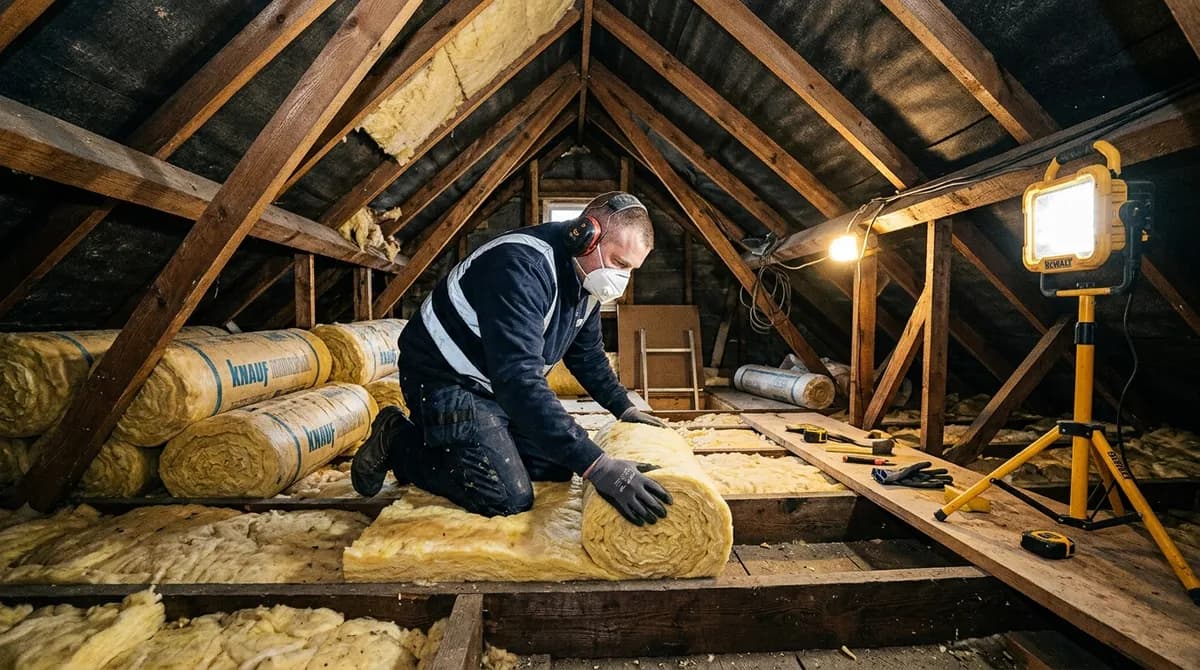
Heat pumps work best in well-insulated homes. As a minimum, you should have loft insulation (270mm), cavity wall insulation (if applicable), and double glazing. A poorly insulated house forces the heat pump to work harder, reducing its COP and increasing running costs. Some installers will not fit a heat pump until insulation has been improved.
Radiators - bigger is better at lower flow temperatures
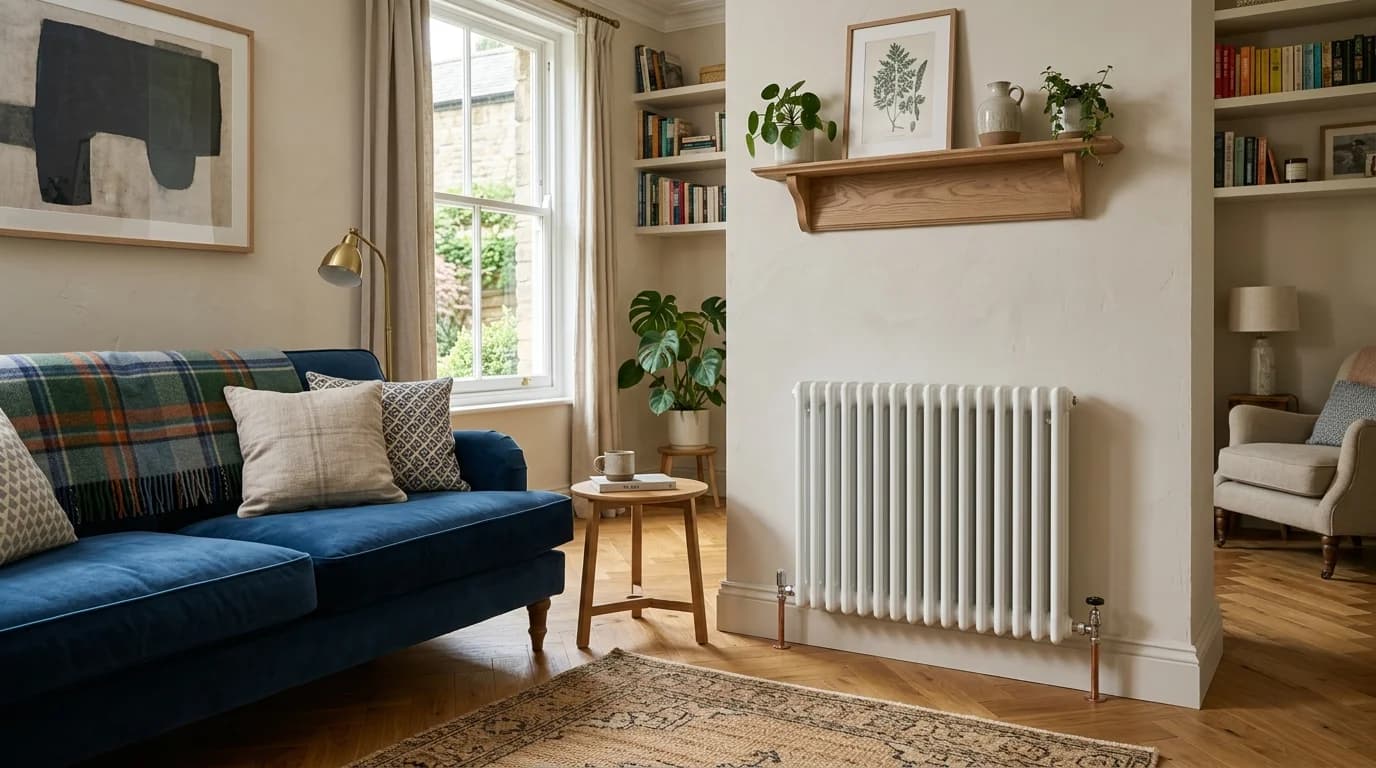
Heat pumps run at lower flow temperatures (35 to 45°C) than gas boilers (60 to 70°C). Your existing radiators may not be large enough to heat each room at these lower temperatures. An installer will do a room-by-room heat loss calculation and tell you which radiators need upgrading. Bedrooms and hallways often need bigger radiators; rooms with underfloor heating are already fine.
Hot water cylinder - essential for heat pump systems
Heat pumps cannot produce instant hot water like a combi boiler. You will need a hot water cylinder, typically 150 to 250 litres depending on household size. If you already have a cylinder (from a system or regular boiler), it may be reusable. If you are coming from a combi, you will need to find space for one - usually in an airing cupboard or utility room.
Outdoor space - placement and noise
Air source heat pumps need an outdoor unit roughly the size of a large suitcase. It should be placed on a flat concrete base with good airflow around it. Avoid enclosed spaces that trap noise. Most units run at 40 to 50 dB - similar to a fridge - but placement under a bedroom window is not ideal. Permitted development rules require the unit to meet specific noise limits at your neighbour's nearest window.
Electrical supply - a dedicated circuit is needed
A heat pump needs a dedicated electrical circuit from your consumer unit. For larger units (12 kW+), a three-phase supply may be needed, which costs £1,000 to £3,000 to install if you do not already have one. Your installer and electrician will assess this during the survey.
Heat Pump vs Boiler - Which Should You Choose?
This is the question most homeowners start with. The answer depends on your property, your budget, and how long you plan to stay.
| Factor | Heat Pump | Gas Boiler |
|---|---|---|
| Upfront cost | £8,000 to £18,000 (ASHP) | £2,000 to £4,500 |
| After grant | £2,500 to £10,500 | No grant available |
| Annual running cost | £850 to £1,200 | £900 to £1,300 |
| Lifespan | 20 to 25 years | 12 to 15 years |
| Carbon emissions | Zero direct emissions | ~2.5 tonnes CO₂/year |
| Hot water | Via cylinder - not instant | Instant (combi) |
| Maintenance | Annual service £100 to £200 | Annual service £80 to £120 |
| Works best in | Well-insulated homes | Any home |
| Future-proofing | Ready for net zero | New-builds moving off gas |
Choose a heat pump if:
- Your home is reasonably well-insulated (or you are willing to improve it)
- You plan to stay in the property for 10+ years
- You are replacing oil, LPG, or electric heating (biggest savings)
- You want to reduce your carbon footprint
A gas boiler may be more practical if:
- Your home has poor insulation and you cannot afford to improve it yet
- You need an urgent replacement and cannot wait for a heat pump survey
- Your budget is under £5,000 and you do not qualify for additional grants
Heat Pump Noise Levels
Noise is one of the biggest concerns homeowners raise. Here is what to expect.
40 dB
Quietest modern heat pumps at 1 metre
Library / quiet bedroom
45 dB
Average modern ASHP at 1 metre
Fridge or bird song
50 dB
Older models or during defrost cycles
Quiet conversation
55 dB
Older units - exceeds permitted development limits
Electric fan
Under permitted development rules, the noise level at the nearest neighbour's window must not exceed 42 dB. Good placement - away from windows and not in enclosed corners - makes a big difference. Ask your installer to check noise compliance before installation.
Heat Pump Costs by Region
Average installed prices for an air source heat pump (8 to 12 kW) by UK region, before the Boiler Upgrade Scheme grant.
| Region | Average Cost | vs National |
|---|---|---|
| London | £14,500 | +18% |
| South East | £13,500 | +10% |
| East of England | £13,000 | +6% |
| South West | £12,500 | +2% |
| Midlands | £12,200 | Average |
| Yorkshire | £11,500 | -6% |
| North West | £11,800 | -3% |
| North East | £11,000 | -10% |
| Scotland | £11,500 | -6% |
| Wales | £11,200 | -8% |
Based on industry data. Prices for a mid-range air source heat pump, fully installed. The Boiler Upgrade Scheme grant is only available in England and Wales.
How to Get Your Heat Pump for Less
A heat pump is a significant investment. These steps can reduce the cost by thousands.
Claim the £7,500 Boiler Upgrade Scheme grant
This is the single biggest saving available. The grant covers air source and ground source heat pumps in England and Wales. Your MCS-certified installer applies on your behalf - the £7,500 is deducted directly from your invoice. You do not need to pay it upfront and claim it back. If you are off the gas grid and replacing oil or LPG, the grant rises to £9,000 from 21 July 2026 to 31 March 2027.
Get three quotes from MCS-certified installers
Prices vary enormously between installers - we have seen quotes for the same job range from £9,000 to £16,000. Always get at least three quotes and make sure each one includes the same scope: heat pump unit, hot water cylinder, radiator upgrades, controls, and commissioning.
Insulate first, then size the heat pump
Better insulation means a smaller heat pump, which costs less to buy and less to run. Spending £1,500 on loft and cavity wall insulation could let you drop from a 12 kW unit to an 8 kW unit, saving £2,000 to £3,000 on the heat pump itself. Always insulate before you size the system.
Switch to a time-of-use electricity tariff
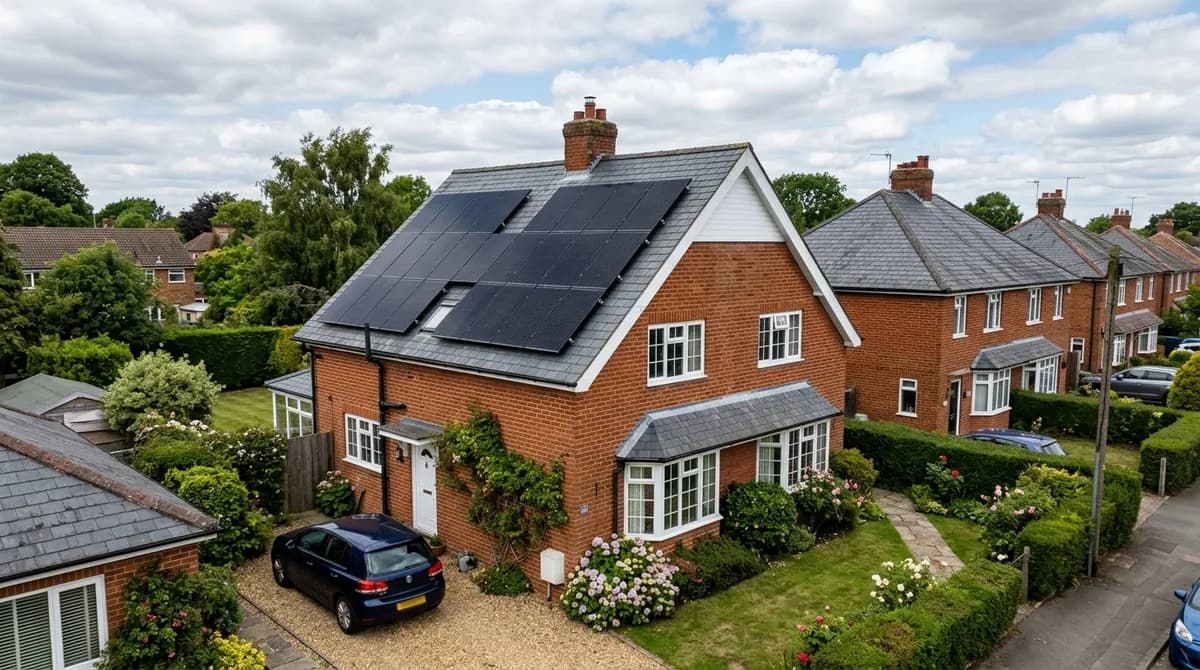
Heat pumps use electricity, so your tariff matters. Time-of-use tariffs like Octopus Agile or Intelligent Octopus Go offer cheaper rates overnight. Running your heat pump during off-peak hours can cut running costs by 30 to 40%. If you have solar panels, running costs drop even further.
Check if you need 0% VAT applied
Heat pumps and their installation are zero-rated for VAT since April 2022, reduced from 5%. This applies to residential properties in Great Britain. Make sure your installer is applying 0% VAT on their invoice - some still charge 5% or even 20% by mistake. That is a saving of £1,500 to £3,000 on a typical installation.
Consider a hybrid system if your home is not well-insulated
A hybrid heat pump works alongside your existing boiler. The heat pump handles most of the heating, and the boiler kicks in during the coldest spells. This costs less to install (£4,000 to £8,000) and avoids the expense of upgrading all your radiators. It is a sensible stepping stone if a full heat pump is not practical right now.
Comparing quotes is the simplest way to pay less
Getting three or four quotes and comparing them is how most homeowners avoid overpaying. It takes a couple of minutes, with no obligation.
Get my free quotesWhat to Expect: The Heat Pump Installation Process
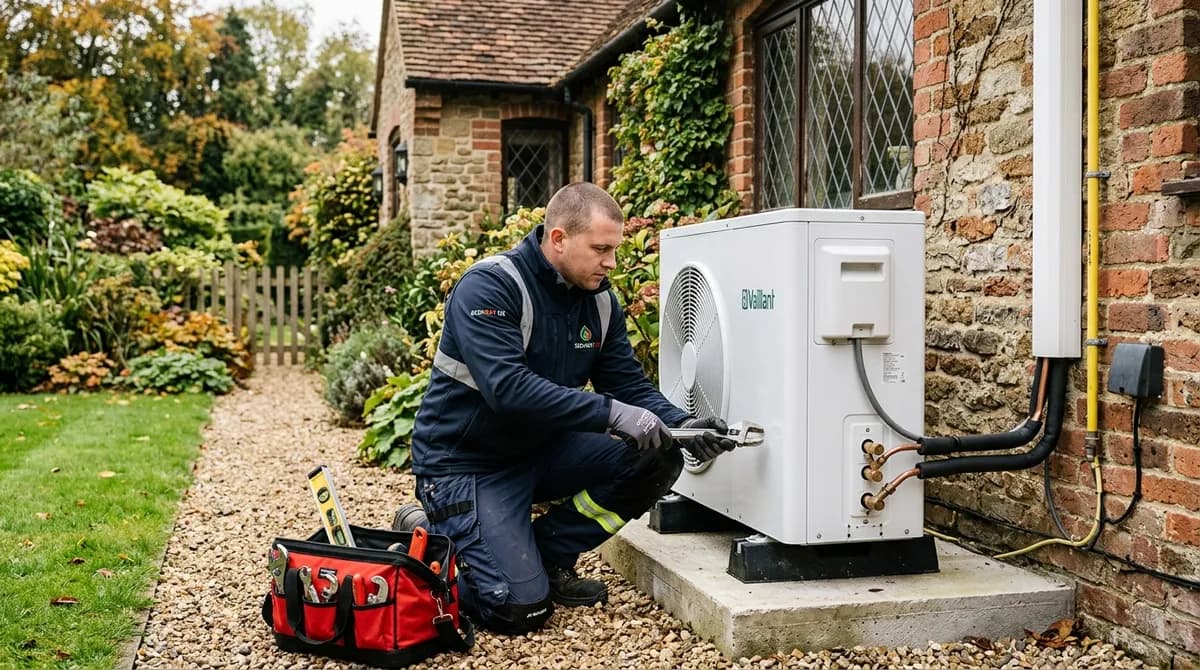
From first enquiry to a warm house, the process typically takes 4 to 8 weeks. The installation itself is 2 to 5 days.
- 1
Home survey and heat loss assessment
An MCS-certified installer visits to measure each room, check insulation levels, assess your current radiators, and identify where the outdoor unit will go. This takes 1 to 2 hours and should be free. They will also check your electrical supply and discuss hot water needs.
- 2
System design and quote
The installer designs the system based on MCS standards, selects the right size unit, and specifies any upgrades needed. The quote should itemise: heat pump unit, cylinder, controls, radiator changes, electrical work, and commissioning. It should also show the Boiler Upgrade Scheme grant as a deduction.
- 3
Grant application
Your installer applies for the Boiler Upgrade Scheme voucher through Ofgem. The voucher is valid for 3 months for air source heat pumps (6 months for ground source) - installation must be completed within that window. The £7,500 is deducted from your invoice; you never see the money yourself.
- 4
Installation (2 to 5 days)
Day 1: outdoor unit positioned on a concrete base, refrigerant lines run. Day 2: indoor pipework, hot water cylinder fitted, radiator upgrades. Day 3: electrical connections, controls setup, system filled and pressurised. Larger or more complex installations may take 4 to 5 days.
- 5
Commissioning and handover
The installer commissions the system, sets flow temperatures, programmes weather compensation, and walks you through the controls. MCS documentation is completed. The system is registered for warranty and the grant voucher is redeemed.
Frequently Asked Questions
How much does an air source heat pump cost in the UK?
An air source heat pump typically costs between £8,000 and £18,000 fully installed in the UK. After the £7,500 Boiler Upgrade Scheme grant, the out-of-pocket cost drops to around £2,500 to £10,500, and off-gas-grid homes replacing oil or LPG can claim £9,000 between 21 July 2026 and 31 March 2027. The exact price depends on the size of the system, the brand, and the complexity of the installation.
How much does a ground source heat pump cost?
A ground source heat pump costs between £15,000 and £35,000 installed, depending on the size of the property and whether horizontal trenches or vertical boreholes are used. Boreholes cost significantly more than trenches but require less garden space. The £7,500 Boiler Upgrade Scheme grant also applies to ground source systems.
Are heat pumps cheaper to run than gas boilers?
Heat pumps can be cheaper to run than gas boilers, but it depends on your property's insulation and the electricity tariff you are on. A well-insulated home with a heat pump on a competitive tariff typically costs £800 to £1,200 per year to heat. A gas boiler in the same property costs around £900 to £1,300. Heat pumps become significantly cheaper when paired with solar panels or a time-of-use tariff.
What is the Boiler Upgrade Scheme grant for heat pumps?
The Boiler Upgrade Scheme offers a £7,500 grant towards the cost of an air source or ground source heat pump in England and Wales. Off-gas-grid homes replacing oil or LPG can claim £9,000 between 21 July 2026 and 31 March 2027. Air-to-air heat pumps now qualify for £2,500 when they replace a fossil-fuel system. The grant is applied directly to the installation cost by your MCS-certified installer. You must be replacing an existing fossil fuel heating system and have a valid EPC to qualify.
What is COP and why does it matter?
COP stands for Coefficient of Performance. It measures how efficiently a heat pump converts electricity into heat. A COP of 3.0 means the heat pump produces 3 kWh of heat for every 1 kWh of electricity it uses. Most air source heat pumps achieve a seasonal COP of 2.5 to 3.5. Higher COP means lower running costs.
Do heat pumps work in cold weather?
Yes. Modern air source heat pumps work down to -20°C or lower. They become less efficient as the temperature drops - a heat pump with a COP of 3.5 at 7°C might drop to a COP of 2.0 at -5°C - but they still produce heat. Ground source heat pumps are unaffected by air temperature because they draw heat from underground, where the temperature stays at 8 to 12°C year-round.
How noisy is an air source heat pump?
Most modern air source heat pumps produce around 40 to 50 decibels at one metre - roughly the same as a fridge or a quiet conversation. Older or poorly installed units can be louder. Planning rules require the unit to meet specific noise limits at the nearest neighbour's window. Placement matters - avoid putting it directly beneath a bedroom window or in a confined space that amplifies sound.
Do I need planning permission for a heat pump?
Most air source heat pumps are installed under permitted development rights, meaning no planning application is needed, provided the unit meets noise limits and is not in a conservation area or listed building. Ground source heat pumps rarely need planning permission unless boreholes are involved. Your MCS-certified installer should advise on any restrictions specific to your property.
Is a heat pump better than a new gas boiler?
It depends on your property and priorities. A heat pump costs more upfront but produces zero direct carbon emissions and can be cheaper to run long-term, especially with the £7,500 grant. A new gas boiler costs £2,000 to £4,500 installed and is simpler to retrofit. If your home is well-insulated and you plan to stay for 10+ years, a heat pump is usually the better long-term investment. If your home has poor insulation and you need an urgent boiler replacement, a gas boiler may be more practical in the short term.
Heat Pump Grants - Full Guide
Everything you need to know about the Boiler Upgrade Scheme, ECO4, local authority grants, and the 0% VAT on heat pumps. We cover eligibility, how to apply, and what older homeowners can access.
Read the full heat pump grants guide
Written by Chris Kervin, Co-Founder, Less.co.uk
Last updated: · Pricing based on industry data and MCS installer submissions · Methodology