How Much Does an Electrician Cost in 2026?
Electrician prices in the UK vary widely depending on the job. A simple socket addition starts from around £80, while a full house rewire for a 3-bed runs £4,500 to £8,000. Day rates sit between £200 and £350 for most of the country, with London commanding a premium on top.
£250
Average day rate
£4,500
Rewire from
£350
Fuse board from
£80
Socket from
Prices updated April 2026 · Based on published trade rates and UK market data.
Part P Building Regulations apply. Most electrical work in the home must comply with Part P of the Building Regulations. Always use a registered electrician who can self-certify - check they are registered with NICEIC, NAPIT, or another competent person scheme. For safety guidance, see Electrical Safety First.
Electrician Prices at a Glance
These are typical prices for the most common domestic electrical jobs in the UK, including labour and materials unless stated otherwise.
| Job | Typical Cost |
|---|---|
| Full house rewire (3-bed) | £4,500 to £8,000 |
| Partial rewire (1 floor) | £1,500 to £3,000 |
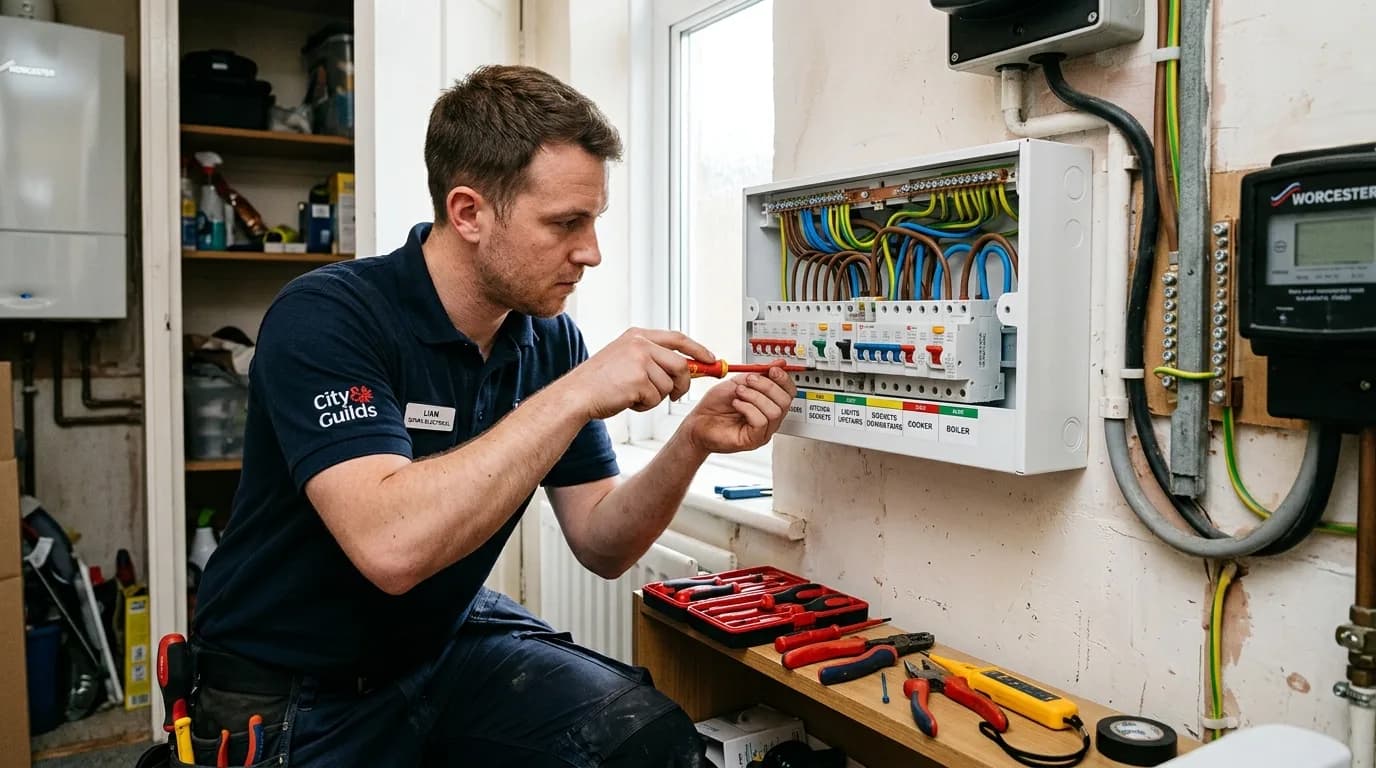
| Consumer unit replacement | £350 to £600 |
| New circuit (cooker/shower) | £250 to £450 |
| Add a double socket | £80 to £150 |
| Move a socket | £100 to £200 |
| Downlights (per light) | £50 to £80 fitted |
| Full room lighting (6 downlights) | £300 to £500 |
| Outdoor socket | £150 to £250 |
| Garden lighting | £300 to £800 |
| EV charger installation | £800 to £1,500 |
| EICR (electrical inspection) | £150 to £300 |
| Smoke alarm installation (wired) | £70 to £120 per alarm |
| Bathroom extractor fan | £150 to £300 |
Prices include labour and standard materials. Specialist fittings, designer switches, or non-standard cable runs may increase costs.
Electrician Day Rates and Hourly Rates
Average hourly rate
London: £50 to £80
£40 to £60
Average day rate
London: £300 to £500
£200 to £350
Callout / minimum charge
Typical for small jobs under 1 hour
£80 to £120
Worth knowing: Most electricians prefer to quote per job rather than charge by the hour. A per-job quote gives you a fixed price with no risk of the bill creeping up if the work takes longer than expected. Always ask for a written, itemised quote before agreeing to any work.
Get Free Electrician Quotes
Compare prices from local electricians. Fill in a few details and they will get in touch with free, no-obligation quotes.
Your details go to our quote partner, Leads.work, who pass them to a few local firms that cover your area. They'll contact you about the job, which may include a phone call. It's free for you, and we're paid a referral fee. How your details are used
What Affects the Cost of Electrical Work?
Age of existing wiring
Properties with pre-1970s wiring almost always need a full rewire - the rubber-insulated cables used in that era degrade over time and become a fire risk. Homes wired in the 1970s to 1990s may only need a partial rewire or upgrades to specific circuits. If your wiring is post-2000 and in good condition, individual jobs like adding sockets or circuits are straightforward and cheaper.
Accessibility
Running cables is quick when floors can be lifted and ceilings are accessible from above. Solid concrete floors, finished surfaces that cannot be disturbed, and lath-and-plaster ceilings all add labour time. Chasing cables into masonry walls then making good afterwards is one of the biggest cost drivers on any electrical job.
Property size and number of circuits
A larger home needs more circuits, more cable, and more testing time. A typical 3-bed semi has 8 to 10 circuits. A 5-bed detached might have 15 to 20. Each additional circuit adds £150 to £300 to a rewire.
First fix vs second fix timing
If you are already renovating and walls are stripped back, electrical first fix is considerably cheaper - no chasing required. Coordinating the electrician with your builder and plasterer means less making good and less wasted time. This alone can save 20 to 30% on the electrical labour.
Location
London electricians charge 30 to 40% more than the national average. The South East runs about 15% above average. Northern England, Scotland, and Wales are typically 5 to 10% below. See the full regional breakdown further down the page.
Part P notification fees
Part P registered electricians pay £50 to £100 per job to notify Building Control. This is usually included in the quote, but it is worth confirming. If your electrician is not Part P registered, you will need to arrange a separate Building Control inspection - typically £250 to £400.
Additional Costs
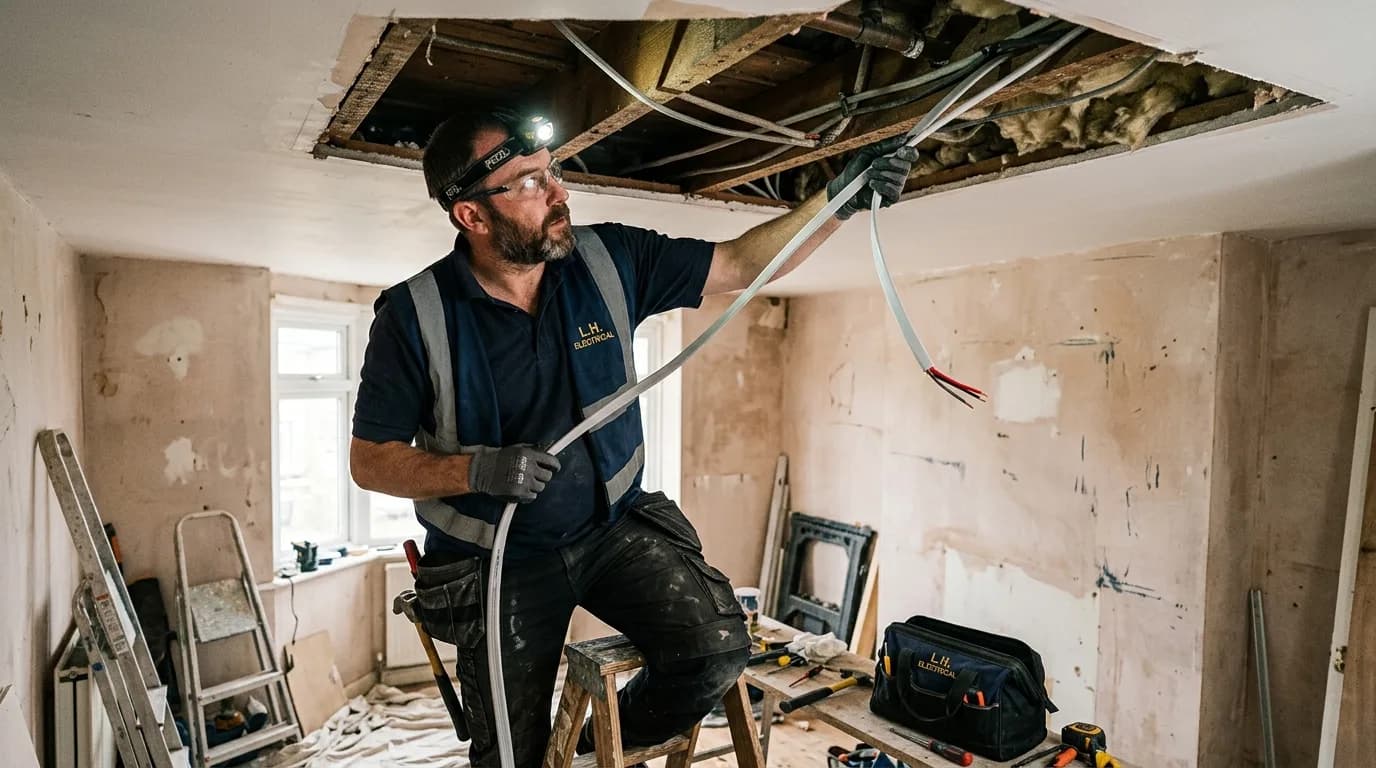
The headline price for electrical work does not always tell the whole story. Here are the extras that can push the final bill up - and which are usually already included.
| Extra Item | Typical Cost |
|---|---|
| Making good after chasing walls | £200 to £500 |
| Asbestos testing (if disturbing old materials) | £30 to £50 per sample |
| Building Control notification | Included |
| New consumer unit (during rewire) | Included |
| Temporary power during rewire | Usually included |
Electrical Work Prices by Region
Where you live has a real impact on what you will pay. These are average electrician day rates across the UK.
| Region | Day Rate | vs National |
|---|---|---|
| London | £300 to £500 | +35% |
| South East | £250 to £400 | +15% |
| East of England | £230 to £370 | +8% |
| South West | £220 to £350 | +5% |
| Midlands | £200 to £330 | Average |
| Yorkshire | £190 to £310 | -5% |
| North West | £190 to £320 | -4% |
| North East | £180 to £300 | -8% |
| Scotland | £190 to £320 | -4% |
| Wales | £185 to £310 | -6% |
Based on industry data. Day rates for a qualified, Part P registered electrician.
How to Get Your Electrical Work for Less
A few smart decisions can save you hundreds on electrical work - without cutting any corners on safety or certification.
Bundle jobs together
If you need a rewire, a new consumer unit, and new lighting, get the lot done in one go. A single visit means the electrician only has to set up, isolate, and test once - which cuts the labour bill significantly. Adding a few extra sockets during a rewire costs almost nothing compared to booking a separate job later.
Time it with other renovation work
Electrical first fix is far cheaper when walls are already stripped back or floors are already lifted. If you are having plastering, a kitchen fit, or a bathroom refit done, schedule the electrical work at the same time. Open walls mean no chasing - and chasing is one of the most time-consuming parts of the job.
Get at least three quotes
Electrician prices vary more than most trades because there is no standard pricing structure. Three quotes will give you a decent range - and help you spot anyone wildly over or under the market. Be specific about what you need so the quotes are properly comparable.
Do not go cheapest - check registration
An unregistered electrician might be cheaper upfront, but you will not get the certificates you need. No Electrical Installation Certificate means no proof of compliance - and that causes real problems when you come to sell, remortgage, or make an insurance claim. Always check your electrician is Part P registered before agreeing to any work.
Ask about off-peak rates
Some electricians offer better rates for jobs booked during quieter months or with flexible timing. If you are not in a rush, mention that your dates are flexible - you may get a lower price simply by fitting in around the electrician's existing schedule.
Supply your own fittings if you know what you want
Electricians mark up materials - sometimes substantially. If you have specific light fittings, sockets, or switches in mind, buying them yourself from Screwfix or Toolstation can save 20 to 30% on the materials portion. Just confirm with your electrician that they are happy to fit customer-supplied items before ordering.
A one-person electrician may not charge VAT
Being VAT registered and being a qualified electrician are two separate things. Any trader turning over less than £90,000 a year does not have to register for VAT, so a genuine sole trader will not add the standard 20% that a larger firm has to charge on top. On a £2,000 job that is up to £400 saved. They still need to be Part P registered and issue the proper certificate, so check that separately.
Comparing quotes is the simplest way to pay less
Getting three or four quotes and comparing them is how most homeowners avoid overpaying. It takes a couple of minutes, with no obligation.
Get my free quotesThe Electrical Installation Process
Here is what to expect if you are having a full house rewire - the biggest and most involved domestic electrical job. Smaller jobs follow a trimmed-down version of the same process.
- 1
Survey and quote
A qualified electrician visits to assess the existing wiring, count circuits, check access routes for cables, and note any complications. They should test a few circuits and inspect the consumer unit before quoting. Be cautious of anyone willing to quote over the phone for a rewire - a site visit is essential.
- 2
Isolate and strip out old wiring
The supply is isolated at the meter and all existing cables, sockets, switches, and the old consumer unit are removed. This stage is messy - expect lifted floorboards and chased walls. The electrician will usually rig up temporary power so you are not completely without electricity overnight.
- 3
First fix - run new cables
New cables are run through floor voids, ceiling spaces, and wall chases to every socket, switch, and light position. The new consumer unit is fitted and all circuits are connected. This is the most labour-intensive stage, typically taking 3 to 4 days for a 3-bed house.
- 4
Plastering and making good
Once all cables are in place, a plasterer patches the wall chases and any disturbed surfaces. There is usually a gap of a few days to a week at this stage while the plaster dries. The electrician returns once the surfaces are ready for second fix.
- 5
Second fix - fit sockets, switches, and lights
All faceplates, sockets, switches, and light fittings are installed. The consumer unit is labelled and every connection is checked and tightened. This stage typically takes 1 to 2 days.
- 6
Testing, certification, and handover
Every circuit is tested for continuity, insulation resistance, and earth fault loop impedance. You receive an Electrical Installation Certificate (EIC), and the electrician notifies Building Control via Part P. Keep this certificate safe - you will need it when selling or remortgaging the property.
Frequently Asked Questions
How much does an electrician charge per hour in the UK?
Most electricians in the UK charge between £40 and £60 per hour, rising to £50 to £80 per hour in London and the South East. That said, the majority of electricians prefer to quote per job rather than hourly - a per-job quote gives you a fixed price with no surprises. For small jobs, expect a minimum callout charge of £80 to £120 regardless of how long the work takes.
How much does it cost to rewire a house in the UK?
A full house rewire for a typical 3-bedroom semi-detached costs between £4,500 and £8,000 depending on the size of the property, the number of circuits, and how easy it is to access the wiring. Older properties with lath-and-plaster walls or limited access under floors tend to cost more. The price usually includes a new consumer unit, all new cabling, sockets, and light fittings, plus testing and certification.
Do I need a Part P registered electrician?
Any electrical work that involves a new circuit, work in a bathroom or kitchen, or changes to a consumer unit must comply with Part P of the Building Regulations. Using a Part P registered electrician means they can self-certify the work and notify Building Control on your behalf. If you use an unregistered electrician, you will need to arrange a separate Building Control inspection, which typically costs £250 to £400 and adds delay.
How long does a house rewire take?
A full rewire of a 3-bedroom house usually takes 5 to 7 working days with one or two electricians on site. Larger properties or those with difficult access can take up to 10 days. First fix (running cables before plastering) takes 3 to 4 days, and second fix (fitting sockets, switches, and lights after plastering) takes 1 to 2 days. There is usually a gap between the two stages while plastering is done.
What is an EICR and do I need one?
An EICR (Electrical Installation Condition Report) is a formal inspection of the fixed wiring in a property. It checks whether the electrics are safe and up to current standards. Landlords are legally required to have an EICR every 5 years. Homeowners are not legally required to have one, but it is strongly recommended if your wiring is over 25 years old, you are buying a property, or you are planning renovation work. An EICR typically costs £150 to £300 depending on the property size.
Can I do any electrical work myself?
You can legally do minor electrical work yourself, such as replacing a light fitting, adding a socket to an existing circuit (not in a bathroom or kitchen), or replacing a damaged cable on an appliance. However, any notifiable work - new circuits, work near water (bathrooms, kitchens), consumer unit changes, or outdoor wiring - must be done by a qualified electrician or inspected by Building Control. Getting notifiable work wrong is a safety risk and can cause serious problems when selling your home.
How much does it cost to install an EV charger at home?
A home EV charger installation typically costs between £800 and £1,500 fully installed. This includes the charger unit itself (usually a 7kW wallbox), mounting, cabling from your consumer unit to the charger location, and Part P certification. If your consumer unit needs upgrading to accommodate the new circuit, add £350 to £600 to the total. The EV chargepoint grant covers £500 per socket, up from £350. Since 1 April 2026 it also covers households with on-street parking, and it runs until 31 March 2027 - check gov.uk for eligibility.
How often should electrics be checked?
The Institution of Engineering and Technology (IET) recommends an electrical inspection (EICR) every 10 years for owner-occupied homes and every 5 years for rented properties. If your home was built before 1980 and has never been rewired, an inspection is a sensible first step before any renovation work. Wiring installed before the 1970s is almost certainly past its useful life and likely needs replacing.
Free, with no obligation to book.

Written by Chris Kervin, Co-Founder, Less.co.uk
Last updated: · Pricing based on published trade rates and UK market data · Methodology