Government Grants for Home Improvements 2026
The UK government offers several grants for home improvements in 2026, including up to £7,500 towards a heat pump (Boiler Upgrade Scheme), free boiler replacements for eligible households (ECO4), and insulation help through the Warm Homes: Local Grant. Here's every scheme available, who qualifies, and how to apply.

Chris Kervin
Written by Chris Kervin, Co-Founder of Less.co.uk
The short answer
The main government schemes in 2026 are: the Boiler Upgrade Scheme (£7,500 towards heat pumps), ECO4 (free boiler/insulation for eligible households on benefits, open until 31 December 2026), and the Warm Homes: Local Grant (insulation and heating help for lower-income homeowners and renters in EPC bands D to G, run by local councils). Local authorities may also have their own grants. Eligibility varies by scheme - some are income-based, others are available to all homeowners.
Quick overview: what's available
| Scheme | Worth | Who qualifies | Covers |
|---|---|---|---|
| Boiler Upgrade Scheme (BUS) | £7,500 | All homeowners (with valid EPC) | Air/ground source heat pumps |
| ECO4 | Up to full cost | Low-income households on benefits | Boilers, insulation, heating |
| Warm Homes: Local Grant | Up to full cost | Lower income, EPC bands D to G | Insulation and heating upgrades |
| Local authority grants | Varies (£500 to £10,000) | Varies by council | Wide range of improvements |
| Warm Home Discount | £150/year | Low income / Pension Credit | Electricity bill discount |
1. Boiler Upgrade Scheme (BUS)
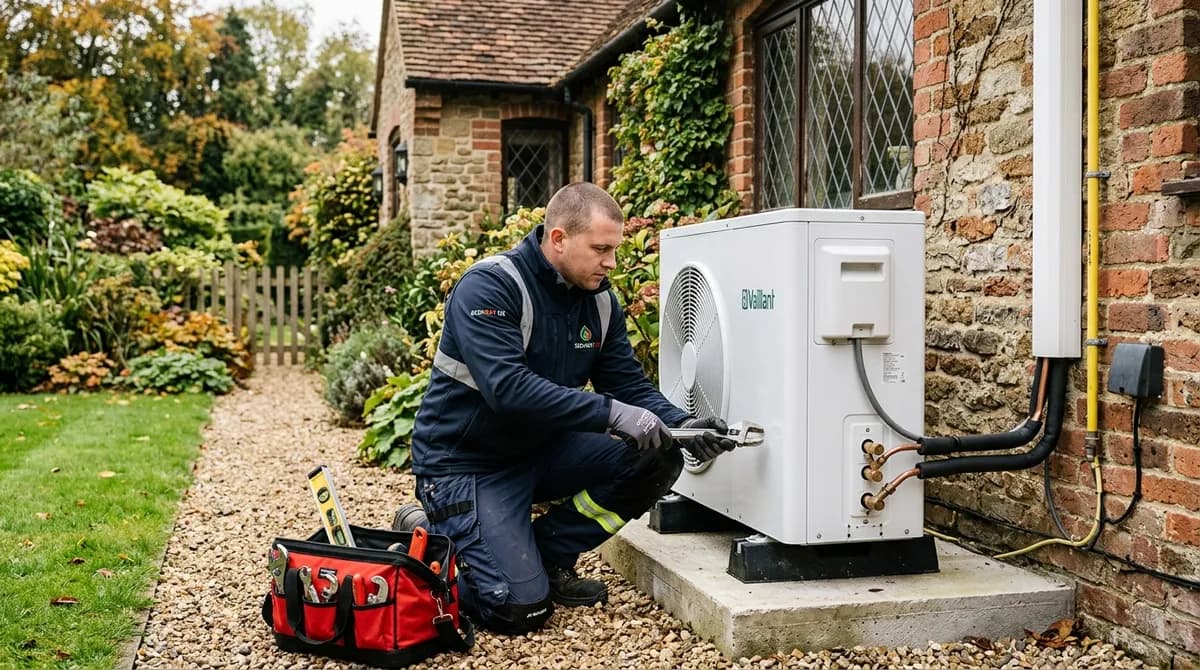
The Boiler Upgrade Scheme is the big one for anyone considering switching from a gas boiler to a heat pump. The government provides a £7,500 grant towards the cost of an air source heat pump or ground source heat pump, or £2,500 towards an air-to-air heat pump.
An air source heat pump typically costs £8,000 to £15,000 fully installed. With the BUS grant, your out-of-pocket cost drops to roughly £500 to £7,500. A ground source heat pump costs more (£15,000 to £35,000) but the grant still takes a significant chunk off.
If your home is off the gas grid and you're replacing an oil or LPG system, a higher grant of £9,000 is available for air-to-water and ground source heat pumps between 21 July 2026 and 31 March 2027.
Who qualifies
- You own the property (homeowners and landlords both qualify)
- The property has a valid EPC (not older than 10 years)
- You're replacing a fossil fuel heating system (gas, oil, LPG, electric, or coal)
- Loft insulation must be at or above 100mm (or a valid reason why it can't be installed)
- The installer must be MCS-certified
How to apply
You don't apply directly. Your MCS-certified installer applies on your behalf through Ofgem's online portal. The grant is deducted from your installation cost - you just pay the difference. The whole process is straightforward, though there can be a wait for Ofgem to approve the voucher (typically 2 to 4 weeks).
The scheme runs until March 2028, but funding is allocated on a first-come, first-served basis. If you're seriously considering a heat pump, don't wait too long.
2. ECO4 (Energy Company Obligation)
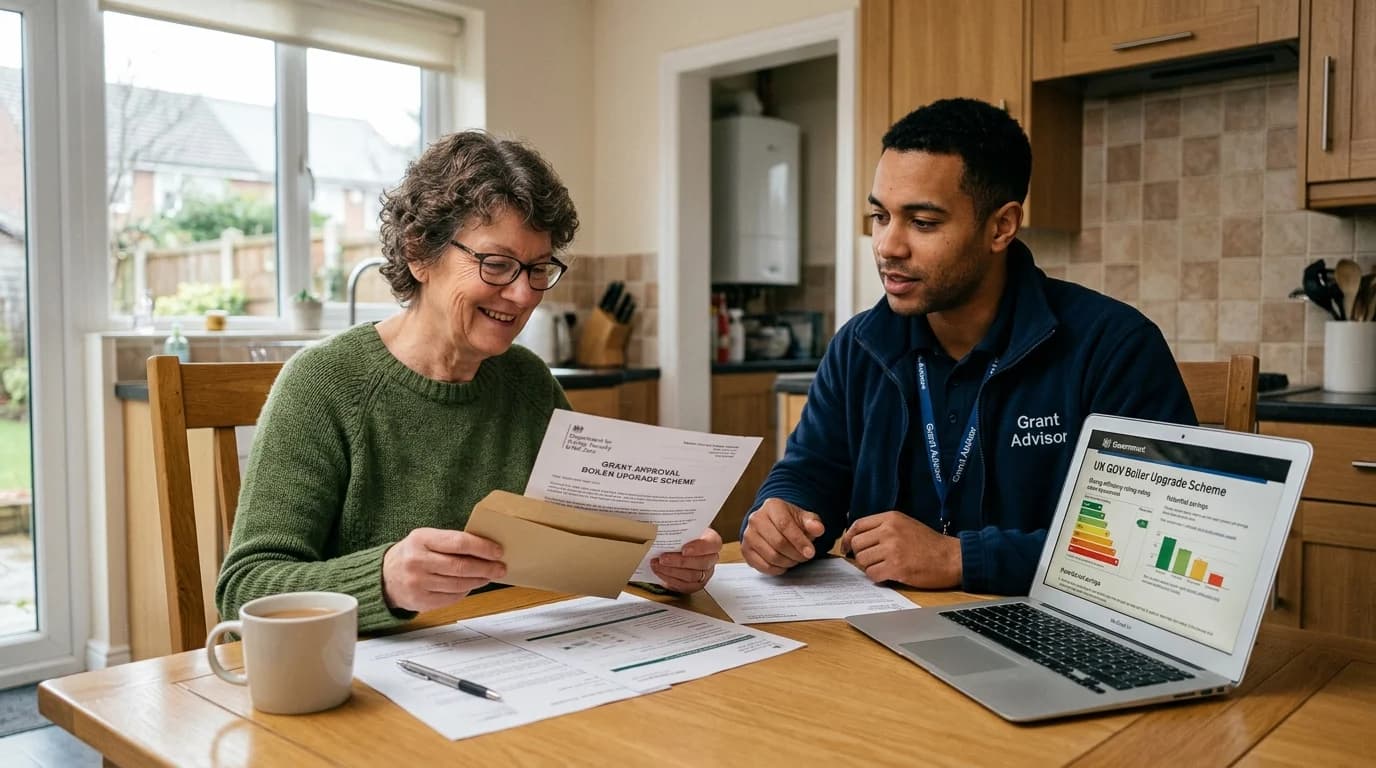
ECO4 is the government's flagship scheme for helping low-income and vulnerable households improve their home's energy efficiency. It's funded by the big energy suppliers (the "Big Six" and others), who are legally required to deliver a certain number of improvements each year.
Under ECO4, eligible households can receive free improvements including:
- Boiler replacement - your old, inefficient boiler replaced with a new A-rated condensing model at no cost
- Loft insulation - topped up or installed from scratch
- Cavity wall insulation
- Solid wall insulation (in some cases)
- First-time central heating systems
- Heating controls and smart thermostats
Who qualifies
You need to meet two criteria: you must receive a qualifying benefit, and your home must have a low EPC rating (typically D, E, F, or G).
Qualifying benefits include:
- Universal Credit
- Pension Credit (Guarantee Credit)
- Child Tax Credit (with income below the threshold)
- Working Tax Credit (with income below the threshold)
- Income Support
- Income-based Jobseeker's Allowance (JSA)
- Income-related Employment and Support Allowance (ESA)
- Housing Benefit
There's also a "flex" eligibility route. If you don't receive benefits but have a low household income and live in a poorly-insulated home, your local authority can refer you. Contact your council to ask about ECO Flex.
How to apply
Contact your energy supplier directly, or find an approved ECO4 installer in your area. They'll check your eligibility, survey your property, and arrange the work. ECO4 is open until 31 December 2026. There is no direct ECO5 successor, but the government's Warm Homes Plan is set to take over longer-term support. Check gov.uk for the latest information on available funding.
Watch out for scams
There are companies cold-calling and door-knocking offering "free government boilers." While the scheme is real, always verify the installer is legitimate. Check they're registered with TrustMark and never pay upfront for work that should be free under ECO4.
3. Warm Homes: Local Grant
The Great British Insulation Scheme (GBIS) closed to new applicants on 31 March 2026. Its replacement is the Warm Homes: Local Grant, a council-run scheme that helps lower-income homeowners and private renters make their homes warmer and cheaper to run. It runs until 31 March 2028 and also takes over from the old Home Upgrade Grant (HUG2).
Who qualifies
You may qualify if:
- Your home has an EPC rating of D, E, F, or G
- You own your home, or rent privately with your landlord's permission
- Your household income is below around £36,000, or you receive a qualifying benefit
- The scheme now covers homes on the gas grid as well as off-grid properties
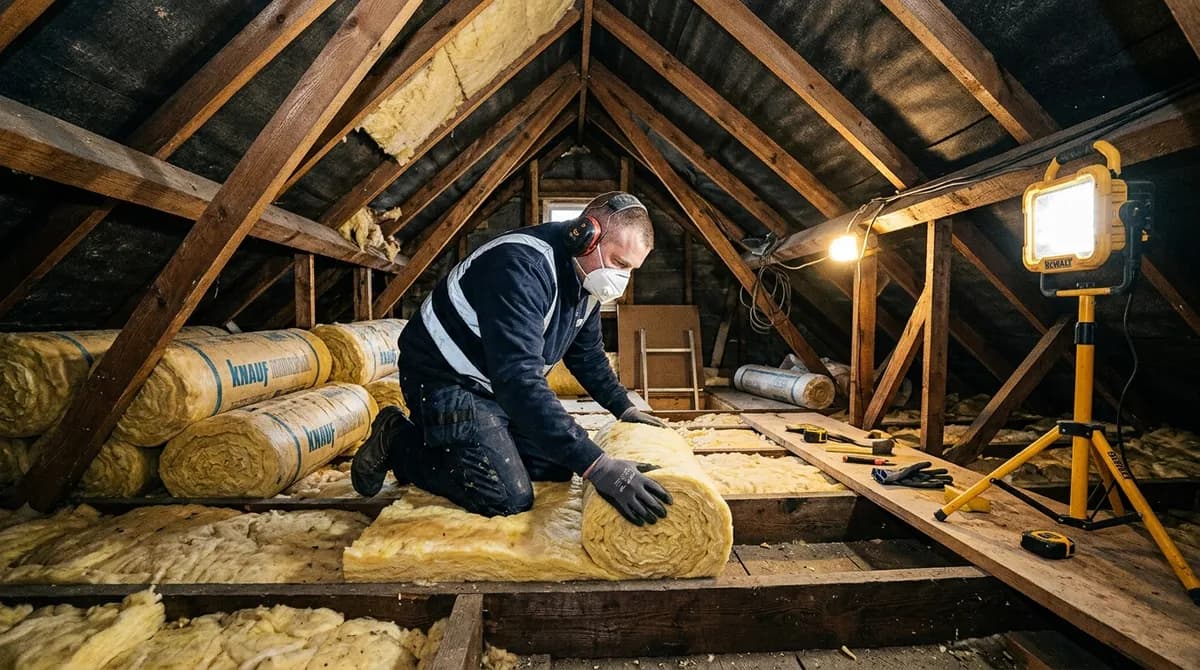
The grant covers insulation such as cavity wall, loft, room-in-roof, and solid wall insulation, and in some cases heating upgrades too. It's delivered by your local council through their approved installers, so the best place to start is your council's website. If you want to estimate what insulation would cost you privately (outside of these schemes), try our insulation cost calculator.
4. Local authority grants
Many local councils offer their own grants for home improvements, particularly energy efficiency measures. These vary hugely by area - some councils have generous schemes funded by central government allocations, while others have very little.
Common local grants include:
- Warm Homes: Local Grant - the main council-delivered scheme, replacing the old Home Upgrade Grant (HUG2). It covers insulation and heating for lower-income households in EPC bands D to G, on and off the gas grid. See section 3 above for the full details.
- Disabled Facilities Grant - up to £30,000 in England for adaptations that help disabled people live independently (stairlifts, wet rooms, ramps, door widening).
- Local energy efficiency schemes - many councils run area-based schemes targeting specific postcodes or housing types.
The simplest way to find out what's available in your area is to visit the government's energy efficiency advice page or call the Home Energy Scotlandhelpline if you're in Scotland. Your council's website should also list current schemes.
5. Other financial help
Beyond grants, there are other ways to reduce the cost of energy-related improvements:
- 0% VAT on energy-saving materials: insulation, solar panels, heat pumps, and other qualifying materials are zero-rated for VAT when installed in residential properties. This saves you 20% on the materials cost.
- Warm Home Discount: a £150 annual discount on your electricity bill if you receive Pension Credit (Guarantee Credit) or are on a low income. Applied automatically by your energy supplier.
- Winter Fuel Payment: £100 to £300 per year for households with someone born before a qualifying date and receiving Pension Credit.
- Green mortgage products: some lenders offer lower interest rates or cashback for energy-efficient homes. Nationwide, Barclays, and NatWest all have green mortgage products.
How to maximise what you get
The schemes can be combined. For example, you could get cavity wall insulation through GBIS, a boiler upgrade through ECO4, and a heat pump through the Boiler Upgrade Scheme - all on the same property. The key is that each measure can only be funded once, and some schemes require a valid EPC before work starts.
Our advice: get a current EPC first (£60 to £120). The recommendations on the certificate will tell you exactly which improvements will make the biggest difference, and your assessor can often advise which schemes your property is likely to qualify for.
Frequently asked questions
Can I get a free boiler from the government?
Yes, through the ECO4 scheme. If you receive certain means-tested benefits (Universal Credit, Pension Credit, Child Tax Credit, etc.) and your home has a low EPC rating, you may qualify for a free boiler replacement. The scheme is delivered by energy companies, so contact your energy supplier or an ECO4 installer to check eligibility. You don't apply directly to the government.
How much is the heat pump grant in 2026?
The Boiler Upgrade Scheme (BUS) provides £7,500 towards an air source heat pump or ground source heat pump, or £2,500 towards an air-to-air heat pump. The grant is applied directly by your MCS-certified installer - you don't need to apply yourself. The scheme runs until March 2028. You must own the property (or be a landlord), and the property must have a valid EPC and loft insulation where applicable.
Do I qualify for free insulation?
The Great British Insulation Scheme closed to new applicants on 31 March 2026. Insulation help now comes through the Warm Homes: Local Grant, run by local councils for lower-income homeowners and private renters in EPC bands D to G, and through ECO4 if you receive means-tested benefits and your home has a low EPC rating. ECO4 is open until 31 December 2026. Contact your council for the Warm Homes: Local Grant, or your energy supplier for ECO4.
Are there any grants for new windows or double glazing?
There's no standalone government grant for double glazing in 2026. However, if you qualify for ECO4 and your home has single glazing, window replacement may be included as part of a whole-house approach to improving your EPC rating. Some local authorities also offer grants for energy improvements that can include windows - check your council's website.
Check the costs for your project
Even with grants, it helps to know the full cost of the work. Our cost guides break down prices for every major improvement.
Related articles
EPC Ratings Explained
What your energy rating means for value and running costs.
When Should You Replace Your Boiler?
The repair vs replace decision - made simple.
Heat Pump vs Gas Boiler
Costs, efficiency, and which makes sense for your home.
Save Money on Home Improvements
Practical tips to cut costs without cutting corners.