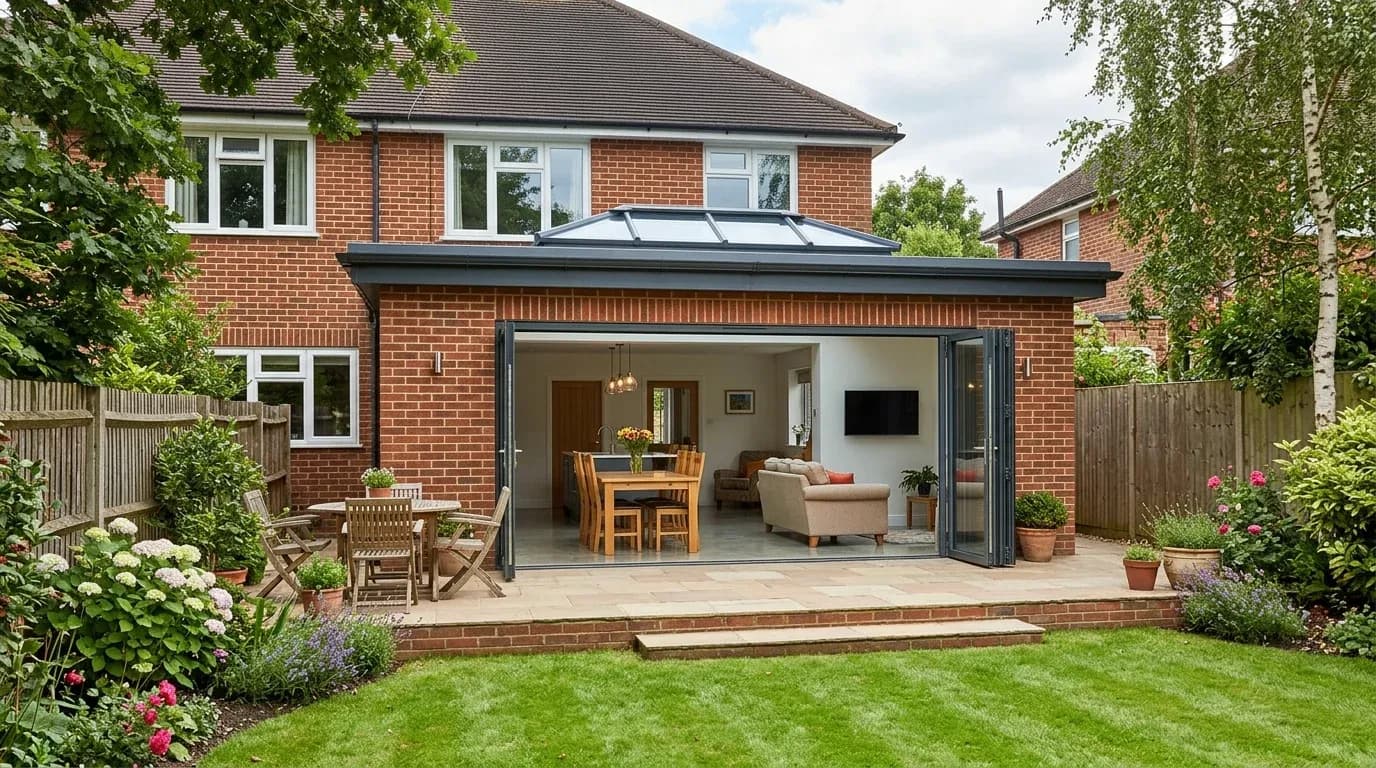
How Much Does Plastering Cost in 2026?
So, how much to plaster a room? A standard bedroom typically costs £300 to £600 for a skim coat, or £400 to £800 for a full replaster including removing old plaster. Skimming an entire house runs £1,500 to £4,000 depending on property size, and a 3 bed house costs £1,500 to £2,500 to skim. The average plasterer day rate is £150 to £250 plus materials.
£450
Average per room
£150
Skim coat from
£350
Full replaster from
1 to 3 days
Timeline
Prices updated April 2026 · Based on industry data and contractor submissions.
Asbestos notice. Plastering does not require planning permission or Building Regulations approval in most cases. However, if removing old plaster in a property built before 2000, check for artex containing asbestos before sanding or scraping. Read HSE guidance on asbestos. For standards and best practice, see the Federation of Plastering and Drywall Contractors.
Plastering Prices at a Glance
How much does plastering cost for the most common jobs? All prices below are for labour and materials in an average UK property. Prices assume the walls are accessible and prep work has been completed prior to the plasterer arriving.
| Job Type | Average Cost | Price Range |
|---|---|---|
| Skim coat (single wall) | £120 | £80 to £200 |
| Skim coat (bedroom, 4 walls and ceiling) | £380 | £280 to £550 |
| Full replaster (bedroom) | £550 | £400 to £750 |
| Skim coat (living room, large) | £520 | £380 to £700 |
| Dot and dab (per room, boards only) | £350 | £250 to £500 |
| Full house skim (3-bed semi) | £2,800 | £2,000 to £4,000 |
Prices include labour and plaster materials. Plasterboard supply, beading, coving, and artex removal are priced separately under additional costs.
Get Free Plastering Quotes
Compare prices from trusted local plasterers near you. Fill in a few details and receive up to 4 free, no-obligation quotes.
Plastering Cost Per Room
The cost of plastering a room depends mainly on how big it is and whether you need a skim coat or a full replaster. Here is what most homeowners pay in 2026 - these are the figures you should expect when getting quotes.
| Room | Typical Size | Skim Coat | Full Replaster |
|---|---|---|---|
| Small bedroom | 10 to 12 m² walls | £200 to £350 | £400 to £600 |
| Double bedroom | 14 to 18 m² walls | £300 to £450 | £550 to £800 |
| Living room | 18 to 24 m² walls | £400 to £600 | £700 to £1,000 |
| Kitchen | 14 to 18 m² walls | £300 to £450 | £550 to £800 |
| Hallway + stairs | 20 to 30 m² walls | £450 to £700 | £800 to £1,200 |
| Whole house (3-bed) | 100 to 140 m² walls | £1,500 to £2,500 | £3,000 to £4,500 |
Prices include labour and standard finishing plaster. Ceilings, if included, add roughly 30 to 40% to the skim coat price.
How Much Does It Cost to Plaster a 3 Bed House?
Doing the whole property in one go is where the numbers get big. A 3 bed house has roughly 100 to 140 m² of wall area, which works out at £1,500 to £2,500 for a skim coat over sound existing plaster, or £3,000 to £4,500 for a full replaster back to brick. A whole house skim on a 3-bedroom semi-detached typically lands at £2,000 to £4,000 once ceilings, the hallway, and the stairwell are counted in.
Most houses are a mix rather than one or the other. It is common to skim the bedrooms and living room and replaster only the rooms where the plaster has blown, which keeps the total nearer the skim price. Tap the walls room by room before you get quotes, then ask each plasterer to price the skim and the replaster areas separately so you can see what the difference actually costs you.
Plasterer Day Rates vs Quoted Prices
Wondering how much do plasterers charge by the day? The average plasterer day rate in the UK sits between £150 and £250 per day, with London and the South East pushing that to £200 to £350. However, most plasterers prefer to quote per room or per job rather than working to a day rate.
Day rates do not include materials
When a plasterer quotes a day rate, that covers their labour only. Plaster, beads, scrim tape, and PVA typically add £50 to £80 per room on top. Always confirm whether materials are included or charged separately before agreeing to a day rate.
How much work can a plasterer do in a day?
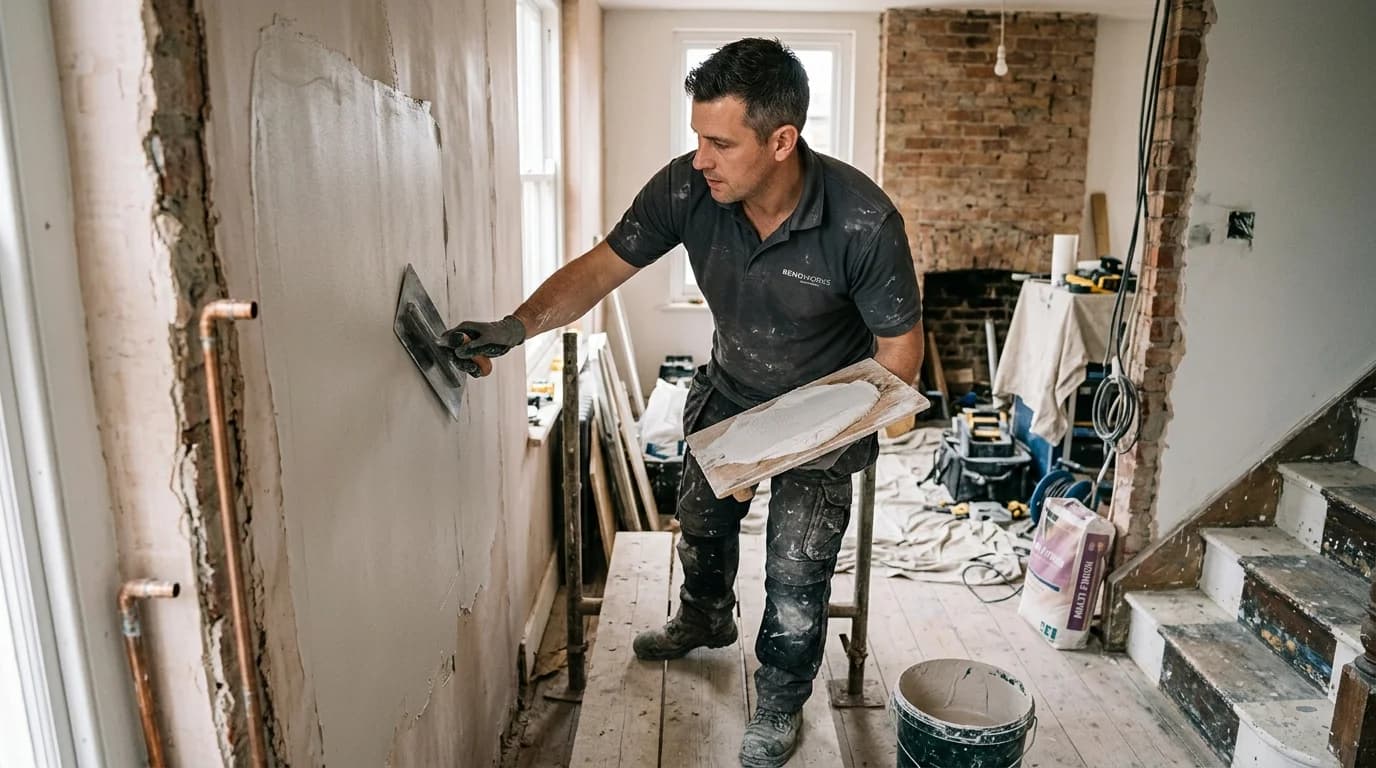
A good plasterer will skim a standard bedroom (walls only) in a single day. If a plasterer quotes for two days on a normal-sized room, either the room is particularly large, the existing walls are in poor condition and need extra prep, or the ceiling is included. Ask what is driving the time estimate - it helps you understand whether the quote is fair.
Tip: For jobs covering three or more rooms, a day rate often works out 15 to 25% cheaper than per-room pricing. Have all rooms prepped and ready so the plasterer can move through them without downtime.
Skim Coat vs Full Replaster - Which Do You Need?
This is the single biggest factor in what you will pay. Knowing which one your walls actually need - before you get quotes - stops you from overpaying for work that is not necessary.
Skim coat - £15 to £25/m²
A 2 to 3mm layer of finishing plaster applied directly over the existing surface. This is the right choice when the existing plaster is sound but rough, uneven, or just needs freshening up. By far the most common plastering job in UK homes.
Full replaster - £30 to £50/m²
Stripping everything back to brick, applying a scratch coat and a finish coat from scratch. You need this when existing plaster is blown, damp-damaged, or crumbling. It takes longer, uses more material, and costs roughly double a skim - but there is no point skimming over plaster that is failing underneath.
Dot and dab - £20 to £35/m²
Plasterboard fixed to the wall with dabs of adhesive, then skimmed over. A good alternative for very uneven walls or where you want to add insulation behind the boards. Quicker than a full replaster but you lose a small amount of room depth.
How to test your walls: Tap the plaster with your knuckles. A solid thud means the plaster is well bonded - skim it. A hollow, drum-like sound means the plaster has blown away from the wall behind and needs to come off. Press with your thumb - if the surface gives or crumbles, that is a full replaster job. These plastering rates per m2 are typical across the UK, though London and the South East sit at the higher end.
Artex Removal Cost
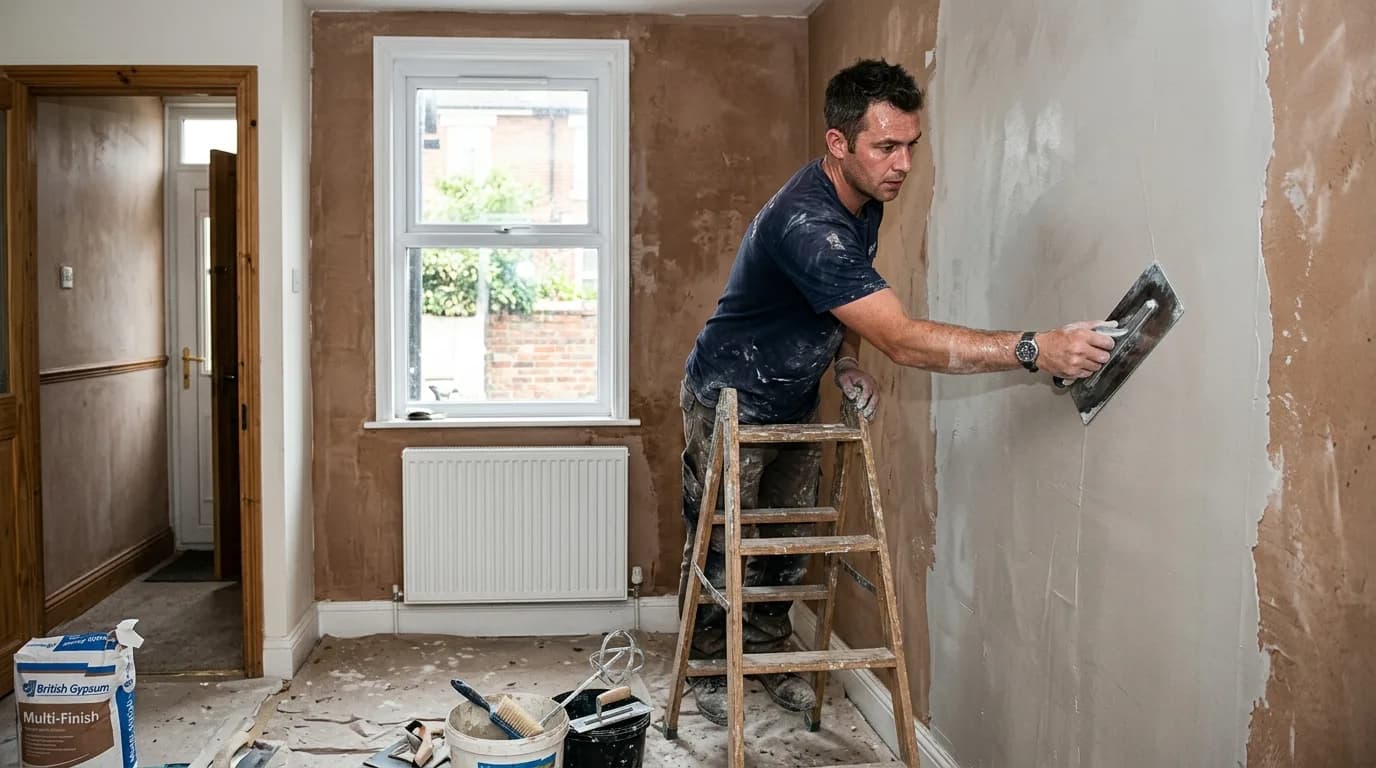
Got textured ceilings or walls? Artex removal is one of the most common add-ons to a plastering job. The cost depends on whether the artex can simply be skimmed over or needs to be scraped off - and crucially, whether it contains asbestos.
| Method | Cost per m² | Notes |
|---|---|---|
| Skim over artex | £15 to £25/m² | Cheapest option - the most common approach |
| Scrape and replaster | £25 to £40/m² | If artex contains asbestos, needs testing first |
| Asbestos artex testing | £30 to £50 per sample | Artex from before 2000 may contain asbestos |
Never sand or dry-scrape artex without testing for asbestos first. Artex and other textured coatings applied before 2000 may contain white asbestos (chrysotile), asbestos was only fully banned in the UK in 1999, and coatings using it were fitted right up to then. Disturbing it without proper precautions is a serious health risk. Have it tested - a sample costs £30 to £50 and gives you peace of mind before any work starts.
What Affects the Cost of Plastering?
Room size
The largest single cost driver. A small bedroom with 4 walls and a ceiling might be 30 to 40 sqm of surface area; a large open-plan kitchen-diner can easily be 80+ sqm. Plasterers typically price larger areas at a lower per sqm rate because the setup cost is the same regardless of room size.
Type of finish required
A skim coat over sound existing plaster is the least expensive option. A full replaster - stripping back to brick or block and starting from scratch - takes longer, uses more materials, and costs significantly more. Dot and dab plasterboarding (fixing boards to walls with adhesive) is an alternative to a full replaster that is quicker but results in slightly less durable walls.
Wall condition and prep needed
If walls have loose plaster that needs hacking off, old wallpaper adhesive that needs removing, or significant repairs before plastering can begin, this all adds time. Some plasterers include prep in their quote; others charge separately. Always clarify this upfront to avoid surprises on the final invoice.
Accessibility and ceiling height
Standard rooms with ceilings up to approximately 2.4 metres present no issue. Higher ceilings require hop-up platforms or scaffold boards, and the plasterer needs to work differently - which takes longer. Vaulted ceilings, stairwell walls, and bay windows all add complexity and cost.
Number of coats
Bare masonry in poor condition may require a hardwall undercoat, then a browning or bonding coat, then a finishing coat - three separate passes. A well-prepared surface in good condition only needs two skim coats. The number of coats affects both drying time between visits and the overall cost.
Materials
Different base coats suit different wall types - hardwall for dense masonry, bonding for metal bead and board edges, browning for soft brick. Finishing plaster is the same for most surfaces. Premium finishing plasters (Thistle) are higher quality than budget alternatives. In most cases your plasterer will supply materials and include them in the quote.
Additional and Hidden Costs
These items are not always included in a standard plastering quote but are common additions depending on the scope of work.
| Extra Item | Typical Cost |
|---|---|
| Plasterboard supply and fitting (per sheet) | £15 to £30 |
| Beading and archways | £50 to £200 |
| Coving installation (per metre) | £8 to £20 |
| Artex removal or encapsulation | £150 to £500 |
| Drying (heating costs to speed drying) | Variable |
Plastering Prices by Region
How much do plasterers charge across different parts of the UK? These are average plasterer costs per room (skim coat, average bedroom size) across different UK regions.
| Region | Average Cost | vs National |
|---|---|---|
| London | £580/room | +29% |
| South East | £520/room | +16% |
| East of England | £490/room | +9% |
| South West | £475/room | +6% |
| Midlands | £450/room | Average |
| Yorkshire | £400/room | -11% |
| North West | £410/room | -9% |
| North East | £380/room | -16% |
| Scotland | £400/room | -11% |
| Wales | £390/room | -13% |
Based on industry data. Average cost per room for a skim coat of a standard bedroom.
How to Get Your Plastering Done for Less
A few sensible choices around timing, prep, and how you book the work can reduce the total plasterer cost without affecting the quality of the finish. Always use a TrustMark-registered plasterer where possible, it is a government-endorsed quality scheme that covers you if something goes wrong.
Get at least three quotes
Prices for the same plastering job can vary by 30% or more between plasterers in the same area. Get at least three written quotes so you can compare like for like, including prep work, materials, and finishing. The cheapest is not always the best, check reviews, ask for references, and make sure the quote includes everything. Using a government-endorsed scheme like TrustMark (trustmark.org.uk) is a good way to find vetted tradespeople.
Do the prep yourself
Plasterers typically charge for their time from the moment they arrive. Stripping wallpaper, filling old fixings with bonding, removing all furniture, and laying dust sheets before they get there saves prep time that you would otherwise pay for. Some plasterers will charge a half day rate just for prep - doing it yourself can save £80 to £150.
Book a day rate and have multiple rooms ready
Plasterers have a fixed cost for mobilising to a job. If you book them for three rooms on the same day at a day rate (£180 to £280), you are getting significantly better value than booking three separate single-room visits. Have all rooms stripped and prepared so they can move efficiently from one to the next.
Let plaster dry fully before decorating
Rushing decoration after plastering is one of the most common and costly mistakes. Painting over damp plaster causes flaking, poor adhesion, and uneven finish - meaning you will need to redecorate and potentially have areas skimmed again. Wait for the plaster to lighten fully (4 to 6 weeks), use a mist coat first, and do the job once properly.
Skim vs full replaster - use the tapping test
Before assuming you need a full replaster, tap the existing plaster with your knuckles. A solid sound means the plaster is well bonded and only needs skimming. A hollow or drum-like sound means the plaster has blown away from the wall behind - this area needs to come off. Skimming is significantly cheaper than a full replaster, so knowing which areas genuinely need full removal saves money.
Ask about day rates for larger jobs
For jobs covering three or more rooms, ask your plasterer for a day rate rather than a per-room price. Plasterers often price per room conservatively to account for unknowns. For a straightforward multi-room job where prep is already done, a day rate of £180 to £280 can work out 15 to 25% cheaper than per-room pricing.
Wet rooms need waterproof board not plasterboard
In bathrooms and shower rooms, standard plasterboard will absorb moisture even under tiles, leading to mould and eventual failure. Always specify moisture-resistant plasterboard or tile backer board for wet areas, and confirm this with your plasterer before ordering materials. Using the wrong board costs more to put right later than getting it right first time.
Comparing quotes is the simplest way to pay less
Getting three or four quotes and comparing them is how most homeowners avoid overpaying. It takes a couple of minutes, with no obligation.
Get my free quotesWhat to Expect: The Plastering Process
Here is how a typical plastering job runs from arrival to a smooth finish ready for decorating. Qualified plasterers typically hold an NVQ Level 2 or 3 in plastering, accredited by the Construction Industry Training Board (CITB).
- 1
Assessment and prep
The plasterer assesses the walls - tapping to check for blown plaster, checking for damp, assessing suction (how absorbent the surface is). Any areas that need to come off are hacked away, and the surface is cleaned down. Beading is fixed to corners and edges if needed.
- 2
Suction coat and PVA bonding
A diluted PVA bonding solution is applied to all surfaces. This controls the suction so the plaster does not dry too quickly (which leads to cracking and poor adhesion). Your plasterer may do this the day before or on the morning of the job.
- 3
First coat and scratch back
The first coat of finishing plaster is applied, ruled off to a flat surface, and then lightly scratched with a devil float or cross-keyed to provide adhesion for the second coat. This coat needs to set slightly (typically 30 to 60 minutes) before the second coat goes on.
- 4
Finishing coat and rule off
The second coat is applied, ruled flat, and then polished with a steel trowel as the plaster begins to set. This is the skilled part - timing is critical. Polishing too early or too late produces a poor finish. A good plasterer will produce a surface that is smooth, flat, and consistent across the entire area.
Detailed Plastering Guides
Looking for more specific pricing? We have broken down the costs for individual plastering jobs in separate guides.
Frequently Asked Questions
How much does it cost to plaster a room?
Plastering a standard bedroom typically costs £300 to £600 for a skim coat (applying a finishing layer over existing plaster) or £400 to £750 for a full replaster. Larger rooms such as living rooms cost £380 to £700 to skim. A full house skim for a 3-bedroom semi-detached costs £2,000 to £4,000 depending on property size and condition.
How much does it cost to plaster a 3 bed house?
Skimming the whole property costs £1,500 to £2,500, based on roughly 100 to 140 m² of wall area. A full replaster back to brick costs £3,000 to £4,500. A whole house skim on a 3-bedroom semi-detached typically comes in at £2,000 to £4,000 once ceilings, the hallway, and the stairwell are included. Most homeowners end up somewhere in between, skimming the rooms where the plaster is sound and replastering only the areas that have blown.
How much do plasterers charge per day?
The average plasterer day rate in the UK is £150 to £250 per day, rising to £200 to £350 in London and the South East. Day rates do not include materials such as plaster, beads, and scrim tape, which typically add £50 to £80 per room. Most plasterers prefer to quote per room or per job rather than a day rate.
How long does new plaster take to dry before decorating?
New plaster typically takes 4 to 6 weeks to fully dry before it is ready to paint with normal emulsion. A mist coat (watered-down emulsion, approximately 50/50) should be applied once the plaster has turned from dark to light pink - usually after 1 to 3 weeks depending on temperature and ventilation. Rushing this process causes paint to peel and is the most common mistake homeowners make after plastering.
What is the difference between skimming and full replastering?
Skimming means applying a thin finishing coat (2 to 3mm) of finishing plaster over the existing surface, which smooths out minor imperfections and refreshes the finish. Full replastering means stripping back to the brick or block, applying bonding or browning coat as a base, and then finishing. Full replaster is needed when existing plaster is crumbling, blown (hollow-sounding), damp-damaged, or too uneven for skimming.
What are plastering rates per m2 in the UK?
Plastering rates per m2 in the UK are roughly £15 to £25 per m² for a skim coat, £30 to £50 per m² for a full replaster back to brick, and £20 to £35 per m² for dot and dab plasterboard. These rates include labour and materials but can vary by region and wall condition.
Does artex contain asbestos?
Artex textured coatings applied before 2000 may contain white asbestos (chrysotile). Properties built or refurbished between the 1960s and late 1990s are most likely to have artex containing asbestos. If you are unsure, do not sand or dry-scrape the surface - have it tested first. A licensed surveyor can take a sample for analysis, or you can use a DIY testing kit. If asbestos is confirmed, encapsulation (plastering over it) is often the safest option rather than removal.
Can I plaster walls myself?
Plastering is a skilled trade and producing a professional finish takes years of practice. DIY attempts frequently result in an uneven surface that is more expensive to fix than if it had been done professionally in the first place. If cost is the concern, focus on preparing the walls yourself - removing wallpaper, filling old fixings, and applying PVA - and let a professional do the plastering itself.
How do I prepare walls for plastering?
Before a plasterer arrives, you should remove all wallpaper and adhesive, fill any large holes with bonding, remove picture hooks and fill the holes, clear the room of furniture, and lay dust sheets on the floor. Apply a diluted PVA bonding solution (1 part PVA to 4 parts water) to all surfaces the night before - this controls suction and helps the plaster bond. Your plasterer may also want to apply their own PVA on the day, so confirm this in advance.
How many coats of plaster does a room need?
A skim coat on a sound existing surface requires two passes - a base scratch coat that is ruled off and keyed, followed by a finishing coat that is polished to a smooth surface. A full replaster on bare masonry requires a bonding or browning undercoat first, which is scratched back once set, then two skim coats on top. Some rougher surfaces need a hardwall base coat rather than browning, which adds an extra stage.
When can I decorate after plastering?
You should apply a mist coat (50/50 diluted emulsion) once the plaster has dried to a pale pink colour - typically 1 to 3 weeks after plastering. Wait a further 2 to 3 weeks before applying full-strength emulsion. For oil-based paints or wallpaper, wait the full 4 to 6 weeks for the plaster to be completely dry. Central heating can be used to speed drying, but avoid excessive heat, which can cause the plaster to crack.

Written by Chris Kervin, Co-Founder of Less.co.uk
Last updated: · Pricing based on industry data and verified contractor submissions · Methodology