How Much Does a House Extension Cost in 2026?
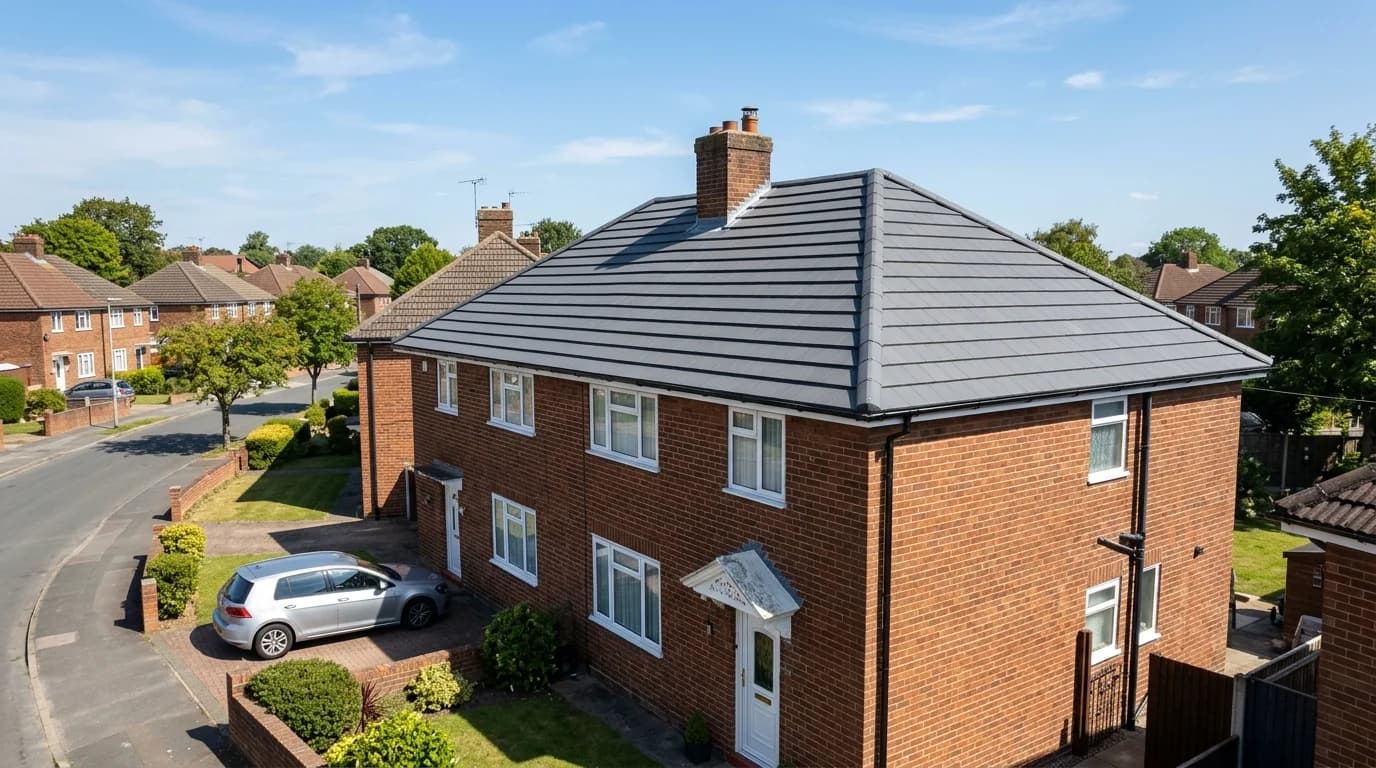
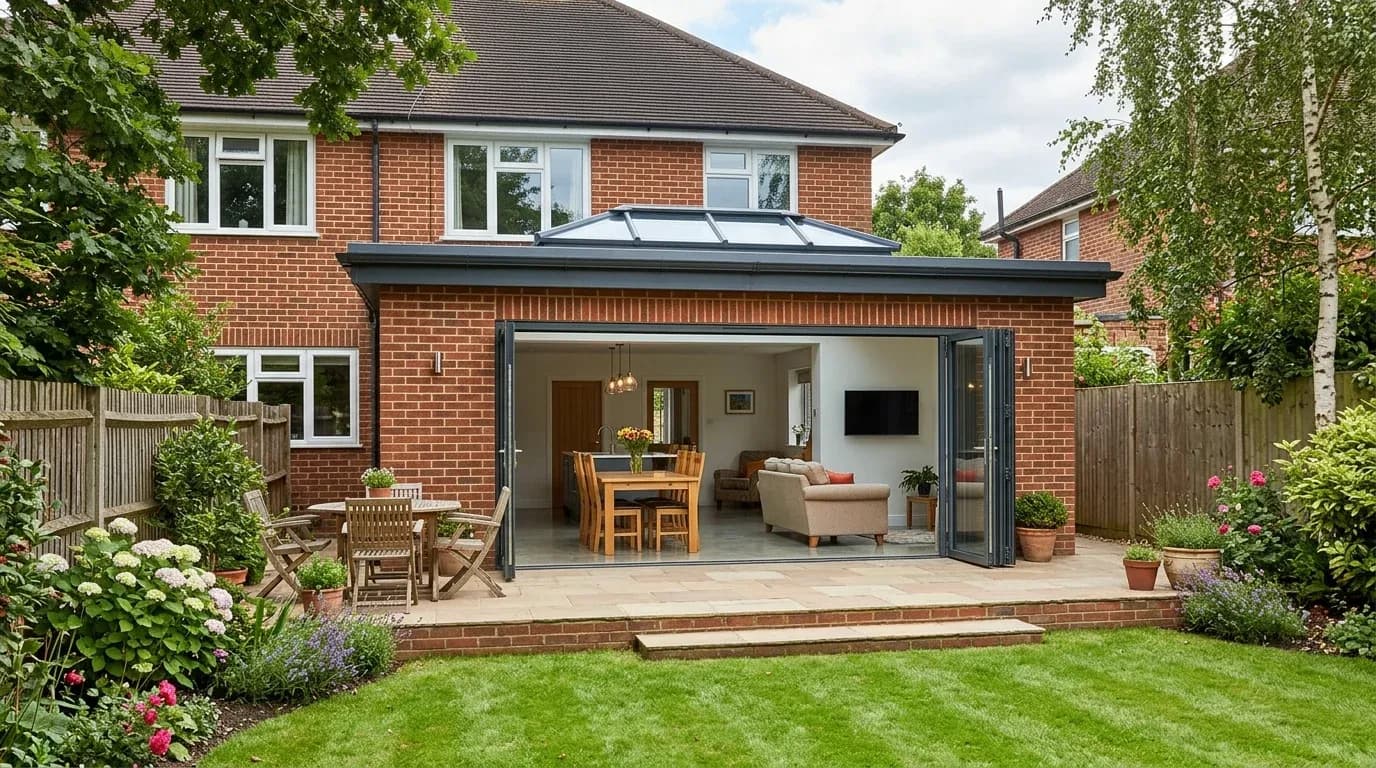
A single-storey rear extension typically costs £20,000 to £45,000. A double-storey extension runs £35,000 to £65,000. Costs vary by size, specification, and where you live - London jobs run 30 to 40% more than the national average. Builders price by floor area, so the number to budget against is extension cost per m²: £1,500 to £2,500 for a single-storey build.
£26,000
Single-storey (avg)
£1,500 to £2,500
Cost per sq m
£52,000
Double-storey (avg)
3 to 6 months
Typical timeline
Prices updated April 2026 · Based on published trade rates and UK market data.
Building Regulations approval is required for all extensions, regardless of whether planning permission is needed. Check the Planning Portal for current Permitted Development rules, GOV.UK for Building Regulations guidance, and the Party Wall Act 1996 if your extension is near a shared boundary. Always consult your local planning authority before starting work.
Extension Prices at a Glance
All prices are for the structural build - foundations, walls, roof, windows, and weatherproofing. Interior finishing (flooring, plastering, kitchen, bathroom) is typically quoted separately.
| Extension Type | Average |
|---|---|
| Single-storey rear extension (up to 20 sq m) | £26,000 |
| Single-storey rear extension (20 to 40 sq m) | £42,000 |
| Side return extension | £35,000 |
| Wrap-around extension (side + rear) | £55,000 |
| Double-storey rear extension | £52,000 |
| Over-garage extension | £28,000 |
Excludes VAT, professional fees, interior fit-out, and planning costs.
Get Free Extension Quotes
Compare prices from local builders near you. Fill in a few details and get free quotes, with no obligation to book.
Your details go to our quote partner, Leads.work, who pass them to a few local firms that cover your area. They'll contact you about the job, which may include a phone call. It's free for you, and we're paid a referral fee. How your details are used
Detailed Extension Guides
Dive deeper into costs for specific extension types.
Professional Fees and Additional Costs
These costs sit on top of the build quote and catch many homeowners by surprise. Budget for them from the start.
| Item | Cost |
|---|---|
| Architect / designer | £2,000 to £8,000 |
| Structural engineer | £500 to £1,500 |
| Planning application fee (England) | £548 |
| Building Regulations application | £400 to £900 |
| Party wall surveyor (if required) | £700 to £1,500 per surveyor |
| VAT (20%) | 20% on all work |
Worth considering: underfloor heating
New extensions are the ideal time to fit underfloor heating. The floor is already being laid from scratch, so the extra cost is far lower than retrofitting into an existing room. It works particularly well with open-plan kitchen-diners where radiators would take up wall space.
Kitchen Extension Cost
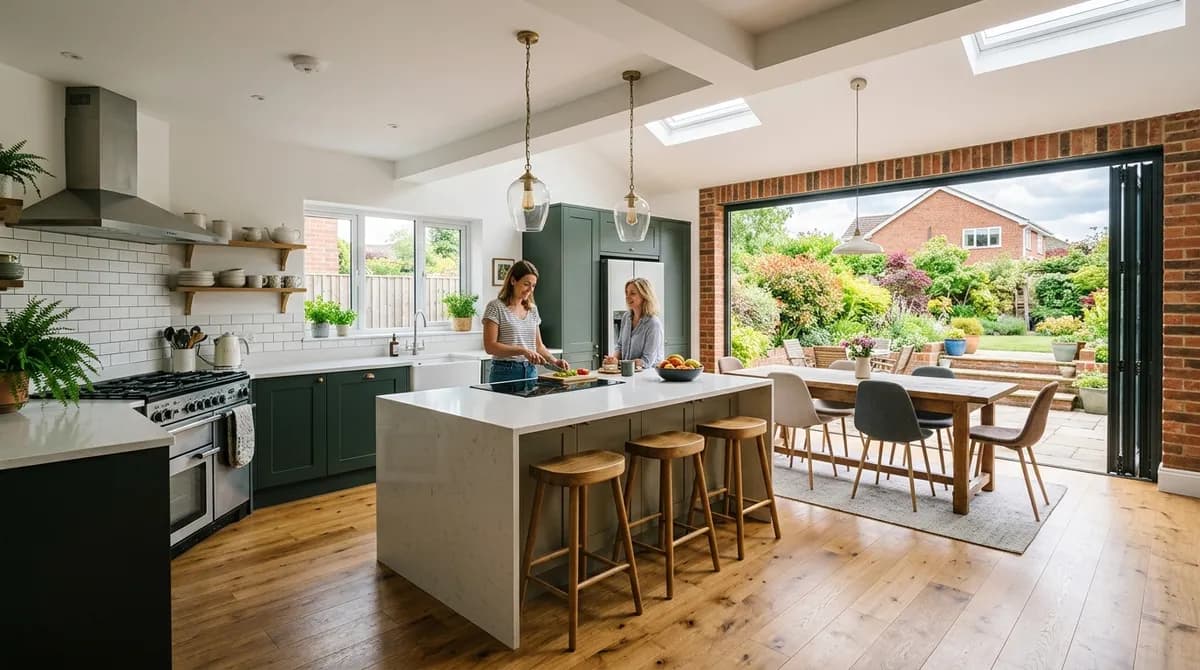
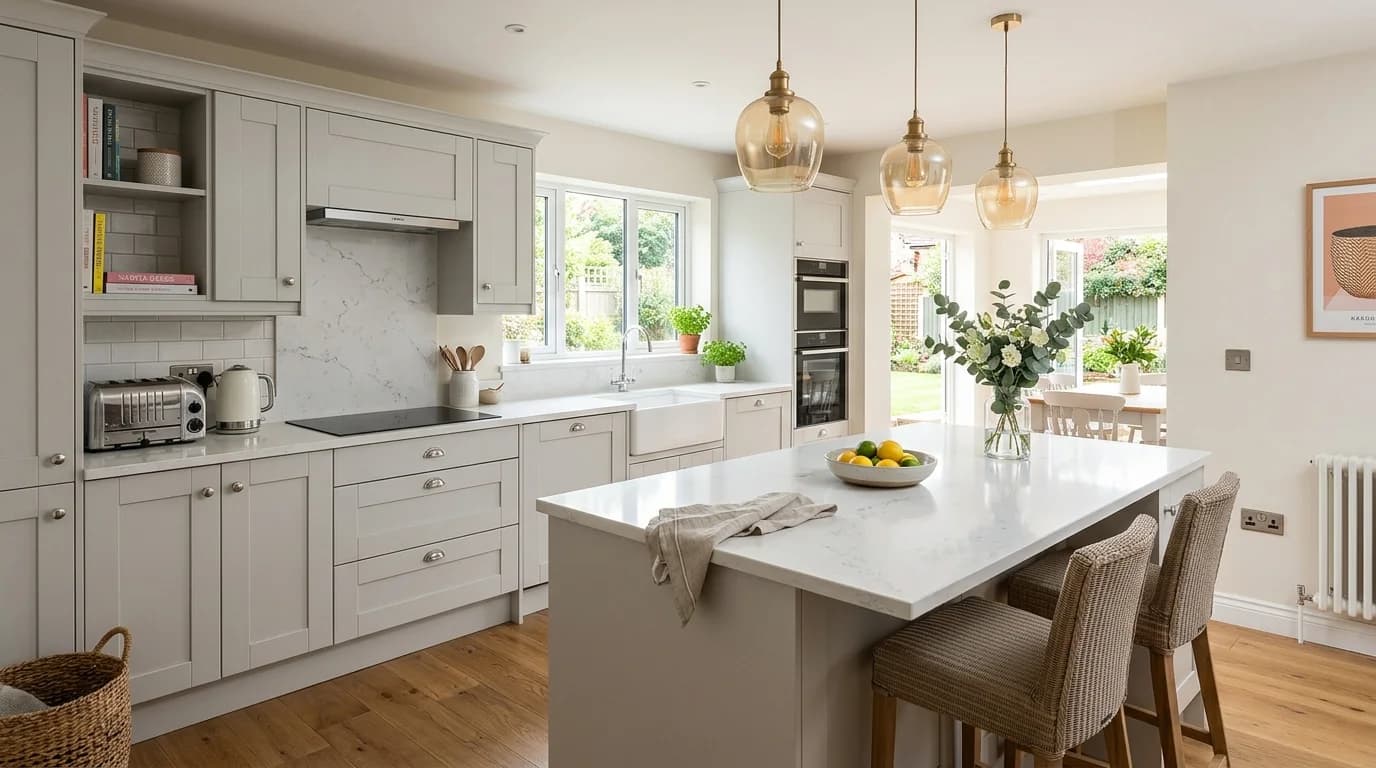
Kitchen extensions are the most common type of single-storey extension in the UK - and for good reason. Opening up the ground floor into a kitchen-diner is one of the best ways to add both living space and value to a property.
Small kitchen extension (3 x 3m)
Enough for a compact kitchen or dining area
£18,000 to £30,000
Medium kitchen extension (3 x 4m with bi-folds)
Room for a proper kitchen-diner with garden access
£25,000 to £40,000
Large open-plan (4 x 6m with island)
Full open-plan living, kitchen, and dining space
£35,000 to £55,000
These prices cover the extension build only - the structural shell, roof, windows, and weatherproofing. Kitchen fitting is extra. See our kitchen cost guide for a full breakdown of worktops, units, appliances, and installation.
Conservatory vs Extension Cost Comparison
Not sure whether to build a full extension or go for something lighter? Here's how the three main options compare.
Conservatory
£8,000 to £15,000
Pros: Cheapest option, usually no planning needed
Cons: Cold in winter, hot in summer - often underused
Orangery
£15,000 to £30,000
Pros: Warmer and more solid than a conservatory
Cons: May need planning permission, still partly glazed
Full extension
£20,000 to £45,000
Pros: Usable all year round, adds the most value
Cons: Higher cost, longer build time, may need planning
The bottom line:a full extension adds more value per pound spent than a conservatory. Conservatories are cheaper up front, but many homeowners end up replacing them with a proper extension within 10 to 15 years. If your budget can stretch to an extension, it's almost always the better long-term investment.
What Affects the Cost of a House Extension?
Size and footprint
The bigger the extension, the higher the cost - but larger extensions have a lower cost per square metre because fixed costs (foundations, roof structure, scaffolding) are spread over more floor space. A 15 sq m extension typically costs more per square metre than a 30 sq m extension of the same spec.
Single vs. double storey
A double-storey extension costs 50 to 70% more than a single-storey of the same footprint but gives you twice the floor area. The expensive parts - foundations, scaffolding, roof - are shared across both storeys. If you need both ground-floor living space and extra bedrooms, double-storey is almost always better value per square metre.
Specification and finishes
Bi-fold or sliding doors, glazed roofs, underfloor heating, and premium cladding all push costs up significantly. A box extension with standard windows at the budget end might cost £1,500/sqm; the same footprint with a flat sedum roof, full-width aluminium doors, and polished concrete floors can reach £3,000/sqm or more.
Foundation type and ground conditions
Standard strip foundations work on most sites. Poor ground conditions, nearby trees, or clay soil may require deeper trench-fill or pile foundations - adding £2,000 to £8,000 to groundworks. A builder should flag this risk before quoting, but a structural engineer's soil assessment is the only way to know for certain.
Location
Labour costs vary more for extensions than smaller jobs because the work takes longer and skilled trades (bricklayers, joiners, roofers) all command regional rates. London and the South East run 25 to 40% above the national average. Northern England and Wales tend to be 10 to 20% below.
Loft Conversion vs Extension: Which Is Better Value?
Weighing up a loft conversion against an extension? Both add space and value, but they suit different needs. Here is how the two stack up.
| Factor | Extension | Loft Conversion |
|---|---|---|
| Average cost | £20,000 to £65,000 | £25,000 to £55,000 |
| Timeline | 10 to 16 weeks | 6 to 10 weeks |
| Planning permission | Often not needed for single-storey rear | Usually not needed (PD) |
| Value added | 5 to 15% | 10 to 20% |
| ROI | 120 to 150% | 150 to 200% |
| Disruption | High (loss of garden, noise, mess) | Moderate (work mostly above) |
| Garden impact | Reduces garden size | None |
| Best for | Kitchen-diner, open-plan living | Extra bedroom, home office, en suite |
Extensions offer something a loft conversion simply cannot: more ground-floor living space. If you want a bigger kitchen, an open-plan kitchen-diner, or a ground-floor bedroom for accessibility, an extension is the right call. The space you get is more flexible too - you choose the layout from scratch rather than working within a roof shape.
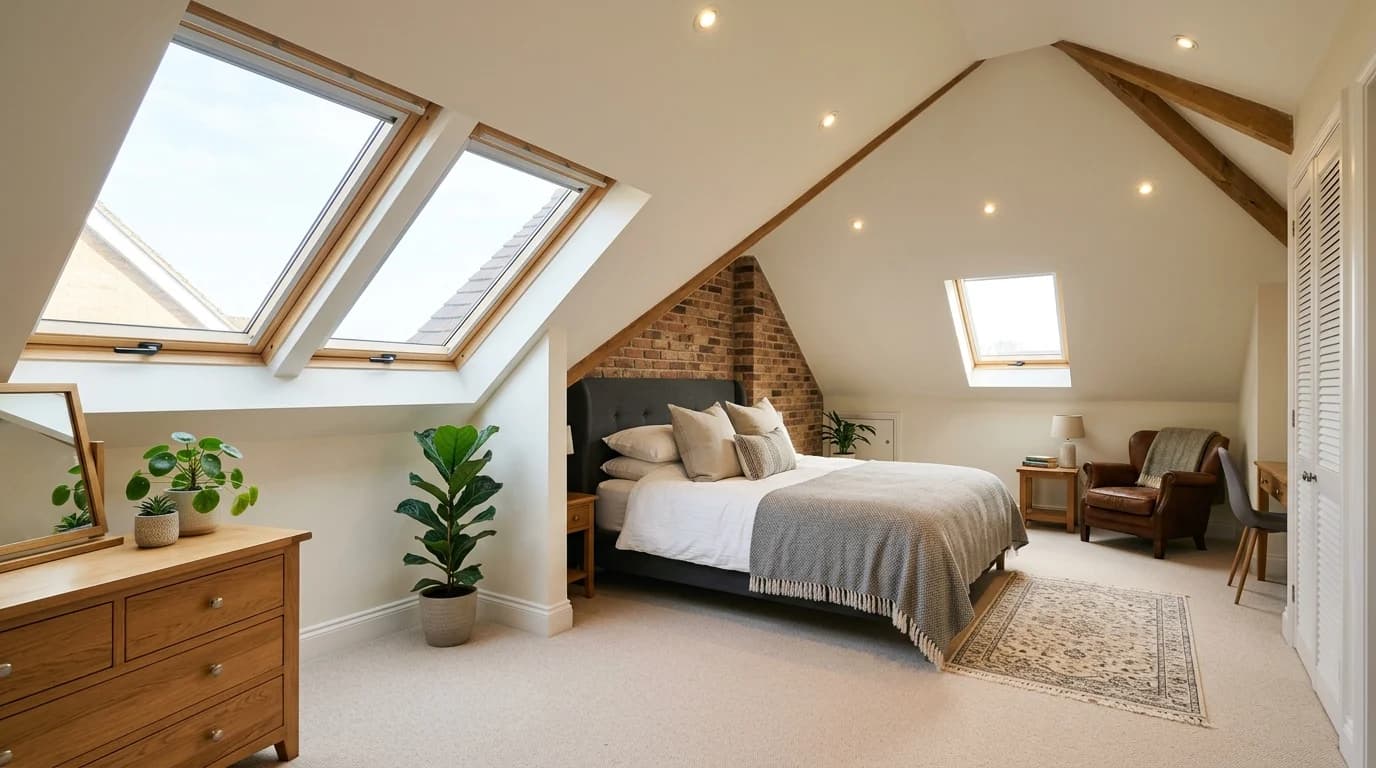
Loft conversions do tend to offer a stronger return on investment and shorter build times with less disruption to daily life. But ROI is only part of the picture - if the space you need is downstairs, a loft bedroom will not solve the problem. See our full loft conversion cost guide for a detailed comparison from the other side.
Extension Cost Per m² Explained
Builders quote by floor area, so extension cost per m² is the figure worth working out before you compare anything. Across the UK, a single-storey extension comes in at £1,500 to £2,500 per square metre for the structural shell at a mid-range specification. Budget spec sits nearer £1,500/sqm, while bi-fold doors, a glazed roof and premium finishes take the same footprint towards £3,000/sqm.
Two things move the rate. Size is one: cost per square metre drops as the extension gets bigger, because foundations, roof structure and scaffolding are spread across more floor space. Location is the other, and the regional table below runs from £1,950/sqm in the North East up to £3,100/sqm in London. Multiply the rate for your area by your floor area for a ballpark build cost, then add VAT, professional fees and interior fit-out on top. Our dedicated cost per m² guide breaks the rates down further.
Extension Costs by Region
Average cost per square metre for a single-storey extension, mid-range specification.
| Region | Cost per sq m | vs National |
|---|---|---|
| London | £3,100/sqm | +35% |
| South East | £2,700/sqm | +17% |
| East of England | £2,500/sqm | +9% |
| South West | £2,400/sqm | +4% |
| Midlands | £2,300/sqm | Average |
| Yorkshire | £2,100/sqm | -9% |
| North West | £2,150/sqm | -7% |
| North East | £1,950/sqm | -15% |
| Scotland | £2,100/sqm | -9% |
| Wales | £2,050/sqm | -11% |
How to Get Your Extension for Less
Extensions are large projects where smart decisions early on can save thousands.
Get at least three builder quotes
Extension quotes vary by 30 to 50% for identical work. Always get a minimum of three quotes from local builders with verifiable references. Ask each to quote on the same specification so you're making a fair comparison. The cheapest quote is not always the best - check insurance, previous work, and whether they use subcontractors.
Go Permitted Development and skip planning fees
If your extension qualifies under Permitted Development rights, you avoid the planning application fee, an 8 to 12 week wait, and the risk of refusal. Check your PD eligibility before appointing an architect - many smaller rear extensions qualify. Get a Lawful Development Certificate for around £274 to formally confirm PD status.
Consider timber frame over traditional brick
Timber frame extensions are faster to build and can be cheaper than traditional block construction, particularly for larger footprints. They also tend to have better thermal performance. Not suitable for all designs or planning requirements, but worth discussing with your architect.
Keep the shell spec separate from interior fitting out
Get your builder to quote for the structural shell - foundations, walls, roof, windows, and waterproofing. Do the internal fit-out (flooring, plastering, decorating, kitchen, bathroom) separately or yourself. This gives you more control over costs and lets you phase spending over time.
Serve party wall notices early
If your extension requires a party wall agreement, serve notice on neighbours at least two months before you want to start. Delays caused by party wall disputes are common and expensive. Getting this done early - before you even appoint a builder - saves time and keeps the project on schedule.
Check whether the 5% VAT rate applies
The reduced 5% VAT rate applies when you renovate a home that has been empty for two years or more, or when the work changes the number of dwellings, such as splitting a house into flats or converting a loft or garage into a separate self-contained home. Most standard extensions are charged at 20%, so ask your builder to confirm your VAT rate in writing. On smaller jobs, a sole trader with turnover under £90,000 does not charge VAT at all, so you save up to 20% on their labour. Confirm each trader's VAT status before you compare quotes.
Pay your deposit by credit card
Pay any deposit by credit card for anything between £100 and £30,000 and Section 75 of the Consumer Credit Act makes the card provider jointly liable if the builder goes bust or fails to deliver. The protection costs you nothing extra. Never hand over a large cash deposit up front, and stage the rest of the payments against work that is actually finished.
Comparing quotes is the simplest way to pay less
Getting three or four quotes and comparing them is how most homeowners avoid overpaying. It takes a couple of minutes, with no obligation.
Get my free quotesWhat to Expect: The Extension Build Process
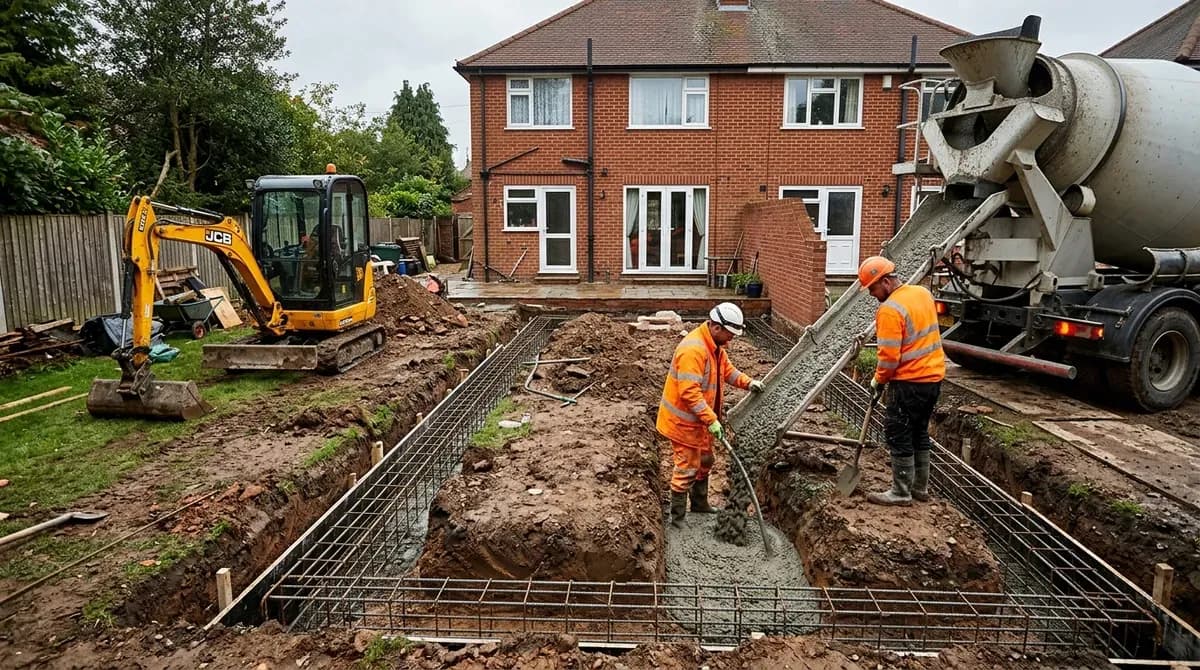
Most extension projects run 6 to 9 months from the first design conversation to moving furniture into the new space. Here is what happens at each stage.
- 1
Design and planning
4 to 12 weeks
Appoint an architect or architectural technician to produce drawings. If planning permission is required, the application typically takes 8 to 10 weeks. Most single-storey rear extensions up to 4 metres (detached) or 3 metres (attached) fall under Permitted Development, meaning no planning application is needed - but always confirm with your local authority. Budget £1,500 to £3,000 for design work.
- 2
Building Regulations approval
2 to 4 weeks
Submit a Building Regs application (fees set by your local authority, typically £400 to £900). You will also need structural engineer calculations for foundations and any steel beams - budget £300 to £800. Run this in parallel with planning to save time.
- 3
Party wall agreements
2 months minimum
If your extension is within 3 metres of a neighbour's boundary or 6 metres of their foundations, you need a Party Wall Agreement under the Party Wall etc. Act 1996. If your neighbour agrees in writing, no surveyor is needed. If they dissent or do not respond within 14 days, a surveyor must be appointed. Budget £700 to £1,500 per neighbour. Serve notice as early as possible - this is one of the most common causes of delays.
- 4
Groundworks and foundations
1 to 2 weeks
Excavate trenches, pour concrete foundations, and lay drainage. This is the most weather-dependent stage - heavy rain can delay the pour by days. Poor ground conditions or nearby trees may require deeper trench-fill or pile foundations, adding cost and time.
- 5
Walls and roof
2 to 4 weeks
Blockwork walls are built up, cavity insulation is installed, and the roof structure goes on. Flat roofs typically get an EPDM rubber or GRP fibreglass covering; pitched roofs get tiles to match the existing house. The extension starts to take shape during this stage.
- 6
Weathertight and windows
1 week
Windows and external doors are fitted, and the extension is sealed from the elements. Once weathertight, internal work can begin regardless of what the weather is doing outside. The internal space really opens up at this point.
- 7
First fix
2 to 3 weeks
Electrics, plumbing, and gas (if extending a kitchen) are roughed in. Underfloor heating goes in if specified. Insulation is fitted between studs and joists, then plasterboard goes up. All of this happens before any plastering or decoration.
- 8
Second fix and finishing
2 to 4 weeks
Plastering, kitchen or bathroom fit-out (if applicable), flooring, painting, and skirting boards. The breakthrough to the existing house - removing the old external wall - usually happens during this stage. It is dusty and disruptive, but the result is worth it.
- 9
Sign-off
1 to 2 days
Building Control carries out a final inspection and issues a completion certificate. Any planning conditions are formally discharged. Keep the completion certificate safe - you will need it when you come to sell the property.
Frequently Asked Questions
How much does a house extension cost in the UK?
A single-storey rear extension typically costs £20,000 to £45,000 depending on size and specification. A double-storey extension costs £35,000 to £65,000. Costs vary significantly by region - London and the South East run 25 to 40% above the national average. As a rough guide, budget £1,500 to £2,500 per square metre for a single-storey extension, more for high-spec finishes.
Do I need planning permission for a house extension?
Many single-storey rear extensions fall under Permitted Development (PD) rights, meaning no planning application is needed. PD rules allow a rear extension of up to 4 metres for a detached house (3 metres for semi or terraced) without planning permission, subject to conditions. Larger extensions, those in conservation areas, flats, and listed buildings all require full planning permission. Always check with your local planning authority before starting work. Building Regulations approval is required regardless of whether planning permission is needed.
How long does it take to build a house extension?
A single-storey extension of 20 to 30 sq m typically takes 10 to 14 weeks from groundworks to completion, assuming no major delays. A double-storey extension takes 16 to 24 weeks. Add 8 to 12 weeks before that for planning permission (if required) and Building Regulations approval. In practice, most extension projects run 6 to 9 months from initial design to moving furniture into the new space.
What is the cost per square metre for a house extension?
The typical cost per square metre for a single-storey extension in the UK is £1,500 to £2,500, including labour and standard materials but excluding VAT and professional fees. Budget spec comes in at the lower end; premium finishes with underfloor heating, bi-fold doors, and high-spec kitchen or bathroom fittings push towards £3,000/sqm and beyond. London adds a further 20 to 35% on top.
How do I work out extension cost per m²?
Divide the build quote by the internal floor area of the extension in square metres. That gives you the extension cost per m², which is the fairest way to compare quotes covering different sizes or specifications. Most UK single-storey extensions land between £1,500 and £2,500 per square metre for the structural shell, rising towards £3,000/sqm for premium finishes and higher again in London. Check what each quote includes before you compare, because a low rate often leaves out windows, doors or interior fit-out.
Does a house extension add value?
A well-executed extension typically adds more value than it costs, particularly in higher-value areas. A kitchen-diner extension that opens up the ground floor of a semi-detached is the most reliable value-adder - adding a bedroom via a double-storey extension can push a property into a higher price bracket entirely. The return is less predictable in lower-value markets where extension costs are proportionally higher relative to property value.
What are the hidden costs of a house extension?
The main hidden costs are: architect or designer fees (£2,000 to £8,000), structural engineer fees (£500 to £1,500), planning application fees (£548 for a householder application in England), Building Regs inspection fees (£400 to £900), party wall surveyor fees if adjoining a neighbour (£700 to £1,500 per surveyor), interior fitting out (kitchen, flooring, decorating - often not in the builder's quote), and VAT at 20% on all labour and materials.
Is a single or double storey extension better value?
A double-storey extension costs roughly 50 to 70% more than a single-storey of the same footprint, but you get twice the floor area. The foundations, roof, and scaffolding are the expensive parts - adding a second storey on top significantly reduces the cost per square metre compared to building two separate single-storey extensions. If you need more bedrooms as well as ground-floor space, double-storey is almost always better value.
Do I need a party wall agreement for an extension?
If your extension involves excavation within 3 metres of a neighbour's foundations, or work on or near a shared wall, you are required by law to serve a Party Wall Notice under the Party Wall etc. Act 1996. If your neighbour agrees in writing, no surveyor is needed. If they dissent or don't respond within 14 days, a party wall surveyor must be appointed. This is a common cause of delays - serve notice early.
Free, with no obligation to book.

Written by Chris Kervin, Co-Founder of Less.co.uk
Last updated: · Pricing based on published trade rates and UK market data · Methodology