How Much Does a Double Storey Extension Cost in 2026?
A double storey extension typically costs £35,000 to £70,000. That is not double the price of a single storey - you save on foundations and roof because they are built once, shared across both floors. Expect to pay roughly 50 to 70% more than single storey for twice the floor area.
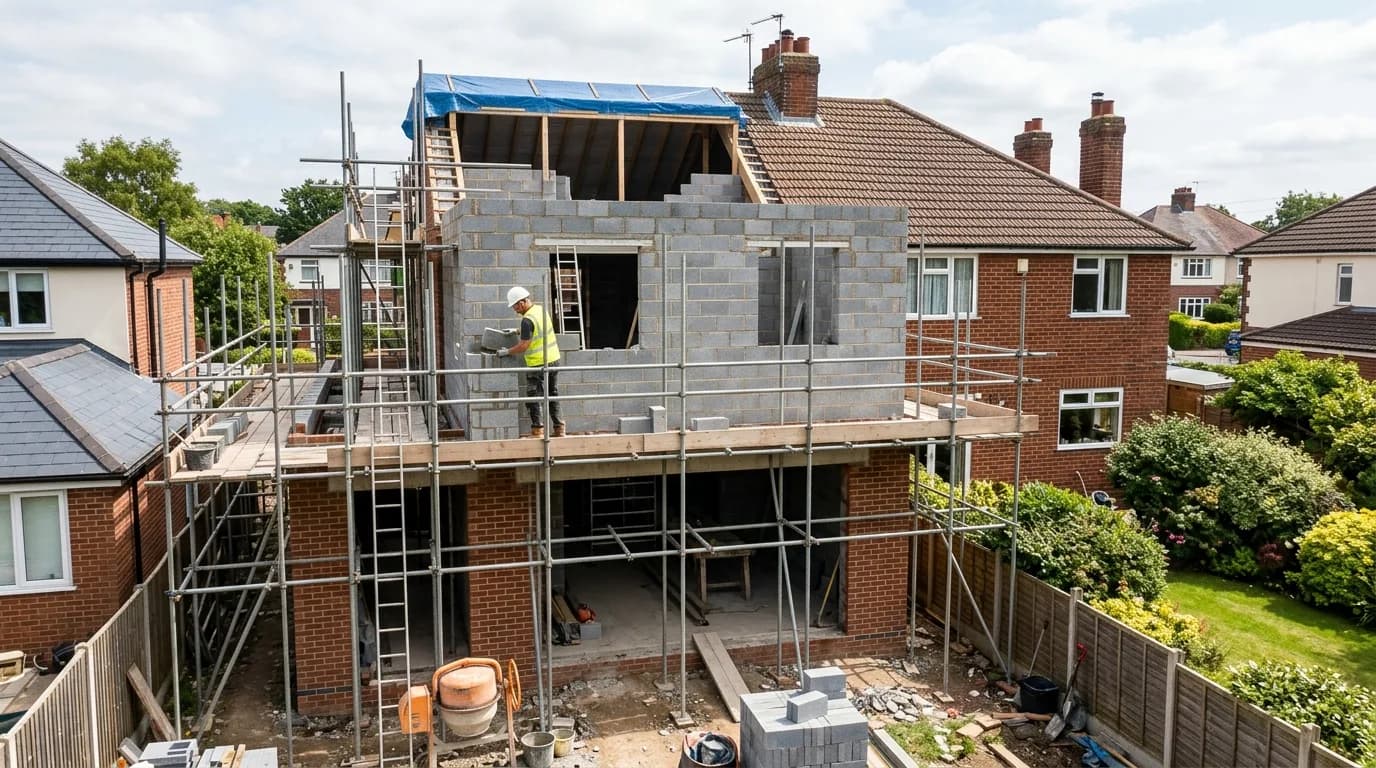
£35k-£70k
Typical range
50 to 70% more
vs single storey
14 to 20 weeks
Build time
Usually needed
Planning
Prices updated April 2026 · Based on industry data and contractor submissions.
Double storey extensions almost always need planning permission and Building Regulations approval. A structural engineer is essential for the foundation and steelwork design. Budget for these professional fees from the start.
Double Storey Extension Prices by Size
Prices for the structural build including both floors - foundations, walls, roof, windows, internal plastering, and basic finishes. Excludes VAT, professional fees, kitchens, and bathrooms.
| Size (footprint = total) | Average |
|---|---|
| Small (3m × 3m footprint = 18m² total) | £38,000 |
| Medium (3m × 4m footprint = 24m² total) | £48,000 |
| Large (4m × 5m footprint = 40m² total) | £62,000 |
| Very large (4m × 7m footprint = 56m² total) | £78,000 |
Excludes VAT (20%), professional fees, and interior fit-out. Prices based on mid-range spec in the Midlands.
Why Double Storey Is Better Value Per m²
The expensive parts of any extension are the bits at the bottom and the top - the foundations and the roof. Whether you build one storey or two, you only dig and pour foundations once, and you only build one roof. The additional cost of a second storey is mainly the extra walls, floor structure, windows, and internal finishes.
In practice, this means a double storey extension costs roughly 50 to 70% more than single storey for the same footprint - but delivers 100% more floor area. The cost per square metre drops significantly.
Cost comparison: single vs double (3m × 4m footprint)
| Element | Single storey | Double storey |
|---|---|---|
| Foundations | £4,000 to £8,000 | £5,000 to £10,000 |
| Walls (ground floor) | £6,000 to £12,000 | £6,000 to £12,000 |
| Walls (first floor) | - | £5,000 to £10,000 |
| Roof | £4,000 to £8,000 | £4,500 to £9,000 |
| Scaffolding | £1,500 to £2,500 | £2,500 to £4,000 |
| Windows and doors | £2,000 to £5,000 | £3,500 to £8,000 |
| Total floor area | 20m² (example) | 40m² (same footprint) |
Planning Permission for Double Storey Extensions
You will almost certainly need planning permission
Double storey extensions exceed the Permitted Development limits in almost all cases. A householder planning application costs £548 in England and takes 8 to 10 weeks for a decision. Your architect should handle the application and supporting documents.
Neighbour objections are more common
A two-storey extension is more visible and has greater potential to cause overlooking and loss of light. The planning officer will consider the impact on neighbours' amenity. Careful design - such as using obscure glazing on upper-floor windows facing neighbours - can address common objections.
Pre-application advice is worth the fee
Most local authorities offer pre-application advice for £100 to £300. This gives you an informal steer on whether your proposal is likely to be approved, and what changes might be needed. Far cheaper than submitting a full application and being refused.
Structural Engineering and Party Wall
Structural engineer - essential, not optional
A double storey extension places significantly more load on foundations than a single storey. The structural engineer designs the foundations (often deeper or wider than single storey), sizes the steel beams where the extension connects to the existing house, and designs the first-floor structure. Expect to pay £800 to £2,000 for structural engineering on a double storey extension.
Foundations need to be right from the start
Double storey extensions typically need deeper foundations than single storey - often 1 metre or more below ground level, depending on soil conditions. If the ground is clay or there are trees nearby, piled foundations may be required, adding £3,000 to £8,000 to the groundworks bill. A soil survey before you start saves money by eliminating guesswork.
Party wall considerations
If your extension is near a boundary, the deeper foundations and greater height make it more likely to trigger Party Wall Act requirements. Serve notices early - at least two months before you want to start on site. If a neighbour dissents, appointing a party wall surveyor and agreeing an award can take 4 to 8 weeks.
Additional Costs to Budget For
These sit on top of the builder's quote and are easy to overlook when budgeting.
| Item | Cost |
|---|---|
| Planning application fee (England) | £548 |
| Architect / designer | £3,000 to £10,000 |
| Structural engineer | £800 to £2,000 |
| Building Regulations application | £500 to £1,000 |
| Party wall surveyor (if needed) | £700 to £1,500 per surveyor |
| Staircase (if not repositioning existing) | £1,500 to £4,000 |
| VAT (20%) | 20% on all work |
How to Get Your Double Storey Extension for Less
Double storey extensions are large projects with plenty of scope to spend wisely.
Build double instead of coming back later for a second storey
Adding a second storey to an existing single storey extension later is far more expensive - you may need to demolish the roof, strengthen foundations, and re-scaffold. If there is any chance you will want the extra space in the next 5 to 10 years, build double from the start.
Finish the first floor to a basic standard initially
Get the builder to complete the shell and first fix on the upper floor, but hold off on the premium finishes. A plastered, carpeted bedroom costs much less to finish than a fully fitted bathroom or home office. You can upgrade finishes later when budget allows.
Engage a planning consultant before submitting
A pre-application consultation with your local planning department (typically £100 to £300) gives you early feedback on what is likely to be approved. This is far cheaper than a refused application, redesign, and resubmission. Some planning consultants offer this as part of their service.
Serve party wall notices the moment you have drawings
Party wall delays are one of the most common reasons double storey extensions overrun. You cannot start work until the party wall process is resolved. Serve notices as soon as your architect has drawings - do not wait until you have planning permission.
Useful resources
- Planning Portal: Extensions, Check if your double-storey extension needs planning permission
- Building Regulations Part A, Structural requirements for multi-storey builds
- LABC, Local Authority Building Control for Building Regulations sign-off
What to Expect: The Double Storey Extension Process
A two-storey extension is a major build that typically takes 14 to 20 weeks. Here's how the project normally progresses.
- 1
Architectural design and approvals
An architect prepares detailed plans including structural calculations. Planning permission is almost always required for a two-storey extension, along with Building Regulations and a Party Wall Agreement if you share a boundary.
- 2
Foundations
Deeper, wider foundations are dug to support the extra load of two storeys. A structural engineer specifies the foundation depth based on ground conditions and proximity to trees or drains.
- 3
Ground floor walls and first floor structure
Cavity walls are built to first-floor level. Steel beams and floor joists are installed to form the first-floor platform, then boarded over ready for the upper storey.
- 4
Upper storey walls and roof
Second-storey walls are built and tied into the existing house. The roof structure, whether pitched or flat, is constructed, tiled, and flashed to the main house.
- 5
Structural opening and steelwork
A structural steel beam (RSJ) is installed at each level to create the openings between the existing house and the new extension. Building Control inspects the steelwork before it is boxed in.
- 6
Internal fit-out and sign-off
First fix (electrics, plumbing, heating), insulation, plastering, then second fix (sockets, radiators, skirting, flooring). Building Control issues a completion certificate once all work passes inspection.
Frequently Asked Questions
How much does a double storey extension cost in 2026?
A double storey extension typically costs £35,000 to £70,000 depending on size and specification. That is roughly 50 to 70% more than a single storey extension of the same footprint, not double the price. The foundations and roof - the most expensive elements - are shared across both floors, which is where the saving comes from.
Do I need planning permission for a double storey extension?
Almost always, yes. Double storey extensions do not fall under Permitted Development rights in most cases. You will need to submit a householder planning application (£548 in England), which typically takes 8 to 10 weeks for a decision. Your architect or planning consultant can advise on the likelihood of approval before you apply.
Is a double storey extension better value than single storey?
Yes, in terms of cost per square metre. A double storey extension gives you twice the floor area for roughly 50 to 70% more cost. The foundations, scaffolding, and roof are the expensive parts - adding a second storey on top of existing foundations is significantly cheaper than building two separate single storey extensions. If you need both ground-floor space and extra bedrooms, double storey is almost always the better investment.
How long does a double storey extension take to build?
A double storey extension typically takes 14 to 20 weeks on site from groundworks to completion. Add 12 to 20 weeks before that for design, planning permission, structural engineering, and Building Regulations approval. The full process from initial design to moving furniture in usually takes 7 to 12 months.
Do I need a structural engineer for a double storey extension?
Yes, always. A structural engineer designs the foundations, calculates beam sizes where walls are removed or openings are formed, and ensures the existing house can take the additional load. The structural calculations form part of the Building Regulations submission. Budget £800 to £2,000 for structural engineering fees on a double storey extension.
Will a double storey extension need a party wall agreement?
If your extension involves excavation within 3 metres of a neighbour's foundations, or building on or near a shared boundary wall, you must serve a Party Wall Notice under the Party Wall etc. Act 1996. Double storey extensions are more likely to trigger this requirement due to deeper foundations. If your neighbour consents in writing, no surveyor is needed. If they dissent, expect £700 to £1,500 per surveyor - and you pay for both.

Written by Chris Kervin, Co-Founder of Less.co.uk
Last updated: · Pricing based on industry data and verified contractor submissions · Methodology
Compare real quotes for your job
Prices move a lot with your postcode, the access on site and the spec you choose. Get up to 3 free quotes from vetted local tradespeople and see what yours actually comes to, with no obligation to book.
More home improvement costs