Extension Cost in South East (2026)
A extension in South East typically costs between £36,000 and £54,000 - roughly 13% above the UK average. Higher local labour rates and strong demand are the main factors driving prices up.
£36,000 to £54,000
Typical range
£45,000
Average cost
+13%
vs national avg
10 to 16 weeks
Typical duration
Free, no obligation. Quotes from vetted tradespeople in South East.
Important: Building Regulations approval is required for all house extensions. Most single-storey rear extensions up to 4m (detached) or 3m (semi/terrace) fall under Permitted Development, but you should always check with your local council before starting work.
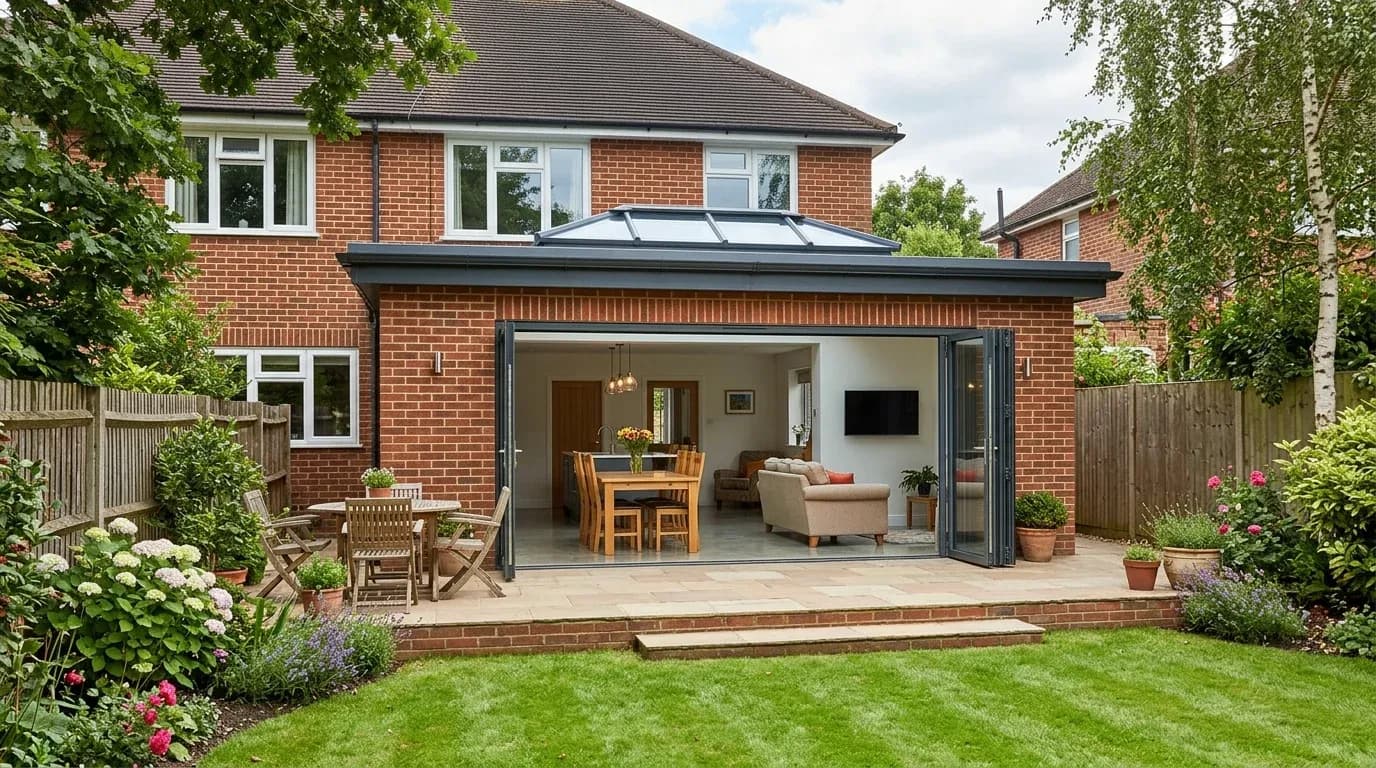
South East extension prices
Prices below reflect the typical cost of an extension in South East, including materials and labour.
| Type | Details | South East range | South East avg |
|---|---|---|---|
| Single-storey rear | 3m x 4m basic build, plastered and decorated | £36,000 to £54,000 | £45,000 |
| Single-storey side | Infill or wraparound, converting dead space | £32,400 to £48,600 | £40,500 |
| Double-storey rear | Two floors, extra bedroom and living space | £63,000 to £94,600 | £78,800 |
All prices include materials and labour. Based on contractor submissions and market data, April 2026.
What affects extension costs in South East
Extension costs are heavily influenced by local build rates - the cost per square metre for structural work. In South East, builders typically charge £50 to £75 per hour for general construction labour, which affects the per-square-metre rate for your build.
The South East has a mix of commuter-belt homes, historic market towns, and coastal properties. Access is generally good, but conservation areas in towns like Canterbury, Brighton, and Guildford can add restrictions. The type of property you are extending matters. A straightforward rear extension on a detached house is simpler than extending a mid-terrace or a property on a slope.
Foundation costs can vary significantly. Chalk and clay soils are common in the South East, which can sometimes require specialist foundation solutions.
Planning and Building Regulations fees are set nationally, but if your extension requires full planning permission rather than falling under Permitted Development, the design and application process adds time and cost. The South East has numerous conservation areas and Areas of Outstanding Natural Beauty (AONB) that can restrict development.
Extension work in South East: what to know locally
Our South East extension guide covers homes across the region, including Brighton, Reading, Milton Keynes, Southampton, Oxford, Maidstone and Guildford. As one of the most affluent regions and closest to London, the South East sits at the higher end of UK labour and trade pricing, generally above the national average.
The South East has a broad spread of stock, from period cottages and Victorian terraces in older towns to large volumes of post-war and modern suburban estate housing in commuter towns like Milton Keynes and Reading, which affects whether walls are solid or cavity and how easily extensions can be added.
Building regulations and planning in South East
The South East contains large protected landscapes such as the South Downs, the Chilterns, the Surrey Hills and the Kent Downs, where National Park and AONB status can add planning restrictions to extensions, outbuildings and external alterations on top of Building Regulations.
Grants and schemes that can help in South East
- Warm Homes: Local Grant, Council-delivered England grant (2025-2028) of up to £30,000 for lower-income households in EPC D-G homes, covering insulation and low-carbon heating, subject to your local authority taking part.
- Boiler Upgrade Scheme, Government grant of £7,500 towards an air or ground source heat pump (and £5,000 for biomass), open across England and extended to 2028.
- ECO4, Energy supplier-funded scheme giving eligible low-income households free insulation, heating and boiler upgrades, running until the end of December 2026.
Eligibility and scheme details change, always check the official scheme page before applying.
Strong demand from a wealthy commuter belt combined with extensive protected landscapes means the South East often pairs higher build costs with tighter planning scrutiny in and around its National Parks and Areas of Outstanding Natural Beauty.
See all South East home improvement costs →How South East compares
South East extension costs compared to other UK regions and the national average.
| Region | Average cost | vs national avg |
|---|---|---|
| London | £51,000 | +28% |
| South EastYou are here | £45,000 | +13% |
| National average | £40,000 | - |
| East of England | £42,600 | +7% |
| South West | £41,600 | +4% |
How to get your extension for less in South East
Use Permitted Development rights
If your extension qualifies under Permitted Development, you skip the full planning application - saving £200 to £500 in fees and potentially months of waiting. Check with your local council before assuming you need planning permission.
Get a fixed-price contract
Extensions are complex and costs can escalate. Insist on a fixed-price contract from your South East builder that covers all structural work, roofing, plastering, electrics, and plumbing. Vague quotes lead to expensive surprises.
Build during quieter months
Builders in South East are typically busiest from April to September. Starting your build in autumn or winter can sometimes get you a better price, though weather delays are more likely.
Frequently asked questions
How much does a house extension cost in South East?
Do I need planning permission for an extension in South East?
How long does it take to build an extension in South East?
Compare real quotes for your job
Prices move a lot with your postcode, the access on site and the spec you choose. Get up to 3 free quotes from vetted local tradespeople and see what yours actually comes to, with no obligation to book.