When Do You Need Planning Permission? (UK Guide)
Most common home improvements in England and Wales don't need planning permission thanks to Permitted Development rights. Extensions, loft conversions, and outbuildings are usually allowed within certain size limits. But Conservation Areas, listed buildings, and flats have stricter rules. Here's the full breakdown by project type.

Chris Kervin
Written by Chris Kervin, Co-Founder of Less.co.uk
The short answer
Most internal work and many external changes fall under Permitted Development and don't need planning permission. Extensions, loft conversions, and outbuildings are usually allowed within size limits. But if you live in a Conservation Area, a listed building, or a flat, the rules are stricter. When in doubt, check with your local planning authority - it's free.
What is Permitted Development?
Permitted Development (PD) is a set of rights granted under the Town and Country Planning (General Permitted Development) Order that let homeowners carry out certain building work without applying for planning permission. Think of it as a blanket approval that already exists for common improvements - as long as you stay within the rules.
These rights apply to houses in England and Wales. Flats, maisonettes, and some houses in designated areas (Conservation Areas, National Parks, Areas of Outstanding Natural Beauty) have reduced PD rights.
Crucially, Permitted Development is separate from Building Regulations. Even if you don't need planning permission, you almost certainly need Building Regs approval for structural work, electrical changes, or anything affecting fire safety.
Extensions
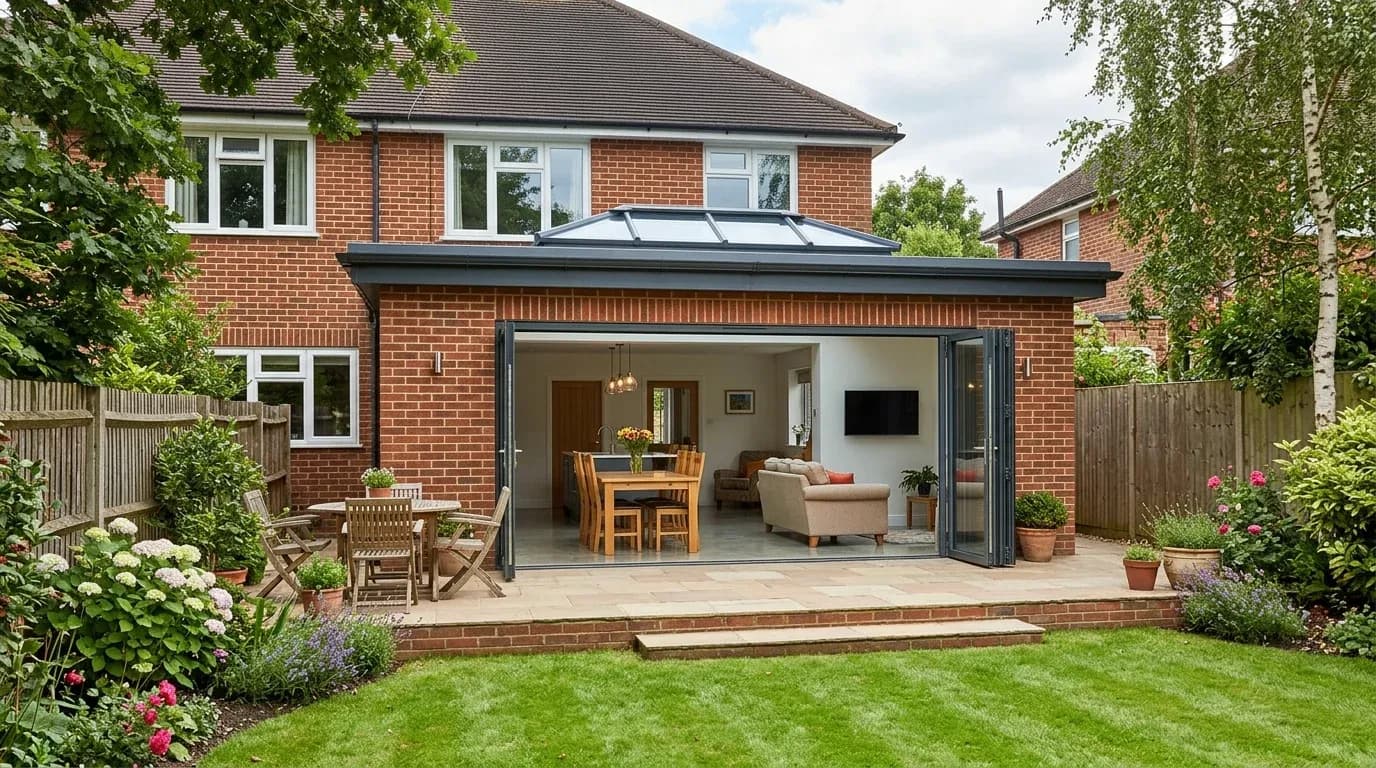
Single-storey rear extensions are one of the most common home improvements, and most don't need planning permission under Permitted Development.
The rules for a single-storey rear extension without planning permission:
- Detached houses: extends up to 4 metres from the original rear wall (or up to 8 metres via prior approval)
- Semi-detached and terraced: up to 3 metres (or up to 6 metres via prior approval)
- Maximum height of 4 metres
- Must not cover more than half the total garden area
- Single storey only - no rooms above
- Materials should be similar in appearance to the existing house
Two-storey extensions have tighter limits: maximum 3 metres from the rear wall, and they can't be built within 7 metres of the rear boundary. Side extensions must be single-storey and no wider than half the original house.
Front extensions and side extensions on a corner plot almost always need planning permission, as they change the street scene.
Loft conversions
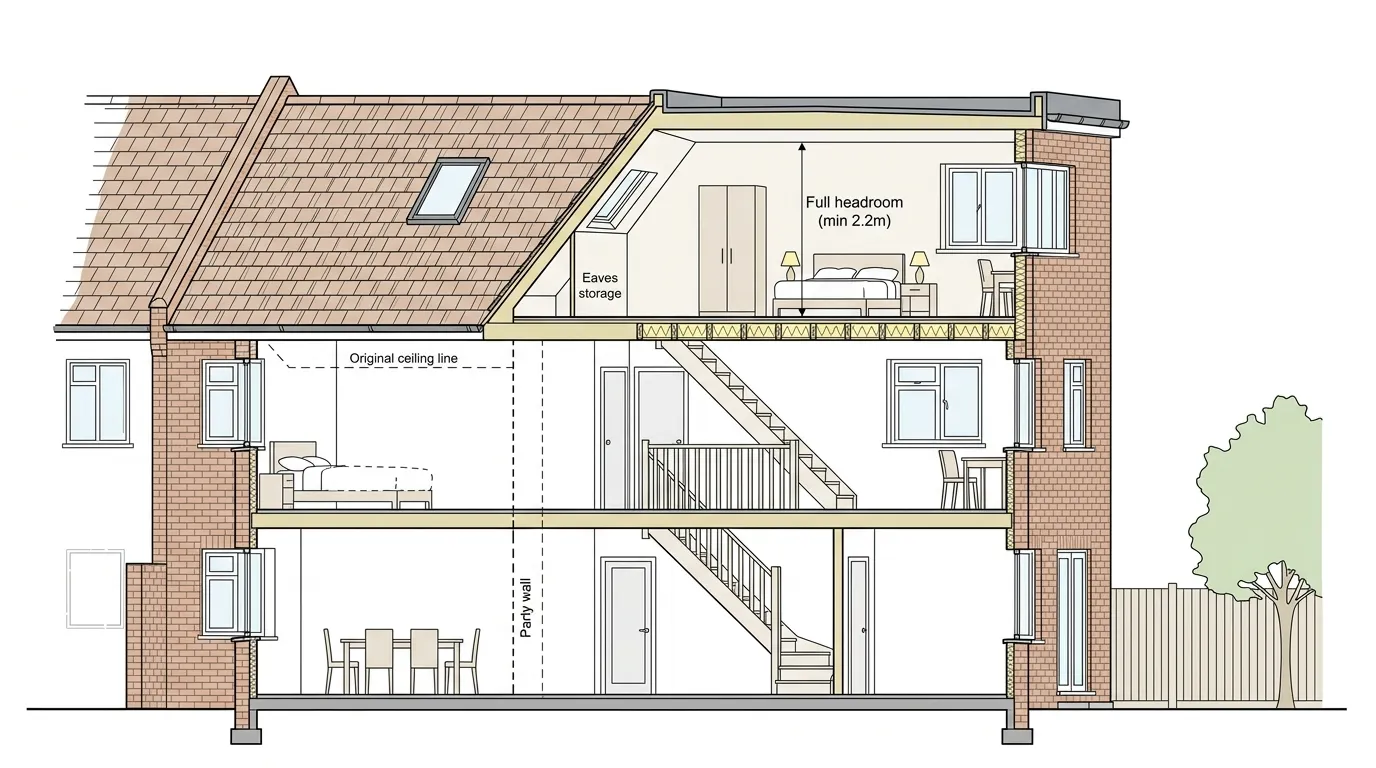
Most loft conversions are Permitted Development. The key limits are:
- Terraced houses: up to 40 cubic metres of additional space
- Detached and semi-detached: up to 50 cubic metres
- No extension beyond the existing roof plane on the front elevation facing a road
- Materials must be similar to the existing house
- Side-facing windows must be obscure-glazed and non-opening below 1.7 metres
- The roof extension must not be higher than the existing ridge
Rear dormers are generally fine under PD. Front dormers that face a road need planning permission. Hip-to-gable conversions are allowed under PD for detached and semi-detached houses, but not in Conservation Areas.
Outbuildings, sheds, and garden rooms
You can build an outbuilding without planning permission as long as it's for a purpose "incidental to the enjoyment of the house" - that means a home office, gym, workshop, or garden room. Not a separate dwelling or a business premises.
The rules: the building must be single-storey, with a maximum eaves height of 2.5 metres. If it's within 2 metres of any boundary, the overall height is capped at 2.5 metres. Otherwise, the maximum is 4 metres for a dual-pitched roof or 3 metres for anything else. It must not cover more than half the garden and cannot be forward of the principal elevation.
Fences, gates, and walls
Fences and walls up to 2 metres high don't need planning permission - unless they're next to a road used by vehicles, in which case the limit drops to 1 metre. In Conservation Areas, you'll need permission to take down any fence or wall over 1 metre that fronts a road.
Planning permission is also needed if your fence would obstruct visibility at a junction. Your local highways authority can advise on this.
Driveways and hard standing
Since 2008, paving over front gardens with impermeable surfaces (concrete, tarmac) larger than 5 square metres requires planning permission. This was introduced to tackle flooding caused by rainwater runoff.
The workaround is simple: use a permeable surface. Gravel, permeable block paving, or any system that directs rainwater to a lawn or border is fine and doesn't need permission. Most modern driveway installations use permeable options for exactly this reason.
Conservatories
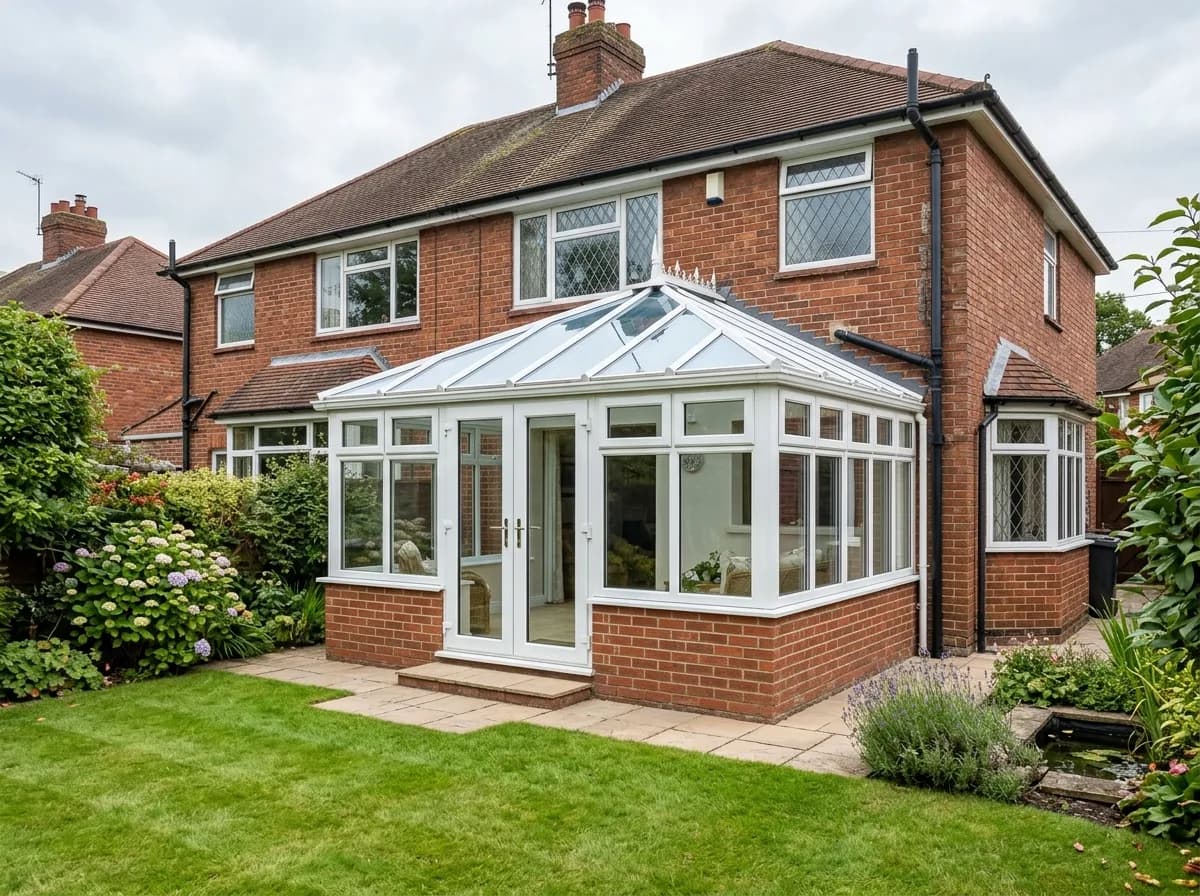
Conservatories follow the same rules as single-storey extensions. They're Permitted Development as long as they stay within the size limits, don't exceed 4 metres in height, and are at the side or rear of the property.
One detail people miss: if you remove the wall between the conservatory and the house, it becomes part of the house for Building Regulations purposes. That means it needs to meet insulation, glazing, and heating standards - which adds cost.
Solar panels
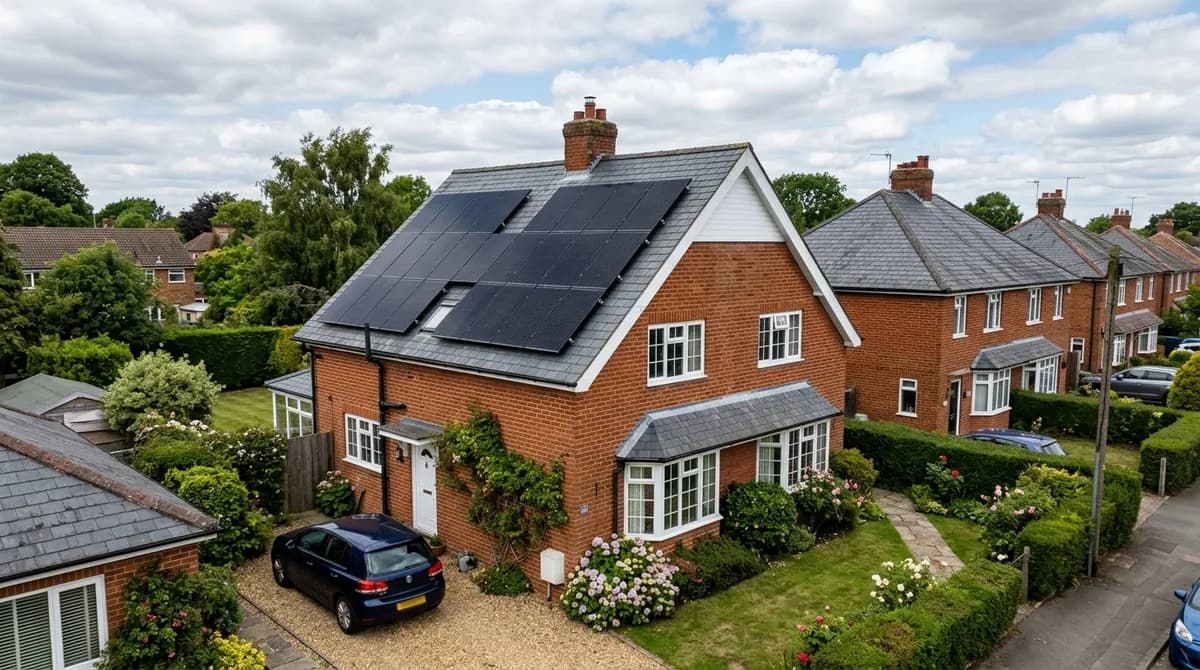
Rooftop solar panels are Permitted Development for most houses. They must not protrude more than 200mm beyond the roof plane and must not be higher than the ridge. In Conservation Areas and on listed buildings, panels visible from a road do need permission.
Ground-mounted solar panels are also PD as long as they don't exceed 4 metres in height, aren't within 5 metres of the boundary, and the total array doesn't exceed 9 square metres.
Projects that always need planning permission
Some projects always need a full planning application:
- Building a new dwelling (including converting a garage into a separate flat)
- Work on a listed building (you'll need Listed Building Consent separately)
- Any work in a Conservation Area that involves demolition or changes to the front elevation
- Converting a house into flats
- Building forward of the principal elevation (facing the road)
- Any commercial use of a residential property
- Exceeding the Permitted Development size limits for your property type
How to check for free
Every local planning authority in England offers a free pre-application advice service for householders, or at minimum an informal query service. You can also apply for a Lawful Development Certificate (LDC), which is a formal confirmation that your proposed work is Permitted Development. An LDC costs £129 and is worth having if you ever plan to sell - it proves the work was legal.
The Planning Portalis the official government resource and has interactive guides for common projects. Your local council's planning department can also answer straightforward questions over the phone or by email.
Frequently asked questions
Do I need planning permission for a single-storey rear extension?
Usually not, provided it meets Permitted Development rules. For detached houses, the extension can project up to 8 metres from the rear wall (4 metres for other house types) under the prior approval process, or up to 4 metres (3 metres for non-detached) without any notification. The extension must be single-storey, no higher than 4 metres, and not cover more than half the garden.
Can I convert my loft without planning permission?
In most cases, yes. A loft conversion is Permitted Development as long as the additional space doesn't exceed 40 cubic metres for terraced houses or 50 cubic metres for detached and semi-detached houses. Dormer windows on the front elevation facing a road do need planning permission. You will still need Building Regulations approval regardless.
What happens if I build without planning permission?
The council can issue an enforcement notice requiring you to undo the work or apply for retrospective planning permission. In serious cases, they can prosecute. Even if enforcement isn't immediate, it will cause problems when you try to sell - solicitors check planning records during conveyancing, and mortgage lenders won't lend against unpermitted work.
How much does a planning application cost?
In England, a householder planning application costs £548 (as of 2026). If you use an architect or planning consultant to prepare and submit the application, their fees typically add £500 to £1,500 depending on the complexity. The decision usually takes 8 weeks.
Planning a project?
Check the costs for your project with our detailed cost guides, including regional breakdowns and real UK pricing data.
Related articles
Extension vs Loft Conversion
Which adds more value and space to your home?
How to Choose a Builder
10 things to check before you hire anyone.
Do I Need Building Regs for Internal Works?
What counts as notifiable work inside your home.
Loft Conversion Types Explained
Dormer, hip-to-gable, mansard, and Velux - compared.