Extension vs Loft Conversion: Which Adds More Value?
You need more space. But should you build out or convert up? Both cost serious money. Both add value. But the right choice depends on your house, your family, and what you actually need the space for. Here's the full comparison.

Chris Kervin
Written by Chris Kervin, Co-Founder of Less.co.uk
The short answer
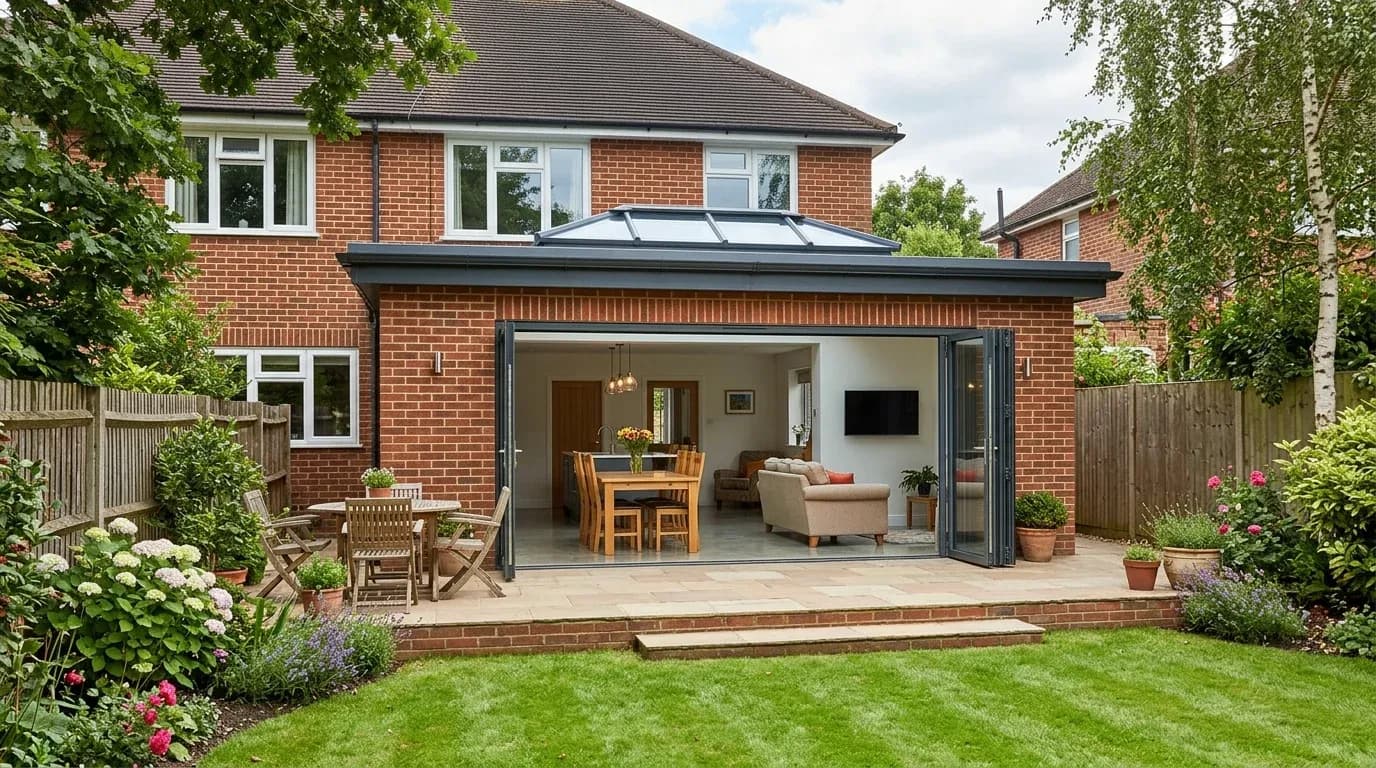
Need a bedroom or office? Loft conversion. Need a bigger kitchen or family room? Extension. For pure ROI, a loft conversion typically wins - it adds 15 to 20% to property value versus 5 to 10% for an extension. But the "right" choice depends on what your home actually needs.
The side-by-side comparison
Here's how the two projects stack up across every factor that matters.
| Factor | Extension | Loft conversion |
|---|---|---|
| Typical cost | £30,000 to £60,000 | £35,000 to £55,000 |
| Build time | 10 to 16 weeks | 6 to 10 weeks |
| Planning permission | Often needed | Usually PD |
| Building Regulations | Yes | Yes |
| Disruption to daily life | High (ground floor unusable) | Moderate (mostly upstairs) |
| Garden impact | Reduces garden size | No impact |
| Value added | 5 to 10% | 15 to 20% |
| Best for | Kitchen-diners, family rooms | Extra bedrooms, home offices |
| Party wall agreement | Often needed (semis/terraces) | Sometimes (dormers) |
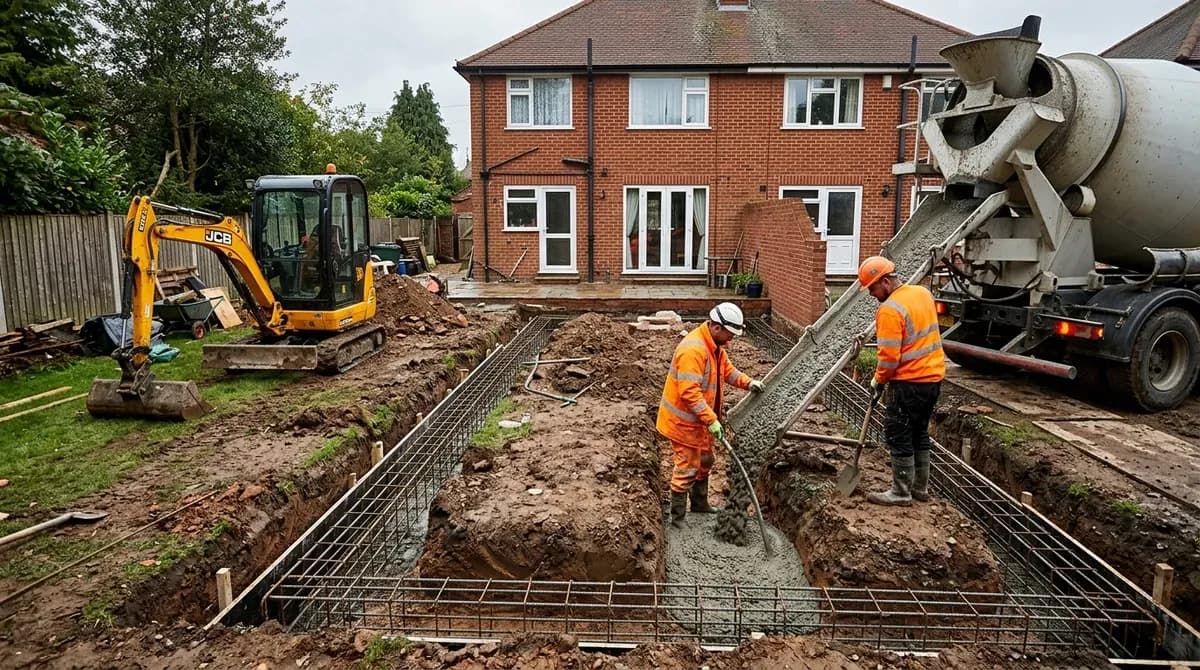
| Foundation costs | £5,000 to £15,000 | None |
Cost: where the money actually goes
On paper, both projects cost roughly the same. But the cost breakdown is very different, and extensions tend to have more surprises.
Extension costs (single-storey rear, 4m x 5m)
Foundations and groundworks: £5,000 to £12,000. This is the big variable - ground conditions, proximity to drains, and trees all affect the cost. If your soil is clay or there are nearby trees, your structural engineer may specify deeper foundations. That alone can add thousands.
Walls, roof, and shell: £10,000 to £20,000. Blockwork, roof structure, insulation, windows, and external doors.
Fit-out (kitchen, electrics, plumbing, flooring): £10,000 to £25,000. If you're extending to create a kitchen-diner, the kitchen itself is often the biggest single cost within the extension.
Making good the garden, drainage connection, and external finishes: £2,000 to £5,000.
Get a personalised cost estimate in under 2 minutes
Loft conversion costs (rear dormer)
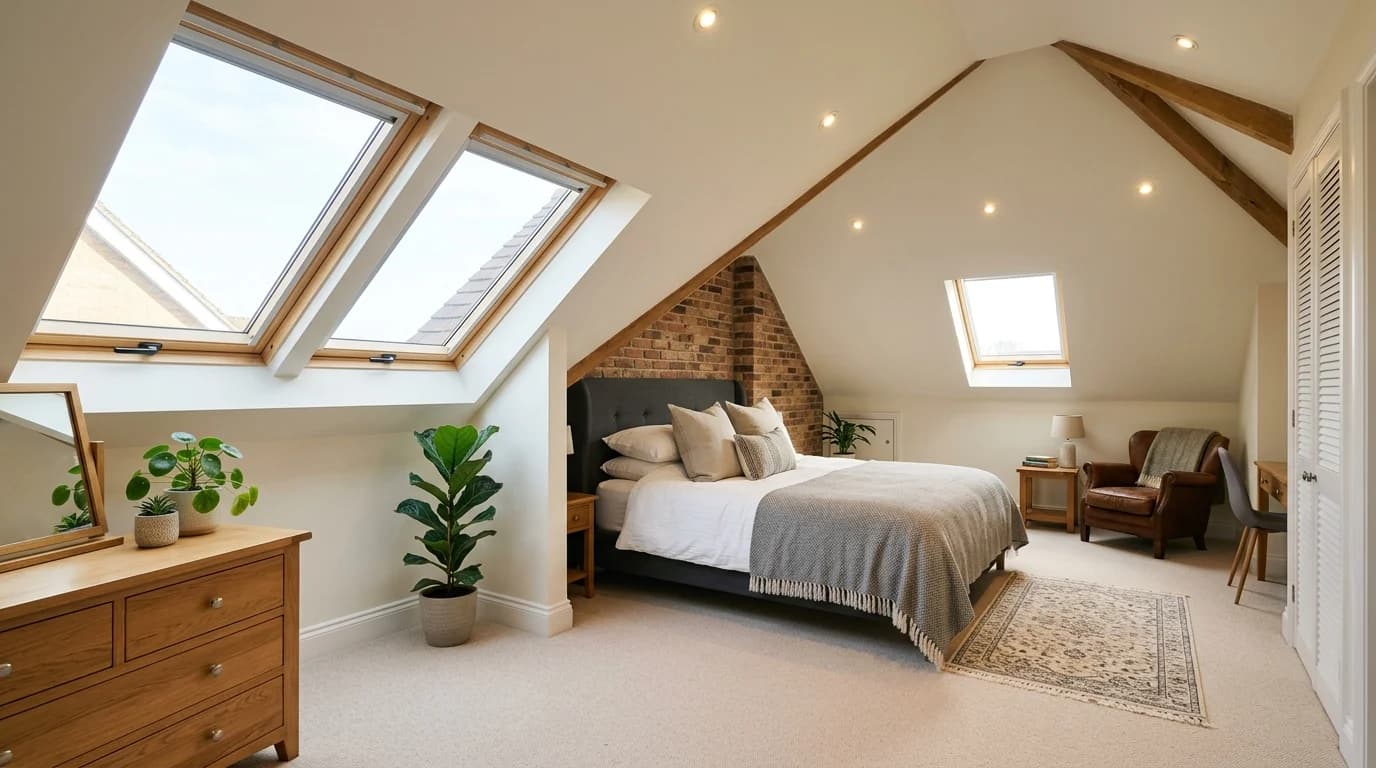
Structural work and dormer construction: £15,000 to £25,000. Steel beams, new floor joists, dormer frame, roofing, and insulation.
Staircase: £2,000 to £5,000. Building the staircase and adapting the landing below.
Fit-out (en-suite, electrics, plastering, flooring): £8,000 to £15,000. An en-suite adds £3,000 to £6,000 but is strongly recommended for the value it adds.
Fire safety (fire doors, smoke alarms, escape route): £1,000 to £2,000. Building Regulations require specific fire safety measures for loft conversions.
Timeline and disruption
A loft conversion is quicker and less disruptive. Most of the work happens upstairs and outside (building the dormer). You can live in the house throughout, though it gets noisy and dusty. Expect 6 to 10 weeks for a standard dormer conversion.
An extension is more disruptive. Your garden becomes a building site. If you're extending the kitchen, you may lose access to it for several weeks. Expect 10 to 16 weeks from breaking ground to completion - longer if the weather is bad or there are planning delays.
The Party Wall Act can also add time. If your extension is within 3 metres of a neighbouring property's foundation (or 6 metres if you're excavating deeper), you need to serve a Party Wall Notice. This gives neighbours 14 days to respond and can add 4 to 8 weeks if they appoint a surveyor.
Planning permission and Building Regs
Loft conversions: Most dormer and Velux conversions fall under Permitted Development rights. You don't need planning permission unless you're in a conservation area, you're exceeding the volume allowance (50m³ for detached, 40m³ for terraced), or you're adding a dormer to the front elevation. Building Regulations approval is always required.
Extensions: Single-storey rear extensions up to 6 metres from the original rear wall (8 metres for detached houses) usually fall under Permitted Development. But there are conditions around height, proximity to boundaries, and materials. Anything bigger needs full planning permission, which takes 8 to 12 weeks and isn't guaranteed. Building Regulations are always required.
Which adds more value?
This is where loft conversions consistently win on paper. According to RICS valuation data, adding a bedroom - especially with an en-suite - moves your property into a different buyer bracket. A 3-bed house selling as a 4-bed commands a significantly higher price.
Extensions add value too, but the return is typically lower as a percentage. A bigger kitchen-diner is attractive to buyers, but it doesn't change the bedroom count on Rightmove - and that's what most people filter by.
The exception: if your house already has 4+ bedrooms but a small, dated kitchen, an extension may add more value than another bedroom. It's about what your property currently lacks.
When to choose an extension
- You need more ground-floor living space - a bigger kitchen, open-plan kitchen-diner, or family room.
- Your loft doesn't have adequate head height (less than 2.2m at the ridge).
- You already have enough bedrooms - adding another won't meaningfully increase value.
- You want to create a ground-floor bedroom or accessible bathroom for a family member with mobility needs.
- Your garden is large enough to absorb the lost space without affecting the property's appeal.
When to choose a loft conversion
- You need an extra bedroom - especially going from 2 to 3 or 3 to 4 bedrooms.
- You want a home office, study, or guest room away from the main living areas.
- Your garden is small and you don't want to lose any outdoor space.
- You want to minimise disruption - loft conversions are quicker and less invasive.
- You're in an urban area where land is expensive and building up makes more financial sense than building out.
Get a personalised cost estimate in under 2 minutes
Can you do both?
If budget allows, doing both simultaneously can actually save money. You share scaffolding costs, building control fees, and your architect/structural engineer can design both at once. Builders sometimes offer a discount for the larger project.
A combined project typically costs 10 to 15% less than doing them separately. But it's a bigger upheaval - expect 3 to 5 months of building work and a larger hit to your daily routine.
Frequently asked questions
What adds more value: an extension or a loft conversion?
A loft conversion typically adds 15 to 20% to a property's value, while a single-storey extension adds 5 to 10%. However, extensions create ground-floor living space (kitchens, family rooms) that many buyers prioritise. The best choice depends on what your property currently lacks.
Which is cheaper: an extension or a loft conversion?
A loft conversion is usually cheaper. A dormer loft conversion costs £35,000 to £55,000. A single-storey rear extension of similar size costs £30,000 to £60,000, but the total often runs higher once you include groundworks, foundations, and making good the garden. Extensions also tend to have more hidden costs.
Do I need planning permission for an extension or loft conversion?
Most loft conversions fall under Permitted Development and don't need planning permission (with exceptions for conservation areas and volume limits). Single-storey rear extensions up to 6 metres (8 metres for detached houses) also fall under Permitted Development. Larger extensions need full planning permission.
See the full cost breakdowns
Compare detailed costs for extensions and loft conversions with regional pricing. Or use our moving vs improving calculator to see whether extending or moving house makes more financial sense.
Related articles
Is a Loft Conversion Worth It?
ROI analysis by property type - honest numbers.
The 5 Types of Loft Conversion Explained
Velux, dormer, hip-to-gable, mansard - which suits your house?
Do I Need Building Regs for Internal Works?
What counts as notifiable work inside your home.
How to Find a Good Contractor
Practical guide to finding UK tradespeople.