How Much Does Mould Removal Cost in 2026?
Professional mould removal costs around £300 for one room in October 2026, and most quotes fall between £200 and £500. Treating a whole three-bedroom house costs £750 to £1,500. The mould will come back unless you fix the moisture behind it, so budget £250 to £1,000 for a fan or PIV unit too.
£300
One room, typical
£750 to £1,500
Whole house
£500 to £1,000
Loft PIV unit fitted
£100 to £350
Mould or damp survey
Find out where the moisture comes from before you pay for removal. Mould grows where water collects: usually condensation, sometimes a leak or damp in the walls. If nobody fixes the cause, it tends to come back within a season.
Mould removal cost by job
Typical UK prices for professional mould treatment in October 2026. They cover killing the mould with a fungicidal treatment and cleaning it off. Redecorating and fixing the cause cost extra unless the row says otherwise.
Small patch or one wall
£250
1 to 2m², fungicidal wash and clean-down
Range: £150 to £400
Bathroom or kitchen
£300
Walls, ceiling, sealant lines and window reveals
Range: £200 to £450
Bedroom or living room
£300
Treatment of walls, ceiling and window reveals
Range: £200 to £500
One room, treated and redecorated
£650
Treatment, stain block and anti-mould paint
Range: £450 to £1,000
Loft
£450
Spray treatment of rafters and the underside of the roof
Range: £300 to £700
Half a house
£800
Three or four rooms, treatment only
Range: £400 to £1,600
Whole house (three bedrooms)
£1,100
Surface mould, treatment only
Range: £750 to £1,500
Severe mould with plaster or timber damage
From £1,500
Strip-out, replastering and treatment
Range: £1,500 to £5,000+
| Job | What it covers | Typical | Range |
|---|---|---|---|
| Small patch or one wall | 1 to 2m², fungicidal wash and clean-down | £250 | £150 to £400 |
| Bathroom or kitchen | Walls, ceiling, sealant lines and window reveals | £300 | £200 to £450 |
| Bedroom or living room | Treatment of walls, ceiling and window reveals | £300 | £200 to £500 |
| One room, treated and redecorated | Treatment, stain block and anti-mould paint | £650 | £450 to £1,000 |
| Loft | Spray treatment of rafters and the underside of the roof | £450 | £300 to £700 |
| Half a house | Three or four rooms, treatment only | £800 | £400 to £1,600 |
| Whole house (three bedrooms) | Surface mould, treatment only | £1,100 | £750 to £1,500 |
| Severe mould with plaster or timber damage | Strip-out, replastering and treatment | From £1,500 | £1,500 to £5,000+ |
Sources: published UK price guides from trade directories and specialist damp and mould firms (June to September 2026), checked in October 2026. Where they disagree we show the range most of them overlap on. See how we put our prices together.
To cite this page: Less.co.uk, “Mould Removal Cost UK 2026”, updated 27 October 2026, https://less.co.uk/home-improvements/mould-removal/cost. You're welcome to quote these figures with a link to this page.
Other costs that can come up
Mould or damp survey
£100 to £350
Worth it when you can't tell condensation from damp. An independent surveyor has no treatment to sell you.
Replastering one room
£400 to £850
Needed when the plaster has blown or crumbled behind the mould.
Plaster patch repairs
£15 to £25 per m²
Small areas around windows and corners.
Anti-mould paint (DIY)
£20 to £50 per room
Materials only. Paint goes on after the mould has been killed and cleaned off.
Containment and air filtration
£50 to £200 per job
For heavy growth, to stop spores spreading to other rooms.
Air sampling and lab tests
£100 to £1,000
Rarely needed in a home, because you can usually see where the mould is.
Urgent or emergency booking
10 to 30% extra
Some firms charge more to come out within a day or two.
| Item | Typical cost | Notes |
|---|---|---|
| Mould or damp survey | £100 to £350 | Worth it when you can't tell condensation from damp. An independent surveyor has no treatment to sell you. |
| Replastering one room | £400 to £850 | Needed when the plaster has blown or crumbled behind the mould. |
| Plaster patch repairs | £15 to £25 per m² | Small areas around windows and corners. |
| Anti-mould paint (DIY) | £20 to £50 per room | Materials only. Paint goes on after the mould has been killed and cleaned off. |
| Containment and air filtration | £50 to £200 per job | For heavy growth, to stop spores spreading to other rooms. |
| Air sampling and lab tests | £100 to £1,000 | Rarely needed in a home, because you can usually see where the mould is. |
| Urgent or emergency booking | 10 to 30% extra | Some firms charge more to come out within a day or two. |
Get free quotes from damp and mould specialists
Tell us about the problem and local damp proofing firms will get in touch with prices. It's free, with no obligation to book. Ask each firm to explain in writing what is causing the mould before you agree to any work.
What it costs to stop condensation mould coming back
Most black mould in UK homes comes from condensation. Warm, wet air from cooking, showers and drying clothes hits a cold wall or window and turns back into water. These are the usual fixes, cheapest first.
Dehumidifier (10 to 20 litre compressor model)
£150 to £300 to buy
Costs about 4p to 13p an hour to run at the October 2026 price cap. Handy if you dry washing indoors.
Replacement extractor fan
£100 to £250 fitted
Like-for-like swap using the existing duct and wiring. A humidity-sensing fan switches itself on when the room gets steamy.
New extractor fan with ducting
£250 to £450 fitted
Includes drilling through the wall or ducting through the loft, plus the wiring.
Loft-mounted PIV unit
£500 to £1,000 fitted
Pushes filtered air from the loft into the landing. The units list at about £300 to £520 and take one to three hours to fit.
Heated or wall-mounted PIV unit
£800 to £1,500 fitted
A heater takes the chill off incoming air in winter. Wall-mounted units suit flats with no loft.
| Fix | Cost | Notes |
|---|---|---|
| Dehumidifier (10 to 20 litre compressor model) | £150 to £300 to buy | Costs about 4p to 13p an hour to run at the October 2026 price cap. Handy if you dry washing indoors. |
| Replacement extractor fan | £100 to £250 fitted | Like-for-like swap using the existing duct and wiring. A humidity-sensing fan switches itself on when the room gets steamy. |
| New extractor fan with ducting | £250 to £450 fitted | Includes drilling through the wall or ducting through the loft, plus the wiring. |
| Loft-mounted PIV unit | £500 to £1,000 fitted | Pushes filtered air from the loft into the landing. The units list at about £300 to £520 and take one to three hours to fit. |
| Heated or wall-mounted PIV unit | £800 to £1,500 fitted | A heater takes the chill off incoming air in winter. Wall-mounted units suit flats with no loft. |
Fan prices from published 2026 UK installation guides. PIV prices from published installation price guides and supplier list prices for Nuaire Drimaster units. Dehumidifier running costs use the Ofgem price cap electricity rate of 26.32p per kWh for October to December 2026 and models drawing 160 to 480 watts.
Where the mould grows tells you which fix you need. Mould in one bathroom usually means the fan is too weak, blocked or switched off too soon. Mould spread over several rooms, on cold outside walls and behind furniture points to whole-house condensation, and that is where a PIV unit or a dehumidifier helps most. Cold walls make it worse, so if your cavity walls are empty, cavity wall insulation can help too.
Approved Document F of the Building Regulations sets a minimum extract rate of 15 litres a second for an intermittent bathroom fan. A cheap fan that can't manage that won't clear the steam from a shower.
Electrical work. A new fan in a bathroom can count as notifiable electrical work under Part P, depending on how close it is to the bath or shower. Use an electrician registered with a competent person scheme who can sign the work off. For damp and mould treatment, look for a member of the Property Care Association, the trade body for damp and timber specialists.
Condensation, or a damp problem?
Black mould almost always means too much moisture, but the moisture can come from three places, and each one has a different fix. Our damp proofing guide goes into more detail.
Condensation
Worst in winter and first thing in the morning. Steamed-up windows, black spots in corners, behind wardrobes and around window frames, usually on outside walls.
Fix: Better ventilation and steadier heating. The fixes above usually cost £100 to £1,000.
Condensation fixes and prices →Penetrating damp
Patches that spread after heavy rain, often high on a wall, around a window or under a leaking gutter. The wall feels cold and wet rather than just steamy.
Fix: Fix the outside first: gutters, pointing, render or the roof. Then treat the mould.
Guttering costs →Rising damp
A tide mark up to about a metre from the floor, white salts on the plaster and crumbling plaster or rotting skirting at ground level.
Fix: Needs a proper diagnosis. Genuine rising damp is less common than many firms claim.
Rising damp treatment costs →Be careful if a firm offering a free survey finds rising damp in a room where the mould sits in the top corners and around the window. That pattern is classic condensation. A second opinion from an independent surveyor costs £150 to £350, which is a lot less than a damp proof course you didn't need.
Mould in a rented home: who pays and what landlords must do
If you rent, damp and mould that come from the building are the landlord's to fix. That covers leaks, damp walls, missing or broken extractor fans and faulty heating. Government guidance for landlords in England, last updated in April 2026, says it is “totally unreasonable” to blame damp and mould on tenants' “lifestyle choices”, because cooking, washing and drying clothes are part of normal life.
Council and housing association tenants
Awaab's Law has applied to social landlords in England since 27 October 2025. Once they know about significant damp and mould, they must investigate within 10 working days, send you a written summary within 3 working days of finishing, and carry out work to make the home safe within 5 working days of the investigation. Emergency hazards must be investigated and made safe within 24 hours. If deadlines are missed, use the landlord's complaints process, then the Housing Ombudsman.
Private tenants
Awaab's Law doesn't cover private renting yet. The government opened a consultation on extending it on 9 October 2026, running until 18 December 2026, and no start date has been set. Private landlords must still keep the home fit to live in under the Homes (Fitness for Human Habitation) Act 2018, which counts damp as one of the things that can make a home unfit. Your council can also inspect and take action under the Housing Health and Safety Rating System.
Report mould to your landlord in writing, with dated photos, and keep copies. Private renters who get no response can contact the council's private housing or environmental health team. The rules above are for England. Wales has its own fitness for human habitation rules under the Renting Homes (Wales) Act 2016, and private landlords in Scotland must meet the Repairing Standard. There is more on repairs in privately rented homes on gov.uk.
Mould and health
The same government guidance, written with the UK Health Security Agency, lists the people most at risk from damp and mould: anyone with asthma, COPD or another lung condition, people with weakened immune systems, pregnant women, children, older people and anyone who is bedbound or has limited mobility. It also says landlords shouldn't wait for medical evidence before acting.
The NHS lists mould among the things that can trigger asthma symptoms. If someone in your home has breathing problems that get worse at home, deal with the mould sooner rather than later and talk to your GP.
Can you remove mould yourself?
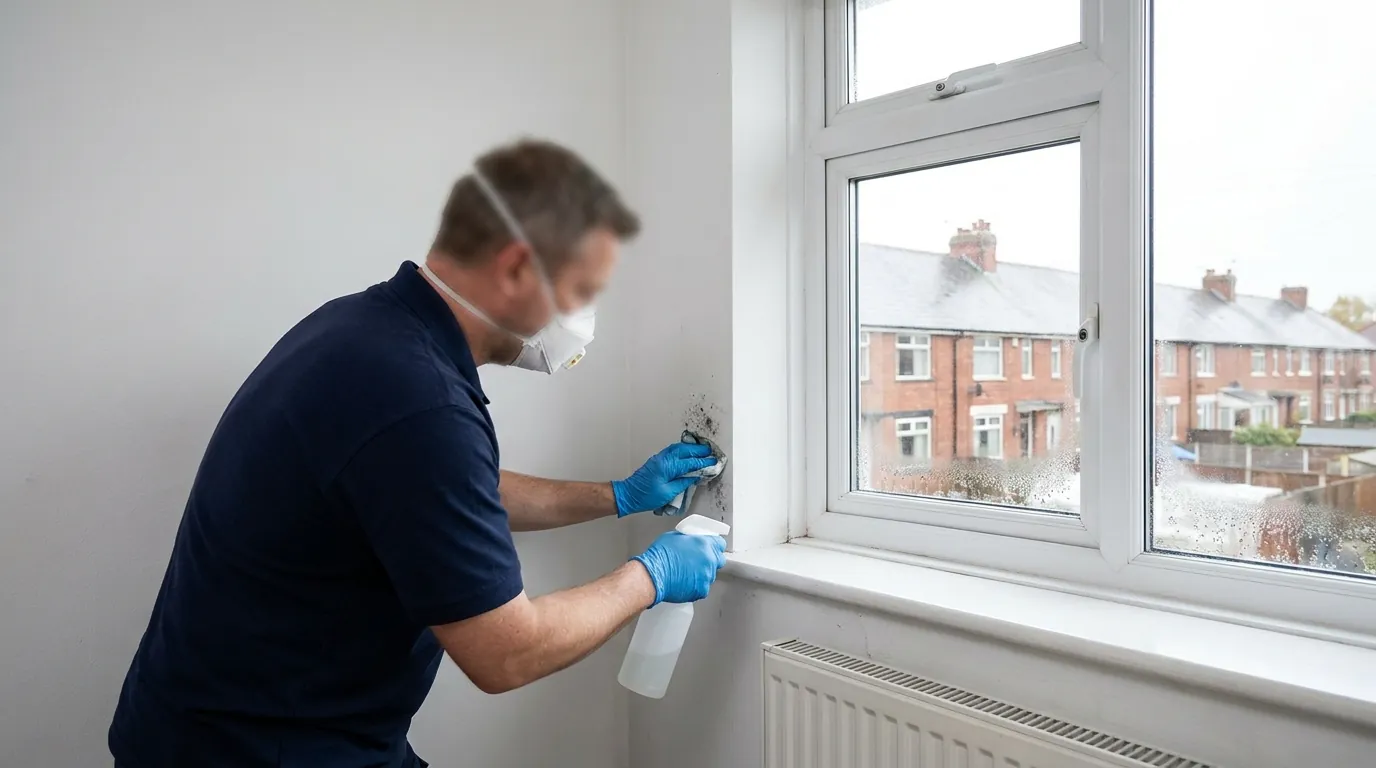
Small amounts, yes. A few black spots on a window reveal, a sealant line or a bathroom ceiling are a reasonable DIY job with a mould spray from a DIY shop, rubber gloves and eye protection. Open a window while you work and wipe the mould off rather than dry-brushing it, which throws spores into the air. Leave the area to dry fully before you paint, and use a stain block and anti-mould paint.
Get a specialist in when the mould covers large areas, has got into soft furnishings, plaster or the loft, keeps coming back within weeks, or anyone in the home is in one of the higher-risk groups above.
Mould removal costs by region
Estimated typical price to treat one room, by region. London comes out about 17% above the UK average and the North East and Yorkshire about 11% below. Your quotes will depend on the size of the job and how busy local firms are.
| Region | One room | vs UK average |
|---|---|---|
| London | £350 | +17% |
| South East | £320 | +7% |
| East of England | £320 | +5% |
| North West | £310 | +2% |
| Scotland | £300 | UK average |
| Midlands | £300 | -1% |
| South West | £290 | -3% |
| Wales | £280 | -7% |
| North East | £270 | -11% |
| Yorkshire | £270 | -11% |
Regional prices use the BCIS location factors published by the Department for Education (December 2025), with the Valuation Office Agency's figure for Wales. There's no current official figure for Scotland, so we show the UK price there. How we work out regional prices.
How to get your mould removal for less
Most of the savings come from fixing the cause once instead of paying for the same treatment every winter.
- 1
Get at least three quotes
Ask three firms to price the same job and compare them line by line. Check whether each quote covers treatment only or treatment and redecoration, whether a survey is included, and what guarantee you get. Quotes for the same room can easily be £200 apart.
- 2
Fix the moisture before you pay for treatment
A £100 to £250 fan swap in a bathroom costs less than paying for the same mould to be treated every winter. If the mould is spread across the house, a dehumidifier or a PIV unit usually does more good than another round of spraying.
- 3
Pay for an independent diagnosis if a firm finds rising damp
Free surveys from companies that sell damp proofing sometimes diagnose rising damp when the real problem is condensation. An independent surveyor costs £150 to £350 and has nothing to sell, which can save you thousands on injections and replastering you don't need.
- 4
Ask an electrician to quote for fans and PIV units
A standard loft PIV unit lists at about £300 to £520 and takes one to three hours to fit, so a quote well above £1,000 for a basic loft unit deserves a question. Damp firms and electricians both fit them, and their prices vary.
- 5
Check whether it's your landlord's job
If you rent, damp and mould that come from the building are the landlord's to sort out. Report it in writing before you spend your own money.
- 6
Deal with small patches yourself
A few spots on a sealant line or window reveal don't need a specialist. A mould spray, rubber gloves, eye protection and an open window will usually do it. Save professional help for mould that covers large areas, keeps coming back or is in a home with someone vulnerable.
Free, with no obligation to book.
Frequently asked questions
How much does mould removal cost per room?
Professional mould treatment for one room usually costs £200 to £500, and £300 is typical in October 2026. Bathrooms and kitchens usually cost the same as other rooms. If the room also needs stain block and anti-mould paint, expect £450 to £1,000.
Is professional mould removal worth it?
For a few spots on a window reveal or sealant line, no. It is worth paying for when mould covers large areas, has got into a loft or behind fitted furniture, keeps coming back after cleaning, or someone in the home has asthma, a lung condition or a weakened immune system. Either way, the result only lasts if the moisture causing it is fixed.
Will home insurance pay for mould removal?
Mould from condensation is usually treated as maintenance and isn't covered. If the mould was caused by a sudden insured event, such as a burst pipe or a leaking roof after a storm, your buildings insurance may cover the damage and the clean-up. Check the policy wording and call your insurer before booking any work.
Who pays for mould removal in a rented home?
Damp and mould that come from the building, such as leaks, cold walls, missing or broken fans and faulty heating, are the landlord's responsibility. Government guidance for landlords in England says it is unreasonable to blame damp and mould on tenants' lifestyle. Council and housing association landlords also have fixed deadlines under Awaab's Law.
Does a PIV unit stop mould?
A PIV unit often cuts condensation mould across a whole house, because it pushes drier filtered air in and moist air out through gaps and vents. It won't fix a leak, penetrating damp or rising damp. Some people find the incoming air chilly in winter, which is why heated models exist.
How long does mould removal take?
A single room usually takes a day. A whole house, or a job that includes replastering and redecorating, can take up to five days. Walls that have been replastered need several weeks to dry before they are painted.
Can I paint over black mould?
Not without killing and cleaning it first. Paint over live mould and it usually grows back through within weeks. Treat the area with a fungicidal wash, let it dry, then use a stain block and an anti-mould paint.

Written by Chris Kervin, Co-Founder, Less.co.uk
Last updated: · Prices checked against published UK price guides and supplier list prices · Methodology