Damp Proofing - Types, Treatment & Costs for UK Homeowners
Damp affects roughly one in twenty UK homes. The trouble is that half the damp problems diagnosed in this country are treated with the wrong solution - because the diagnosis was wrong in the first place. This guide helps you work out what type of damp you actually have, what the real options are, and what a fair price looks like.
Get an independent survey first. Free surveys from damp proofing companies often over-diagnose rising damp. An independent Property Care Association (PCA)-qualified surveyor will give you an honest diagnosis. Spending £200 on the right survey can save you thousands on treatment you do not need.
Quick answer
How much does damp proofing cost?
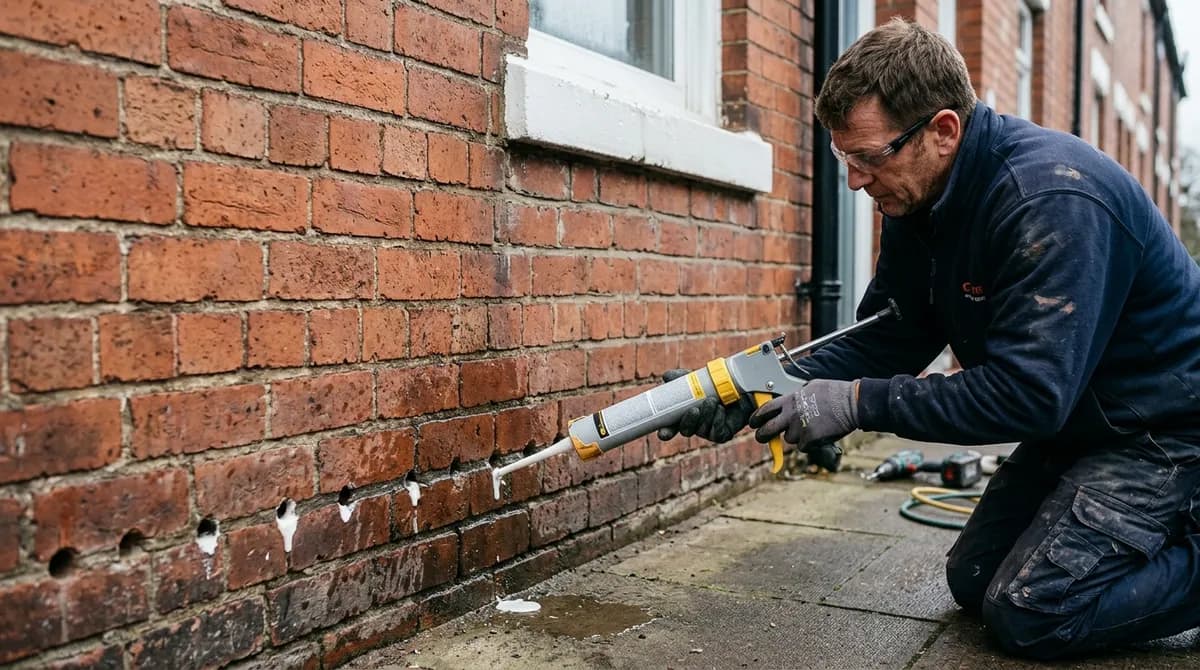
A chemical DPC injection on a single wall costs £350-£1,000. A full damp proof course for a three-bedroom semi, including replastering, typically costs £1,800-£4,000. Basement tanking runs £2,000-£6,000. But before you spend anything on treatment, make sure the diagnosis is correct - many damp problems are condensation, which costs far less to fix.
View the full damp proofing cost guideThe three types of damp
Every damp problem in a UK home falls into one of three categories. The treatment for each is completely different, which is why correct diagnosis matters so much.
Rising damp
Moisture from the ground travels upwards through walls by capillary action. It affects the bottom metre of a wall, leaves a visible tide mark, and causes plaster to crumble and white salt deposits to appear on the surface.
Signs to look for
- Tide mark on walls (usually below 1 metre)
- Crumbling or blistering plaster at ground level
- White crystalline salt deposits on the wall surface
- Damp patches that do not change with the weather
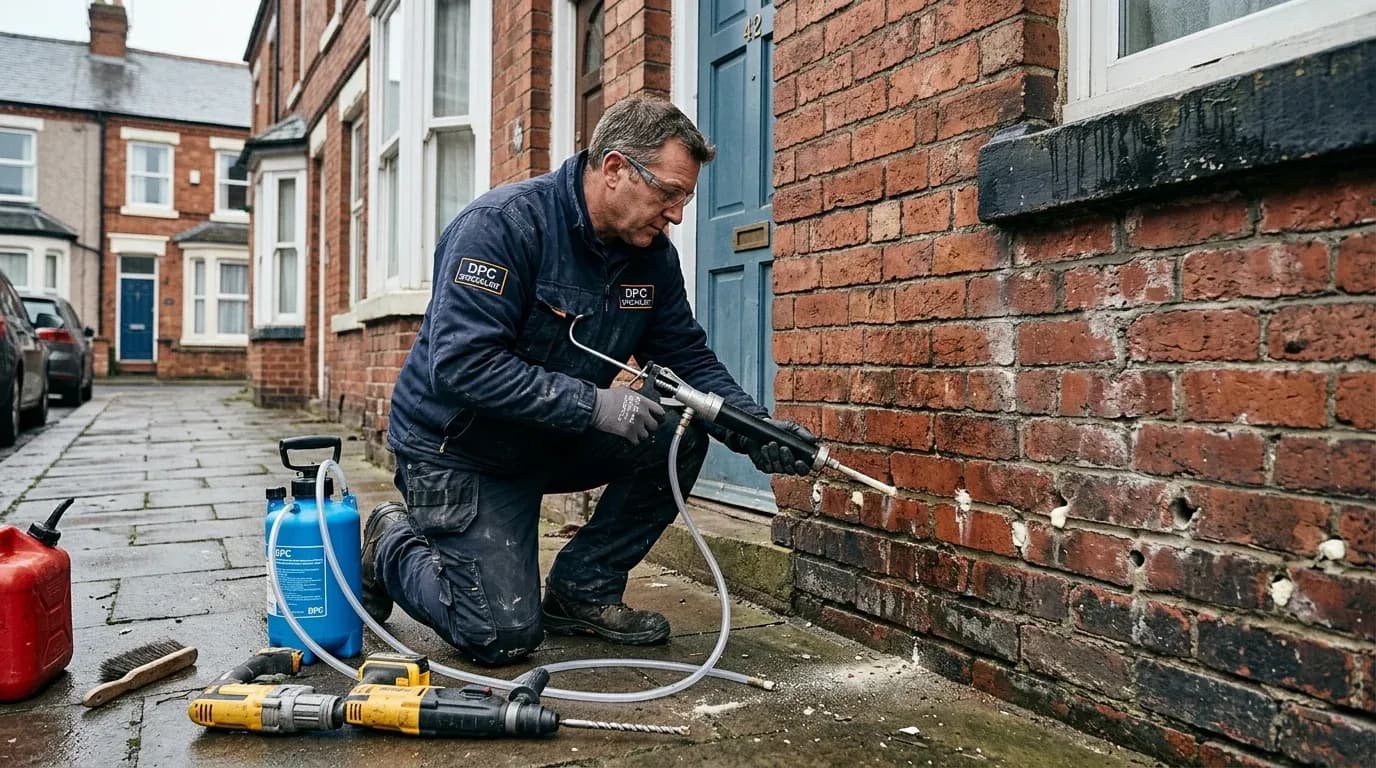
Treatment: Chemical DPC injection or physical DPC replacement
Typical cost: £350 to £1,000 per wall
Penetrating damp
Water comes through from outside - through the walls, roof, or around windows. Common causes include failed pointing, cracked render, leaking gutters, missing roof tiles, or defective window seals.
Signs to look for
- Damp patches that get worse during rain
- Water stains on walls or ceilings
- Damp around windows or door frames
- Patches that improve in dry weather
Treatment: Fix the external source - repointing, gutter repair, render repair
Typical cost: £400 to £1,500 depending on the cause
Condensation
The most common type of damp in UK homes. Warm, moist air meets a cold surface and the moisture condenses. Cooking, showering, drying clothes indoors, and even breathing all add moisture to the air.
Signs to look for
- Steamed-up windows, especially in the morning
- Black mould in corners and behind furniture
- Musty smell, worst in winter
- Damp patches on cold walls (typically north-facing)
Treatment: Better ventilation - extractor fans, trickle vents, PIV unit
Typical cost: £250 to £1,000 to solve properly
Signs of damp to look for
Not sure whether you have a damp problem? Here are the telltale signs that something needs attention.
Damp patches, staining, or discolouration on internal walls - particularly at ground level or around windows
Peeling wallpaper, blistering paint, or crumbling plaster - especially in the lower sections of walls
Black mould growth in corners, behind furniture, or around windows - a strong indicator of condensation
White crystalline deposits (salts) on the wall surface - a hallmark of rising damp as salts are drawn upwards
A persistent musty or damp smell, especially in rooms that are not well ventilated or in basements and cellars
Damaged skirting boards, soft timber, or visible rot at the base of walls - suggests prolonged damp exposure
Professional help or DIY?
You can handle it yourself
Minor condensation problems respond well to simple improvements: opening trickle vents on windows, running extractor fans when cooking or showering, not drying clothes on radiators, and keeping a small gap between furniture and external walls. If you have confirmed rising damp on a single wall and are confident with a drill, a DIY DPC injection kit costs £30 to £80.
You need a professional
If the problem covers multiple walls, if you suspect the issue is structural (penetrating damp through a wall), if your property has a basement or cellar that needs tanking, or if you are unsure what type of damp you have - get a professional survey. The diagnosis is the most important part. A PCA-qualified surveyor will identify the type, the cause, and the most appropriate treatment.
When it is urgent
If damp has caused visible timber rot in structural elements - floor joists, lintels, or wall plates - you need a specialist sooner rather than later. Wet rot weakens timber over time and dry rot can spread rapidly through a property. If you spot fungal growth on timber or the wood feels soft when you press a screwdriver into it, act quickly.
How to find a good damp proofing specialist
Start with an independent survey
Pay for a survey from someone who does not sell damp proofing treatment. An independent surveyor has no incentive to over-diagnose. PCA-qualified surveyors or RICS chartered surveyors with damp experience are your best options. Expect to pay £150 to £350.
Use PCA member companies for treatment
If treatment is needed, the Property Care Association (PCA) is the trade body you want. Member companies must meet training standards, and their guarantees are backed by an insurance scheme - so the guarantee survives even if the company closes. Check membership at property-care.org.
Get three quotes on the same scope
Ask each company to quote for the same work - specify which walls, whether replastering is included, and what the guarantee covers. Some quotes include replastering while others quote for injection only. Comparing a quote that includes replastering against one that excludes it is meaningless.
Check the guarantee terms
A good damp proofing guarantee should be for at least 20 years, transferable to new owners if you sell, and backed by an insurance scheme (not just the company). Ask who underwrites the guarantee and what happens if the company ceases trading.
Damp proofing guides
Common questions about damp proofing
How do I know if I have rising damp or condensation?
Rising damp typically affects the bottom metre of a wall, leaves a visible tide mark, causes plaster to crumble, and draws white salt deposits to the surface. It does not get worse in winter specifically. Condensation causes black mould, usually in corners, behind furniture, and around windows. It gets much worse in cold weather and when windows are kept closed. If your problem is worst in winter and involves mould rather than crumbling plaster, it is almost certainly condensation - not rising damp.
Is damp proofing covered by insurance?
Standard home insurance policies do not cover damp proofing as it is classed as a maintenance issue rather than sudden damage. However, if damp has been caused by a specific insured event - such as a burst pipe or storm damage to the roof - your buildings insurance may cover the resulting damage and repair. Some specialist damp proofing companies offer their own insurance-backed guarantees that cover the treatment for 20 to 30 years.
Can I sell a house with damp?
You can, but damp flagged on a homebuyer survey will almost certainly reduce offers or cause buyers to renegotiate. A solicitor will ask about known damp issues in the property information form. Getting the damp treated before listing - and providing the guarantee certificate to buyers - removes a major objection and usually costs less than the price reduction you would have to accept.
How long does it take for walls to dry after damp proofing?
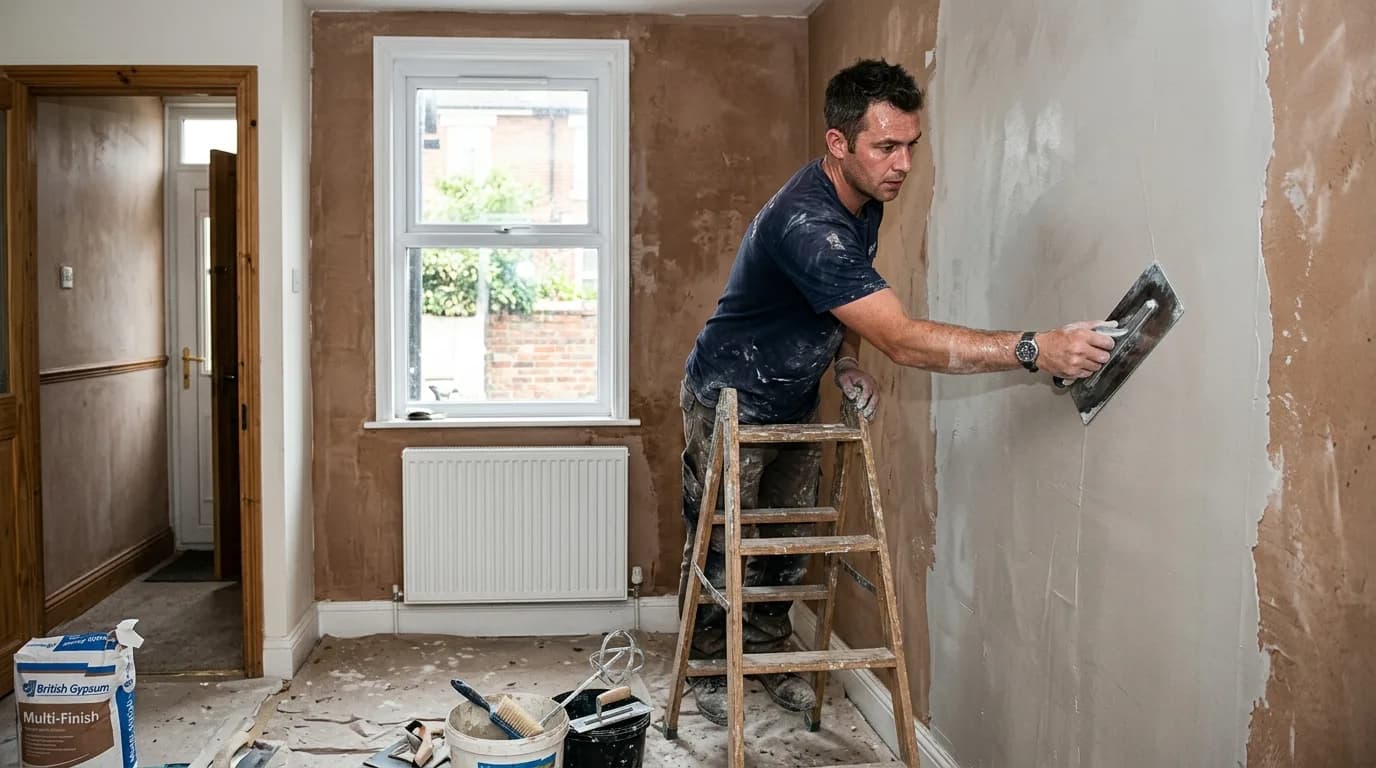
Walls typically take 4 to 6 weeks to dry out after a damp proof course is installed and new plaster applied. The exact time depends on wall thickness, ventilation, and the time of year. Summer is obviously faster. Do not redecorate until the walls are dry - painting too soon traps moisture and can cause the new plaster to blow. A breathable paint is preferable to vinyl emulsion for the first coat.
What is a positive input ventilation (PIV) unit?
A PIV unit is a small fan installed in the loft space or on an outside wall that gently pushes filtered, dry air into the property. By slightly pressurising the house, it forces out moist air through natural gaps and dramatically reduces condensation. A PIV unit costs £250 to £500 installed and is one of the most effective treatments for condensation damp. It uses very little electricity - roughly £10 to £20 per year to run.
Quote service coming soon
Get free quotes from damp proofing specialists near you
Free, no obligation. Read the cost guide first so you know what a fair price looks like before anyone gives you a number.
Compare real quotes for your job
Prices move a lot with your postcode, the access on site and the spec you choose. Get up to 3 free quotes from vetted local tradespeople and see what yours actually comes to, with no obligation to book.