How Much Does a Loft Conversion With Ensuite Cost?
Adding an ensuite to a loft conversion adds £5,000 to £12,000 depending on the spec. Total cost for a dormer with ensuite: £40,000 to £70,000. It is almost always worth including the ensuite during the build rather than fitting one later.
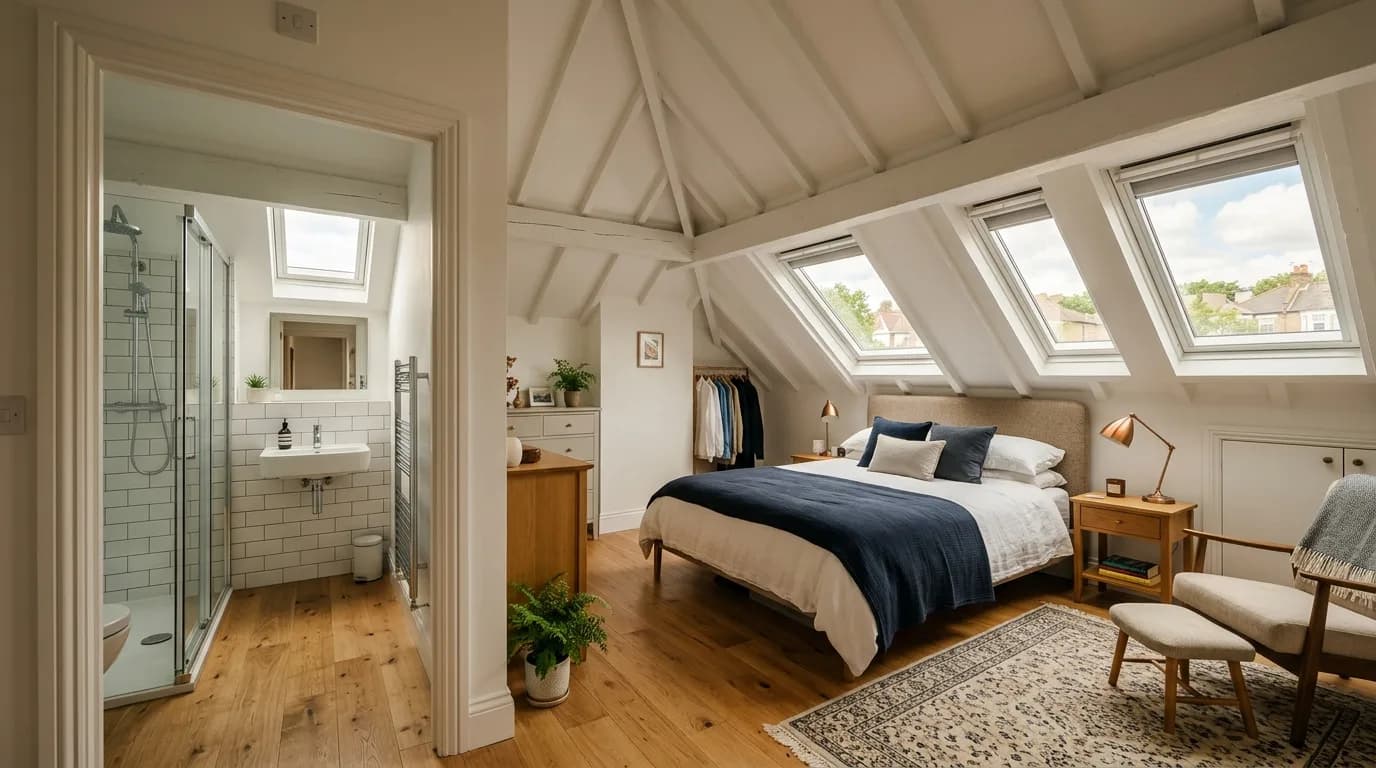
£6,500
Basic ensuite add-on
£9,000
Mid-range ensuite
£49,000
Dormer + ensuite total
15 to 20%
Value added to home
Free, no obligation. Quotes from local loft conversion specialists near you.
Quick answer
What does a loft ensuite add to the cost?
A basic ensuite bathroom (shower enclosure, WC, basin) adds £5,000 to £8,000 to the cost of a loft conversion. A mid-range ensuite with a walk-in shower and vanity unit adds £8,000 to £10,000. A premium ensuite with underfloor heating, wetroom-style shower, and high-end fixtures adds £10,000 to £12,000+. The total cost for a dormer conversion with ensuite ranges from about £40,000 to £70,000.
Ensuite Bathroom Costs by Specification
What the ensuite alone adds to your loft conversion price, by level of finish.
Basic ensuite
Shower enclosure, close-coupled WC, pedestal basin, ceramic tiles
£6,500
£5,000 to £8,000
Mid-range ensuite
Walk-in shower, wall-hung WC, vanity unit basin, full tiling
£9,000
£8,000 to £10,000
Premium ensuite
Wetroom or large walk-in, wall-hung WC, underfloor heating, premium tiles and fixtures
£11,000
£10,000 to £12,000+
Total Costs: Conversion + Ensuite
What to expect for the complete job, combining the loft conversion and ensuite bathroom.
Velux conversion + basic ensuite
£35,000
£28,000 to £42,000
Rear dormer + basic ensuite
£49,000
£40,000 to £58,000
Rear dormer + mid-range ensuite
£52,000
£43,000 to £62,000
Rear dormer + premium ensuite
£56,000
£48,000 to £68,000
L-shaped dormer + mid-range ensuite
£60,000
£50,000 to £70,000
Mansard + mid-range ensuite
£70,000
£58,000 to £85,000
Excludes VAT, professional fees, and full decoration.
Plumbing Considerations for a Loft Ensuite
Soil stack location
Wastewater from the WC and shower needs to reach the main soil stack - the vertical pipe that runs down the outside (or inside) of the house and connects to the sewer. The closer your loft ensuite is to this stack, the simpler and cheaper the plumbing. If the ensuite is at the opposite end of the loft, waste pipes need to run through the floor void, which adds cost and requires careful gradient planning to avoid blockages.
Water pressure at roof level
If you have a combi boiler, mains pressure is usually fine for a loft shower. If you have a traditional gravity-fed system with a cold water tank in the loft, pressure at that height can be poor. Options include fitting a shower pump (£200 to £500 plus installation), upgrading to an unvented hot water cylinder, or fitting a pressurised system. Your plumber should assess this early in the planning stage.
Hot water supply
Check that your boiler or hot water cylinder can handle the additional demand. A combi boiler serving two showers at once may struggle with flow rate. If the household regularly uses hot water at the same time (mornings, for instance), consider whether the system needs upgrading. This is a question for the plumber, not the loft conversion company - and it is better asked before work starts.
Ventilation requirements
Building Regulations (Part F) require mechanical ventilation in a loft ensuite - typically an extractor fan rated at 15 litres per second. If the ensuite has an openable window, that helps but does not replace the need for mechanical extraction. A humidity-sensing fan that runs automatically is the most practical option and avoids condensation problems.
Building Regulations for Loft Ensuites
A loft ensuite needs to comply with several parts of the Building Regulations. Your builder and Building Control officer will manage this, but it helps to know what is required.
Part G - Sanitation, hot water, and water efficiency
Covers the design and installation of sanitary fittings, safe hot water temperatures (thermostatic mixing valves on baths and showers), and water efficiency standards. New WCs must be dual flush. Taps and showers must meet flow rate limits.
Part F - Ventilation
The ensuite must have mechanical extract ventilation - typically an extractor fan. If the room has no openable window, the fan must run continuously at a low rate with a boost function. Humidity-sensing fans are the most common solution in loft ensuites.
Part E - Sound insulation
If the loft conversion creates a separate dwelling (rare for a standard loft conversion), Part E sound insulation requirements apply between the loft and the floor below. For a normal loft bedroom, sound insulation between the ensuite and the bedroom is not a Building Regs requirement, but good builders insulate the partition wall anyway.
Waterproofing
Building Control will want to see that the shower area is properly waterproofed (tanked) to prevent leaks into the room below. This is especially important in loft conversions because the ceiling below is often newly plastered - any leak will be immediately visible and expensive to repair.
Layout Ideas: Making the Most of the Space
Loft ensuites have to work within the constraints of a sloping ceiling. The trick is putting each fixture where the headroom suits it.
Shower under the highest point
The shower needs the most headroom. Position it under the ridge or in the dormer section where the ceiling is at full height. A walk-in shower with a frameless glass screen works well and makes the space feel larger than a shower enclosure with a door.
WC and basin under the eaves
You do not need full standing height above a WC - you sit down to use it. Tuck the WC under the lower part of the sloping ceiling. The basin can go next to it. Wall-hung WCs and basins save floor space and make cleaning easier.
Use the eaves for storage
The very lowest part of the eaves - where you cannot stand or sit - can house built-in cupboards for towels, toiletries, and cleaning supplies. This is dead space for living in but perfectly usable for storage. A good carpenter can build these into the ensuite at relatively low cost.
Keep the layout compact
A loft ensuite does not need to be large. A well-designed shower room of 2m x 1.5m (3 square metres) is enough for a shower, WC, and basin. Going bigger than necessary just reduces the size of the bedroom next door, which is the room that actually adds value to the property.
How to Get Your Loft Ensuite for Less
Include the ensuite in the main conversion contract
Fitting an ensuite during the build is significantly cheaper than retrofitting one later. The plumbing first fix, tiling substrate, and waterproofing all happen as part of the flow of work. Doing it as a separate project means ripping up finished floors and redecorating.
Choose a shower over a bath
A bath in a loft ensuite is possible but takes up far more space and adds weight to the floor structure. A shower enclosure or walk-in shower is more practical, cheaper to install, and avoids the need for additional structural reinforcement that a bath full of water demands.
Position the ensuite above the existing bathroom
The closer your loft ensuite is to the existing soil stack, the less plumbing work is needed. If it sits directly above the bathroom below, waste pipes run almost vertically - short, simple, and cheap. Moving it to the other end of the loft means running waste pipes across the floor void, which adds cost and complexity.
Keep the spec sensible for a loft ensuite
A loft ensuite does not need to be a luxury spa. A clean, well-tiled shower room with decent fixtures adds the same value to the property as one with premium designer fittings. Spend the money on getting the waterproofing and ventilation right - those are what matter in a loft bathroom.
Useful resources
- Planning Portal: Loft conversions, Planning requirements for loft conversions with en-suites
- Building Regulations Part G, Sanitation and hot water requirements for en-suite bathrooms
What to Expect: The Loft Conversion With Ensuite Process
A loft conversion with ensuite is a major project that typically takes 6-8 weeks. Building Regulations approval is required, and you may also need planning permission depending on your property and the type of conversion.
- 1
Structural survey and planning
A structural engineer assesses the roof, floor joists, and load-bearing walls. Architectural drawings are prepared and submitted for Building Regulations approval (and planning permission if required).
- 2
Scaffolding and structural work
Scaffolding is erected and the roof structure is altered, steel beams are installed to support the new floor, and dormers or roof windows are fitted depending on the conversion type.
- 3
First fix, plumbing and electrics
Waste pipes, water supply, and soil stack connections are run up to the loft for the ensuite. First-fix electrical wiring is installed for lighting, sockets, and the heated towel rail.
- 4
Insulation and boarding
The roof space is insulated to Building Regulations Part L standards (typically 100mm+ rigid insulation between rafters). Plasterboard is fitted to walls and ceilings, and the floor is boarded.
- 5
Ensuite fit-out
The ensuite bathroom is tiled and fitted, typically a shower enclosure, toilet, basin, and heated towel rail. Waterproof tanking is applied to wet areas before tiling.
- 6
Second fix and finishing
Staircase is installed, doors hung, skirting boards fitted, and final electrical and plumbing connections made. Building Control carries out a final inspection and issues a completion certificate.
Frequently Asked Questions
How much does a loft conversion with ensuite cost?
A loft conversion with ensuite typically costs £40,000 to £70,000 in total, depending on the type of conversion and the specification of the ensuite. Adding a basic ensuite (shower, WC, basin) to a loft conversion adds around £5,000 to £8,000. A mid-range ensuite with better fittings adds £8,000 to £10,000. A premium ensuite with underfloor heating and high-end fixtures can add £10,000 to £12,000 or more.
Can you have a bathroom in a loft conversion?
Yes - an ensuite bathroom is one of the most popular additions to a loft conversion. The plumbing needs careful planning because wastewater has to reach the existing soil stack, and water pressure at roof level can be lower than on the floors below. Building Regulations (Part G for water and Part F for ventilation) apply. Most dormer and mansard conversions have enough space for at least a shower room with WC and basin.
Is it worth adding an ensuite to a loft conversion?
In most cases, yes. An ensuite significantly increases the value added by a loft conversion - buyers expect a master bedroom to have an ensuite, and the added convenience means the new loft bedroom does not put extra pressure on the existing bathroom. The cost of adding an ensuite during the conversion is also much lower than retrofitting one later, because the plumbing first fix is already part of the project.
What Building Regulations apply to a loft ensuite?
Part G (sanitation, hot water, and water efficiency) and Part F (ventilation) of the Building Regulations apply to ensuite bathrooms in loft conversions. The ensuite must have adequate mechanical ventilation - either an extractor fan or a window that opens. Hot water must be supplied at a safe temperature (thermostatic mixing valves are required). If the ensuite has a bath or shower, the flooring must be waterproofed to prevent leaks to the room below.
Do I need a pump for a loft ensuite?
It depends on your existing system. If you have a combi boiler or an unvented hot water cylinder, mains pressure is usually adequate for a loft shower. If you have a gravity-fed system with a cold water tank in the loft, you may need a shower pump or a mains pressure booster to get decent flow at that height. Your plumber will assess this during the planning stage - it is a common consideration and straightforward to resolve.
Where should the ensuite go in a loft conversion?
The ensuite is usually positioned at one end of the loft, ideally above or near the existing bathroom below. This minimises the distance wastewater has to travel to reach the soil stack. The shower and WC need adequate headroom (at least 1.8m above the shower tray is sensible), so they work best under the ridge or dormer section. The basin and WC can sit under the lower eaves where headroom is reduced.

Written by Chris Kervin, Co-Founder of Less.co.uk
Last updated: · Pricing based on industry data and verified contractor submissions · Methodology
Ready to get your loft conversion for less?
Compare free quotes from local loft conversion specialists. Ask for ensuite pricing in your quote.
Compare Free QuotesComing soon - sign up to our newsletter to be the first to know.
More home improvement costs