Loft Conversions: Types, Planning & How to Choose 2026
This guide walks you through the whole loft conversion journey: working out if your roof is suitable, choosing between the main types, and getting your head around planning permission, Building Regulations and the fire safety rules that catch so many people out. On budget, a basic Velux conversion starts at around £20,000, a rear dormer sits between £35,000 and £50,000, and a full mansard or hip-to-gable conversion runs from £50,000 to £65,000 - see our loft conversion cost guide for the full breakdown. The Planning Portal also has detailed guidance on what counts as permitted development.
Fire doors are legally required on all floors of the house when adding a habitable loft room. Building Regulations require a protected escape route from the new room down to the ground floor. This means FD30 fire doors on every landing and on habitable rooms off the staircase - throughout the whole house, not just the loft.
Quick answer
How much does a loft conversion cost?
A basic Velux conversion starts at around £20,000 to £30,000. A rear dormer conversion - the most common type - costs between £35,000 and £50,000. A full mansard or hip-to-gable conversion runs from £50,000 to £65,000 or more. Prices vary significantly by region, with London and the South East costing 25 to 40% more than the rest of the UK.
View the full loft conversion cost guideWhat does a loft conversion involve?
The type of conversion determines most of the work involved. But regardless of type, all loft conversions share a common set of structural, fire safety, and regulatory requirements.
Structural engineer designs new floor joists and any steelwork needed, plans submitted to Building Control
New floor structure installed, dormer structure built if applicable, roof windows and insulation fitted
Staircase installed (replacing the loft hatch), first-fix plumbing if en-suite included, first-fix electrics
Fire doors fitted throughout all storeys of the house, plastering, flooring, second-fix, Building Control completion certificate issued
Things to think about before you hire
Head height - the first thing to check
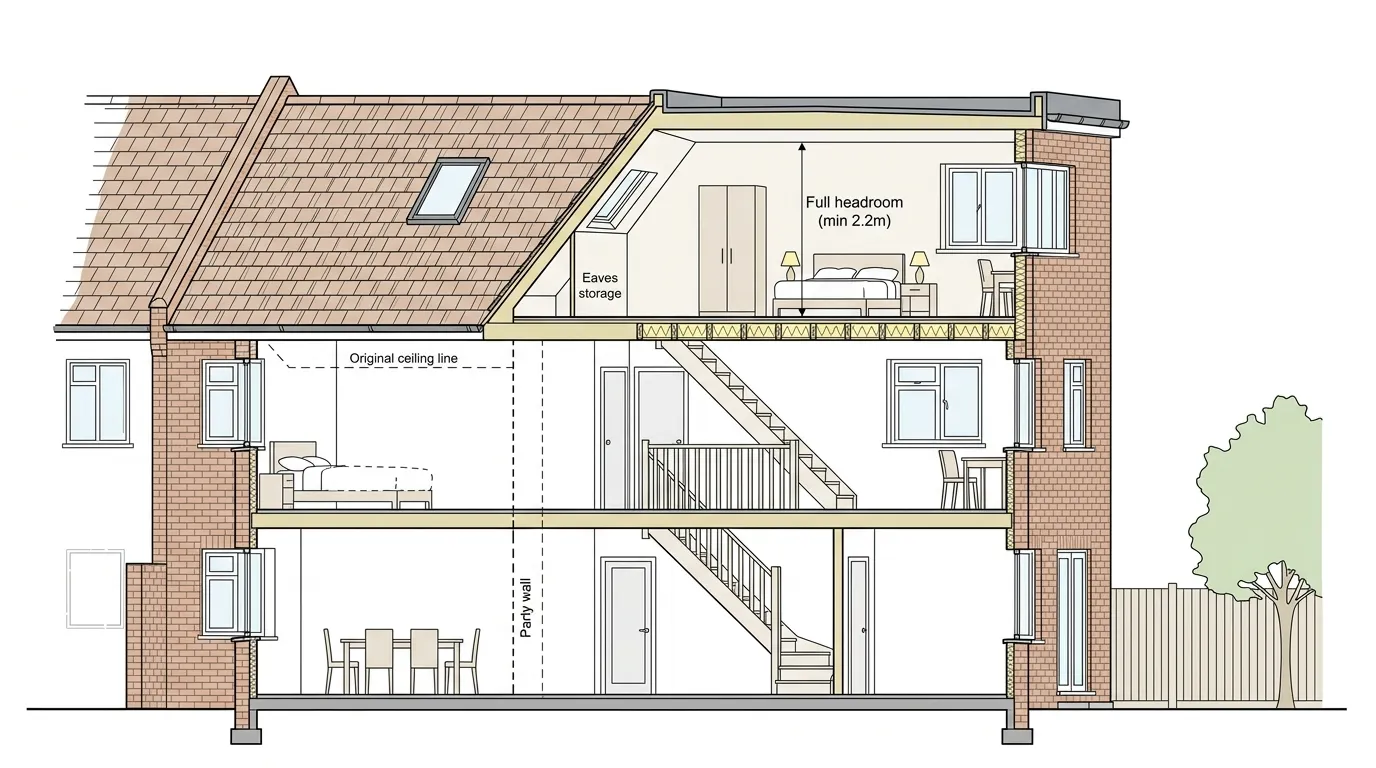
The minimum usable head height for a loft conversion is 2.2 metres, measured from the existing floor joists to the highest point of the roof. If your roof is below this, a conversion is not viable without raising the roof structure (which makes it a much bigger job). Measure this before spending any money on plans or consultations.
Which type of conversion suits your property?
A Velux (rooflight) conversion is the simplest and cheapest option - it adds windows to the existing roof slope without changing the roofline. A dormer conversion extends the roof outward, giving you more headroom and floor space, and is the most common choice. A mansard conversion (where one or both roof slopes are replaced with near-vertical walls) gives the most space but almost always requires planning permission. A hip-to-gable conversion is common on semi-detached and detached houses with a hipped roof. If budget is tight, read our guide to getting a loft conversion under £30k.
Party Wall Act on semis and terraces
If your property is semi-detached or terraced, work on or near the shared wall may trigger the Party Wall etc. Act 1996. You will need to serve formal notices on your neighbours before starting. If they agree, this is straightforward. If they appoint their own surveyor, you pay for both - this can add several hundred pounds to the project cost.
Fire doors - the cost that gets forgotten
A loft conversion requires fire doors on every floor of the house, including rooms off the main staircase. This is frequently omitted from initial quotes. The number of doors varies by property size, but budget an extra £1,000 to £3,000 for a typical three-bedroom house. Ask every company you quote if fire door upgrades are included - if not, get a separate price.
How to find a good loft conversion specialist
Use a loft conversion specialist, not a general builder
Loft conversions are a specialist job. A company that does them regularly will have a structural engineer on call, understand the Building Regulations requirements, and have a smoother process than a general builder taking it on for the first time. Ask how many loft conversions they have completed in the last 12 months.
Check that structural work is included in the quote
Steelwork and new floor joists are a significant part of the cost. Some quotes include them; others ask you to engage a structural engineer and steelwork contractor separately. Make sure you know exactly what is and is not in each quote before comparing prices.
Ask specifically about fire doors
As above - this is the most commonly omitted item. Get a straight answer: are fire doors throughout all floors of the house included? If not, ask for a price to include them.
Check their Building Control relationship
A reputable loft conversion company will have an established relationship with a Local Authority Building Control or an Approved Inspector. They should be able to tell you exactly how the inspection process works and what sign-off you will receive at the end.
Get three quotes and ask to see three completed jobs
Loft conversion prices vary considerably. Three quotes on the same specification will show you the range. Ask each company for addresses of recently completed conversions you can drive past - checking the exterior quality of a dormer (lead flashing, roof finish, junction with existing roof) tells you a lot about their standard of work.
Loft conversion guides
Loft conversion calculator
Loft conversion cost guide
Dormer loft conversion cost
Velux loft conversion cost
Hip-to-gable loft conversion cost
Loft conversion with ensuite cost
House extension guide
House extension cost guide
New bathroom cost guide
Loft conversion under £30k
Loft conversion FAQs
How do I know if my loft is suitable for conversion?
The main factor is head height. You need a minimum of 2.2 metres from the floor joist to the apex of the roof. Below this, a conversion is not impossible but becomes increasingly difficult and expensive. Roof pitch matters too - a shallow pitch above 2.2m may still not give you usable floor space across much of the room. A loft specialist can assess your roof type and give you an honest answer in a short survey visit.
Do I need planning permission for a loft conversion?
A basic Velux or rooflight conversion usually falls within Permitted Development, so no planning permission is needed. A rear dormer that does not exceed the height of the existing roof and sits within PD limits also usually avoids full planning. However, mansard conversions, hip-to-gable conversions, and any work on a listed building or in a conservation area will need planning permission. Always check before starting work.
What is involved in the building process?
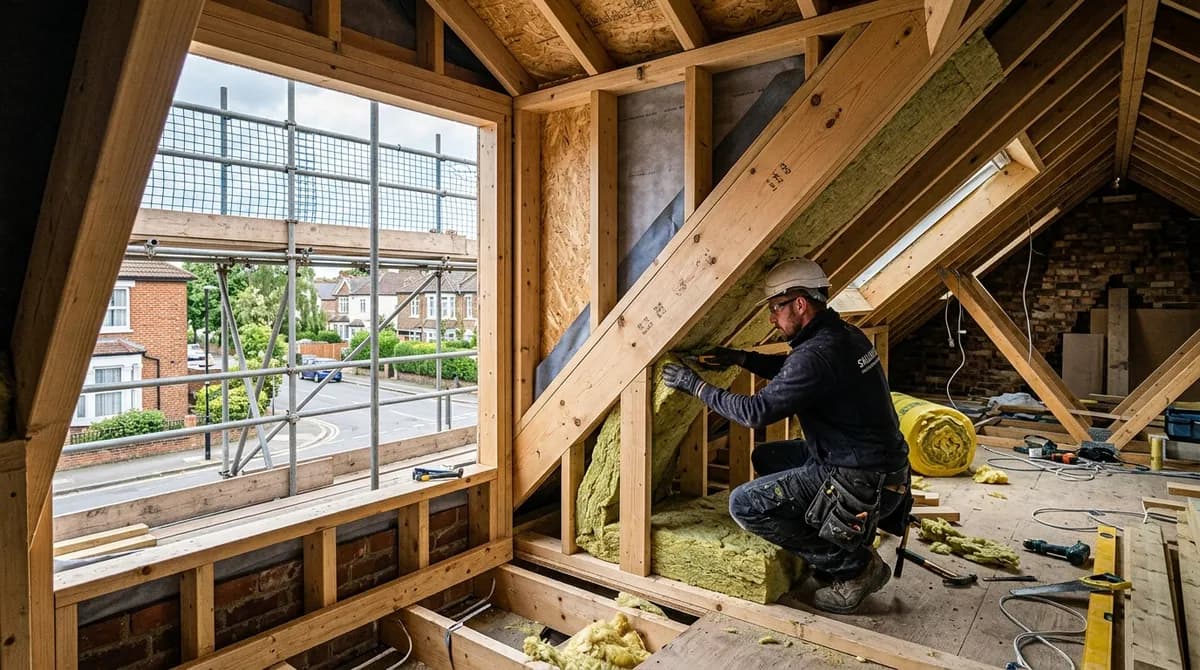
A loft conversion typically takes eight to twelve weeks on site. The sequence is: structural steels and new floor joists installed, dormer structure built if applicable, roof insulation, staircase installed, first-fix electrics and plumbing, boarding and plastering, then second-fix and finishing. Building Control must inspect at multiple stages. Fire doors are required throughout all floors of the house before the conversion can be signed off.
Why do I need fire doors on all floors, not just the loft?
Building Regulations (Approved Document B) require that when a habitable room is added above the existing top storey, the escape route from that room (the staircase) must be protected by fire doors on every floor. This means replacing existing hollow-core doors with fire doors (FD30 minimum) on every landing and habitable room off the staircase. It is often forgotten in quotes, and it can add £1,000 to £3,000 to the final cost depending on the number of doors.
Does a loft conversion add value to my home?
A well-executed loft conversion with an en-suite bathroom typically adds 15 to 20% to a property's value, according to most estate agent surveys. Whether it adds more than it costs depends on your property type, location, and the local market. In areas where bedroom count matters - most of the UK - adding a fourth bedroom through a loft conversion tends to have a strong return. A conversion that creates a large but impractical room is worth less.
Quote service coming soon
Get free quotes from loft conversion specialists near you
Free, no obligation. See the cost guide first so you know what a realistic price looks like before anyone comes to survey your roof.