The 5 Types of Loft Conversion Explained
Velux, dormer, hip-to-gable, L-shaped, mansard - they're not all the same price and they're not all possible in every house. Here's what each one actually involves, and which might work for yours.

Chris Kervin
Co-Founder, Less.co.uk
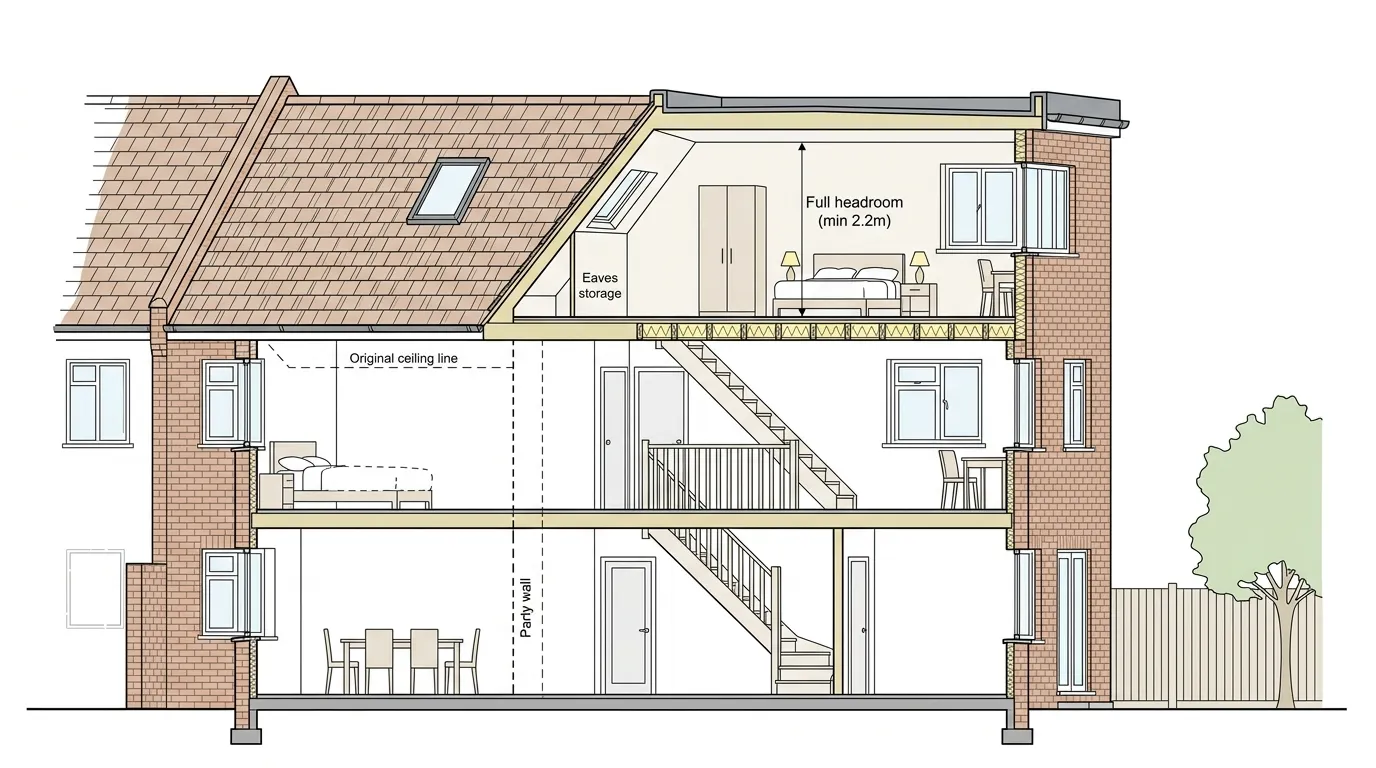
The most common question people ask when they're looking into loft conversions is: "what type should I get?" The answer usually comes down to three things - what your roof looks like now, how much space you need, and what your budget is. If you're still weighing up whether a loft conversion is the right move, our guide on whether a loft conversion is worth it covers the financial side in detail.
Here's a plain-English breakdown of all five types, with realistic 2026 cost ranges and the key things that determine whether each is viable for your house. You can also use our loft conversion calculator to get a quick estimate based on your house type.
Quick comparison
| Type | Cost range | Planning |
|---|---|---|
| Velux (rooflight) conversion | £20,000 to £30,000 | Usually Permitted Development |
| Dormer conversion | £30,000 to £55,000 | Permitted Development in most cases |
| Hip-to-gable conversion | £35,000 to £55,000 | Usually Permitted Development (but check) |
| L-shaped dormer | £45,000 to £65,000 | Usually Permitted Development |
| Mansard conversion | £45,000 to £70,000 | Usually requires full planning permission |
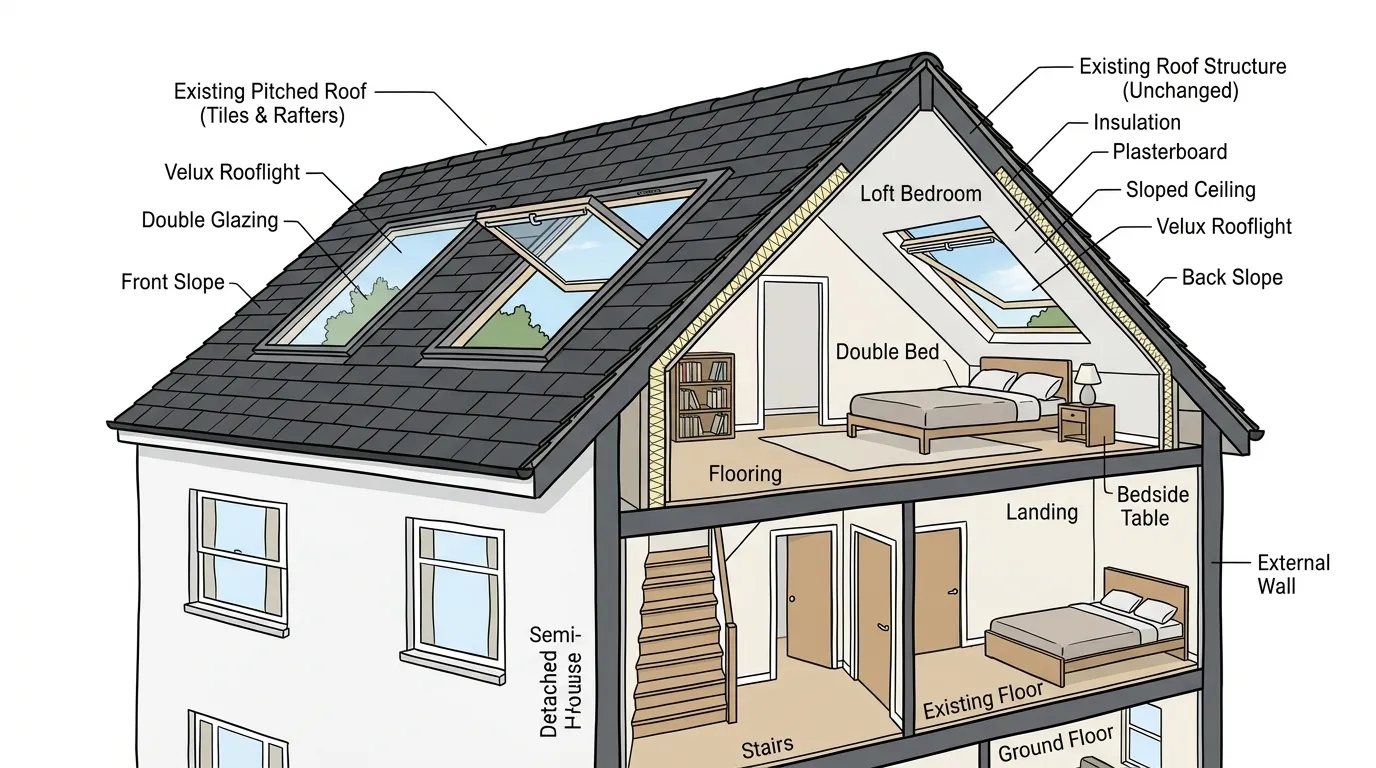
1. Velux (rooflight) conversion
A Velux conversion keeps the existing roof structure intact and adds roof windows (skylights) to bring in light. The loft space is boarded out, insulated, and fitted with a staircase. It's the fastest and least expensive type - but it only works if your loft already has enough head height, typically at least 2.2m at the ridge.
Advantages
- Cheapest option
- Quickest to build
- Minimal disruption to roofline
- Rarely needs planning permission
Watch out for
- Requires adequate head height already
- Less additional space than other types
- Can feel dark without good window placement
2. Dormer conversion
A dormer extends vertically from the slope of the roof, creating a box-like structure with a flat roof. This dramatically increases usable floor space and head height. Most rear dormers fall within Permitted Development rights (no planning permission needed), though side and front dormers often require full planning. It's by far the most popular type.
Advantages
- Good head height throughout
- More usable floor space than Velux
- Usually within PD rights
- Can add en-suite
Watch out for
- More expensive than Velux
- Changes the roofline
- Takes 8+ weeks to complete
3. Hip-to-gable conversion
On houses with a hipped (sloped) roof end, a hip-to-gable conversion extends the hip end to create a vertical gable wall. This frees up a large amount of space that was previously unusable. It's commonly combined with a rear dormer to maximise the usable area. Works on semi-detached and detached houses with hipped roofs - not terrace houses.
Advantages
- Significantly increases floor area
- Tidy appearance
- Good head height
- Often combined with dormer at rear
Watch out for
- Only works on hipped roofs
- Can look odd on some house types
- More expensive than standard dormer
4. L-shaped dormer
An L-shaped dormer consists of two dormers joined together - one on the main roof and one on a back addition - forming an L-shape when viewed from the side. It's particularly well-suited to Victorian and Edwardian terrace houses that have a rear addition (the typical layout where the kitchen extends back). It maximises the usable space and is commonly used to create a master bedroom with en-suite.
Advantages
- Maximum floor space
- Popular for main bedroom + en-suite
- Two rooms often achievable
- Usually within PD
Watch out for
- Most expensive dormer option
- Only works on properties with a back addition
- Substantial structural work
5. Mansard conversion
A mansard conversion replaces the entire sloping roof with an almost-vertical (typically 72°) back wall and a flat roof. It creates the maximum possible loft space and is common in London and other urban areas. Because it substantially changes the appearance of the building, it almost always requires full planning permission rather than Permitted Development. The higher cost and planning requirement make it less common outside London.
Advantages
- Maximum usable space of any type
- Can accommodate multiple rooms
- Adds significant value
Watch out for
- Almost always needs planning permission
- Most expensive option
- Longest build time
- Not always approved in conservation areas
Fire doors - often forgotten
Building Regulations require fire doors on all floors when you add a habitable loft room. This includes the doors on every landing from the new room down to the ground floor. It's a legal requirement that's frequently left out of initial quotes - make sure it's included. See our guide on building regulations for internal works for more detail.
Not sure whether to convert the loft or extend instead? We've compared the two options side by side in our extension vs loft conversion guide. And if budget is tight, have a look at how to get a loft conversion under £30k- it's possible with the right type and spec.
Check what a loft conversion costs in your area
Prices vary significantly by region. See our full guide with regional breakdowns.
Related articles
Is a Loft Conversion Worth It?
ROI analysis by property type - honest numbers.
Building Regulations for Internal Works
What counts as notifiable work inside your home.
Loft Conversion Under £30k
How to keep your loft conversion on a tight budget.
How to Find a Good Contractor
Practical guide to finding UK tradespeople.