How Much Does a New Staircase Cost in 2026?
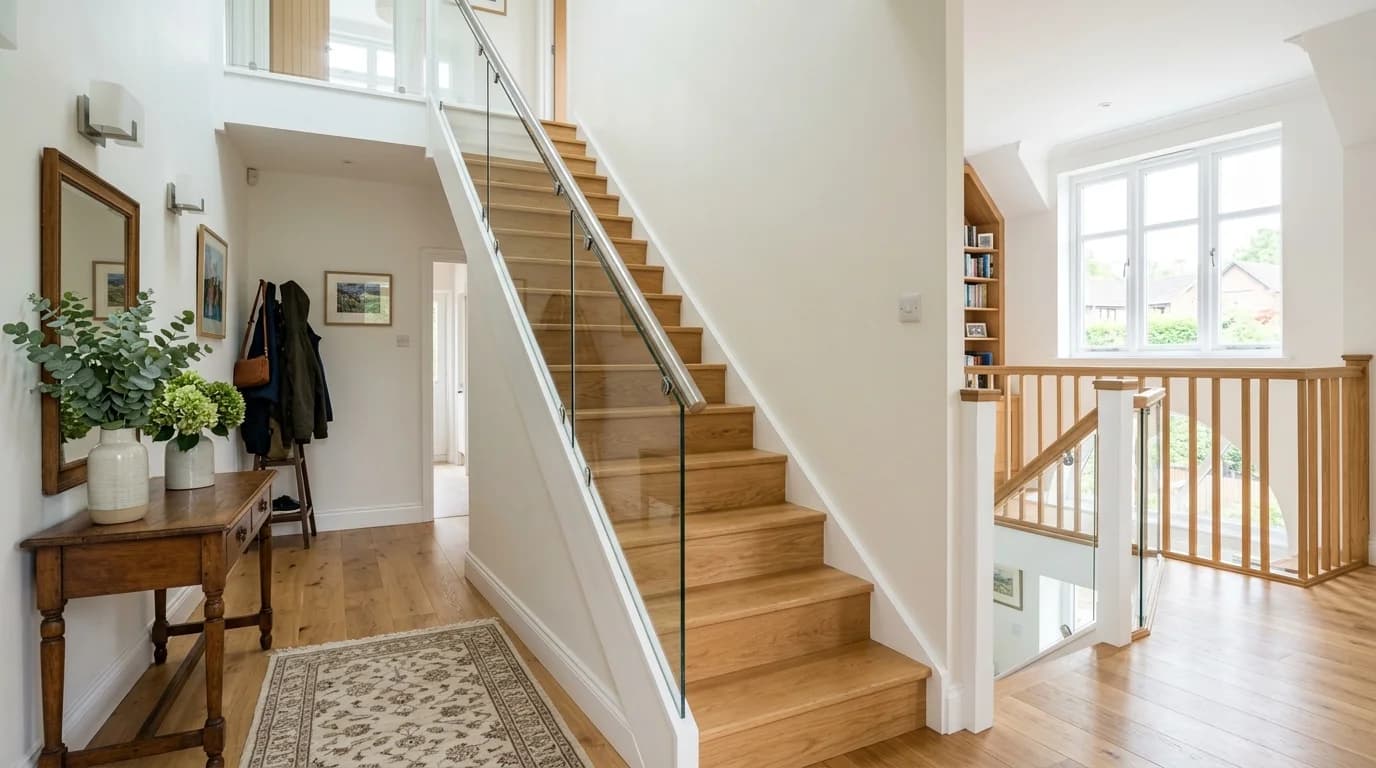
The cost of a new staircase is £1,000 to £8,000 depending on the material and scope. A wooden staircase cost starts from £1,000, an oak staircase cost from £2,500, and a glass staircase cost from £4,000. A floating staircase cost runs £3,000 to £7,000. Here is a full breakdown.
£500
Refurb from
£1,000
Replacement from
£2,500+
Oak staircase
2 to 5 days
Installation
Prices updated April 2026 · Based on industry data and contractor submissions.
Building Regulations. All new and replacement staircases must comply with Approved Document K (Part K). Key rules: max 220mm rise, min 220mm going, handrail on at least one side, guarding min 900mm (1,100mm on landings), baluster gaps max 100mm. You must notify Building Control before work starts.
New Staircase Cost by Type
What does each type of staircase project cost? Prices below include the staircase itself and installation but exclude plastering, decoration, and Building Control fees unless stated.
Staircase refurbishment
Sand, stain, new spindles, paint risers
£500 to £1,500
Wooden staircase replacement (softwood)
New pine staircase in same position
£1,000 to £2,500
Hardwood staircase (oak)
Solid oak, natural or stained finish
£2,500 to £5,000
Glass and oak staircase
Oak treads with glass balustrade panels
£4,000 to £8,000
Floating staircase
Cantilevered treads with hidden steel supports
£3,000 to £7,000
Spiral staircase
Metal or timber, made to measure
£2,000 to £6,000
Loft conversion staircase
Standard staircase to new loft room
£2,000 to £4,000
Space-saver / paddle staircase
Alternating tread, for tight spaces
£1,000 to £2,500
Prices based on industry data for standard domestic properties. Unusual configurations, restricted access, or listed buildings will add to the cost.
Get Free Staircase Quotes
Compare prices from trusted local staircase specialists near you. Fill in a few details and receive up to 4 free, no-obligation quotes.
Labour & Additional Costs
The staircase itself is only part of the bill. Here is what else to budget for to get the full picture.
| Item | Typical Cost |
|---|---|
| Carpenter / joiner | £200 to £300/day |
| Plasterer (making good) | £200 to £300 |
| Decorator | £150 to £250 |
| Building Control fee | £200 to £400 |
| Skip hire (if needed) | £200 to £350 |
New Staircase Cost by Region
Average cost for a mid-range oak staircase replacement including installation, plastering, and Building Control. Prices vary by region mainly due to labour costs.
| Region | Average Cost | vs National |
|---|---|---|
| London | £4,500 | +28% |
| South East | £3,900 | +11% |
| South West | £3,600 | +3% |
| Midlands | £3,500 | Average |
| East of England | £3,700 | +6% |
| Yorkshire | £3,200 | -9% |
| North West | £3,300 | -6% |
| North East | £3,000 | -14% |
| Scotland | £3,200 | -9% |
| Wales | £3,100 | -11% |
Based on industry data. Mid-range oak staircase replacement, supply and fit including plastering and Building Control.
How to Get Your Staircase for Less
A new staircase is a significant investment, but there are sensible ways to bring the cost down.
Get at least three quotes
Prices for the same staircase job can vary by 30% or more between staircase joiners in the same area. Get at least three written quotes so you can compare like for like, especially bespoke vs off-the-shelf options, which is where costs diverge most. The cheapest is not always the best, check reviews, ask for references, and make sure the quote includes everything.
Refurbish instead of replacing if the structure is sound
Replacing a staircase is a big job - but you might not need to. If the strings, treads, and newel posts are structurally sound, sanding the treads, replacing the spindles, and painting the risers can make it look brand new for a third of the price. Get a carpenter to assess it before committing to a full replacement.
Choose softwood if you are planning to carpet
There is no point paying for oak if you are going to cover it with carpet. Softwood staircases cost half the price and are perfectly strong enough. Save the hardwood budget for visible treads and handrails if you want a mix of both - some carpenters will do softwood strings with oak treads as a compromise.
Use a specialist staircase company, not a general builder
Staircase fitting is precision work, the rise and going must be consistent, the handrail height must meet Building Regs, and everything needs to be plumb and level. All new staircases must comply with Approved Document K of the building regulations. A joiner who specialises in staircases will get it right first time and knows what Building Control will be looking for. General builders sometimes subcontract this work anyway, so you may as well go direct and save the markup.
Get quotes that include making good and Building Control
A staircase quote that only covers the staircase itself is not the full picture. Ask each company to include plastering, decoration, Building Control fees, and skip hire in their price - or at least give you a separate figure. The total cost of the project is what matters, not just the staircase component.
Combine with other work to share the disruption
Replacing a staircase creates mess and dust. If you are already doing a loft conversion, extension, or full renovation, fitting a new staircase at the same time means one round of disruption instead of two. The plasterer and decorator are already on site, so you save on those call-outs too.
Keep the staircase in the same position
Moving a staircase to a new spot means altering the floor opening and the joists it hangs from. That is structural work, and it often adds £1,000 or more plus a more involved Building Control inspection. If the current position works, a like-for-like replacement in the same footprint is a much simpler and cheaper job.
Pay a deposit by card for free protection
Bespoke staircases are made to order and can take 4 to 8 weeks to build, so you usually pay a deposit up front. Put at least part of the bill on a credit card and the whole purchase is covered by Section 75 of the Consumer Credit Act, as long as the total is between £100 and £30,000. If the company folds before fitting, the card provider is jointly liable for getting your money back. Avoid large cash deposits.
A smaller joiner may not charge VAT
A sole trader or small firm with turnover under the £90,000 VAT threshold does not add 20% VAT to their labour, whereas a larger staircase company has to. On a £3,000 job that is a few hundred pounds for identical work. Ask whether a quote includes VAT so you are comparing like for like.
Comparing quotes is the simplest way to pay less
Getting three or four quotes and comparing them is how most homeowners avoid overpaying. It takes a couple of minutes, with no obligation.
Get my free quotesWhat to Expect: The Staircase Replacement Process
From first survey to final sign-off, here is how a typical staircase replacement works.
- 1
Survey and measurement
A carpenter or staircase company visits to measure the space, assess the existing staircase, and discuss your requirements. They work out the rise, going, and number of treads to meet Building Regs, and propose a design. For made-to-measure staircases, this stage includes detailed drawings. Building Control is notified before work starts.
- 2
Remove old staircase
The existing staircase is carefully taken out. This creates a fair amount of mess and dust, so cover any furniture and flooring in the hallway. The opening may need adjusting to fit the new staircase.
- 3
Structural preparation
The opening is prepared to the correct dimensions for the new staircase. Any structural modifications are made, supporting timbers are checked, and the area is cleaned and readied for installation.
- 4
Install new staircase
The new staircase is installed, levelled, and secured. The carpenter fits the treads, risers, strings, newel posts, handrail, and balusters. Every measurement is checked against Building Regulations Part K requirements for rise, going, headroom, and guarding.
- 5
Finishing (balustrade, decoration)
A plasterer patches the walls and ceiling around the new staircase. Once dry, a decorator paints the affected areas. The carpenter returns if any snagging is needed. Building Control inspects and signs off the completed work.
Frequently Asked Questions
How much does it cost to replace a staircase in the UK?
Replacing a staircase costs between £1,000 and £8,000 depending on the material and complexity. A like-for-like softwood replacement runs £1,000 to £2,500. A hardwood oak staircase costs £2,500 to £5,000. Glass and oak designs start at £4,000 and can exceed £8,000 for complex configurations. These prices include the staircase, installation, and basic making good but exclude decoration.
How much does staircase refurbishment cost?
Refurbishing an existing staircase costs £500 to £1,500. This typically includes sanding and staining or painting the treads, replacing the spindles and newel posts, fitting a new handrail, and painting the risers and strings. If you want to add hardwood tread cladding over existing treads, budget £800 to £2,000 depending on the wood and the number of treads.
How much does a loft conversion staircase cost?
A standard staircase for a loft conversion costs £2,000 to £4,000 installed, including the opening in the floor above. A space-saver or paddle staircase is cheaper at £1,000 to £2,500, but it is steeper and less comfortable to use daily. Building Regulations set strict rules on rise, going, and headroom for loft staircases, so the design needs to be worked out early in the project.
How long does it take to fit a new staircase?
Installation typically takes 2 to 5 days depending on the complexity. A straightforward softwood replacement in the same position takes 2 to 3 days. A custom hardwood or glass staircase takes 3 to 5 days. After the carpenter finishes, you will need a plasterer for a day to make good the walls, plus a decorator to paint around the new staircase. Made-to-measure staircases can take 4 to 8 weeks to manufacture before installation begins.
Do I need Building Regulations for a new staircase?
Yes. All new and replacement staircases must comply with Building Regulations Approved Document K in England and Wales. Key requirements include a maximum rise of 220mm per step, a minimum going of 220mm, handrails on at least one side, guarding at least 900mm high on the stair (1,100mm on landings), and gaps between balusters no wider than 100mm. You need to notify Building Control or use a competent person scheme.
Is a spiral staircase cheaper than a standard staircase?
Not necessarily. A basic metal spiral staircase starts at around £2,000, but by the time you add a quality finish, Building Regs-compliant guarding, and professional installation, costs typically run £3,000 to £6,000. A standard softwood staircase is usually cheaper at £1,000 to £2,500. Spiral staircases make sense where floor space is extremely limited, but they are less comfortable for daily use and cannot be used as the primary staircase in a new loft conversion under current Building Regs.

Written by Chris Kervin, Co-Founder of Less.co.uk
Last updated: · Pricing based on industry data and verified contractor submissions · Methodology