How Much Does a Dropped Kerb Cost in 2026?
A standard dropped kerb costs about £1,800 to build, and most councils charge £1,600 to £2,500. You also pay the council an application fee, usually £130 to £260, so most people pay about £2,100 in all, typically £1,800 to £2,800. That total adds each council's fee to its own build price, so it comes out a little above the two averages added together. It can cost far more where a lamp post, telecoms box or parking bay has to move.
These are councils' own published prices. Treat them as a guide, because most councils only give an exact price after a site visit.
£165
Council application fee
£1,800
Building the crossing
£2,100
Fee and build together
2 to 5 months
From applying to finished
Last updated . Prices are the ones UK councils publish on their own websites: application fees from 46 councils and build prices from 19, each read on the council's own page in November 2026. Councils set these prices, and most only give an exact figure after a site visit, so treat them as a guide. Most council pages don't say whether VAT is included. How we work out our prices.
To cite this page: Less.co.uk, “Dropped Kerb Cost 2026”, updated 23 November 2026, https://less.co.uk/home-improvements/driveways/dropped-kerb-cost. You're welcome to quote these figures with a link to this page.
Dropped Kerb Prices
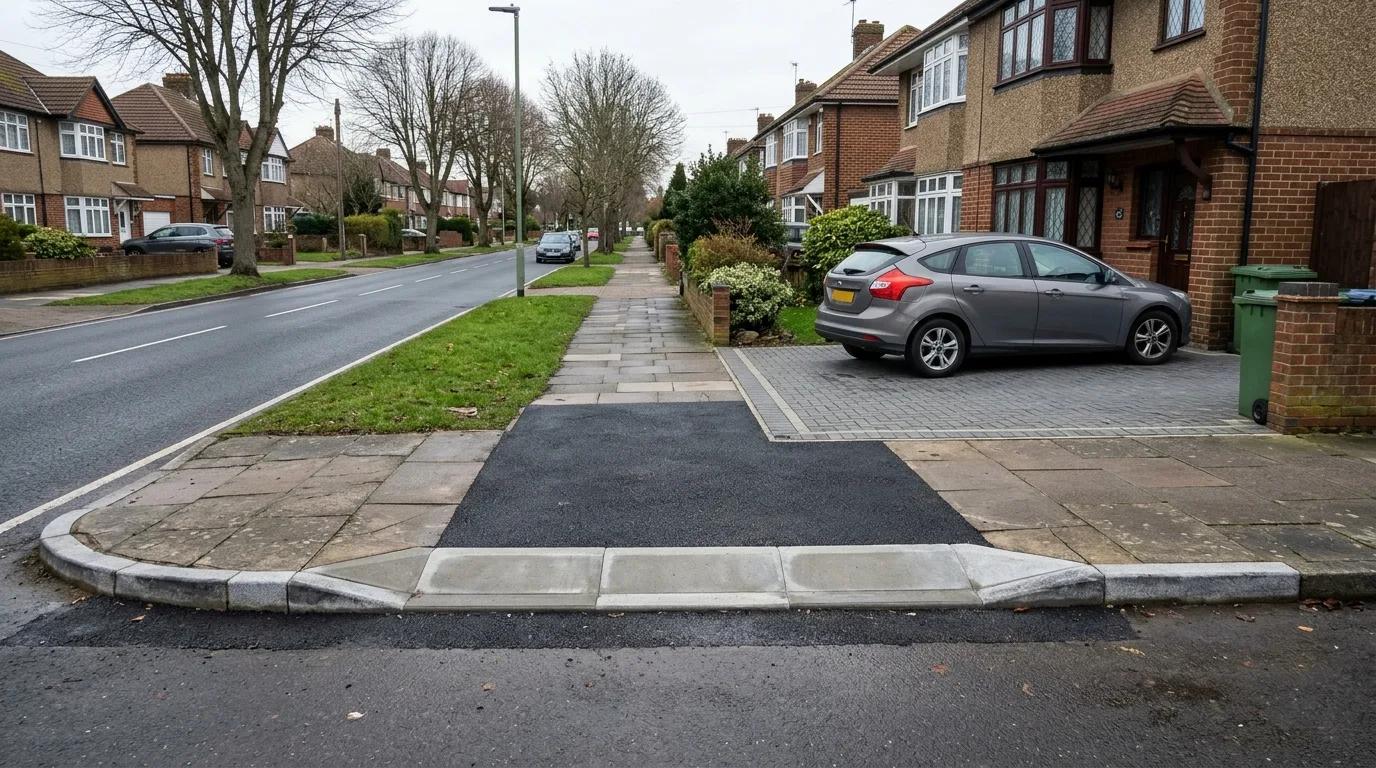
What UK councils charge for a standard crossing: three flat kerbs and two sloping ones, about 4.5 m at the kerb, across a pavement about 2 m deep. You pay the application fee first and the build later, once the council has approved it and sent a price. The main figure is the middle council's price.
Council application fee
£130 to £260, paid up front. The lowest we found was £50 and the highest £568
About £165
Building a standard dropped kerb
£1,600 to £2,500, for three flat kerbs and two sloping ones across a pavement about 2 m deep
About £1,800
Fee and build together
£1,800 to £2,800, adding each council's fee to its own build price
About £2,100
Widening an existing dropped kerb
£850 to £1,600. A guide from 4 councils
About £1,000
Each extra kerb, about 0.9 m
One council's schedule. A London borough charges £274 for every extra 300 mm
£110 to £220
Moving a lamp post
A guide from one council and a national price guide. The electricity company can charge extra
£1,200 to £2,000
Moving a BT or Virgin box
One council's price, and it can cost far more
From about £2,250
Changing parking bays or yellow lines
A traffic order, from four councils. It can add three months
£730 to £3,750
Planning application, only if needed (England)
For a house, rising to £285 for applications made from 8 December 2026. Most dropped kerbs don't need one
£272
The build price covers lowering the kerbs and strengthening and resurfacing the pavement up to your boundary. It doesn't include the driveway itself. The extras each rest on one to four councils, so treat them as a guide. We could confirm only two council fees in Wales, Northern Ireland publishes none, and just one firm we found publishes its own price. Your council's quote is the figure to go by. For the drive behind the crossing, see our driveway costs.
What Affects the Price of a Dropped Kerb?
Your council
Most councils set the price themselves. The same standard crossing costs £1,301 in Bolton and £3,034 in Greenwich.
Width
Each extra kerb adds roughly £110 to £220 on Bolton's schedule, and Greenwich charges £274 for every extra 300 mm. Many councils cap the width, Kingston and Sutton at 4 m.
Pavement depth
A deeper pavement means more to dig out and resurface. Bolton and Walsall both add about £250 for each extra half metre beyond about 2 m.
Things in the way
Adjusting a small cover, from a stop tap to a manhole, costs £40 to £120 in Bolton, and Bracknell Forest puts moving a lamp post at about £2,000. A BT or Virgin box costs from about £2,250 and can cost far more.
Parking restrictions
If a bay or yellow line has to change, the traffic order costs £730 in BCP and up to £3,737 in Greenwich, and it can add three months.
Fees and paperwork
Application fees run from £50 to £568. Birmingham adds a £375 admin fee, Brent and Waltham Forest ask for legal agreements of £500 and £400, and where you hire the contractor, a permit to dig costs £140 to £540.
Dropped Kerb Cost Calculator
Pick the width, the pavement and anything in the way for a rough price before you apply. The council's fee is shown separately, because you pay it first.
Who builds the crossing?
Your council's dropped kerb page says which route it uses. We found no sign that either is cheaper.
A standard crossing has three flat kerbs and two sloping ones, about 4.5 m at the kerb. Many councils cap the width: Kingston and Sutton at 4 m.
Anything in the pavement where the crossing would go?
A small cover means a stop tap, hydrant or manhole lid. A BT or Virgin box means a telecoms chamber, usually a lid marked BT, Openreach or Virgin Media.
How much does your council charge to apply?
Most councils charge £130 to £260, about £165 on average.
Your estimate
Building the dropped kerb
About £1,800
Typically £1,600 to £2,500.
Council application fee
£130 to £260, paid up front and usually not refundable.
Get quotes for your drivewayBased on the prices UK councils publish on their own websites, checked November 2026. Most councils only give an exact price after a site visit, so your council's quote is the real figure. The council or a contractor it approves builds the crossing. The quotes are for the driveway behind it.
Get quotes for the driveway behind it
Your council, or a contractor it approves, builds the dropped kerb itself, so these quotes are for the driveway behind it. Tell us about the drive and local installers will get in touch with prices, with no obligation to book.
Who Builds a Dropped Kerb?
In England and Wales your council, as the highway authority, either builds the crossing or decides who can. Most councils use their own contractor, and you pay the council. Others, including Leeds, Calderdale, Lancashire, Surrey and Bristol, have you hire a street works accredited contractor, and many Scottish councils work that way too.
We found no sign that hiring your own contractor is cheaper, and the council's fees for that route are often higher. Bracknell Forest charges £261 against £133, Coventry £200 against £130, and Walsall's permit is £540 against £140.
Only an approved contractor may work on the pavement. It needs street works (NRSWA) accreditation, the council's permit and public liability cover of at least £5 million, and some councils ask for £10 million. A driveway firm can only build your crossing if it has all three and the council allows it.
Pay the council only through its own payment page. Croydon warns of rogue traders posing as council contractors, so turn down doorstep offers to drop your kerb.
How Long Does a Dropped Kerb Take?
Councils usually take 3 to 8 weeks to inspect the site and send a decision or a price. Once you pay, the work is normally done within 1 to 4 months, and the digging itself takes a few days. If a parking bay or yellow line has to change, the traffic order can add three months. Allow 2 to 5 months from applying to driving on it.
A council's quote usually lasts three to six months, so time your application around the driveway. If you're having a new drive laid, apply for the dropped kerb first and book the driveway firm once you know when the council will build it.
Do You Need Permission for a Dropped Kerb?
Yes. You need the council's approval before anyone touches the kerb, and only the council or a contractor it approves may do the work (Highways Act 1980, section 184). You can find your council's dropped kerb page through gov.uk. Once the council accepts the crossing, it maintains it as part of the highway.
You can't simply drive over a full-height kerb. The Highway Code says you must not drive on or over a pavement except to gain lawful access to property. If you regularly cross a kerb, the council can build a crossing and charge you, or set conditions, and breaking them can mean a fine of up to £1,000.
Planning permission
Planning is a separate question, and most houses don't need it. In England a new access is permitted development only onto a road that isn't a trunk or classified road (GPDO 2015, Part 2 Class B), so a drive onto an A, B or C road or a trunk road needs planning permission. Flats and maisonettes don't have the same rights as houses (article 2), so they need it too. For a house, the application fee is £272, rising to £285 for applications made from 8 December 2026 (gov.uk).
A listed home or a conservation area can need consent as well. Works that affect a listed building's character, such as taking out a front wall or railings, need listed building consent, and the Planning Portal lists conservation areas among the cases to check, so ask the council's planning team first. The driveway surface has its own rule: in England a front garden surface over 5 m² must be permeable or drain into the garden (gov.uk guidance). Our guide to planning permission for a driveway covers it in full.
Wales, Scotland and Northern Ireland
- Wales: you need the council's approval in the same way, and a new access onto a classified road needs planning permission (GPDO 1995, Part 2 Class B).
- Scotland: you need the roads authority's written consent before any work in a public road, and working without it is an offence (Roads (Scotland) Act 1984, section 56). An access onto a trunk or classified road needs planning permission (GPDO Scotland 1992, Class 8).
- Northern Ireland: the Department for Infrastructure gives consent (Roads (NI) Order 1993, article 80). You use your own contractor, and DfI takes a deposit it returns once the road has been made good and has held for six months. A, B and C roads, conservation areas where planning is required and commercial accesses need planning permission (nidirect).
If you hire the contractor
Paying at least part by credit card gives you Section 75 cover on a price between £100 and £30,000. A contract made on your doorstep or online can usually be cancelled within 14 days, and the work must be done with reasonable care and skill.
Dropped Kerb Prices by Region
Councils set their own prices, so we haven't applied our usual regional building cost factors here. The council figures do show some differences.
- London is dearer at the top end and in the extras. The middle build price across 8 boroughs is about £2,050 (£1,700 to £2,700), against about £1,800 elsewhere. Greenwich (£3,034), Richmond (about £2,750) and Haringey (about £2,700 on average) are the dearest we found, but Ealing (about £1,500) and Sutton (about £1,600) cost less than many councils outside London, so it goes borough by borough. Changing parking restrictions and legal agreements are mostly London costs, and application fees are a little higher, about £184 in the middle against £152 elsewhere.
- Scotland: councils approve the crossing and usually leave the building to a private contractor you hire. The 4 council fees we confirmed run from about £50 to £195. We found no Scottish council build price, and the only firm we found that publishes one starts at £3,144 with VAT, including its own permit handling.
- Wales: we could confirm only two council fees (£152 and £227), so the evidence is thin. In Carmarthenshire you hire your own contractor.
- Northern Ireland: no fee is published. You use your own contractor, and the Department for Infrastructure takes a refundable deposit, which it returns once the road has been made good and has held for six months.
How to Get Your Dropped Kerb for Less
Read the council's rules before you pay the fee
Most application fees aren't refunded if the council says no. Check what it needs first, such as how deep your front garden must be: 4.8 m in Waltham Forest, 6 m by 2.75 m in Bradford and 5 m by 3 m in West Northamptonshire.
Get three quotes for the drive, and for the kerb where you can choose
Where your council lets you pick who builds the crossing, get three quotes from accredited firms. Lancashire says quotes run from £2,000 to £3,500. Check the council's fees for that route too, as Bracknell Forest charges £261 against £133. Get three quotes for the driveway behind it as well, and ask each firm whether it's accredited for street works.
Keep to a standard width
Each extra kerb adds £110 to £220 or more, and many councils cap the width anyway.
Widen the one you have
If you already have a dropped kerb, widening it costs about £850 to £1,600, against about £1,800 for a new one.
Pick a clear spot
Choose a spot clear of lamp posts, BT or Virgin boxes and trees, because that's where the big extra costs come from.
Share with a neighbour
Birmingham lets neighbours share the fee and the quote, Bradford splits the cost, and Lancashire takes one application for a shared crossing up to 6 m wide.
Ask whether pavement works are planned
Stockport charges £465 for a 5 kerb crossing while it's rebuilding the footway on your street, and West Lothian sometimes offers the work during footway repairs.
Ask about a Blue Badge discount
If you have a Blue Badge, Kingston and Sutton take up to £100 off the build. Ask your council whether it does the same.
Apply before fees go up
Most councils change their fees on 1 April, and Bracknell Forest's goes from £133 to £200 in January 2027. We found no month that's cheaper for the work itself.
Free, with no obligation to book.
Frequently Asked Questions
How much does a dropped kerb cost?
Most councils charge £1,600 to £2,500 to build a standard dropped kerb with three flat kerbs and two sloping ones, about £1,800 on average across 19 councils. You also pay an application fee, usually £130 to £260, so most people pay £1,800 to £2,800 in all. It can cost far more where a lamp post, telecoms box or parking bay has to move.
Do I need planning permission for a dropped kerb?
Usually not for a house on an unclassified road. You do need it if the drive opens onto an A, B or C road or a trunk road, or if the home is a flat or maisonette. A listed home or a conservation area can need consent too, so ask the council's planning team first. In England the application fee for a house is £272, rising to £285 for applications made from 8 December 2026.
Can I use my own contractor?
It depends on the council. Bradford, Kingston, Sutton, Lewisham and Haringey only let their own contractor do it. Leeds, Calderdale, Lancashire, Bristol and Surrey have you hire a street works accredited contractor, and many Scottish councils work that way. The contractor needs the council's permit and at least £5 million of public liability insurance.
Can my driveway firm build the dropped kerb?
Only if your council lets you hire your own contractor and the firm has street works accreditation, the council's permit and the right insurance. Where the council builds the crossing, your driveway firm lays the drive behind it, and the two jobs are booked separately.
How long does it take to get a dropped kerb?
Councils usually take 3 to 8 weeks to inspect and send a price. Once you pay, the work is normally done within 1 to 4 months, and the digging itself takes a few days. If a parking bay or yellow line has to change, the traffic order can add three months. Allow 2 to 5 months from applying to driving on it.
Is the application fee refundable?
Usually not, even if the council turns you down. A few give part of it back: Bradford returns £60 of £120, Lancashire half of £290, and York charges £63 instead of £263 if it refuses. Check the council's rules, such as how deep your front garden must be, before you pay.
Can I drive over the pavement without a dropped kerb?
You shouldn't. The Highway Code says you must not drive over a pavement except to gain lawful access to property, and councils treat crossing a full-height kerb as unauthorised. The council can build a crossing and charge you, or set conditions on how you use it, and breaking those can mean a fine of up to £1,000.
Who maintains a dropped kerb?
The council. The crossing is part of the public highway, and once the council accepts it, it looks after it at no cost to you unless a heavy vehicle damages it. Bristol keeps a privately built crossing as the contractor's responsibility for its first two years.
Is it different in Scotland or Northern Ireland?
In Scotland you need the roads authority's written consent under section 56 of the Roads (Scotland) Act 1984, and many councils expect you to hire a private contractor. The council fees we found run from about £50 to £195. In Northern Ireland the Department for Infrastructure gives consent and takes a deposit, which it returns once the road has held up for six months.
Reviewed by Chris Kervin, Less.co.uk Home Improvement Costs Specialist
Last updated: · Prices from 46 UK councils · Methodology
Planning a new drive?
Apply to the council for the dropped kerb first, then compare a few local installers for the driveway behind it.
Get Free Driveway QuotesFree, no obligation · Local firms · Compare multiple quotes