Types of Driveways & Driveway Materials: Which Is Best?
There are seven main driveway types used on UK homes, and each has its strengths and weaknesses. The right choice depends on your budget, property style, how much maintenance you want to do, and whether you need a permeable surface. We have compared them all so you can make an informed decision without wading through sales pitches from driveway companies.
£20/m²
Cheapest (gravel)
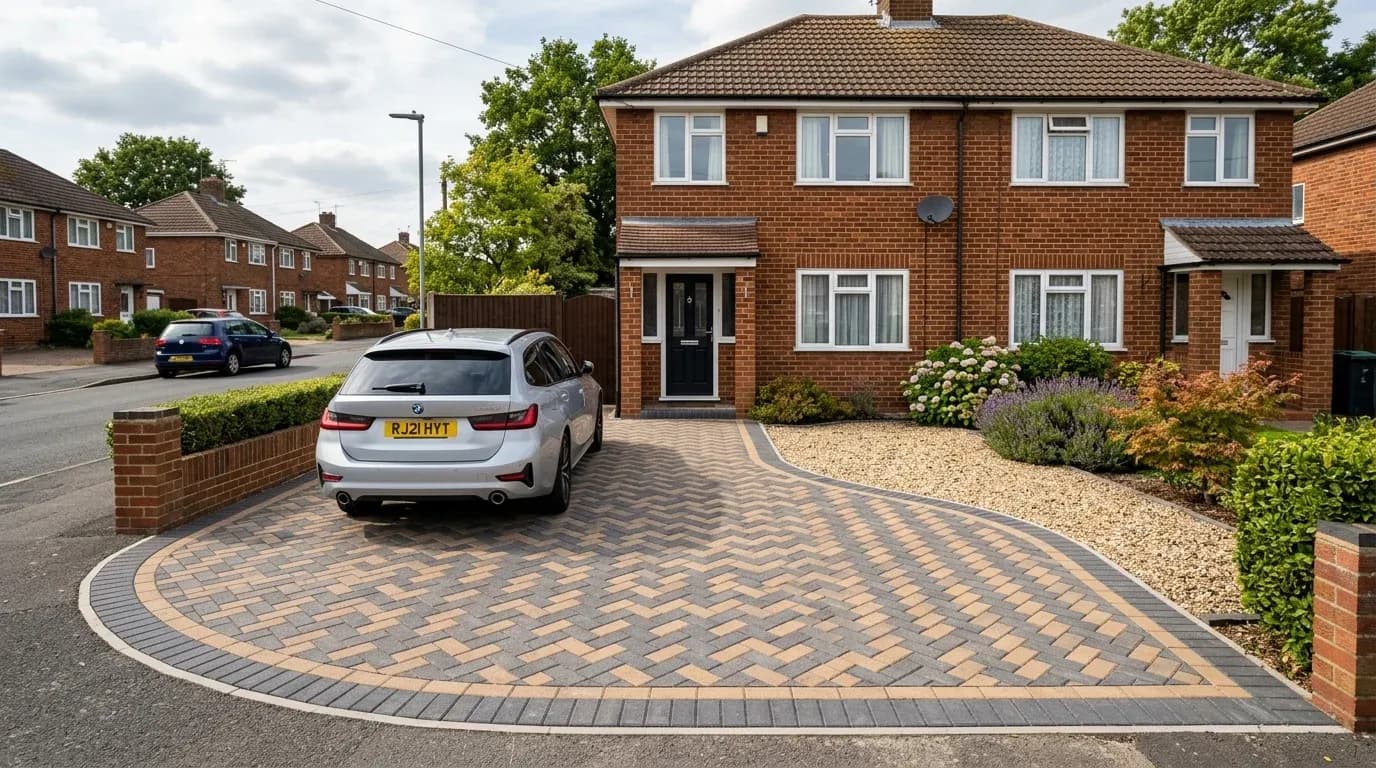
Block paving
Most popular
Porcelain
Lowest maintenance
Resin bound
Best all-rounder
Free, no obligation. Quotes from local driveway contractors near you.
Planning rule: Front gardens over 5 square metres need a permeable surface or drainage to your own garden if you are using an impermeable material. This applies to tarmac, solid concrete, non-permeable block paving, sandstone, and porcelain. Gravel and resin bound are permeable by nature. Permeable block paving is also available. Check the government guidance on permeable surfacing for full details.
Quick Comparison
Here is how all seven driveway types stack up on the things that actually matter.
| Type | Cost/m² |
|---|---|
| Block paving | £70 - £120/m² |
| Tarmac | £40 - £70/m² |
| Resin bound | £40 - £70/m² |
| Gravel | £20 - £40/m² |
| Concrete | £50 - £85/m² |
| Indian sandstone | £70 - £120/m² |
| Porcelain paving | £90 - £150/m² |
Costs include supply, sub-base preparation, and professional installation for a typical 50m² driveway. Prices vary by region and installer.
Block paving
The most popular driveway surface in the UK and for good reason. Individual blocks are laid on a compacted sand and aggregate base. Available in dozens of colours, patterns, and styles. Permeable block paving uses wider joints or specially designed blocks that let water drain through, avoiding the need for planning permission.
Pros
- +Looks great on most property styles
- +Individual blocks can be lifted and replaced if damaged
- +Permeable option available for planning compliance
- +Very durable with proper installation
- +Huge choice of colours, patterns, and finishes
Cons
- -Weeds can grow through joints over time
- -Jointing sand needs topping up every few years
- -Can shift and become uneven if sub-base is not right
- -Ants love the sand joints
- -Installation takes longer than tarmac or resin
Our take
Block paving is the safe, versatile choice that works on almost any property. It costs more than tarmac but looks considerably better and lasts longer. If you want a driveway that will look smart for 20 years with occasional maintenance, block paving is where most people end up.
Tarmac
The cheapest professional hard surface for a driveway. Hot tarmac is machine-laid in a single operation, giving a smooth, black finish. It is the same material used on most UK roads. Quick to install and perfectly functional, though it lacks the visual appeal of block paving or natural stone.
Pros
- +Cheapest professional hard surface
- +Quick to install (often done in a day)
- +Smooth, even surface
- +Easy to repair potholes and cracks
- +Good for large driveways where block paving would be very expensive
Cons
- -Looks basic compared to other options
- -Not permeable, so may need planning permission if over 5m²
- -Can soften in very hot weather
- -Needs resealing every 3 to 5 years to stay looking good
- -Oil stains are difficult to remove
- -Fades to grey over time without resealing
Our take
Tarmac is the practical, no-frills choice. It does the job, costs less than anything else except gravel, and a good tarmac contractor can have it done in a day. Just be aware that it is not permeable, so driveways over 5 square metres will need planning permission or a drainage solution. It suits large driveways where the cost of block paving would be prohibitive.
Resin bound
A mixture of natural aggregate and clear resin, mixed together before being trowelled onto a prepared base. The result is a smooth, seamless surface that lets water drain straight through. It has become very popular in the last ten years because it looks clean and modern, needs virtually no maintenance, and is inherently permeable.
Pros
- +Naturally permeable, no planning permission needed
- +Smooth, contemporary finish
- +Very low maintenance
- +No weeds (no joints for them to grow through)
- +Wide range of aggregate colours
- +Can be laid over existing tarmac or concrete
Cons
- -Surface can crack if sub-base moves
- -Not as durable as block paving under heavy vehicles
- -Quality varies hugely between installers
- -Cheaper systems can discolour or shed stones
- -Repairs can be visible if only patching a small area
Our take
Resin bound is the modern choice that ticks a lot of boxes. The permeability means no planning permission hassle, the look is clean and contemporary, and maintenance is minimal. The key is finding a good installer, because a cheap resin bound driveway can fail within a few years. Pay for quality and it will serve you well.
Gravel
Loose gravel or shingle laid over a compacted sub-base. The cheapest driveway option by a long way. Works well in rural settings and on period properties where a gravel drive feels appropriate. Modern gravel grids (plastic honeycomb panels) help keep the stones in place and reduce the messiness.
Pros
- +By far the cheapest option
- +Naturally permeable, no planning issues
- +Good security feature (you can hear people arriving)
- +Suits period and rural properties
- +Easy to DIY if you are happy with the prep work
Cons
- -Stones migrate onto paths, lawns, and into the house
- -Needs topping up every 2 to 3 years
- -Weeds grow through without a membrane
- -Not great for pushchairs, wheelchairs, or heels
- -Can be difficult to clear snow from
- -Cats may use it as a toilet
Our take
Gravel is the obvious choice if budget is the overriding concern or if you have a long, rural driveway where anything else would cost a fortune. Using gravel retention grids makes a big difference to the surface stability. It is also worth noting that gravel driveways are an excellent security feature because it is impossible to approach a house quietly across gravel.
Concrete
Poured and finished on site, concrete gives a solid, long-lasting surface. Plain concrete looks basic, but pattern imprinted concrete (PIC) can mimic the appearance of block paving, natural stone, or brick at a lower cost. Concrete is extremely durable and requires virtually no maintenance, though it can crack if the sub-base is not properly prepared.
Pros
- +Very long lifespan (25+ years)
- +Pattern imprinted options look surprisingly good
- +Low maintenance once laid
- +Extremely strong, handles heavy vehicles
- +No weeds or ant problems
Cons
- -Can crack if sub-base is not right (and cracks are permanent)
- -Not permeable, planning permission needed if over 5m²
- -Plain concrete looks institutional
- -Pattern imprinted concrete colours can fade
- -Needs resealing every 3 to 5 years (pattern imprinted)
- -Difficult and expensive to repair if it does crack
Our take
Concrete is the workhorse option. It lasts decades with minimal fuss. Pattern imprinted concrete gives you the look of block paving without the joints and weeding. The risk is cracking, which is almost always caused by poor sub-base preparation. If your installer skimps on the groundwork, you will know about it within a couple of winters.
Indian sandstone
Natural stone slabs imported from India, available in a range of warm colours from buff and grey to rich browns and reds. Each slab has a unique character. Indian sandstone looks beautiful on traditional properties and makes a real statement. It needs sealing to prevent staining and algae growth.
Pros
- +Beautiful natural appearance, every slab is unique
- +Suits period and traditional properties perfectly
- +Very long lifespan when properly maintained
- +Adds genuine kerb appeal and property value
- +Available in many natural colour tones
Cons
- -Expensive compared to block paving and tarmac
- -Needs sealing on installation and every 2 to 3 years
- -Can become slippery when wet if not sealed
- -Softer than concrete or porcelain, can chip
- -Not permeable, planning rules apply
- -Quality varies enormously between suppliers
Our take
Indian sandstone is the premium natural stone choice. It looks wonderful on the right property and ages gracefully. The main hassle is the sealing and periodic maintenance. If you love the look and are happy to maintain it, sandstone is a genuinely attractive option. If you want the stone look without the maintenance, consider porcelain instead.
Porcelain paving
Engineered ceramic tiles designed for outdoor use. Porcelain paving is the newest option on this list and has become very popular for driveways, patios, and paths. It comes in a huge range of finishes including realistic stone, wood, and concrete effects. It is virtually maintenance free because it does not absorb water or stains.
Pros
- +Virtually zero maintenance
- +Does not absorb water, so no staining or algae
- +Huge range of styles and finishes
- +Does not fade in sunlight
- +Can be jet washed without damage
- +Very consistent finish (unlike natural stone)
Cons
- -Most expensive option on this list
- -Can look too perfect or clinical for some properties
- -Needs very precise installation (thin slabs, no room for error)
- -Not permeable, planning rules apply
- -Can be slippery when wet in some finishes
- -Relatively new product, so less long-term data than stone
Our take
Porcelain is the premium, no-fuss option. If you want a driveway that looks immaculate with zero effort, this is it. The cost is high but you are paying for the complete absence of maintenance. It suits contemporary properties and homeowners who do not want to spend weekends weeding or resealing. Not the best choice for period properties where natural materials would look more appropriate.
How to Choose the Right Driveway Type
Instead of overthinking it, start with these three questions and the answer usually becomes obvious.
What is your budget?
If budget is the priority, it is either gravel (cheapest) or tarmac (cheapest hard surface). If you have a mid-range budget, block paving and resin bound give you the best balance of cost, appearance, and durability. If money is less of a concern, Indian sandstone and porcelain are the premium options that look genuinely impressive.
Do you need it to be permeable?
If your front garden is over 5 square metres and you want to avoid the planning permission process, choose gravel, resin bound, or permeable block paving. These are inherently or optionally permeable and do not trigger the planning requirement. Tarmac, concrete, sandstone, and porcelain are not permeable, so you will need either planning permission or a drainage solution that directs water to your own garden.
How much maintenance are you willing to do?
If you want to lay it and forget it, porcelain or resin bound are the lowest maintenance options. Block paving needs occasional weeding and re-sanding. Tarmac needs resealing every few years. Sandstone needs sealing. Gravel needs the most ongoing attention with regular raking and topping up. Be honest with yourself about how much time you will actually spend maintaining your driveway.
Frequently Asked Questions
What is the best type of driveway?
There is no single best driveway type because it depends on your budget, property style, and how much maintenance you are willing to do. Block paving is the most popular choice in the UK because it offers a good balance of durability, appearance, and cost. Resin bound is increasingly popular for its contemporary look and permeability. For the lowest cost, gravel is hard to beat. For the lowest maintenance, porcelain paving is the premium choice.
Do I need planning permission for a new driveway?
If your front garden is more than 5 square metres and you are using an impermeable material (standard tarmac, solid concrete, non-permeable block paving), you need planning permission. If you use a permeable surface (permeable block paving, resin bound, gravel) or drain the water to your own garden rather than the public road, you do not need planning permission regardless of the size. This rule was introduced in 2008 to reduce surface water flooding.
What is the cheapest driveway option?
Gravel is the cheapest driveway material at £20 to £40 per square metre including a proper sub-base. A 50 square metre gravel driveway costs roughly £1,000 to £2,000. The catch is that gravel needs topping up every few years, gets messy in wet weather, and can migrate onto paths and into the house. Tarmac is the cheapest professional hard surface at £40 to £70 per square metre.
How long does a block paving driveway last?
A properly laid block paving driveway lasts 20 to 25 years or more. The blocks themselves are extremely durable and can last much longer than that. What usually fails first is the jointing sand washing out and weeds growing through, or the sub-base settling and causing the surface to become uneven. Both of these are repairable without replacing the blocks. A well-maintained block paving driveway can look good for 30 years or more.
Is resin bound better than block paving?
They are different rather than better or worse. Resin bound gives a smooth, contemporary finish with very few weeds and virtually no maintenance. Block paving offers a more traditional look with individual blocks that can be lifted and replaced if damaged. Resin bound is inherently permeable. Block paving can be permeable or non-permeable depending on the jointing. Resin bound is slightly cheaper at £40 to £70 per square metre versus £70 to £120 for block paving. The choice is really about which look you prefer.
What is the most low-maintenance driveway?
Porcelain paving is the most low-maintenance option. It does not absorb water, does not stain, does not need sealing, and can be jet washed without damage. The downside is cost, at £90 to £150 per square metre. Resin bound is a close second for low maintenance. Gravel and block paving are at the higher maintenance end of the scale.
What is the difference between resin bound and resin bonded?
Resin bound and resin bonded are two different systems. Resin bound: the aggregate and resin are mixed together before laying, creating a smooth, porous surface. It is permeable, durable, and the stones stay put. Resin bonded: the resin is applied to the surface first, then loose aggregate is scattered on top. It looks similar initially but the stones shed over time, especially in high-traffic areas. Always go for resin bound. It costs slightly more but lasts much longer.

Written by Chris Kervin, Co-Founder of Less.co.uk
Last updated: · Pricing based on industry data and verified contractor submissions · Methodology
Ready to get your driveway for less?
Once you have decided on a driveway type, the next step is getting quotes from local contractors. Prices vary significantly between installers, so comparing at least three quotes is the single best way to make sure you are paying a fair price for the work.
Compare Free QuotesFree, no obligation · Local contractors · Compare up to 3 quotes