Gravel Driveway Cost UK 2026
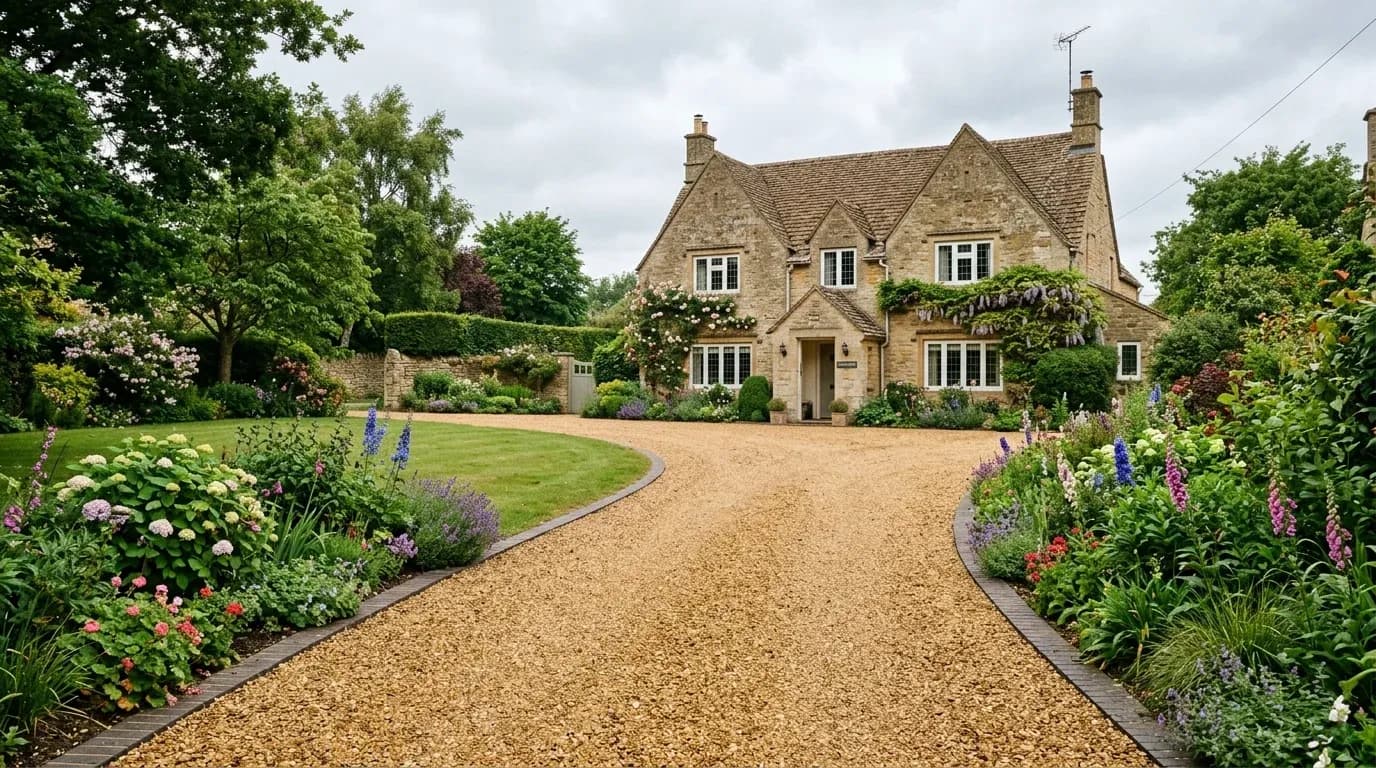
Gravel driveway cost in the UK runs from £1,500 to £3,000 for a small drive of 30 square metres, £2,500 to £5,000 for a medium one at 50 square metres, and £4,000 to £8,000 for a large drive of 80 square metres. That works out at roughly £50 to £100 per square metre fully installed. Gravel is the most affordable driveway surface, it looks good, and, because it is permeable, you do not need planning permission.
£50 to £100
Cost per m² installed
£1,500+
Small drive (30m²)
£2,500+
Medium drive (50m²)
4 to 5 tonnes
Gravel for 50m²
Not needed
Planning permission
15 to 25 yrs
Lifespan
Prices updated April 2026 · Based on industry data and contractor submissions.
No planning permission needed. Gravel is a permeable surface, so it does not require planning permission regardless of size. Impermeable surfaces (concrete, block paving without drainage) over 5 square metres at the front of your property do need permission under permitted development rules.
Gravel Driveway Prices at a Glance
These prices include excavation, sub-base preparation, weed membrane, edging, and gravel surface. Gravel grid is shown as an optional add-on.
| Driveway Size | Average Cost | Price Range |
|---|---|---|
| Small driveway (30m²) | £2,200 | £1,500 to £3,000 |
| Medium driveway (50m²) | £3,500 | £2,500 to £5,000 |
| Large driveway (80m²) | £5,500 | £4,000 to £8,000 |
| Gravel grid system (add-on) | £15/m² | £10 to £20/m² |
| Gravel top-up (every 2 to 3 years) | £350 | £200 to £500 |
Prices include labour, materials, excavation, sub-base, weed membrane, edging, and gravel. Skip hire included.
Gravel Driveway Cost per Square Metre
Most driveway contractors price by the square metre, and gravel comes out at £50 to £100 per square metre fully installed. That covers the dig, a compacted MOT Type 1 sub-base, weed membrane, edging and the gravel surface. The bottom of the range is a straightforward rectangular drive with room for a tipper truck to reverse in. The top is a drive with an old concrete slab to lift, materials that have to be barrowed round the side of the house, or brick edging instead of timber.
Work out your area first
Multiply the length by the width in metres. A single-car drive is usually around 30 square metres and a double drive 60 to 80 square metres. Once you have that number, put it into our driveway cost calculator to see how gravel stacks up against block paving, tarmac and resin for the same area, then take the figure into your quotes so you can compare like for like.
Types of Gravel for Driveways
Not all gravel is equal when it comes to driveways. Angular stones lock together and stay put; rounded stones roll and shift. Here are the most popular options and how much they cost per tonne delivered.
| Gravel Type | Cost per Tonne | Best For | Driveway Suitable? |
|---|---|---|---|
| Pea gravel (10mm, rounded) | £40 to £70/tonne | Paths and borders | Not ideal, shifts easily |
| Golden gravel (20mm, angular) | £50 to £80/tonne | Driveways and paths | Excellent |
| Cotswold stone (20mm) | £55 to £85/tonne | Traditional properties | Very good |
| Granite chippings (20mm) | £50 to £90/tonne | Modern driveways | Excellent |
| Slate chippings (20mm) | £70 to £120/tonne | Contemporary look | Good (can be sharp) |
| Limestone (20mm) | £45 to £75/tonne | Light-coloured drives | Very good |
Our recommendation: 20mm golden gravel or granite chippings are the best all-round choice for most driveways. They look good, compact well, and are widely available at a reasonable price. Avoid pea gravel for any area that gets vehicle traffic.
How Much Gravel Do You Need, and What Does a Tonne Cost?
The surface layer wants to be 40 to 50mm deep. At that depth a 50 square metre driveway takes roughly 4 to 5 tonnes of gravel, which is why the stone itself is only £300 to £1,000 of a typical job. Almost everything else you pay for is the dig and the foundation underneath.
Loose delivery, not bulk bags
Standard gravel tipped loose from a lorry is £50 to £80 per tonne. The same stone in 25kg bags from a builders merchant is £4 to £6 a bag, which is far more expensive once you have bought enough to cover a whole drive. Bags are for topping up a small patch, or for when a lorry genuinely cannot get to you.
The sub-base is a separate cost
Under the gravel goes 100 to 150mm of compacted MOT Type 1, budgeted at £400 to £1,200 on a typical drive. Laying gravel straight onto soil with a membrane is the most common reason a driveway develops ruts and soft patches within a couple of winters, and it is not something you can fix later without lifting the lot.
Order slightly over
Gravel beds down as it settles and tyres push it about, so contractors order a little more than the calculated volume. Running short means paying a second delivery charge, and a later batch from a different quarry may not match the colour of the first.
Full Cost Breakdown
Here is where your money goes on a typical 50 square metre gravel driveway installation.
| Item | Typical Cost |
|---|---|
| Excavation and removal of spoil | £500 to £1,500 |
| Sub-base (MOT Type 1, compacted) | £400 to £1,200 |
| Weed membrane | £50 to £150 |
| Edging (timber, metal, or brick) | £200 to £800 |
| Gravel (surface layer, 40 to 50mm deep) | £300 to £1,000 |
| Gravel grid system (optional) | £300 to £1,600 |
| Delivery and skip hire | £200 to £500 |
Extra Costs People Forget
These are the items that turn a tidy-looking quote into a bigger bill. Ask about each one before you agree a price.
A dropped kerb, if you do not already have one
Turning a front garden into parking means applying to your council for a dropped kerb. It is a separate job from the driveway, priced by the council and its approved contractors, and approval can take weeks. Start that application before you book anyone in, not after.
Lifting the old surface
Excavation and spoil removal is £500 to £1,500 on a typical drive, and an old concrete slab sits at the top of that range because it has to be broken up before it can be carted away. Old tarmac or existing gravel is quicker and cheaper to clear.
Edging is not always in the price
Some quotes leave it out. Timber is £5 to £10 per metre, metal £8 to £15 per metre, and brick or stone £15 to £30 per metre, which comes to £200 to £800 across a typical perimeter. Without it the gravel migrates onto your lawn and down the pavement.
Topping up the gravel later
Budget £200 to £500 every 2 to 3 years to top the surface back up, depending on the size of the drive and whether you fitted a grid. It is a small running cost, but it is a real one and no other driveway surface has it.
Where the water goes
Gravel is permeable, so run-off is usually a non-issue. The exception is a drive that falls towards the house or towards the road, where the contractor may need to regrade the levels or add drainage. Worth raising at the quote stage rather than after the first heavy rain.
Do You Need a Gravel Grid?
A gravel stabilisation grid is a honeycomb-style plastic panel that sits on top of the sub-base. You fill the cells with gravel, and the grid holds the stones in place. Here is a straight answer on whether it is worth the extra cost.
With a grid (£10 to £20/m² extra)
- + Gravel stays in place, no ruts from tyres
- + Much firmer surface for walking and wheelchairs
- + Dramatically reduces maintenance and top-ups
- + Reduces weed growth
- - Adds £500 to £1,600 to the upfront cost
Without a grid
- + Lower upfront cost
- + Easier to lay, no grid fitting needed
- - Gravel shifts and ruts form under tyres
- - Needs raking regularly and topping up more often
- - Not wheelchair or pushchair friendly
Verdict: If your driveway gets daily vehicle use, a gravel grid is worth every penny. If it is a lightly used area or a path, you can skip it. The grid pays for itself within 5 to 7 years through reduced maintenance and gravel top-up costs.
What Affects the Cost of a Gravel Driveway?
Size of the driveway
The biggest cost factor. Gravel driveways cost roughly £50 to £100 per square metre fully installed. A single-car drive (30 square metres) is far cheaper than a double drive (60 to 80 square metres). Measure your driveway before getting quotes so you can compare costs per square metre.
Existing surface and excavation
If you are replacing an old driveway, the existing surface needs removing first. Lifting an old concrete drive costs more than removing old tarmac or gravel. If the area is currently garden, excavation is straightforward. The depth of dig (typically 200 to 250mm) and volume of spoil to remove also affects price.
Type and quality of gravel
Standard aggregates (golden gravel, granite chippings) cost £50 to £80 per tonne. Premium decorative gravel (slate chippings, Scottish pebbles) costs £70 to £120+ per tonne. A 50 square metre driveway needs roughly 4 to 5 tonnes of surface gravel, so the choice of material makes a meaningful difference.
Edging and borders
Edging is essential to stop gravel spreading onto paths and lawns. Timber edging is cheapest (£5 to £10 per metre), metal edging (£8 to £15 per metre) is more durable, and brick or stone edging (£15 to £30 per metre) looks the smartest but costs the most. The perimeter length of your driveway determines the total edging cost.
Access and delivery
Gravel and sub-base materials are heavy and need to be delivered by tipper truck. If the truck cannot get close to the driveway, the materials need wheelbarrowing in, which adds labour cost. Good access directly to the work area keeps the price down.
Gravel Driveway Prices by Region
Average cost of a 50 square metre gravel driveway across different UK regions.
| Region | Average Cost | vs National |
|---|---|---|
| London | £4,500 | +29% |
| South East | £4,000 | +14% |
| East of England | £3,700 | +6% |
| South West | £3,600 | +3% |
| Midlands | £3,500 | Average |
| Yorkshire | £3,100 | -11% |
| North West | £3,200 | -9% |
| North East | £2,900 | -17% |
| Scotland | £3,100 | -11% |
| Wales | £3,000 | -14% |
How to Get Your Gravel Driveway for Less
Gravel is already the cheapest driveway option, but these tips can bring the cost down even further.
Source gravel from a local quarry
Buying gravel direct from a quarry or aggregate supplier is typically 30 to 50% cheaper than buying bagged gravel from a builders merchant or DIY store. For a 50 square metre driveway, you need roughly 4 to 5 tonnes of gravel. At £50 to £80 per tonne loose versus £4 to £6 per 25kg bag, the saving on a full driveway is easily £200 to £400.
Do the excavation yourself if you are fit
Excavation and spoil removal is the most labour-intensive part of the job and typically costs £500 to £1,500. If you are physically able and have a weekend to spare, digging out the top 200mm yourself and hiring a skip (£200 to £300) can save you £300 to £1,000. The sub-base compaction is the critical part, consider hiring a whacker plate (£30 to £50 per day) and doing this yourself too.
Invest in a gravel grid, it saves money long-term
A gravel grid costs £10 to £20 per square metre upfront, but it dramatically reduces ongoing maintenance. Without a grid, you will need to rake the gravel regularly and top up every 1 to 2 years as stones scatter. With a grid, top-ups drop to every 3 to 5 years. Over 10 years, the grid pays for itself in reduced gravel purchases and time spent raking.
Choose a common gravel colour
Golden gravel, limestone, and standard granite chippings cost £50 to £80 per tonne. Premium options like slate chippings, Scottish pebbles, and decorative aggregates cost £70 to £120+ per tonne. For a 50 square metre driveway needing 4 to 5 tonnes, the difference between a standard and premium gravel adds £100 to £200 to the total cost.
Get 3 quotes and check what is included
Driveway quotes can vary by £1,000 to £2,000 for the same job. Some include excavation, sub-base, and skip hire; others quote the gravel and laying only, with everything else as extras. Always ask: what depth of excavation, what sub-base thickness, is edging included, and is skip hire covered? Like-for-like quotes are the only fair way to compare.
How a Gravel Driveway Is Installed
A professional gravel driveway takes 1 to 3 days to install depending on size. Here is the process.
- 1
Excavation
The top 200 to 250mm of ground is dug out and removed (usually by mini-digger). Spoil goes into a skip. Any tree roots or soft spots are dealt with at this stage.
- 2
Sub-base
100 to 150mm of MOT Type 1 compacted hardcore is laid and compacted with a whacker plate. This provides the solid foundation that stops the driveway sinking or developing ruts.
- 3
Edging
Edging is installed around the perimeter to contain the gravel. This can be timber, metal, or stone/brick. It is secured with concrete haunching to stop it moving.
- 4
Membrane and grid
A heavy-duty weed membrane is laid over the sub-base. If using a gravel grid, this is placed on top of the membrane and clipped together.
- 5
Gravel
40 to 50mm of your chosen gravel is spread across the surface and raked level. If using a grid, the cells are filled to just below the top of the grid. The driveway is ready to use immediately.
Gravel Driveway Cost: DIY vs Hiring a Contractor
Gravel is the one driveway surface a reasonably fit person can genuinely lay themselves. There is no screeding, no curing time and no specialist kit beyond a hired whacker plate. What you cannot skip is the sub-base, and that is where most DIY drives go wrong.
Doing it yourself
- + You still buy the materials: £400 to £1,200 sub-base, £300 to £1,000 gravel, £50 to £150 membrane, £200 to £800 edging
- + What you save is labour, mainly the £500 to £1,500 excavation and spoil removal
- + Allow £200 to £300 for a skip and £30 to £50 a day for a whacker plate
- + Realistic saving of £300 to £1,000 for a weekend of hard graft
- - Get the sub-base depth or compaction wrong and the drive ruts, which means lifting it and starting again
Hiring a driveway contractor
- + A crew with a mini-digger does the whole job in 1 to 3 days
- + Spoil removal, deliveries and compaction are all their problem, not yours
- + If the surface sinks, you have someone to go back to
- - Quotes for the same drive can vary by £1,000 to £2,000, so get three and check what each one includes
Frequently Asked Questions
How much does a gravel driveway cost?
A gravel driveway costs £1,500 to £3,000 for a small drive (30 square metres), £2,500 to £5,000 for a medium drive (50 square metres), and £4,000 to £8,000 for a large drive (80 square metres). These prices include excavation, sub-base preparation, weed membrane, edging, and gravel. Adding a gravel grid system costs an extra £10 to £20 per square metre.
How much does a gravel driveway cost per square metre?
A gravel driveway costs roughly £50 to £100 per square metre fully installed. That covers excavation, a compacted MOT Type 1 sub-base, weed membrane, edging and the gravel surface. A gravel grid adds £10 to £20 per square metre on top. To work out your area, multiply the length by the width in metres: a single-car drive is usually around 30 square metres and a double drive 60 to 80 square metres.
How much does a gravel driveway cost for a double drive?
A double drive is usually 60 to 80 square metres. Our large driveway figure of £4,000 to £8,000 is based on 80 square metres, so that is the range to budget for a double. Where you land inside it comes down to the dig rather than the gravel: an old concrete surface to lift, poor access for a tipper truck, or brick edging instead of timber all push you towards the top end.
How much gravel do I need for a driveway?
At the recommended surface depth of 40 to 50mm, a 50 square metre driveway takes roughly 4 to 5 tonnes of gravel. Standard types such as golden gravel and granite chippings cost £50 to £80 per tonne loose, which is why the gravel itself is usually only £300 to £1,000 of the total job. The same stone in 25kg bags works out at £4 to £6 a bag, so order a loose tipped delivery for anything driveway-sized.
Can I lay a gravel driveway myself?
Gravel is the most DIY-friendly driveway surface, because there is no screeding, curing or specialist kit involved. You still pay for the materials: £400 to £1,200 for the sub-base, £300 to £1,000 for the gravel, £50 to £150 for membrane and £200 to £800 for edging. What you save is the labour, mainly the £500 to £1,500 excavation and spoil removal. With a hired skip at £200 to £300 and a whacker plate at £30 to £50 a day, most people save £300 to £1,000. The part to get right is the compacted sub-base, because that is what stops the drive rutting.
Do I need planning permission for a gravel driveway?
No, you do not need planning permission for a gravel driveway. Gravel is a permeable surface, which means rainwater drains through it naturally rather than running off into the street drains. Under current UK planning rules, you only need permission for impermeable surfaces (such as concrete or block paving without drainage) that cover more than 5 square metres at the front of your property.
What is the best type of gravel for a driveway?
The best gravel for driveways is angular gravel in 20mm size, it locks together and does not roll under tyres as much as rounded gravel. Popular choices include golden gravel, Cotswold stone, and granite chippings. Avoid pea gravel for driveways as it is too rounded and shifts easily. Slate chippings look striking but are more expensive and can be sharp on tyres.
How long does a gravel driveway last?
A well-installed gravel driveway lasts 15 to 25 years before it needs a major refresh. The sub-base and edging can last even longer. You will need to top up the gravel every 2 to 3 years (roughly £200 to £500 depending on size), and rake it level periodically. A gravel grid system extends the lifespan significantly by keeping the stones in place.
What is a gravel grid and is it worth it?
A gravel grid (also called a gravel stabilisation grid or honeycomb grid) is a plastic panel laid over the sub-base before the gravel goes down. It holds the gravel in place so it does not shift, rut, or scatter when you drive or walk on it. Grids cost £10 to £20 per square metre but are worth it for any driveway that gets regular vehicle use, they dramatically reduce maintenance and make the surface feel much firmer underfoot.
Is a gravel driveway cheaper than block paving?
Yes, significantly. A gravel driveway costs roughly £50 to £100 per square metre installed, while block paving costs £80 to £150 per square metre. For a typical 50 square metre driveway, gravel saves you £1,500 to £2,500 compared to block paving. Gravel also requires no planning permission (it is permeable), whereas block paving without drainage on an area over 5 square metres does.
How deep should gravel be on a driveway?
The gravel surface layer should be 40 to 50mm deep (about 2 inches). Underneath, you need a compacted sub-base of MOT Type 1 hardcore, typically 100 to 150mm deep. The total dig depth is usually 200 to 250mm from the finished surface level. Going too shallow means the gravel wears through to the sub-base; too deep and it becomes difficult to walk and drive on.
How do I stop weeds growing through a gravel driveway?
A heavy-duty weed membrane laid over the sub-base before the gravel is the most effective prevention. This is standard in any professional installation. For existing driveways, a weed killer applied twice a year (spring and autumn) keeps growth under control. A gravel grid system also reduces weed growth because the cells leave less room for seeds to take root. Avoid cheap landscape fabric, it degrades within 2 to 3 years and becomes ineffective.

Written by Chris Kervin, Co-Founder of Less.co.uk
Last updated: · Pricing based on industry data and verified contractor submissions · Methodology
Compare real quotes for your job
Prices move a lot with your postcode, the access on site and the spec you choose. Get up to 3 free quotes from vetted local tradespeople and see what yours actually comes to, with no obligation to book.