Do You Need Planning Permission for a Driveway? UK Rules Explained
Planning to pave over your front garden? Before you get quotes, you need to understand the rules. Since 2008, paving your front garden with a non-permeable surface over a certain size requires planning permission. Get it wrong and the council can make you rip the whole thing up.

Chris Kervin
Written by Chris Kervin, Co-Founder of Less.co.uk
The short answer
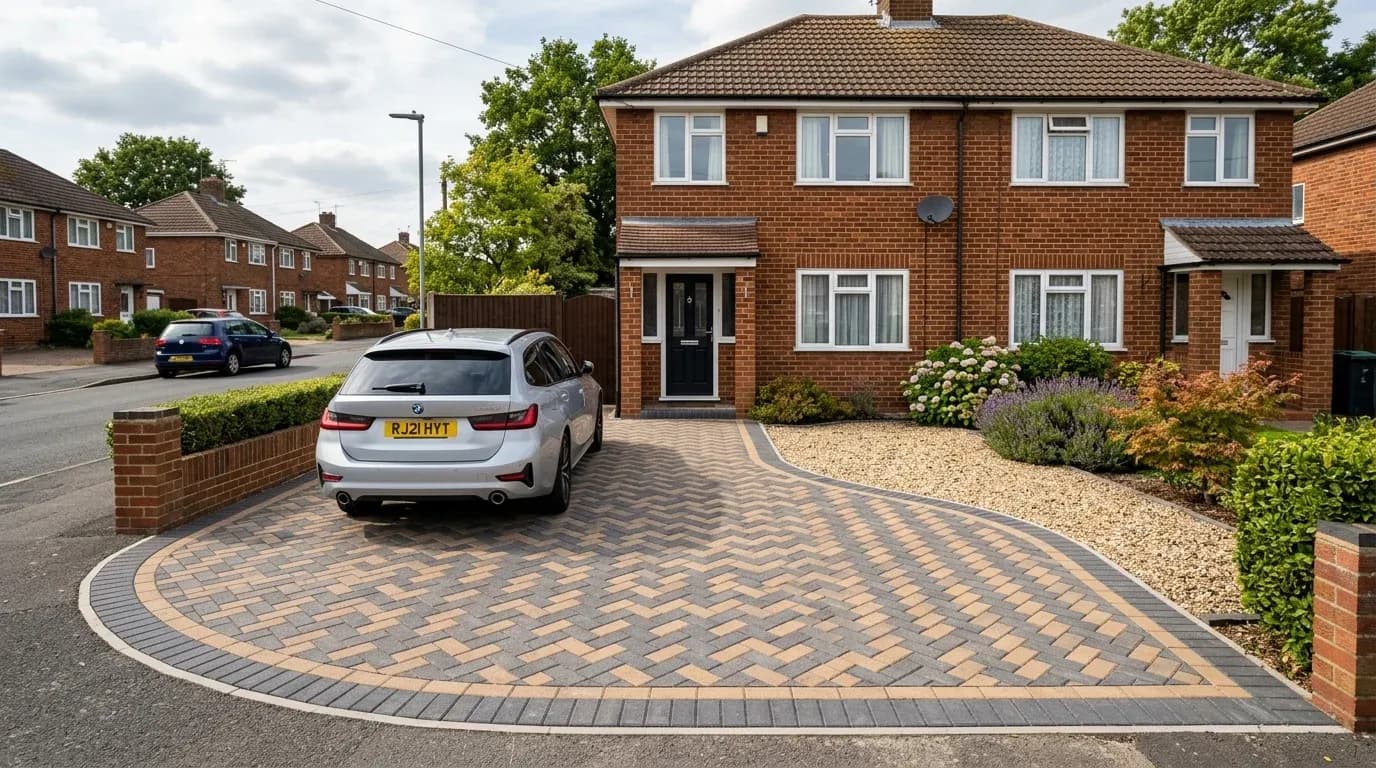
If you are paving more than 5 square metres of your front garden with a non-permeable surface (standard tarmac, concrete, or solid block paving), you need planning permission. If you use a permeable surface (permeable block paving, gravel, resin-bound), you do not need permission regardless of size. Back gardens are not covered by this rule.
Why the rules exist
In October 2008, the government changed the permitted development rules for front gardens in England. The reason was simple: flooding.
Across the country, millions of front gardens had been paved over with concrete and tarmac during the previous few decades. All that hard surface meant rainwater that used to soak into the ground was instead running straight off driveways, down the street, and into the drains. The drainage system could not cope, and surface water flooding was getting worse, particularly in urban areas.
The rule change was designed to slow this down. If you want a hard surface on your front garden, you either need to use a material that lets water drain through it, or you need to apply for planning permission so the council can assess the impact.
The actual rules
Here is exactly what requires planning permission and what does not. This applies to England only (Scotland, Wales, and Northern Ireland have their own rules, though they are broadly similar).
| Situation | Permission needed? |
|---|---|
| Permeable surface, any size, front garden | No |
| Non-permeable surface, under 5m², front garden | No |
| Non-permeable surface, over 5m², front garden | Yes |
| Non-permeable surface draining to a permeable area on your land | No |
| Any surface, any size, back garden | No |
| Any surface in a conservation area | Check with your council |
The 5m² threshold is quite small. That is roughly 2.5m x 2m, which is about the size of a single parking space. Most driveways are considerably larger than this, so in practice, unless you are using permeable materials, you will almost certainly need to apply.
What counts as permeable?
A permeable surface is one that allows rainwater to drain through it into the ground below, rather than running off the surface. The most common permeable driveway options are:
- Gravel or loose aggregate - the simplest and cheapest option. Water drains straight through.
- Permeable block paving - looks like standard block paving but either has wider joints filled with grit, or the blocks themselves are porous. This is the most popular choice for driveways that need to look smart.
- Resin-bound gravel - small stones mixed with resin and laid on a permeable base. Creates a smooth, attractive surface that water can still drain through.
- Grasscrete or cellular paving - concrete or plastic grids with grass growing through the gaps. Popular for overflow parking areas.
- Permeable tarmac - a specialist product with a porous structure. Looks like standard tarmac but lets water through. Less widely available.
What does NOT count as permeable
- Standard tarmac or asphalt laid on a solid base
- Poured concrete
- Standard block paving laid on a solid mortar bed with tight, grouted joints
- Indian sandstone or porcelain slabs on a concrete base
The key distinction is whether water can physically get through the surface and into the ground. If it runs off the edges and into the street, it is not permeable.
How much does a new driveway cost?
Use our driveway calculator for a quick estimate based on your driveway size and material choice, or check our full cost guide.
The loophole: draining to a permeable area
There is an alternative that some people miss. Even if you use a non-permeable surface, you do not need planning permission if the rainwater drains to a permeable area within your own property. In practice, this means sloping the driveway so water runs onto a border, lawn, or gravel area instead of into the street.
This can work well if you have enough garden space around the driveway. A 300mm-wide gravel channel along the edge of a tarmac driveway, for example, could be enough. But the permeable area needs to be big enough to handle the run-off, and it needs to be on your land, not the pavement or road.
Conservation areas and listed buildings
If your property is in a conservation area, additional restrictions may apply. Some councils require planning permission for any changes to the front of a property in a conservation area, including new driveways, regardless of the surface material.
If your property is a listed building, you will almost certainly need listed building consent as well as planning permission for any external changes. This applies to the front and back of the property.
Not sure if you are in a conservation area? Check your local council's website or use the Planning Portal to find your local planning authority. They will tell you within minutes.
What about dropped kerbs?
If you are creating a new driveway where there was not one before, you will also need a dropped kerb. This is separate from the planning permission question.
A dropped kerb has to be installed or approved by your local council (or their appointed contractor). You cannot just lower the kerb yourself. Driving over a full-height kerb regularly will damage your car, and more importantly, it is illegal to drive across a pavement without a proper vehicle crossover.
Dropped kerbs typically cost £800-£2,000 depending on the council and the width required. Some councils have long waiting lists, so apply early.
Can the council make you rip up a driveway?
Yes, they can. If you pave your front garden with a non-permeable surface over 5m² without planning permission, the council can issue an enforcement notice requiring you to remove it or make it compliant.
In practice, enforcement is not common for driveways. Councils have limited resources, and they tend to focus on bigger planning breaches. But it does happen, particularly in flood-risk areas, when neighbours complain, or when the council is running a crackdown on front garden paving.
There is no time limit on enforcement for this type of work. Unlike some planning breaches where you become immune after a certain number of years, the government specifically excluded front garden paving from the time-limit rules. The council could theoretically ask you to rip up a driveway ten years after you laid it.
This is another reason to just use permeable materials and avoid the issue entirely.
The cost comparison: permeable vs non-permeable
Here is the good news: permeable options are not significantly more expensive than non-permeable ones. In many cases, they cost about the same.
| Material | Cost per m² (installed) | Permeable? |
|---|---|---|
| Gravel | £20 - £40 | Yes |
| Standard tarmac | £40 - £60 | No |
| Permeable block paving | £40 - £80 | Yes |
| Standard block paving | £40 - £80 | No |
| Resin-bound gravel | £50 - £90 | Yes |
| Poured concrete | £50 - £100 | No |
| Indian sandstone slabs | £60 - £100 | No |
As you can see, permeable block paving costs roughly the same as standard block paving. Gravel is the cheapest option full stop. Resin-bound gravel is a bit more expensive but gives a sleek, low-maintenance finish. There is really no financial reason to choose a non-permeable surface and deal with the hassle of planning permission.
The safe bet
Use permeable paving and you never need to worry about planning permission for your front garden driveway. It costs about the same, it is better for the environment, it reduces flood risk in your area, and you will never have a council officer knocking on your door.
Permeable block paving is the most popular choice for driveways that need to look good. It comes in the same colours and patterns as standard block paving, and most people cannot tell the difference by looking at it. The only visible difference is slightly wider joints between the blocks, filled with a fine aggregate instead of mortar.
For a full comparison of all driveway types, including how they hold up over time and what maintenance they need, see our dedicated guide.
Official guidance
The government published detailed guidance on this topic. You can read the full document on the gov.uk guidance on permeable surfacing of front gardens. It covers the regulations in full, with diagrams showing what is and is not permitted.
The bottom line
If you are paving your front garden, use a permeable surface and you do not need to think about planning permission at all. If you really want tarmac or concrete, keep it under 5m² or make sure the water drains to a permeable area on your property. If neither of those works, apply for planning permission before the work starts.
The rules are there for a good reason. Surface water flooding is a growing problem in the UK, and paved-over front gardens are a major contributor. Using permeable materials is a small change that makes a genuine difference, and it costs you nothing extra. It is one of those rare situations where the right thing to do is also the easiest thing to do.
Frequently asked questions
Do I need planning permission to tarmac my front garden?
If the area is over 5 square metres and you are using standard (non-permeable) tarmac, yes, you need planning permission. If you use permeable tarmac or direct rainwater to a permeable area within your property, you do not need permission. This rule applies to front gardens in England only and has been in place since October 2008.
Can I pave my back garden without planning permission?
Yes. The 2008 permitted development rules on paving only apply to front gardens (specifically, areas between the front of the house and the highway). You can pave your back garden without planning permission, though it is still worth considering drainage to avoid waterlogging your own property.
What counts as a permeable surface for a driveway?
Permeable surfaces include gravel, permeable block paving (with gaps or porous blocks that let water drain through), resin-bound gravel, grasscrete (concrete with grass-filled voids), and permeable tarmac. Standard concrete, standard tarmac, and non-permeable block paving laid on a solid bed do not count as permeable.
What happens if I pave my front garden without permission?
Your local council can take enforcement action and require you to remove the non-compliant surface. In practice, enforcement is relatively rare for driveways, but it does happen, particularly in areas with flood risk or where neighbours complain. Councils have no time limit on enforcement for this type of work, so you could be asked to rip it up years later.
Does permeable paving cost more than standard paving?
Permeable block paving costs roughly the same as standard block paving, typically £40-£80 per square metre installed. Gravel is the cheapest option at £20-£40 per square metre. Resin-bound gravel is at the higher end at £50-£90 per square metre. The cost difference between permeable and non-permeable options is usually minimal, so there is no real financial reason to choose a non-permeable surface.
Find out what your driveway will cost
Our driveway cost guide has up-to-date UK prices for every material, including permeable options.
Related articles
Driveway Cost Guide 2026
Full UK pricing for every type of driveway surface.
Driveway Types Compared
Block paving, tarmac, gravel, resin, and concrete compared.
Resin Driveway Cost Guide
What resin-bound and resin-bonded driveways actually cost.
Are Resin Driveways Worth It?
Pros, cons, and real costs of resin driveways.