Tarmac Driveway Cost UK 2026
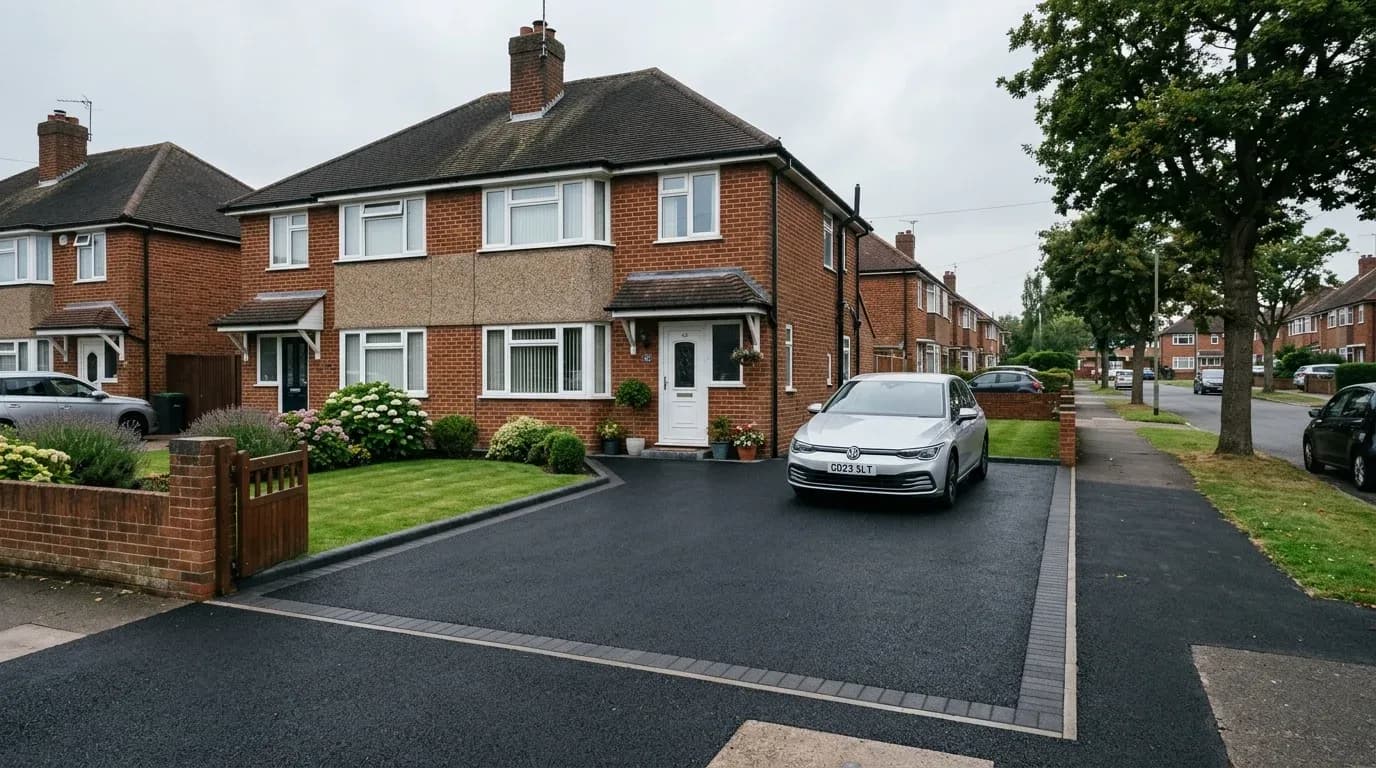
A tarmac driveway costs £40 to £60 per m² including base preparation and laying, so the average tarmac driveway cost for a typical 40 m² drive is £1,600 to £2,400. Resurfacing a sound existing drive instead of digging it out drops that to £20 to £40 per m². Tarmac remains the most affordable hard-surface option for UK driveways, and most jobs are finished in a day or two.
£50
Average per m²
£2,000
Typical drive (40 m²)
1 to 2 days
Installation time
15 to 25 yrs
Lifespan
Prices updated April 2026 · Based on industry data and contractor submissions.
Quick answer
How much does a tarmac driveway cost?
A tarmac driveway costs £40 to £60 per m² for a full dig-out and re-lay in 2026. A typical single-car driveway of around 40 m² costs £1,600 to £2,400. An overlay on an existing sound surface is cheaper at £20 to £40 per m². Averaged across the UK that is roughly £50 per m², or about £2,000 for a standard single-car drive. Prices include base preparation, edging, and laying but exclude drainage and drop kerbs, which are quoted separately.
Tarmac Driveway Prices by Size
Full dig-out, Type 1 sub-base, and two-coat tarmac finish. Edging included. Prices are national averages.
Small drive (30 m²)
£1,500
£1,200 to £1,800
Typical drive (40 m²)
£2,000
£1,600 to £2,400
Large drive (60 m²)
£3,000
£2,400 to £3,600
Double drive (80 m²)
£4,000
£3,200 to £4,800
Overlay only (40 m²)
£1,200
£800 to £1,600
Excludes drop kerb, drainage, and any groundwork beyond standard base preparation.
What Affects the Price of a Tarmac Driveway
Base preparation
The sub-base is everything. A proper 150 to 200 mm layer of compacted Type 1 crushed stone costs more than skipping straight to tarmac, but it is the difference between a drive that lasts 20 years and one that cracks within five. Any contractor who offers to lay tarmac directly onto soil or an existing crumbling surface without preparing the base is not worth hiring.
Drainage requirements
Under planning rules, new or replacement driveways over 5 m² that are not permeable need to manage surface water run-off. That might mean an ACO channel drain across the bottom of the slope, a soakaway, or directing water into a planted border. If the drive slopes towards your house, proper drainage is not optional - it is protecting your foundations.
Edging and kerbing
Tarmac needs a solid edge to butt against, otherwise the edges crumble over time. Concrete edging kerbs are the standard budget option. Granite or natural stone kerbs look better but cost more. Some contractors include edging in their m² rate; others quote it separately. Always check.
Colour options
Standard black tarmac is the cheapest. Red tarmac costs 15 to 25% more and gives the drive a distinctive look, though it does fade over the years. Some contractors offer buff and green shades as well, but these are niche products with limited suppliers and higher prices. For most people, standard black is the sensible choice.
Tarmac vs Block Paving vs Gravel vs Resin
How tarmac stacks up against the other main driveway options on price, lifespan, and maintenance.
| Material | Cost per m² |
|---|---|
| Tarmac | £40 to £60/m² |
| Block paving | £70 to £120/m² |
| Gravel | £20 to £40/m² |
| Resin bound | £40 to £70/m² |
| Concrete | £50 to £80/m² |
The Downsides of a Tarmac Driveway
Tarmac wins on price and speed, and that is why most people end up choosing it. It is worth knowing what you are trading away before you commit.
It does not last as long as block paving
Tarmac gives you 15 to 25 years. Block paving gives you 25 to 50. If you plan to stay put for decades, the cheaper surface is not automatically the cheaper decision, because you are likely to pay for a second drive somewhere down the line.
It softens in real heat
A hot summer will make the surface tacky. Anything with a narrow point load pressed into it will leave a dent: caravan jockey wheels, trailer legs, motorbike stands, even a car jack. A steel spreader plate underneath solves it and costs almost nothing.
Fuel and oil damage it permanently
Petrol, diesel and engine oil dissolve the bitumen binder. A car that drips will eventually leave a soft, crumbling patch rather than just a stain. Catch spills quickly and put a drip tray under anything you are working on.
Repairs never match
Patching tarmac is cheap and quick, which is genuinely a point in its favour. The patch will always be a slightly different shade to the rest of the drive though, so a drive that has been repaired a few times starts to look it. Red tarmac makes this worse, because it fades unevenly as well.
It is a sealed surface
Water cannot pass through tarmac, so the run-off has to go somewhere on your own land. That means a channel drain, a soakaway, or a fall towards a border or lawn, and it is a cost that comes on top of the per m² rate.
It is the plain option
Nobody buys a house because of the tarmac. If kerb appeal matters to you, block paving, resin or pattern imprinted concrete all look more considered. A common compromise is a block paved border with tarmac in the middle, which lifts the look for a fraction of the price of paving the whole drive.
Tarmac, Asphalt, Bitmac: Are They the Same Thing?
For a driveway, near enough. What contractors actually lay is bitumen macadam, shortened to bitmac or, by almost everybody, to tarmac. Real tarmacadam used coal tar as the binder and has not been laid in this country for decades. Asphalt is the same principle with a denser mix and is more common on roads and car parks than on domestic drives.
The practical point is that a quote saying tarmac, a quote saying asphalt and a quote saying macadam are all describing broadly the same surface, so the word tells you very little. What separates a good quote from a bad one is the depth of the sub-base, whether you are getting a binder course as well as a wearing course, and whether edging is priced in. Compare those, not the name.
Overlay or Full Dig-Out?
An overlay is cheaper and faster, but it is not always the right call. Here is when each approach makes sense.
An overlay works if...
- ✓ The existing surface is stable with no major cracks or sinking
- ✓ Drainage is already working properly
- ✓ The levels work - the new surface will not sit too high against your door threshold or garage
- ✓ The base underneath is solid Type 1 or similar, not soil or rubble
Typical overlay cost: £800 to £1,600 for a 40 m² drive
A full dig-out is needed if...
- ✗ The surface is crumbling, potholed, or sinking in places
- ✗ Water pools on the drive rather than draining away
- ✗ The existing base is poor or unknown
- ✗ You need to change the shape, levels, or layout of the drive
Skipping a dig-out when the base is poor is a waste of money - the new surface will fail just as fast.
Additional Costs to Budget For
These extras come up on most tarmac driveway jobs. Make sure you know which are included in your quote.
| Extra Item | Typical Cost |
|---|---|
| Excavation and removal of old surface | £10 to £20/m² |
| Type 1 sub-base (150 to 200 mm) | £8 to £15/m² |
| Edging/kerbing | £15 to £30 per linear metre |
| Drainage channel or ACO drain | £200 to £600 |
| Drop kerb (council crossing) | £800 to £2,000 |
| Skip hire | £200 to £350 |
Tarmac Driveway Costs by Region
Average price per m² for a full tarmac driveway installation (dig-out, sub-base, two-coat tarmac), by UK region.
| Region | Price per m² | vs National |
|---|---|---|
| London | £60/m² | +20% |
| South East | £55/m² | +10% |
| East of England | £52/m² | +4% |
| South West | £50/m² | Average |
| Midlands | £48/m² | -4% |
| Yorkshire | £45/m² | -10% |
| North West | £46/m² | -8% |
| North East | £42/m² | -16% |
| Scotland | £45/m² | -10% |
| Wales | £43/m² | -14% |
Based on industry data for standard black tarmac. Red tarmac will be 15 to 25% higher.
The Best Time of Year to Tarmac a Driveway
Spring and early autumn are the best windows. Tarmac lays perfectly well in cooler weather provided the ground is dry and the temperature is above 5°C, and contractors are nothing like as booked up as they are through the summer, so you get the dates you want and often a keener price. Winter is the one to avoid outright: cold, damp tarmac will not compact properly and the finish shows it.
Whatever the season, rain on the day is the usual reason a job slips, so build a bit of flexibility into your plans rather than booking the drive for the week you are moving in.
Looking after it in the first few weeks
You can normally drive on a new tarmac drive within a few hours of the final rolling, once the surface has cooled. It carries on hardening for a good while after that, though, so for the first few weeks it is worth being a bit careful with it.
- ✓ Vary where you park rather than sitting in the same two spots every night
- ✓ Do not turn the steering wheel while the car is stationary, which scuffs the surface
- ✓ Put a spreader plate under jockey wheels, trailer legs, bike stands and jacks
- ✓ Mop up fuel and oil drips straight away rather than leaving them to soak in
- ✓ Keep the pressure washer off it, or at least keep the lance well back and moving
Planning Permission, Drainage and Drop Kerbs
You do not normally need planning permission to tarmac a driveway, but there is a condition attached and plenty of homeowners only find out about it once the job is done. Tarmac is not permeable, so if you are laying more than 5 m² of it in a front garden the run-off has to be directed somewhere on your own land: a lawn, a planted border, or a soakaway. Let it drain onto the pavement or the road and the work stops being permitted development, which means a planning application.
In practice that is handled with a channel drain across the bottom of the slope, or by laying the drive with a fall towards a border. Either way it is a real cost that sits on top of the per m² rate, so check whether your quote includes it. If the drive slopes towards the house it is not a discretionary extra at all, it is what keeps water away from your walls.
Separately, if you do not already have a lowered kerb where the drive meets the road, you need a drop kerb from the council before any work starts. That runs £800 to £2,000 and takes several weeks to arrange, and it is the item most often left out of a headline quote.
How to Get Your Tarmac Driveway for Less
Practical ways to bring the cost down without ending up with a drive that falls apart in five years.
Ask about an overlay instead of full dig-out
If your existing drive is structurally sound - no major cracks, no sinking, decent drainage - an overlay of 25 to 40 mm of fresh tarmac on top can save 30 to 40% versus a full excavation and re-lay. Not every drive is suitable, but it is always worth asking the question.
Get quotes in spring or early autumn
Tarmac contractors are busiest in summer. Spring and early autumn give you better availability and sometimes better prices - the tarmac still lays properly in cooler weather provided it is above 5°C and dry. Avoid winter entirely; cold tarmac does not compact well and the finish suffers.
Combine with neighbouring drives
Tarmac laying machines have a minimum run cost, and mobilisation makes up a chunk of any small job. If your neighbour also needs their drive done, getting them both quoted together can reduce the per-metre price. Two 40 m² drives done on the same day is cheaper than two separate jobs a month apart.
Check whether you need a drop kerb first
If you do not already have a lowered kerb for vehicle access, you will need one from your council before any driveway work begins. This can add £800 to £2,000 to the total cost and takes several weeks to arrange. Some tarmac quotes conveniently leave this out - make sure you know whether it is included.
Stick with standard black tarmac
Red tarmac costs 15 to 25% more than standard black. It looks smart when freshly laid, but it fades over time and stains are more visible. Standard black tarmac ages more gracefully and gives you the best value for money. If you want colour, consider spending that premium on block paving edging with tarmac in the middle instead.
Useful resources
- Gov.uk: Flood risk rules, Hard-surfacing front gardens and permeable requirements
- Planning Portal: Driveways, Driveway planning permission rules
What to Expect: The Tarmac Driveway Process
A tarmac driveway is one of the quickest to install, most standard drives are finished in 1-2 days and can be driven on within hours of completion.
- 1
Excavation and site clearance
The old surface is broken up and removed. The ground is excavated to around 200mm depth and any soft spots are dug out and filled.
- 2
Sub-base preparation
A layer of MOT Type 1 crushed stone (100-150mm) is spread and compacted with a roller to form a solid, level foundation.
- 3
Edge restraints and drainage
Kerbing or edging is installed to define the driveway boundaries. Drainage channels or a slight fall are incorporated to manage rainwater run-off.
- 4
Binder course (base layer)
A 40-60mm layer of coarse tarmac (binder course) is laid and rolled while hot, creating the structural strength of the driveway.
- 5
Surface course (top layer)
A finer 20-25mm wearing course is laid on top and rolled smooth. This gives the driveway its finished appearance and weather resistance.
- 6
Rolling and finishing
The entire surface is rolled multiple times to achieve full compaction. Edges are neatly trimmed and the driveway is left to cool before use, typically drivable within a few hours.
Frequently Asked Questions
How much does a tarmac driveway cost per m²?
A tarmac driveway costs between £40 and £60 per square metre in 2026, including base preparation and laying. The exact price depends on the condition of the existing ground, whether drainage work is needed, and where you are in the UK. London and the South East sit at the top of that range; the North East and Wales are typically at the lower end.
What is the average cost of a tarmac drive?
The average tarmac drive works out at around £50 per m², so a typical 40 m² single-car drive comes to about £2,000, usually landing somewhere between £1,600 and £2,400. A small 30 m² drive is nearer £1,200 to £1,800 and a double drive of around 80 m² runs £3,200 to £4,800. Those figures cover a full dig-out, a Type 1 sub-base, edging and a two-coat tarmac finish.
What are the downsides of a tarmac driveway?
Tarmac has a shorter life than block paving, at 15 to 25 years against 25 to 50 years, and it is the surface most likely to look plain next to a neighbour's block paving or resin. It softens in a proper heatwave, so caravan jockey wheels, motorbike stands and trailer legs can dent it without a spreader plate under them. Petrol and diesel drips eat into the binder and leave permanent soft patches. Repairs are easy but never colour-match, so a patched drive always looks patched, and red tarmac fades unevenly over the years. It is also a sealed surface, so run-off has to be dealt with somewhere.
What is the best time of year to tarmac a driveway?
Spring and early autumn are the sweet spot. Tarmac lays fine in cooler weather as long as the ground is dry and the temperature is above 5°C, and contractors are far less booked up than they are in summer, so you get better dates and often a better price. Avoid winter: cold, wet tarmac does not compact properly and the finish suffers. Rain on the day is the usual reason a job gets pushed back, so expect some flexibility in the date.
How soon can you drive on a new tarmac driveway?
Most drives can be driven on within a few hours of the final rolling, once the surface has cooled. The surface carries on hardening for a good while after that, so for the first few weeks it pays to avoid parking in the same spot every day, turning the steering wheel while the car is stationary, and resting anything with a narrow point load on it, such as a caravan jockey wheel or a bike stand.
How much does it cost to resurface a tarmac driveway?
Resurfacing, or an overlay, costs £20 to £40 per m², which is £800 to £1,600 on a 40 m² drive. That is roughly half the price of a full dig-out and re-lay, because the excavation, the spoil removal and the new sub-base all drop out of the job. It only works where the existing surface is sound and the levels still leave enough clearance at your door threshold or garage.
Is tarmac the same as asphalt?
In everyday use, yes. What UK contractors lay on driveways is bitumen macadam, usually shortened to bitmac or just tarmac. True tarmacadam used coal tar as the binder and has not been laid for decades. Asphalt is the same idea with a different mix, denser and more common on roads. If a quote says tarmac, asphalt, bitmac or macadam, you are being quoted for broadly the same surface, so compare the layer depths and the base preparation rather than the name.
Do you need planning permission for a tarmac driveway?
Usually not, but there is a condition attached. Tarmac is not permeable, so if you are laying more than 5 m² of it in a front garden you have to direct the run-off to a lawn, a border or a soakaway inside your own boundary rather than letting it run onto the road. Do that and it stays permitted development. If you do not already have a lowered kerb for vehicle access you will need a drop kerb from the council, which costs £800 to £2,000 and takes several weeks to arrange.
How long does a tarmac driveway last?
A well-laid tarmac driveway lasts 15 to 25 years with minimal maintenance. The base preparation is the biggest factor in longevity - a proper Type 1 sub-base compacted to the correct depth prevents the surface from cracking and sinking. Tarmac that has been laid on a poor base or over existing tarmac without proper preparation will fail much sooner.
Is tarmac cheaper than block paving?
Yes, tarmac is significantly cheaper than block paving. Tarmac costs £40 to £60 per m² while block paving runs £70 to £120 per m². On a typical 40 m² driveway, that difference adds up to £1,200 to £2,400. Tarmac is also quicker to lay - most drives are finished in one to two days versus three to five days for block paving.
Can you lay tarmac over an existing driveway?
Sometimes, but it depends on the condition of the existing surface. If the current driveway is stable, level, and free from major cracks or soft spots, an overlay of 25 to 40 mm of tarmac can work and costs less than a full dig-out. If the existing surface is crumbling, uneven, or has drainage problems, laying over the top will just give you a new surface with the same old problems underneath. A reputable contractor will inspect the base before recommending an overlay.

Written by Chris Kervin, Co-Founder of Less.co.uk
Last updated: · Pricing based on industry data and verified contractor submissions · Methodology
Ready to get your tarmac driveway for less?
Compare free quotes from local driveway contractors near you. Getting three quotes is the single best way to make sure you are paying a fair price.
Get Free Tarmac Driveway QuotesFree, no obligation · Local driveway contractors · Compare multiple quotes
More home improvement costs
Compare real quotes for your job
Prices move a lot with your postcode, the access on site and the spec you choose. Get up to 3 free quotes from vetted local tradespeople and see what yours actually comes to, with no obligation to book.