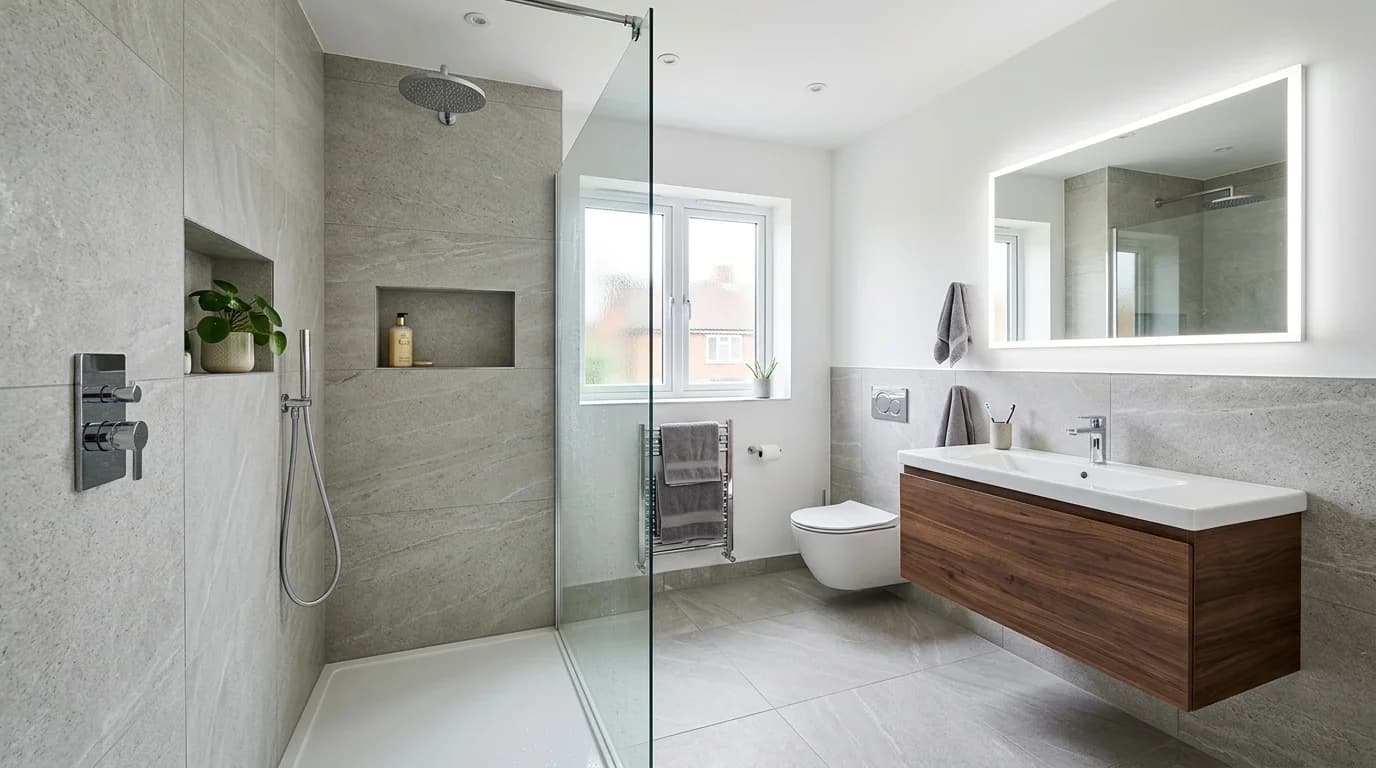
How Much Does Bathroom Tiling Cost in 2026?
Wall tiling costs £25-£45/m² (supply and fit), floor tiling runs £30-£55/m², and a full bathroom re-tile costs £800-£2,500all in. Labour alone runs £25-£40/m² depending on your location and the complexity of the job.
£25/m²
Wall tiles from
£30/m²
Floor tiles from
£800 to £2,500
Full bathroom
£25 to £40/m²
Labour rate
Prices updated April 2026 · Based on industry data and contractor submissions.
Waterproofing is non-negotiable in wet areas. Any shower enclosure, wet room, or bath surround must have a tanking membrane applied before tiles go on. Without it, moisture works its way behind the tiles, causing damp, mould, and tile failure within a few years. Check that your tiler’s quote explicitly includes this. The Tile Association publishes guidance on approved waterproofing standards.
Bathroom Tiling Costs: Prices at a Glance
These prices cover the most common bathroom tiling jobs in UK homes in 2026. All figures include tiles (mid-range porcelain), adhesive, grout, silicone sealant, and fitting unless stated otherwise.
| Job Type | Average Cost | Price Range |
|---|---|---|
| Shower enclosure walls only (8 to 10m²) | £450 | £300 to £600 |
| Full bathroom walls (15 to 25m²) | £900 | £600 to £1,200 |
| Floor tiling (3 to 6m²) | £300 | £200 to £400 |
| Full bathroom floor and walls | £1,650 | £800 to £2,500 |
| Splash-back behind basin | £140 | £80 to £200 |
Prices assume mid-range porcelain tiles. Waterproofing (tanking) for shower enclosures adds £150 to £300 if not included in the quote. Always confirm what is covered.
What Affects the Cost of Bathroom Tiling?
Tile size
Standard tiles (300x600mm wall, 450x450mm floor) are the most cost-efficient to lay. Large-format tiles, 600x600mm or bigger, need a much flatter surface and take longer to position correctly. Going large adds £5 to £15/m² to the labour cost. At the other extreme, mosaic tiles involve a huge amount of cutting and alignment work, pushing labour rates up significantly.
Tile material
Ceramic is cheapest at £10 to £30/m² for the tiles themselves. Porcelain costs £20 to £60/m² but is far more durable and better suited to bathroom floors and shower walls. Natural stone (£40 to £100+/m²) needs sealing and more specialist installation. On a full bathroom job, the tile supply cost often rivals or exceeds the labour cost if you go for premium materials.
Laying pattern
A simple stack bond (straight grid) is the cheapest to lay. Brick-bond (offset) adds a small premium. Herringbone and other diagonal patterns require a lot more cutting, expect to pay 20 to 30% more in labour compared to a straight grid. The more complex the pattern, the longer the job takes.
Waterproofing
Tanking a shower enclosure adds £150 to £300 to the job. For a wet room (where the entire floor is the shower tray), a full floor membrane is needed too. This is covered by Building Regs Part G , wet rooms in particular must comply with requirements for waterproofing and drainage. Always ask whether tanking is included in your quote.
Preparation and old tile removal
If existing tiles need removing first, add £10 to £20/m² for wall tiles and more for floors (which are harder to chip off). Walls that need replastering or tile backer board before tiling will also add to the cost. Good preparation is what separates a lasting tile job from one that starts to fail within a few years.
Number of cuts and obstacles
Every pipe, socket, window reveal, and shower niche slows the tiler down. A bathroom full of pipework, recessed shelving, or an awkwardly shaped shower cubicle will take longer than a straightforward rectangular room. Complex bathrooms can cost 20 to 40% more in labour than a simple layout of the same size.
Best Tile Types for Bathrooms
Not every tile is right for every bathroom application. Here is how the main options compare for walls, floors, and wet areas.
Porcelain
Best all-roundAdvantages
Very low water absorption, extremely hard-wearing, suits walls and floors in wet areas
Drawbacks
Harder to cut than ceramic (needs a diamond blade), costs more than ceramic
Ceramic
Best for budget wallsAdvantages
Cheapest option, huge colour range, easy to cut, widely available
Drawbacks
Higher water absorption, fine for bathroom walls but avoid on wet floors
Natural stone
Premium lookAdvantages
Unique appearance, adds character and value, lasts a lifetime if maintained
Drawbacks
Must be sealed and re-sealed regularly, porous, expensive, higher maintenance
Mosaic
Feature walls and nichesAdvantages
Great for shower niches, curved walls, and decorative feature panels
Drawbacks
Labour-intensive to fit, lots of grout lines to keep clean, takes longer to lay
Large format
Modern minimal lookAdvantages
Fewer grout lines, easier to clean, gives a contemporary feel to larger bathrooms
Drawbacks
Needs a very flat surface to lay correctly, harder to tile around obstacles
Waterproofing: What You Need to Know
This is the bit most guides skip over, and it is the main reason bathroom tiling fails prematurely. Here is the key information before you book a tiler.
Shower enclosures must be tanked
A tanking membrane is a waterproof layer applied to the walls (and often the floor) before any tiles go on. Without it, grout and silicone sealant are the only barriers between water and the wall behind, and they will not last. Tanking a standard shower enclosure costs £150 to £300 and should be included in any professional bathroom tiling quote.
Bath surrounds also need attention
The three walls around a bath get regular splashing and steam exposure. While they do not need the same level of waterproofing as a walk-in shower, the grout and silicone joints need to be maintained. Silicone around the bath edge should be replaced every 3 to 5 years. Any tiles above the water line that look hollow or loose are a sign of moisture getting in.
Wet rooms require full floor waterproofing
A wet room, where the entire bathroom floor is the shower tray, requires a continuous waterproof membrane across the whole floor and at least 150mm up every wall. This is covered by Building Regulations Part G, which sets requirements for sanitation, hot water, and water efficiency. A professional wet room installer will design to this standard.
Tiling directly onto plasterboard is a risk
Standard plasterboard is not suitable for wet areas. If your tiler is tiling shower walls directly onto standard board, question it. Tile backer board (cement board or dedicated water-resistant board) should be used in any area likely to get wet. It costs a bit more but massively extends the lifespan of the tiling.
DIY vs Professional Bathroom Tiling
Not all bathroom tiling is equally DIY-friendly. Here is an honest breakdown of where you can save money and where it really is worth paying a professional.
Floor tiling, DIY-friendly
Bathroom floor tiling is within reach for a confident DIYer. The main challenges are getting the floor level (a self-levelling compound sorts most problems), planning your tile layout to minimise small cuts, and using flexible adhesive suitable for bathroom floors. For a 4 to 5m² floor, you could save £150 to £250 in labour by doing it yourself.
Bathroom wall tiling, proceed with caution
Tiling behind a basin or on low-splash walls is manageable for a skilled DIYer. However, large wall areas with lots of cuts around pipes and fixtures take practice to do neatly. Poor alignment and uneven grout lines are common first-time mistakes. If you’re tiling the main feature wall, hiring a professional is usually worth it for the finish.
Shower enclosure tiling, use a professional
Getting the waterproofing right in a shower enclosure is critical. A professional tiler knows how to apply the tanking membrane correctly, seal joints properly, and use the right adhesive and grout for constant wet-area exposure. A DIY shower tile job that lets moisture behind the wall can cause serious damp damage within a few years, costing far more to fix than the original job was worth.
How to Get Your Bathroom Tiling Done for Less
Smart choices on materials, preparation, and finding the right tiler can bring your costs down without compromising the finished result.
Get at least three quotes
Prices for the same bathroom tiling job can vary by 30% or more between tilers in the same area. Always get at least three written quotes so you can compare like for like, and check what each quote includes for waterproofing and preparation. The lowest price is not always the best deal if it cuts corners on tanking.
Use premium tiles only where they matter
You do not need expensive tiles behind the toilet or on walls hidden by a vanity unit. Use your best tiles in the shower area and on the main feature wall, then switch to a cheaper tile from the same range for less visible spots. Most tile ranges include budget and premium options that look similar once grouted.
Buy tiles at trade prices or in end-of-line sales
Tile warehouses, trade counters, and clearance sections can save you 30 to 50% compared to high-street showroom prices. Topps Tiles, Tile Giant, and independent trade suppliers often have surplus stock at a fraction of the normal cost. Just make sure to buy all tiles from the same batch to avoid colour variation between boxes.
Strip old tiles yourself before the tiler arrives
Removing existing tiles, cleaning off old adhesive, and bagging the rubble before your tiler turns up can save half a day’s labour, typically £75 to £150. Just be careful not to damage the plasterboard or substrate beneath the tiles. If you’re not sure what is behind the tiles, leave this to the tiler.
Stick to standard tile sizes
Standard 300x600mm wall tiles and 450x450mm floor tiles are the most efficient to lay, they minimise waste and keep labour costs down. Large-format tiles (600x600mm+) need a flatter surface and take longer to position correctly. Herringbone and other decorative patterns add to fitting time and can increase the overall quote by 20 to 30%.
Check whether the quote includes VAT
A sole-trader tiler with turnover under £90,000 a year does not charge VAT, so there is no 20% on top of their labour. Many one-person tiling businesses sit under this threshold. On £900 of bathroom tiling labour that is up to £180 you keep. A VAT-registered firm has to add it, so always ask before you compare quotes.
Only fully tile the wet zone
The shower and bath surround need full-height, properly tanked tiling. Walls away from the water do not. Tiling those to half height or splashback height, with a moisture-resistant bathroom paint above, uses far fewer tiles and less labour, and it can roughly halve the tiled area on those walls. It still looks deliberate rather than unfinished.
Useful Resources
What to Expect: The Bathroom Tiling Process
Tiling a full bathroom typically takes 2 to 4 days depending on the size of the room and complexity of the layout. Here's what a professional tiler does.
- 1
Remove old tiles and prepare surfaces
Existing tiles are chipped off and the wall or floor surface is checked for level. Any loose plaster is removed and the surface is cleaned, primed, and made good with a skim coat or levelling compound if needed.
- 2
Waterproof the wet zones
Shower areas, bath surrounds, and any surfaces that will be regularly exposed to water are coated with a tanking membrane or liquid waterproofer. This is essential to prevent moisture reaching the wall structure.
- 3
Plan the tile layout
The tiler sets out a dry row of tiles to work out the best starting point, minimise awkward cuts, and ensure a symmetrical finish. Tile spacers are selected (typically 2mm or 3mm) and a batten is fixed as a starting guide.
- 4
Fix the wall tiles
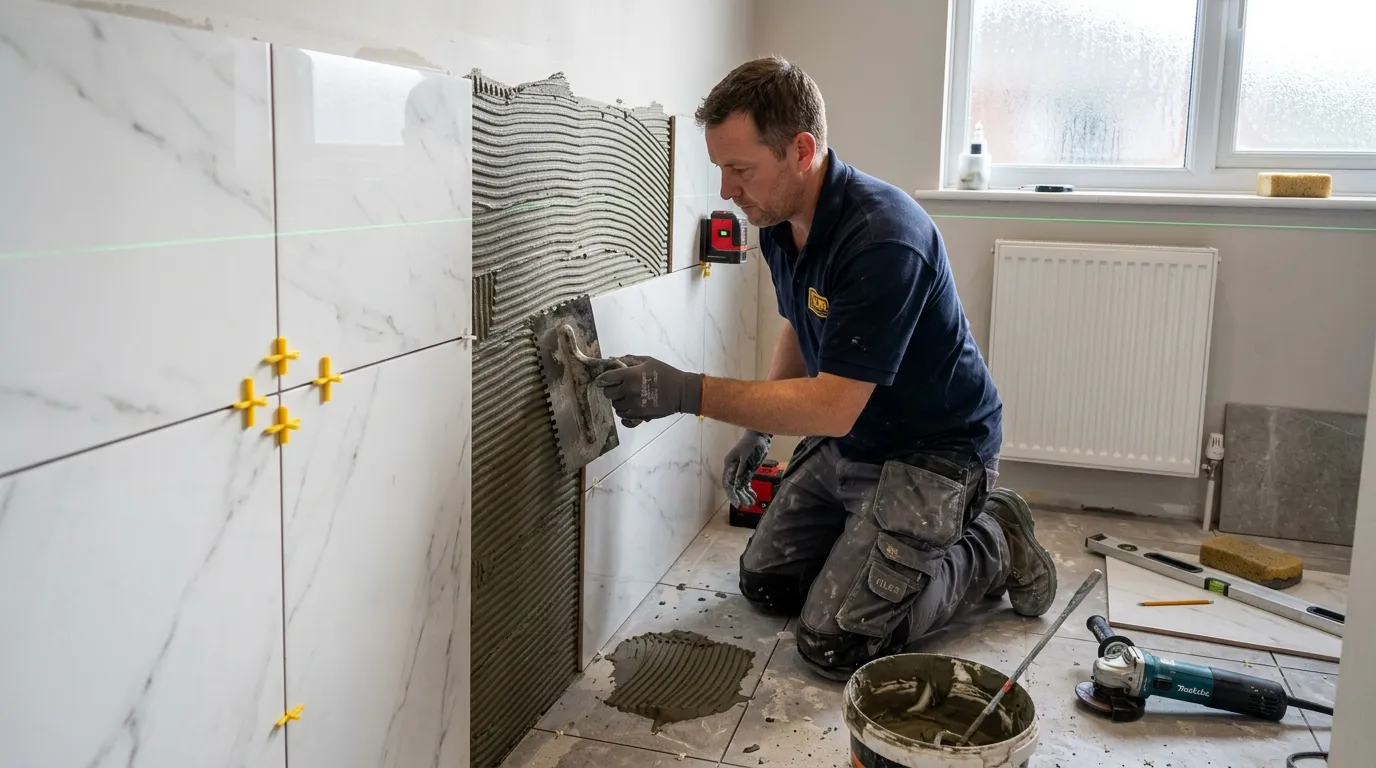
Flexible tile adhesive is applied with a notched trowel and tiles are pressed into position row by row, working from the bottom up. Each row is checked for level. Cuts around pipes and fittings are made with a tile cutter or grinder.
- 5
Tile the floor
Floor tiles are laid from the centre of the room outwards using flexible adhesive. Anti-slip rated tiles are recommended for bathrooms. The adhesive is left to set for at least 24 hours before grouting.
- 6
Grout and seal
Waterproof grout is worked into all joints using a rubber float, then cleaned off with a damp sponge. Silicone sealant is applied where tiles meet the bath, shower tray, or sanitaryware. The finished surface is buffed clean.
Frequently Asked Questions
How much does it cost to tile a full bathroom?
Tiling a full bathroom (walls and floor) typically costs £800 to £2,500 for supply and fitting. Smaller bathrooms with standard ceramic tiles sit at the lower end, while larger rooms with porcelain or natural stone can reach the upper end. This includes preparation, waterproofing in the shower area, adhesive, grout, and silicone sealant.
How much does it cost to tile a shower enclosure?
Tiling a shower enclosure (walls only, roughly 8 to 10m²) typically costs £300 to £600 including tiles and labour. Waterproofing (tanking) the shower walls adds £150 to £300 on top, though reputable tilers include this in their bathroom quotes. Always confirm whether tanking is included before accepting a quote.
How much does bathroom floor tiling cost?
Floor tiling in a standard bathroom (3 to 6m²) costs £200 to £400 including tiles and fitting. Floor tiles need to be slip-resistant and suitable for wet areas, which means porcelain is usually the best choice. If the floor is uneven, a levelling compound is needed first and adds £50 to £150.
Is waterproofing included in a tiling quote?
It depends on the tiler. Reputable tilers include tanking (waterproof membrane) in wet areas as standard. However, some quotes cover tiling only and add waterproofing as an extra. Always ask whether tanking is included and whether it covers the shower walls, floor, and any bath surround. Waterproofing a shower area typically costs £150 to £300 if priced separately.
Can I tile my own bathroom to save money?
Floor tiling is within reach for a competent DIYer, the biggest challenges are getting the floor level and cutting around obstacles. Wall tiling around a shower or bath is a different matter: waterproofing must be done correctly or moisture will get behind the tiles causing damp, mould, and eventual tile failure. For shower enclosures, professional fitting is strongly recommended.
What is the cheapest type of tile for a bathroom?
Ceramic tiles are the cheapest option at £10 to £30/m², making them ideal for bathroom walls. They come in a huge range of colours and sizes. For bathroom floors, porcelain is the better choice even though it costs more (£20 to £60/m²), because it is much harder and has a lower water absorption rate. Ceramic floor tiles can crack under heavy foot traffic over time.

Written by Chris Kervin, Co-Founder of Less.co.uk
Last updated: · Pricing based on industry data and verified contractor submissions · Methodology
Compare real quotes for your job
Prices move a lot with your postcode, the access on site and the spec you choose. Get up to 3 free quotes from vetted local tradespeople and see what yours actually comes to, with no obligation to book.