How Much Does a Wet Room Cost in 2026?
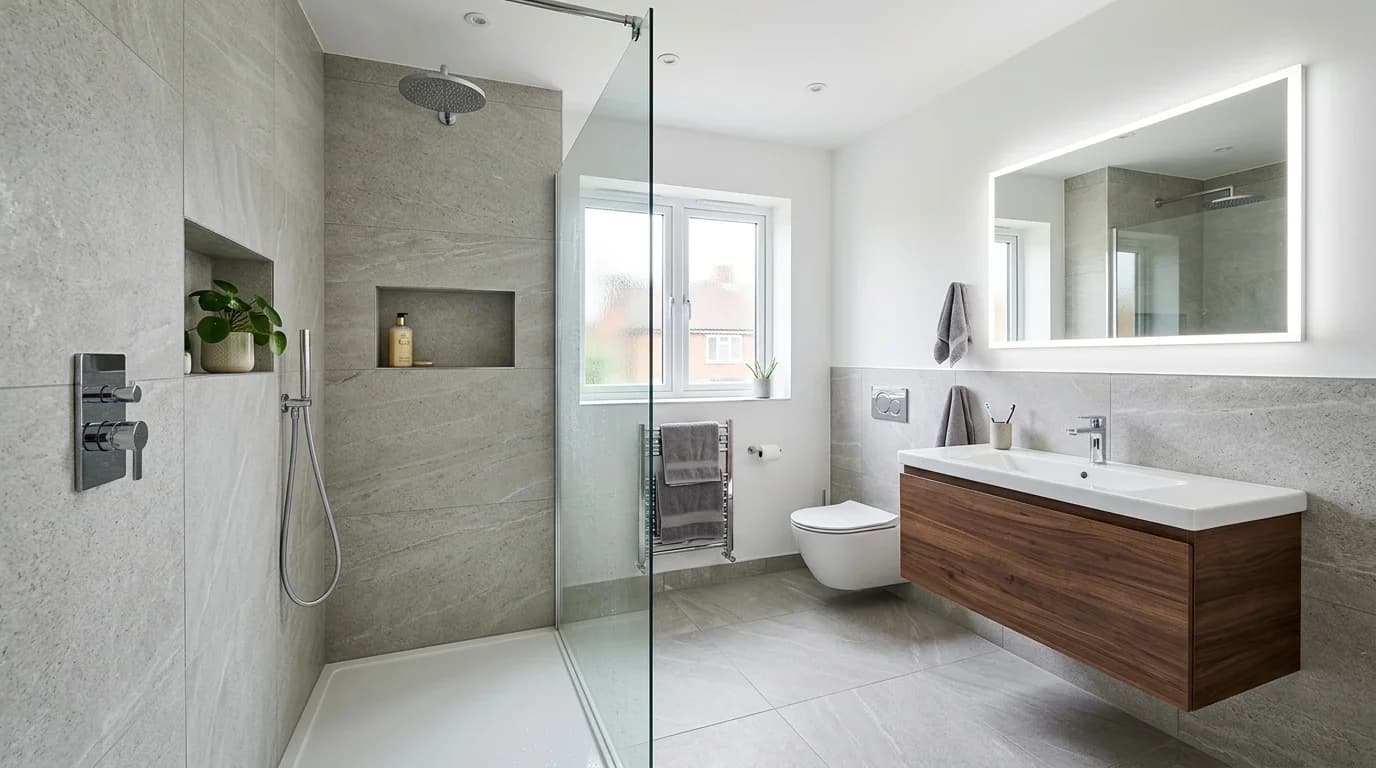
A wet room conversion costs between £3,000 and £8,000 for a typical UK bathroom. A smaller en suite wet room starts from around £2,500, while a large wet room with premium finishes can reach £10,000. The waterproof tanking membrane is the bit that really matters, and that alone costs £500 to £1,500. Get the tanking right and everything else follows.
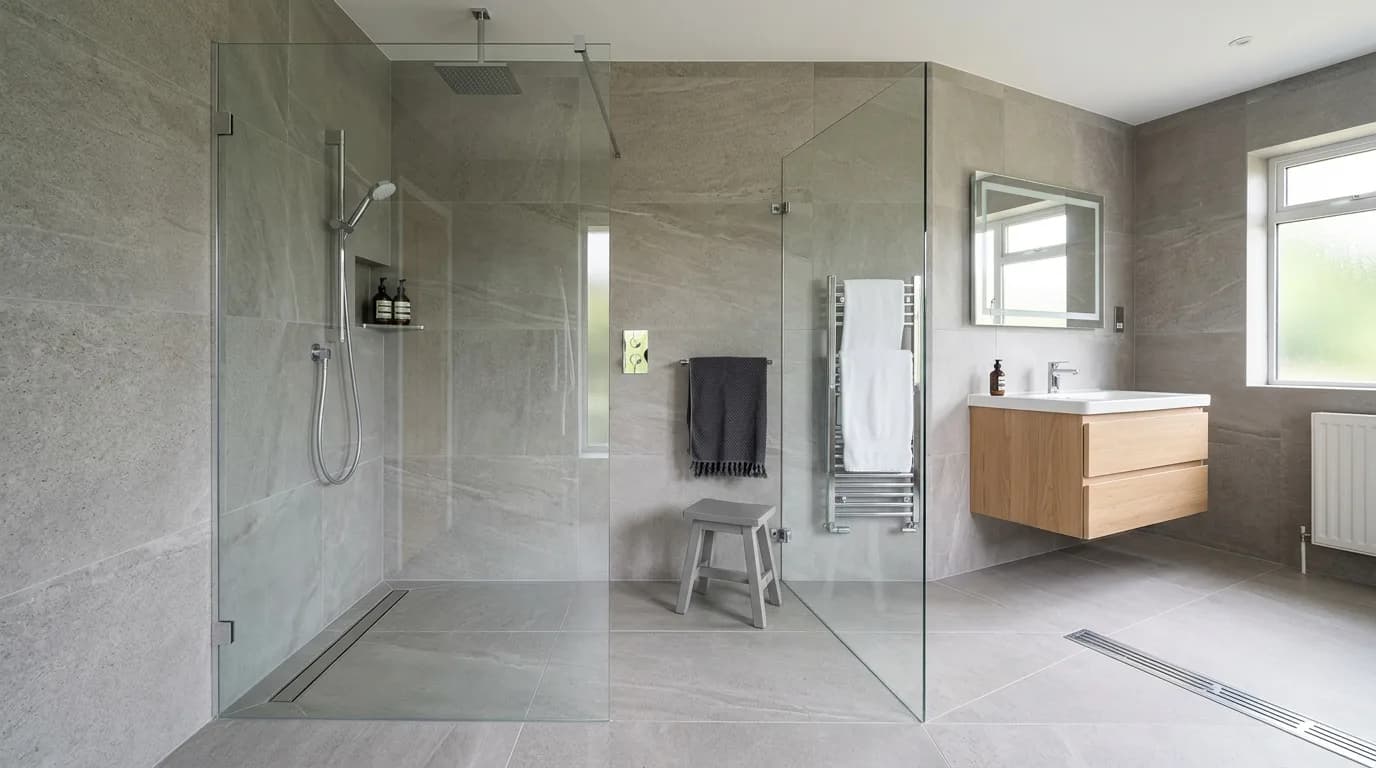
£3,000
Conversion from
£2,500
Small en suite from
£5,000
Large wet room from
£500+
Tanking alone
Prices updated April 2026 · Based on industry data and contractor submissions.
Electrical work in a wet room must comply with Building Regulations Part P. Underfloor heating, lighting, and extractor fans must be installed or certified by a registered electrician. If you live in a flat, check your lease for restrictions on wet room installations before starting work.
Wet Room Prices at a Glance
These prices cover the full installation including tanking, drainage, tiling, shower fittings, and all labour. They assume a standard bathroom conversion on a concrete or properly prepared timber floor.
Small wet room (en suite, new build)
£3,500
£2,500 - £5,000
Bathroom to wet room conversion
£5,000
£3,000 - £8,000
Large wet room
£7,000
£5,000 - £10,000
Accessible/mobility wet room
£5,500
£3,500 - £8,000
Prices based on industry data. Actual costs depend on room size, floor type, specification, and location.
Wet Room Component Costs
Here is what each element of a wet room typically costs, so you can see where the money goes.
| Component | Typical Cost |
|---|---|
| Tanking (waterproof membrane) | £500 - £1,500 |
| Screeded floor with fall to drain | £300 - £600 |
| Linear drain (stainless steel) | £200 - £500 |
| Point drain (traditional round) | £50 - £150 |
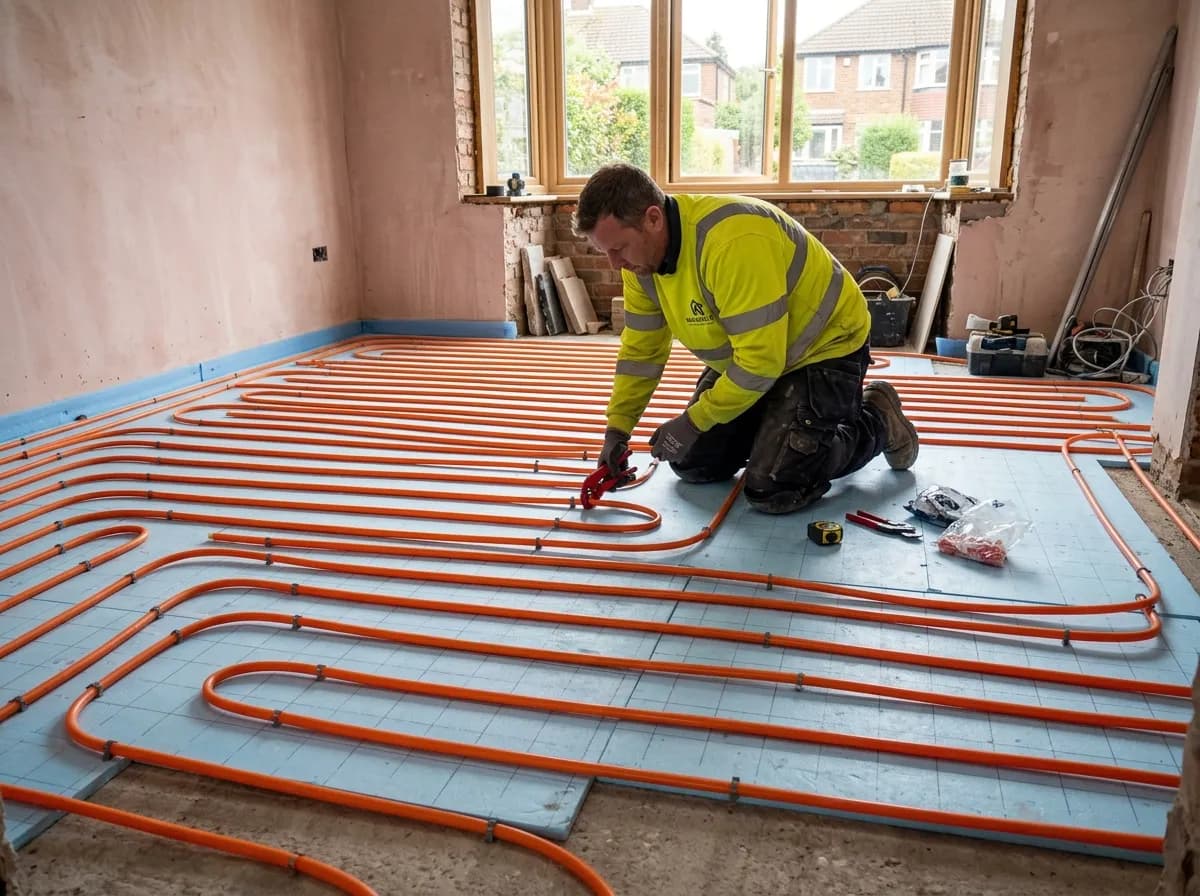
| Underfloor heating (electric mat) | £300 - £600 |
| Wet room former (pre-formed tray) | £150 - £400 |
| Wall tiling (per sq metre) | £40 - £80 |
| Floor tiling (per sq metre, anti-slip) | £50 - £100 |
| Glass screen/partition | £300 - £800 |
| Thermostatic shower valve | £200 - £500 |
| Rainfall showerhead | £80 - £300 |
| Timber floor reinforcement | £300 - £800 |
Tanking: The Most Important Part of Any Wet Room
If there is one thing to take away from this page, it is this: the tanking is what makes or breaks a wet room. Everything else is cosmetic. The tanking is structural.
Liquid membrane
A liquid waterproofing compound painted onto the floor and walls in two or three coats. The most common method and works well on concrete floors.
- + Cheapest tanking method
- + Easy to apply in awkward shapes
- + Works on concrete and rigid substrates
- ! Not ideal for timber floors (too much flex)
Tanking board + wet room former
Rigid waterproof boards fixed to the walls and floor, with a pre-formed tray that has the fall built in. The most reliable method for timber floors.
- + Handles timber floor movement
- + Built-in fall, no screeding needed
- + Most reliable for upstairs installations
- ! More expensive (£500 - £1,500)
What Affects the Cost of a Wet Room?
Room size and layout
A small en suite wet room (3 to 4 square metres) is the most affordable option. A larger main bathroom conversion involves more tanking, more tiling, and more floor preparation. The shape matters too. A simple rectangular room is quicker and cheaper to tank than an awkward L-shaped space with lots of corners.
Tanking method
This is not the place to save money. Liquid tanking membrane is the most common method and works well on concrete and rigid floors. Tanking board (rigid waterproof boards fixed to the walls and floor) gives a belt-and-braces level of protection. A pre-formed wet room former with a built-in fall is the safest option for timber floors. Your installer should recommend the right method for your situation. If they do not talk about tanking in detail during the quote, find someone else.
Floor type: concrete vs timber
Concrete floors are the easy case. They are rigid, stable, and straightforward to tank. Timber floors need extra work because they flex under load, and that movement can crack tiles and compromise waterproofing. The floor usually needs additional plywood and sometimes extra bracing between the joists. Budget an extra £300 to £800 for timber floor preparation. If your house was built after the 1950s, the upper floors are almost certainly timber.
Upstairs vs downstairs
A ground floor wet room on a concrete slab is the simplest installation. An upstairs wet room needs more thorough waterproofing because a leak goes straight through to the ceiling below. The tanking needs to extend further up the walls and under the entire floor area, not just the immediate shower zone. This adds to the cost but is absolutely worth it.
Tiles and finishes
Tiling is typically 30 to 40% of the total wet room cost. Large format tiles (600x600mm or bigger) look stunning with fewer grout lines but are harder to lay on a sloped wet room floor. Smaller mosaic-style tiles follow the fall to the drain more naturally. The floor tiles must be anti-slip rated. Wall tiles are down to personal taste and budget.
Drain style
A standard point drain in the centre of the floor is the cheapest option at £50 to £150. A linear drain along one wall looks more contemporary and makes tiling easier because the floor only needs to slope in one direction. Linear drains cost £200 to £500 but they simplify the floor layout and look much better.
Does a Wet Room Add Value?
A wet room can add value, but context matters. As an en suite or second bathroom, it is a genuine selling point. Buyers like the contemporary look and the accessibility benefits. However, if a wet room replaces the only bath in the house, it can put off families with young children. Estate agents generally advise keeping at least one bath in the property.
The most value-adding scenario is a wet room en suite in the master bedroom, particularly in a property aimed at professional couples or downsizers. A wet room in a loft conversion or ground floor extension also works well.
The least value-adding scenario is removing a family bathroom with a bath and replacing it with a wet room. If you only have one bathroom, keep the bath and put the wet room idea on hold until you have a second bathroom to convert.
How to Get Your Wet Room for Less
Wet rooms are not cheap, but there are sensible ways to manage the cost without compromising on the bits that matter.
Do not over-spec the tanking
Good tanking is essential, but you do not need to gold plate it. On a concrete ground floor, a quality liquid membrane applied in two coats is perfectly adequate. Tanking board on top of liquid membrane on top of a concrete floor is overkill and adds cost without meaningful benefit. Save the belt-and-braces approach for upstairs timber floors where the consequences of failure are much worse.
Buy your own tiles
Bathroom fitters typically mark up tiles by 15 to 25%. Buy your tiles from a trade tile outlet or online and have them delivered to site. You will save a decent amount and have more choice. Just make sure the floor tiles are anti-slip rated (look for R10 or R11 on the specification) and buy 10 to 15% extra for cuts and waste. Wet room floors have more cuts than a standard bathroom because of the fall to the drain.
Use a point drain instead of a linear drain
Linear drains look great and are fashionable right now, but they cost £200 to £500 compared with £50 to £150 for a standard point drain. A point drain in the centre of the floor does exactly the same job. The floor needs to slope in four directions instead of one, which is slightly more work for the tiler, but the saving on the drain itself more than covers that. If budget is the priority, this is an easy win.
Consider a walk-in shower instead
If you want the open, level-access feel of a wet room but your budget is tight, a low-profile shower tray with a frameless glass screen gives you 90% of the look for significantly less money. You skip the tanking, the screeded fall, and the extra floor preparation. A good low-profile tray sits just 40mm above the floor. Unless you specifically need a fully open, tray-free space, this is the more practical and affordable route.
Keep the plumbing where it is
If you are converting an existing bathroom, putting the shower where the old bath or shower used to be means you can reuse the existing waste and water supply positions. Moving the drainage to a new location adds £200 to £500 in plumbing work. The layout might not be perfect, but the savings from keeping the plumbing in place are real.
What to Expect: The Wet Room Conversion Process
A wet room conversion typically takes 5 to 7 days. The tanking stage is critical, it's what makes or breaks a wet room. Here's the full process.
- 1
Strip the existing bathroom
All existing sanitaryware, tiles, and flooring are removed. The subfloor is exposed and inspected, timber floors may need reinforcing with plywood to support the tanking system.
- 2
Form the floor gradient
A screed or pre-formed floor former is installed to create a gentle fall towards the drain position. The gradient must be precise, typically 1:80, to ensure water drains away without pooling.
- 3
Install the drain
A linear or point drain is fitted flush with the finished floor level and connected to the waste pipe. Linear drains are the most popular choice for a contemporary look.
- 4
Tank the entire wet area
A liquid or sheet tanking membrane is applied to the floor and up the walls to at least 1.8 metres. Every corner, joint, and pipe penetration is sealed to create a fully waterproof enclosure.
- 5
Tile the floor and walls
Anti-slip floor tiles are laid first, followed by wall tiles. Flexible tile adhesive and waterproof grout are used throughout. Smaller floor tiles (mosaic or 100mm) work better on the gradient than large format tiles.
- 6
Fit sanitaryware and glass screen
The shower valve, rainfall head, toilet, and basin are installed. An optional glass screen or partition is fitted to contain splash. All silicone joints are sealed and the system is tested for leaks.
Frequently Asked Questions
How much does a wet room cost in the UK?
A wet room costs between £2,500 and £10,000 depending on the size and specification. A small en suite wet room in a new build costs £2,500 to £5,000. Converting an existing bathroom into a wet room runs £3,000 to £8,000. A large wet room with premium finishes can reach £5,000 to £10,000. The tanking (waterproof membrane) is the critical element and typically costs £500 to £1,500 on its own.
Can you have a wet room upstairs?
Yes, but it needs extra care. An upstairs wet room requires thorough waterproofing under the floor as well as on the walls, because any leak will go straight through to the ceiling below. The floor may also need reinforcement if it is a standard timber joist construction. A competent wet room installer will assess the floor structure during the survey and recommend any additional work needed. The tanking cost is typically higher for an upstairs installation because of the additional layers required.
Does a wet room add value to a house?
A wet room can add value, but there is a catch. It is an attractive feature for some buyers, particularly younger buyers and anyone with mobility concerns. However, if a wet room replaces the only bath in the house, it can actually put off families with young children who want a bath. The general advice from estate agents is to keep at least one bathroom with a bath and use the wet room as a second bathroom or en suite. In that scenario, it is a genuine selling point.
What is tanking and why is it so important?
Tanking is the process of applying a continuous waterproof membrane to the floor and walls of a wet room. It is the single most important element of any wet room installation. Without proper tanking, water will seep through tiles and grout into the structure of the building, causing damp, mould, and potentially serious structural damage. Good tanking typically costs £500 to £1,500 depending on the room size. Never cut corners on this. A failed wet room tank in an upstairs bathroom can cause thousands of pounds of damage to the room below.
Do I need planning permission for a wet room?
No, you do not need planning permission to install a wet room in a standard UK home. However, the electrical work (for underfloor heating, extractor fans, and lighting) must comply with Building Regulations Part P and be carried out or certified by a registered electrician. If you live in a flat, check your lease before starting work. Many leases require freeholder consent for wet room installations because of the potential water damage risk to properties below.
Can you install a wet room on a timber floor?
Yes, but it requires significant preparation. Timber floors flex, and that movement can crack tiles and compromise the tanking membrane. The floor usually needs reinforcement with additional plywood sheeting and sometimes extra noggins between the joists to stiffen everything up. A specialist wet room former (a pre-formed tray with a built-in fall) is the safest option on timber floors because it gives a rigid, waterproof base. On a concrete floor, the installation is more straightforward because concrete does not flex. Budget an extra £300 to £800 for timber floor preparation.
How long does it take to install a wet room?
A wet room installation typically takes 5 to 10 days depending on the scope of work. Stripping out the old bathroom takes 1 to 2 days. Floor preparation, tanking, and screeding takes 2 to 3 days (with drying time). Tiling takes 2 to 3 days. Final plumbing, electrical, and finishing takes 1 to 2 days. If the floor needs structural reinforcement, add another 1 to 2 days. The tanking and screed need proper curing time, so do not let anyone rush this stage.

Written by Chris Kervin, Co-Founder of Less.co.uk
Last updated: · Pricing based on industry data and verified contractor submissions · Methodology
Ready to get your wet room for less?
Wet room costs vary a lot depending on the floor type, room size, and specification. The best way to get an accurate price is to get a few quotes from bathroom specialists who have done wet rooms before. Not every bathroom fitter has the tanking experience, so ask specifically about their wet room experience.
Compare Free QuotesFree, no obligation · Local specialists · Compare up to 3 quotes