Tiling - Costs & Guides for UK Homeowners
From a simple kitchen splashback to a full bathroom retile, getting the right tiles fitted properly makes a massive difference to how your home looks and feels. This guide covers the different types of tiling work, what materials suit which rooms, and what you should expect to pay in 2026.
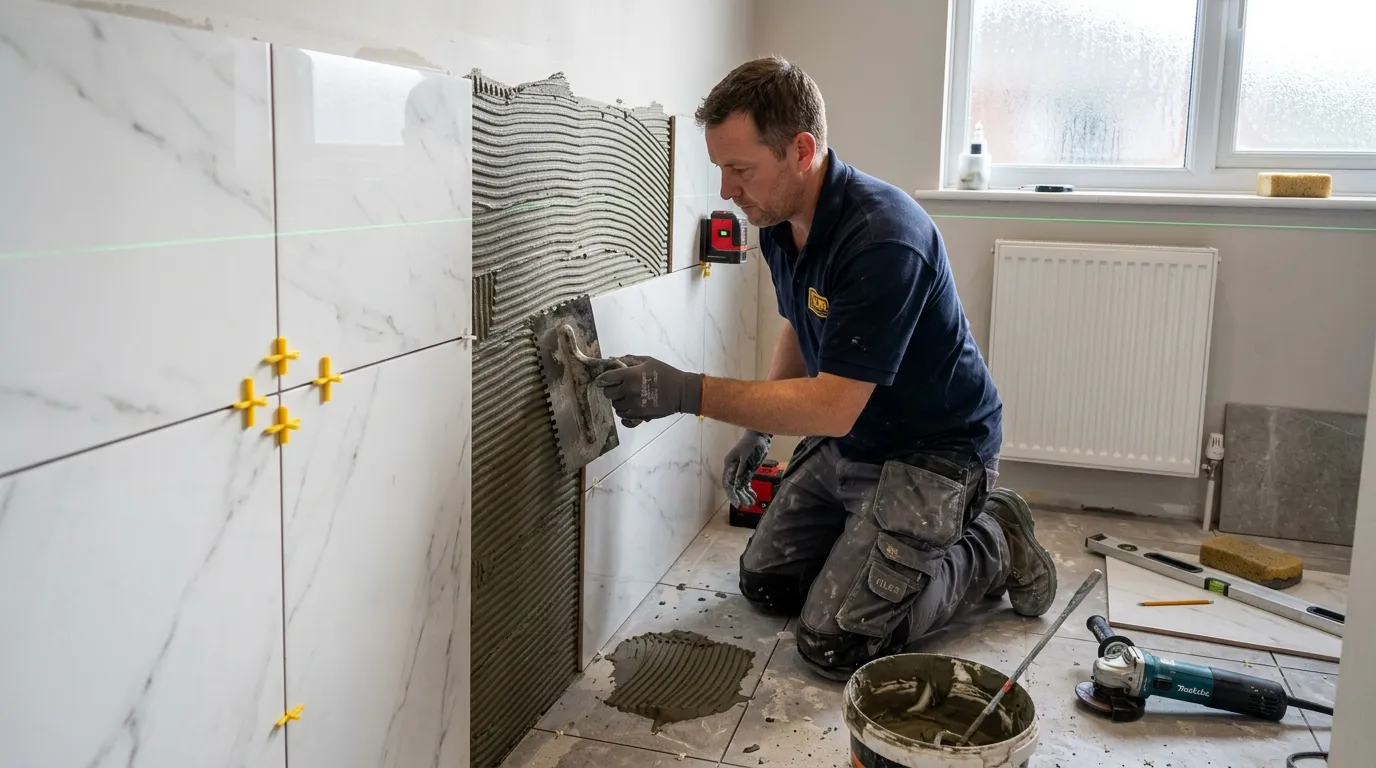
Waterproofing matters: Tiles and grout are not waterproof on their own. Wet areas like showers and bath surrounds need a tanking membrane applied before tiling to prevent damp and mould behind the tiles.
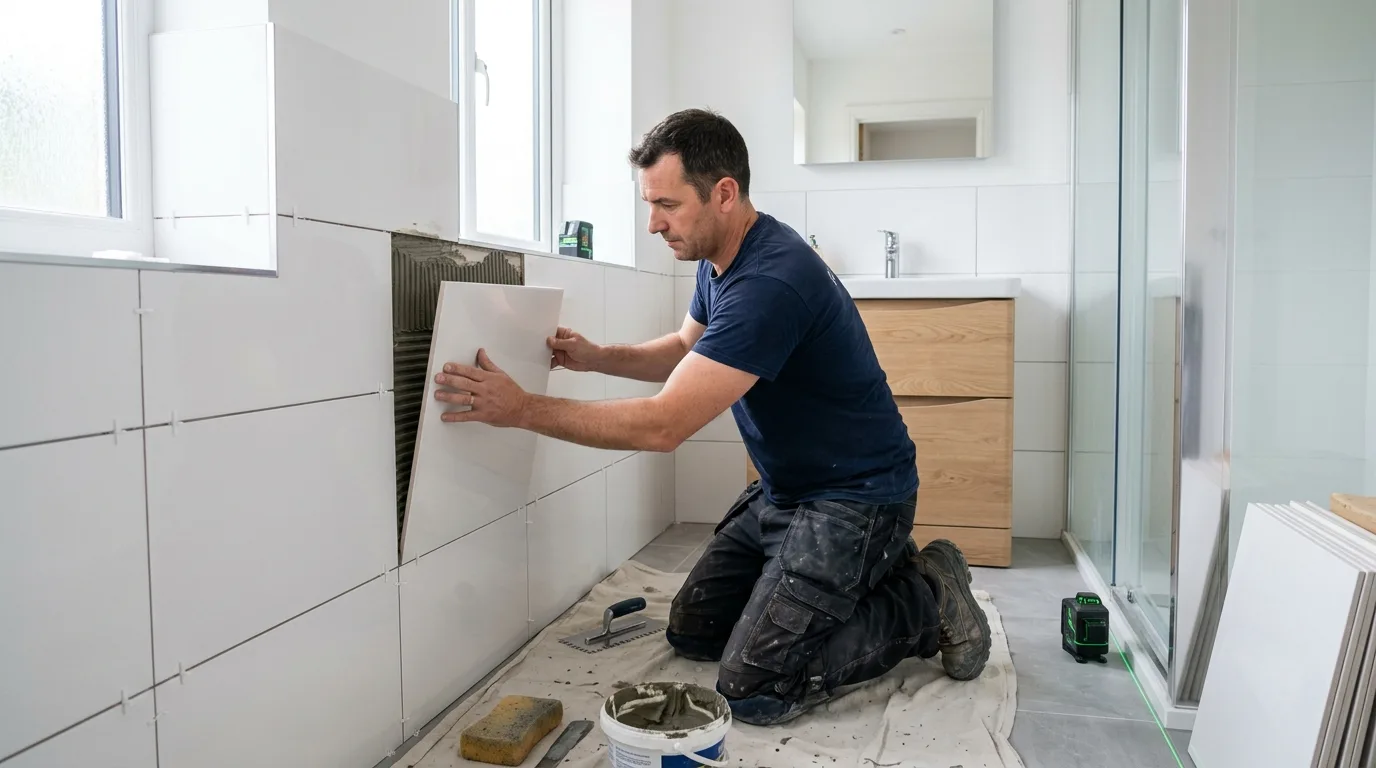
Types of tiling work
Bathroom wall tiling
The most common tiling job in UK homes. Covers shower enclosures, bath surrounds, and full bathroom walls. Porcelain or ceramic tiles are standard, with waterproof tanking behind wet areas.
Kitchen splashback
A run of tiles between the worktop and wall units, typically 2 to 4 rows high. Protects the wall from cooking splashes and is one of the quickest, most affordable tiling jobs you can have done.
Floor tiling
Porcelain, natural stone, or large-format tiles fitted to kitchen, hallway, or bathroom floors. Requires a level, solid substrate, uneven floors need screeding or levelling compound first.
Feature walls and decorative tiling
Mosaic tiles, herringbone patterns, or statement walls in living areas. More labour-intensive due to the number of cuts and the precision required for pattern alignment.
Tile types compared
| Tile Type | Cost per m² | Best For |
|---|---|---|
| Ceramic | £10-£30 | Walls, splashbacks, budget-friendly projects |
| Porcelain | £20-£60 | Bathrooms, floors, high-traffic areas |
| Natural stone | £40-£100+ | Premium bathrooms, hallways, feature walls |
| Mosaic | £30-£80 | Shower niches, feature strips, decorative accents |
Tile prices are for supply only. Fitting adds £25-£50 per m² on top.
Cost at a glance
£25 to £60
Wall tiling (per m²)
£30 to £80
Floor tiling (per m²)
£150 to £500
Kitchen splashback
£600 to £2,000
Full bathroom
How to find a good tiler
The Tile Association maintains a directory of vetted tiling contractors across the UK, which is a good starting point.
Ask to see finished work, not just photos mid-job
Any tiler can make a half-finished job look decent. What matters is the final result, neat cuts around obstacles, consistent grout lines, and tiles that sit perfectly flat. Ask for addresses of recent jobs you can visit, or at the very least, close-up photos of finished edges and corners.
Check they prepare the substrate properly
A tiler who goes straight onto a dodgy wall without checking the surface is cutting corners. Good tilers check for level, test adhesion, and will tell you if walls need boarding, tanking, or a levelling compound before a single tile goes up.
Get a fixed price, not a day rate
Tiling jobs vary enormously in how long they take depending on the tile size, pattern, and number of cuts. A fixed price gives you certainty. If a tiler will only work on a day rate, agree the maximum number of days upfront.
Clarify who supplies the tiles
Some tilers prefer to source tiles themselves (and may get trade prices). Others expect you to supply them. Either way, confirm this before work starts, and always order 10 to 15% extra to cover cuts, breakages, and future repairs.
Get at least three written quotes
Tiling prices vary considerably between tilers. The same bathroom can be quoted at very different amounts depending on the tiler’s day rate, how they price cuts and preparation work, and whether materials are included. Always get at least three written quotes that each specify the area to be tiled, the tile type and size, whether substrate preparation and tanking are included, and the total price. Comparing like for like is the only way to tell a fair price from an inflated one.
Tiling guides
Tiling cost guide
Full breakdown of tiling prices per m², by room, and by region in 2026.
Bathroom tiling cost
Wall tiles, floor tiles, shower areas, and full bathroom re-tiling prices.
Bathroom cost guide
Complete bathroom renovation costs including tiling, plumbing, and fixtures.
Kitchen cost guide
Kitchen fitting costs including splashbacks, worktops, and appliances.
Flooring cost guide
Compare floor tiling against laminate, vinyl, and engineered wood options.
Common questions
How long does it take to tile a bathroom?
A typical bathroom takes 2 to 4 days to tile, depending on the size, tile layout complexity, and how much preparation is needed. Larger bathrooms with intricate mosaic patterns or natural stone can take up to a week. Allow an extra day for the adhesive and grout to cure fully before using the room.
Can I tile over existing tiles?
Yes, in some cases. The existing tiles must be firmly bonded to the wall, level, and in good condition. Your tiler will use a specialist adhesive designed for tile-on-tile application. However, this adds thickness to the wall, which can cause issues around door frames, window reveals, and where tiles meet fixtures. If existing tiles are hollow-sounding or cracked, they need to come off first.
What is the best tile for a bathroom?
Porcelain tiles are the most popular choice for UK bathrooms. They absorb almost no water (less than 0.5%), are extremely durable, and come in a huge range of styles including stone and wood-effect finishes. Ceramic tiles are a budget-friendly alternative for walls, while natural stone adds a premium look but needs sealing and more maintenance.
Do I need to waterproof behind bathroom tiles?
Yes, tiles and grout alone are not waterproof. In wet areas (showers, around baths), a tanking membrane or liquid waterproofing should be applied to the substrate before tiling. This is essential to prevent moisture penetrating the wall, which causes damp, mould, and eventual tile failure. Any decent tiler will include this in their quote for shower areas.