How Much Does It Cost to Paint the Outside of a House?
Most homeowners pay between £1,500 and £3,500 to have the outside of a house painted. A terraced house starts from around £1,500 for all elevations; a detached house can reach £6,000 once scaffolding is factored in.
£1,500
Terraced from
£2,000
Semi-detached from
£3,500
Detached from
£8 to £15
Per m²
Prices updated April 2026 · Based on industry data and contractor submissions.
Exterior Painting Costs by Property Type
Prices below include surface preparation (scraping, cleaning, filling small cracks), primer where needed, and two coats of quality masonry paint. Scaffolding costs are separate unless stated, see the additional costs section below.
Terraced (front only)
Front elevation, windows, door frame, no scaffolding usually needed
£1,100
£800 to £1,500
Terraced (all elevations)
Front and rear, all masonry and woodwork
£2,000
£1,500 to £2,500
Semi-detached
Three elevations, masonry and all exterior woodwork
£2,800
£2,000 to £3,500
Detached
All four elevations, full exterior repaint
£4,500
£3,500 to £6,000
Bungalow
All elevations, low access, often no scaffolding needed
£1,800
£1,200 to £2,500
Per m² rate
Rough guide for non-standard properties or single walls
£11
£8 to £15 per m²
Always check what is included. Some decorators quote for masonry only and exclude all woodwork; others include everything. Ask specifically whether window frames, fascias, soffits, and the front door are covered.
Additional Costs to Budget For
The prices above cover painting only. Most exterior jobs involve at least one or two of these extras, scaffolding in particular is almost always needed for a two-storey property.
| Item | Typical Cost |
|---|---|
| Scaffolding (2-storey semi) | £500 to £900 |
| Scaffolding (detached house) | £900 to £1,500 |
| Masonry repairs / crack filling | £100 to £400 |
| Window frame painting (full house) | £300 to £700 |
| Fascias and soffits painting | £200 to £500 |
| Guttering (painting or replacement) | £150 to £600 |
| Render repair or patching | £200 to £800 |
What Does Exterior Painting Include?
A properly quoted exterior painting job covers more than just rolling paint onto walls. Here is what you should expect from a decent decorator.
- 1
Access and protection
Scaffolding or a tower is erected where needed. Windows, doors, paths, and plants are masked or sheeted to protect them from paint splashes. Any scaffold boards at ground level are put in place.
- 2
Surface preparation
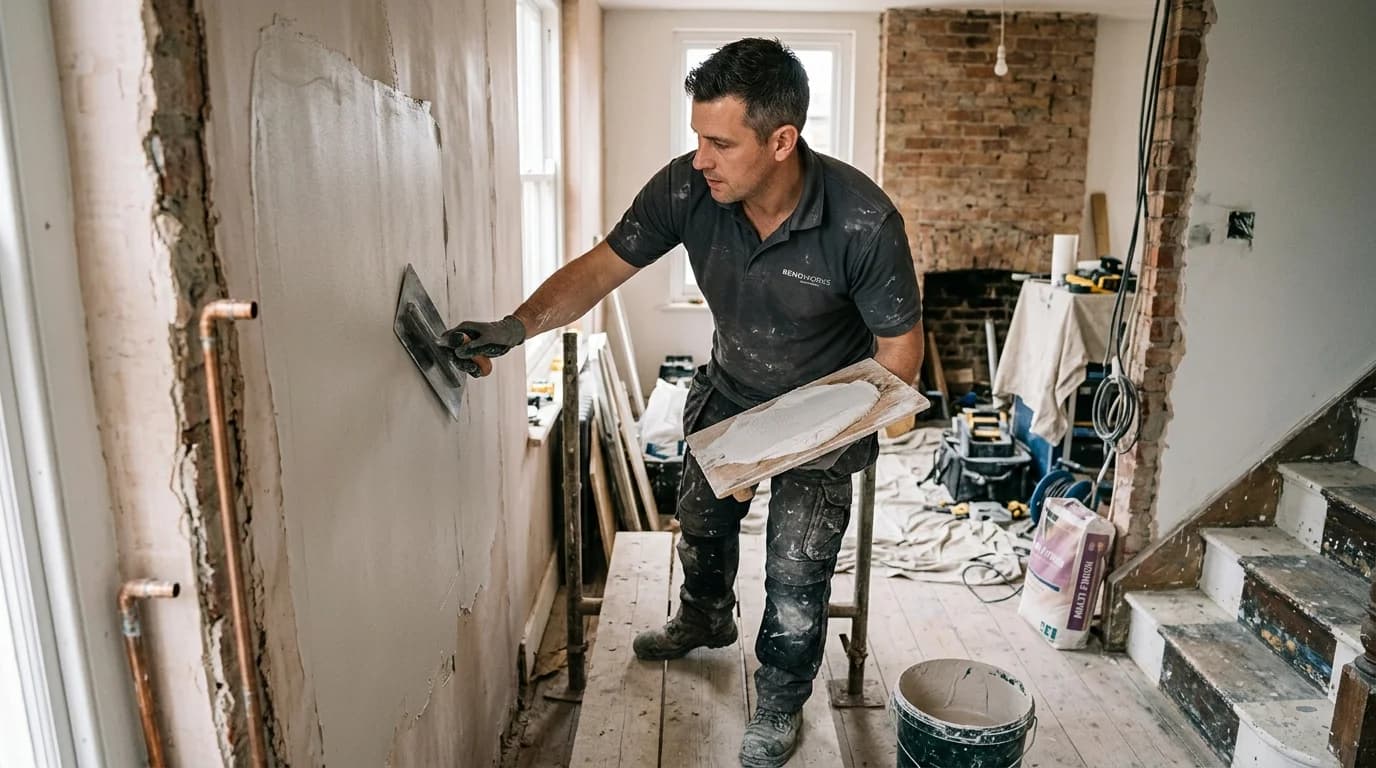
This is where most of the time goes. The decorator will scrape off any flaking or loose paint, pressure wash algae and moss from masonry, brush down dusty or powdery render, fill cracks and holes with exterior filler, and sand any rough areas. Poorly prepared surfaces are the main reason exterior paint fails early.
- 3
Priming and sealing
Bare masonry, bare timber, and any repaired areas get a coat of appropriate primer. Stained or chalky surfaces may need a stabilising solution first. Timber gets an exterior wood primer before top coats go on.
- 4
First coat of masonry paint
Applied by brush, roller, or spray depending on the surface type and finish desired. The first coat reveals any areas that need further filling or touching up before the second coat.
- 5
Second coat and finishing
The second coat goes on once the first has dried properly, usually the following day. Woodwork (frames, soffits, fascias) is painted last. Any masking is removed, splashes are cleaned up, and the decorator walks around the whole property to check for thin patches or missed areas.
Exterior Paint Types
The right paint depends on what surface you are painting. Most UK houses use masonry paint on the walls and exterior wood paint or gloss on timber and metalwork.
| Paint type | Cost per 10L |
|---|---|
Masonry paint Brick, render, pebbledash, concrete Most common exterior coating in the UK. Flexible formula copes with the freeze-thaw cycle. Available in hundreds of colours. | £40 to £60 |
Exterior wood paint / stain Timber cladding, sills, frames Microporous formulas are best, they let the timber breathe rather than trapping moisture underneath. | £30 to £55 |
Exterior gloss Doors, window frames, metal railings Traditional oil-based gloss is more durable than water-based on exterior metalwork and hardwood doors. | £25 to £45 |
Silicone / premium masonry Render, older stonework Self-cleaning properties reduce algae and dirt build-up. Worth the extra cost on exposed elevations. | £60 to £100 |
Farrow & Ball / Little Greene exterior Render, brick, cladding Excellent depth of colour, especially in darker shades. Costs two to three times more than trade alternatives for a comparable technical performance. | £100 to £140 |
How Often Should You Repaint the Outside of Your House?
There is no fixed answer, it depends on the surface, the paint quality used, and how exposed your property is.
Masonry (brick, render, pebbledash)
A good quality masonry paint on a sheltered property should last five to eight years before it starts to chalk, fade, or flake. More exposed properties, coastal, high ground, north-facing walls, may need attention after four to five years. Watch for white powdery deposits (called efflorescence), cracks at the render joints, or areas where the paint is bubbling or peeling.
Exterior woodwork (frames, fascias, soffits)
Timber expands and contracts with temperature and moisture changes, which is hard on paint films. Painted timber typically needs repainting every three to five years. If you wait until it is peeling badly, the preparation work becomes much more involved and the cost goes up. Small touch-ups every couple of years are cheaper than leaving it to deteriorate.
UPVC windows and doors
UPVC does not need painting in the way timber does, but if it has yellowed or you want to change the colour, it can be painted with specialist UPVC paint. This is not the same as a standard repaint cycle, it is more of a cosmetic update and tends to last around five to seven years before it chips or fades.
Signs it is time to repaint
Chalky or powdery masonry when you rub your hand against it, visible cracks or gaps at render joints, peeling or bubbling paint, staining or green algae growth, faded or patchy colour. If you are getting the scaffolding up for another reason, it is usually worth repainting at the same time rather than waiting.
Best Time of Year to Paint Exterior
Exterior painting needs dry weather and a minimum surface temperature of around 10°C. Most masonry paints also need the surface to have been dry for at least 24 hours before application.
Warm and generally dry. Decorators book up fast, get quotes in April.
Peak season. Higher demand means less flexibility on timing and price.
Often the best combination of decent weather and better availability.
Cold temperatures and rain prevent paint curing properly. Woodwork jobs can sometimes proceed in mild spells, but masonry painting should wait.
DIY vs Hiring a Professional
Ground floor exterior painting is well within DIY territory, a garden wall, a low extension, or the ground floor of a terrace front. Above the first floor, the calculus changes. Working off ladders for sustained painting is tiring and the results are rarely as consistent as professional work. More importantly, the HSE working at height guidance is clear that ladders are not an appropriate platform for extended exterior painting, you need scaffolding or a tower.
| Factor | DIY | Professional |
|---|---|---|
| Ground floor only | Straightforward, brush and roller | Efficient and tidy |
| Above first floor | Needs scaffolding, hire cost often comparable to a professional | Scaffolding arranged as part of the job |
| Surface preparation | Time-consuming but doable | Thorough as standard |
| Material cost (paint) | £150 to £400 depending on area | Usually included in quote |
| Finish consistency | Variable, especially on render | Even coverage, clean edges |
| Time required | 2 to 5 days depending on property | 2 to 4 days with a team |
Working at height: Ladders are not suitable for prolonged exterior painting. If you are planning a DIY exterior job above ground floor level, you need proper scaffolding or a tower, not a stepladder. See the HSE working at height guidance before you start.
How to Get Your Exterior Painting for Less
A bit of planning and timing can take a meaningful chunk off the final bill without cutting corners on quality.
Get three quotes, and give them the same spec
Exterior painting quotes vary more than you might expect. One decorator might quote £2,200 for a semi, another £3,400 for identical work. Get at least three quotes, and make sure each one covers the same scope: number of coats, whether scaffolding is included, who supplies the paint, and what prep is expected. Without a shared spec, you are not comparing like for like.
Combine with other exterior work
If you are already getting scaffolding up for painting, it makes sense to tackle other jobs at the same time, roof tiles, pointing, or new fascias and soffits. The scaffolding hire is a fixed cost, so spreading it across multiple jobs saves money overall. Talk to your decorator about what else could be done while access is in place.
Book in late summer or early autumn
Decorators are busiest in spring. Book for August or September and you will often find better availability and, occasionally, better rates. The weather is still warm enough for paint to cure properly, but the spring rush has died down. Avoid booking in advance without checking the forecast window, cancellations cost you and the decorator alike.
Supply your own paint
Some decorators mark up paint by 20 to 40%. If you buy trade masonry paint yourself from a trade counter or online, Sandtex, Dulux Weathershield, or Johnstone's Stormshield are all solid options, you can save £100 to £200 on a full exterior job. Agree this upfront and confirm the product before purchasing, since the decorator needs to be comfortable with what they are working with.
Do the prep on the ground floor yourself
Scrubbing algae off a low garden wall, sanding a ground floor window frame, or filling small cracks at ground level are all things a confident DIYer can do. If you sort the prep on anything accessible, the decorator spends less time and charges you less. Just check with them first, some decorators prefer to control the prep themselves to be confident in the final result.
Check whether the decorator is VAT-registered
Exterior jobs run into thousands of pounds, so VAT makes a real difference. Most sole-trader decorators turn over less than £90,000 a year and so are not VAT-registered, which means they cannot add VAT to your bill. A registered firm has to add 20% on top. On a £3,500 semi that is up to £700 you avoid by using a smaller decorator, with no difference in the standard of work. If the property has stood empty for two years or more, even a registered decorator can drop to the 5% reduced rate.
Useful resources
Painting and Decorating Association, Find an accredited decorator
The PDA is the UK's main trade body for professional decorators. Their member search lets you find vetted, accredited decorators in your area.
HSE, Working at height safety
If you are considering any DIY work above ground floor level, read the HSE guidance first. It covers when ladders are and are not appropriate, and what equipment to use instead.
What to Expect: The Exterior Painting Process
A full exterior repaint on a typical semi-detached house takes around five days. Here's how the job usually unfolds.
- 1
Scaffold or access equipment erected
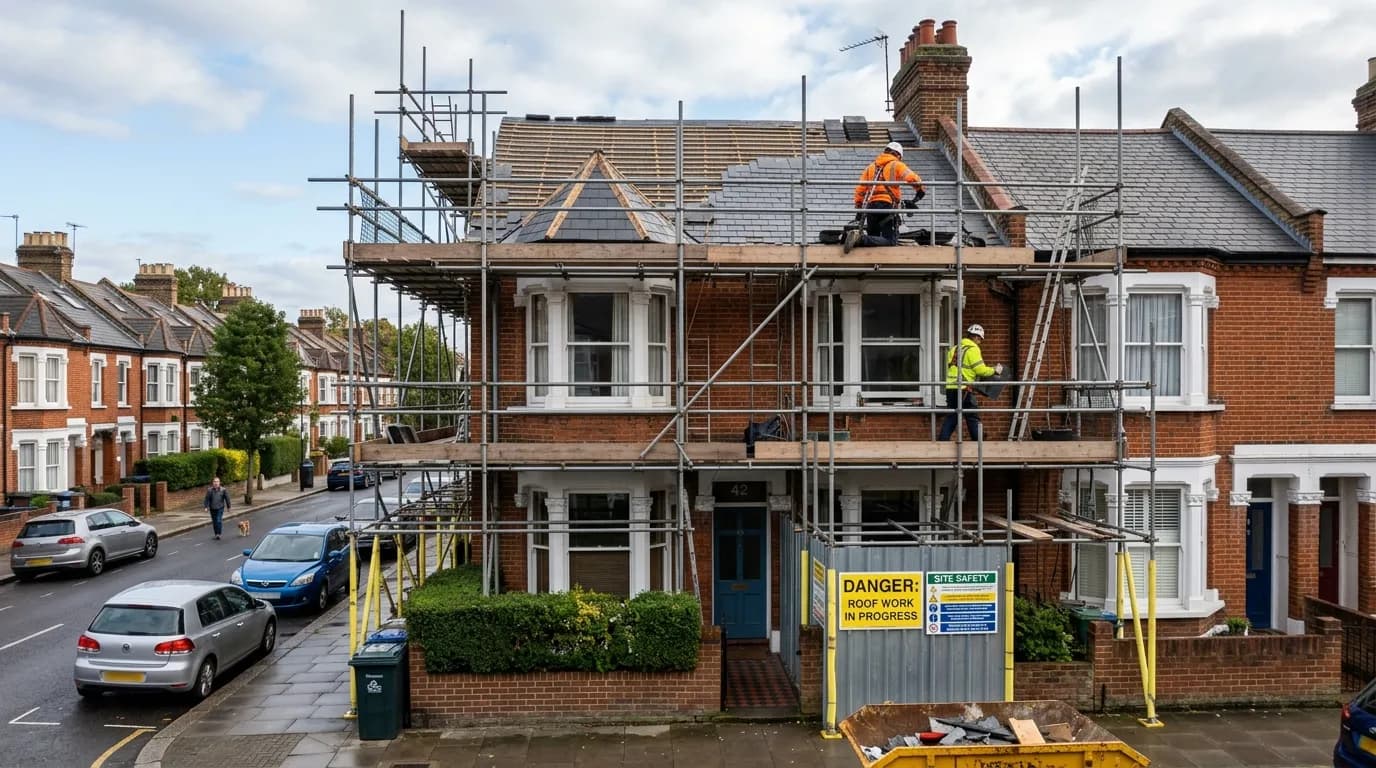
For two-storey homes and above, scaffolding is erected around the property. This typically adds £500 to £1,200 to the overall cost but is essential for safe working at height.
- 2
Surface preparation and repairs
Old flaking paint is scraped off, cracks are filled, rotten timber is replaced or treated, and surfaces are sanded smooth. This is the most important stage, paint applied over poor prep will not last.
- 3
Masking and protection
Windows, doors, gutters, and any surfaces not being painted are masked with tape and sheeting. Plants and paths near the walls are covered to catch drips.
- 4
Primer and undercoat applied
Bare timber, repaired areas, and porous masonry receive a suitable primer. An undercoat is applied to create an even base and improve adhesion of the topcoat.
- 5
Topcoat applied (usually two coats)
The finish coat is applied by brush, roller, or spray depending on the surface. Most exterior paints need two coats for full coverage and durability. Masonry paint, gloss for woodwork, and metal paint for gutters are used as needed.
- 6
Final inspection and scaffold removal
The decorator checks for missed spots, touch-ups, and clean lines. Masking is removed, scaffolding is taken down, and any paint splashes on glass or paths are cleaned off.
Frequently asked questions
How much does it cost to paint the outside of a house in the UK?
Exterior painting costs vary a lot by property size. A terraced house front runs £800 to £1,500. Painting all elevations of a terraced house costs £1,500 to £2,500. A semi-detached house comes in at £2,000 to £3,500, and a full detached house typically costs £3,500 to £6,000. These prices cover preparation, primer where needed, and two coats of masonry paint. Scaffolding is usually quoted separately and adds £500 to £1,500.
Does exterior house painting include scaffolding?
Not always. Some decorators include scaffolding in their quote; others treat it as a separate line item. Always check before accepting a quote. For a standard two-storey semi, scaffolding costs £500 to £900. A larger detached house with more elevations can cost £1,000 to £1,500. If the decorator is using a cherry picker or tower instead, that affects the price differently, confirm what access method they plan to use.
What is the best paint for the outside of a house in the UK?
Masonry paint is the most widely used exterior coating in the UK. It bonds directly to brick, render, and stone and handles the wet British climate well. Good-quality masonry paint from Dulux, Sandtex, or Ronseal costs around £40 to £60 for 10 litres. For timber cladding, fascias, and window frames, exterior wood paint or a microporous stain is better. Premium brands like Farrow & Ball offer exterior masonry ranges but cost two to three times more for a finish most decorators would say is comparable to trade alternatives.
How often do you need to repaint the outside of a house?
Masonry paint on brickwork or render typically lasts five to eight years before it starts to flake, fade, or look tired. Exterior woodwork, window frames, fascias, soffits, and doors, usually needs repainting every three to five years because timber expands and contracts with the weather. Properties in exposed coastal or northern locations will need repainting more frequently than sheltered southern ones.
Can I paint the outside of my house myself?
Yes, for ground floor work. Painting at ground level, a garden wall, a low extension, the ground floor of a terrace front, is straightforward DIY territory. Anything above the first floor requires access equipment. Working off ladders for exterior painting is tiring, risky, and often produces an uneven finish. The HSE recommends scaffolding or a tower for any sustained work at height. If the job involves the full exterior of a two-storey house, hiring a professional with proper access is the sensible call.
What time of year should I get the outside of my house painted?
May to September is the best window. Masonry paint needs dry conditions and a minimum temperature of around 10°C to cure properly. Painting in cold or wet weather leads to poor adhesion and patchy results. August and September are often the sweet spot, warm enough, less rain than early summer, and decorators tend to be slightly less booked. Avoid winter months entirely for exterior masonry; you can do woodwork in mild weather but again, frost and heavy rain cause problems.
Related cost guides

Written by Chris Kervin, Less.co.uk founder
Last updated: · Pricing based on industry data and verified contractor submissions · Methodology
Quote service coming soon
Get free quotes from local decorators
Tell us what you need painting and we will connect you with rated painters and decorators in your area. Free, no obligation.
Compare Free Quotes