How Much Does Rendering Cost in 2026?
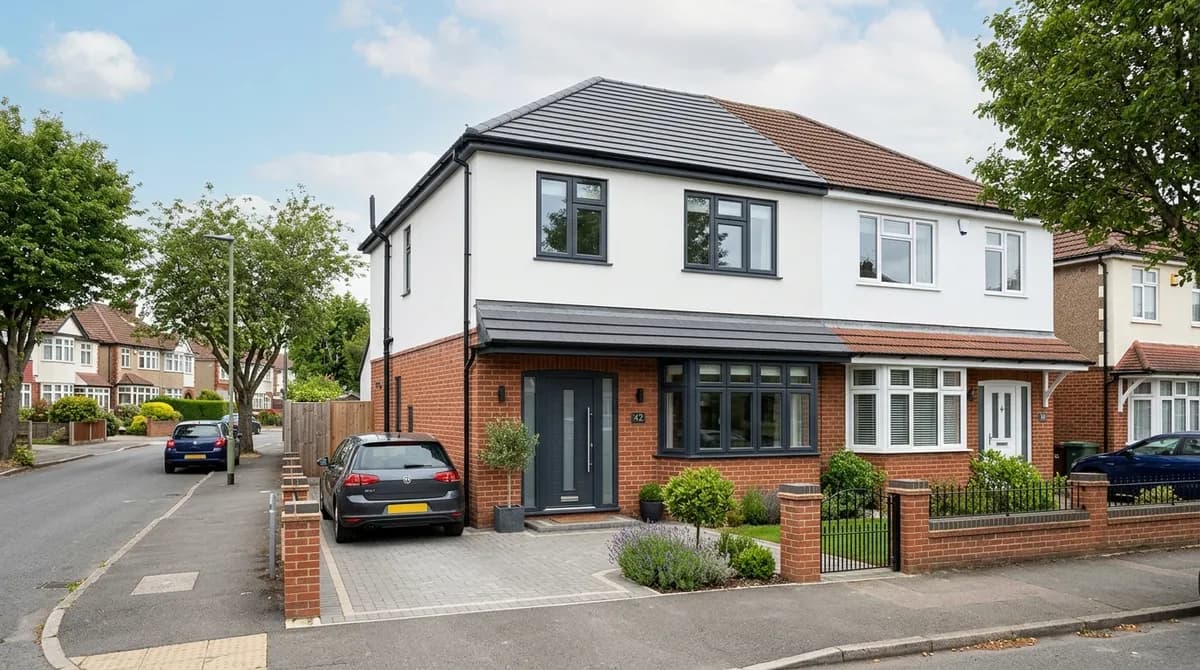
The cost of rendering a house is £30 to £65 per m² installed, depending on the render type. For a typical 3-bed semi with around 80m² of external wall area, the house rendering cost works out to £2,400 to £5,200. Silicone rendering cost per m2 sits at the top end; sand and cement is the cheapest option. Re-rendering an already rendered house costs slightly more due to removal work. Here is the full breakdown of wall rendering cost by type.
£40
Per m² from
£3,200
Whole house from
Silicone
Most popular
5 to 8 days
Typical duration
Prices updated April 2026 · Based on industry data and contractor submissions.
Planning permission. Rendering usually falls under permitted development, but in conservation areas, listed buildings, or Areas of Outstanding Natural Beauty, you may need approval before changing the exterior. Check with your local council planning department before committing.
Rendering Cost per m2 by Type
What does each type of render cost per square metre, installed? The rendering cost per m2 below includes both labour and materials but excludes scaffolding unless stated.
Sand & cement render
Traditional 2-3 coat, painted finish
£38/m²
£30 to £45/m²
Monocouche (one-coat)
Through-coloured, textured finish
£48/m²
£40 to £55/m²
Silicone render
Thin-coat, self-cleaning, flexible
£55/m²
£45 to £65/m²
Acrylic render
Mid-range thin-coat, good water resistance
£50/m²
£40 to £60/m²
Lime render
Breathable, for older/listed buildings
£68/m²
£55 to £80/m²
Pebbledash removal + re-render
Strip existing, new render system
£85/m²
£70 to £100/m²
Prices based on industry data for standard residential properties. Actual costs depend on wall condition, access, and your location.
Get Free Rendering Quotes
Compare prices from trusted local rendering specialists near you. Fill in a few details and receive up to 4 free, no-obligation quotes.
Whole House Rendering Cost
What does it cost to render an entire house? These estimates are for a typical 3-bed semi-detached with around 80m² of external wall area, including scaffolding.
| Render Type | Scope | Estimated Cost |
|---|---|---|
| Sand & cement | 3-bed semi (~80m²) | £2,400 to £3,600 |
| Silicone render | 3-bed semi (~80m²) | £3,600 to £5,200 |
| With EWI underneath | 3-bed semi (~80m²) | +£3,000 to £6,000 |
| Lime render | 3-bed semi (~80m²) | £4,800 to £7,200 |
Prices include scaffolding, preparation, and materials. Complex elevations, bay windows, and dormer windows increase the cost.
Additional Costs to Budget For
The main render price covers the render system itself, but there are a few extras that can affect the final bill.
| Item | Typical Cost |
|---|---|
| Scaffolding | £500 to £1,500 |
| Crack repair | £200 to £500 |
| Removing old render | £10 to £20/m² |
| Beading and trims | Included |
| Masonry paint (sand & cement) | £300 to £600 |
Combining render with insulation?
External wall insulation and render go hand in hand - the insulation boards go on first, then the render system sits on top. If your property has solid walls, you may qualify for a government grant that covers much of the insulation cost. It's well worth exploring before you commit to a render-only job.
Rendering Costs by Region
Rendering prices vary by region, mainly driven by labour costs. These are average whole-house prices (3-bed semi, silicone render, ~80m²) by area.
| Region | Average Cost | vs National |
|---|---|---|
| London | £4,700 | +24% |
| South East | £4,300 | +13% |
| East of England | £4,000 | +5% |
| South West | £3,900 | +2% |
| Midlands | £3,800 | Average |
| Yorkshire | £3,450 | -9% |
| North West | £3,550 | -7% |
| North East | £3,250 | -15% |
| Scotland | £3,450 | -9% |
| Wales | £3,300 | -13% |
Based on industry data. Silicone render, 3-bed semi, supply and fit including scaffolding.
How to Get Your Rendering for Less
Rendering is a significant investment, but there are practical ways to bring the cost down without cutting corners on quality.
Get quotes from specialist renderers, not general builders
Rendering is a specialist skill. A general builder who occasionally renders will not match the finish quality or speed of a dedicated rendering company. Specialists also tend to offer proper system guarantees (10 to 25 years from the render manufacturer), whereas a general builder’s guarantee is only as good as their business.
Book in spring or autumn for the best prices and weather
Summer is peak season for rendering, long days and dry weather suit the work perfectly, which means renderers are busiest and prices are highest. Spring and early autumn give you the same good curing conditions but with shorter waiting lists and more room to negotiate. Avoid winter entirely if you can.
Think about lifetime cost, not just upfront price
Sand and cement is the cheapest option upfront, but it needs repainting every 5 to 7 years at around £1,000 to £2,000 per time. Silicone render costs more initially but does not need painting and stays cleaner for 20 to 30 years. Over a 20-year period, silicone often works out cheaper than sand and cement once you factor in the repainting.
Combine rendering with external wall insulation for a grant
If your property has solid walls (no cavity), you may qualify for help towards external wall insulation through ECO4, which is open until 31 December 2026 for households on qualifying benefits, or the Warm Homes: Local Grant run by your local council for lower-income homeowners in EPC bands D to G. Check what you can get on the gov.uk Find ways to save energy page. The insulation boards go on first, then the render goes over the top. Getting the insulation subsidised can knock thousands off the combined cost.
Claim 0% VAT when the render goes over external wall insulation
Render fitted as the weatherproof finish over external wall insulation counts as part of an energy-saving materials installation, so a VAT-registered installer should charge 0% VAT on the whole job, labour and materials, until 31 March 2027, then 5% after that. On a solid-wall insulate-and-render job that is a 20% saving versus the standard rate. It does not apply to render on its own, so check the quote is written up as insulation work.
Line up other exterior jobs while the scaffolding is up
Scaffolding costs £500 to £1,500 and it is a fixed cost whether one trade uses it or several. If your gutters, fascias, soffits, roofline, or a chimney also need attention, get that work done while the render scaffold is standing rather than paying to put it up a second time later. Ask your renderer to coordinate dates with a roofer or gutter fitter so everyone shares the same platform.
Pay the deposit by credit card so it is protected
A whole-house render runs from around £2,400 to £5,200, which sits inside the £100 to £30,000 range covered by Section 75 of the Consumer Credit Act. Put at least part of the payment on a credit card and the card provider is jointly liable if the renderer banks your deposit and never finishes, or goes under mid-job. Avoid handing over a large cash deposit up front, and treat anyone who insists on one as a warning sign.
Get three written quotes and compare systems, not just prices
A £45/m² quote for sand and cement is not comparable to a £65/m² quote for silicone. Make sure each quote specifies the render system, manufacturer, number of coats, and guarantee length. Ask what is included, scaffolding, preparation, beading, painting, so you are comparing like with like.
Comparing quotes is the simplest way to pay less
Getting three or four quotes and comparing them is how most homeowners avoid overpaying. It takes a couple of minutes, with no obligation.
Get my free quotesWhat to Expect: The Rendering Process
From first survey to scaffold down, here is how a typical house rendering job works.
- 1
Survey and quote
A renderer visits to assess the walls, measure the area, and discuss which render system suits your property. They should explain the options, specify the product by name, and put the quote in writing with a clear breakdown of what is and is not included.
- 2
Scaffolding goes up
Most rendering jobs need full scaffold around the property. This goes up a day or two before rendering starts. You will need to move anything away from the walls - bins, plants, garden furniture - to give the scaffolders clear access.
- 3
Preparation
The renderer cleans the walls, removes loose material, repairs cracks, and fixes beading to all corners and edges. If existing render needs removing, this is done first. A bonding agent or scratch coat may be applied depending on the substrate.
- 4
Render applied
The render goes on in one or more coats depending on the system. Sand and cement needs two or three passes; monocouche goes on in one; silicone is applied as a thin coat over a base. Each layer needs time to set before the next goes on.
- 5
Finishing and handover
Once the final coat is set and any texturing or painting is complete, the scaffolding comes down. Walk around the property with your renderer and check every elevation before signing off. Any snagging is much easier to sort while the scaffold is still up.
Frequently Asked Questions
How much does it cost to render a house in the UK?
Rendering a typical 3-bed semi-detached house (around 80m² of external walls) costs £2,400 to £3,600 for sand and cement render, or £3,600 to £5,200 for silicone render. These prices include scaffolding, preparation, and all materials. If external wall insulation is fitted underneath, add £3,000 to £6,000 to the total.
How much does rendering cost per m2?
Rendering costs per m² in the UK are roughly £30 to £45 for sand and cement, £40 to £55 for monocouche, £45 to £65 for silicone render, £40 to £60 for acrylic, and £55 to £80 for lime render. These prices include labour and materials but exclude scaffolding, which typically adds £500 to £1,500.
Is silicone render worth the extra cost?
For most homeowners, yes. Silicone render costs 20 to 40% more than sand and cement but repels water, resists algae and mould, and does not need painting. Over a 20-year period, you avoid the cost of repainting every 5 to 7 years (around £1,000 to £2,000 each time), so the lifetime cost is often lower. It also stays cleaner and looks better for longer.
How long does rendering a house take?
A typical 3-bed semi takes 5 to 8 working days for a standard sand and cement render, or 4 to 6 days for a monocouche or silicone system. This includes scaffold erection, preparation, rendering, and scaffold removal. Adverse weather, particularly rain or frost, can cause delays because render should not be applied below 5°C or in the rain.
Do I need planning permission to render my house?
In most cases, no. Rendering falls under permitted development rights for most properties. However, if your home is in a conservation area, is listed, or is within an Area of Outstanding Natural Beauty, you may need planning approval before changing the exterior appearance. Always check with your local council before starting work.
Can you render a house in winter?
Rendering should not be applied when the temperature is below 5°C or when frost is expected within 24 hours of application. Rain during application or curing is also a problem. For this reason, spring and autumn are the best seasons to have rendering done. Winter work is possible during milder spells but carries a higher risk of weather delays.

Written by Chris Kervin, Co-Founder of Less.co.uk
Last updated: · Pricing based on industry data and verified contractor submissions · Methodology