Painting & Decorating: Your Complete Guide
This guide walks you through a decorating project from start to finish: paint versus wallpaper, how much prep your walls really need, and how to spot a good decorator from a mediocre one. As a rough guide, day rates run £180 to £280, or £200 to £500 per room, see our cost guide for full prices. The TrustMark scheme is a government-endorsed way to find vetted decorators.
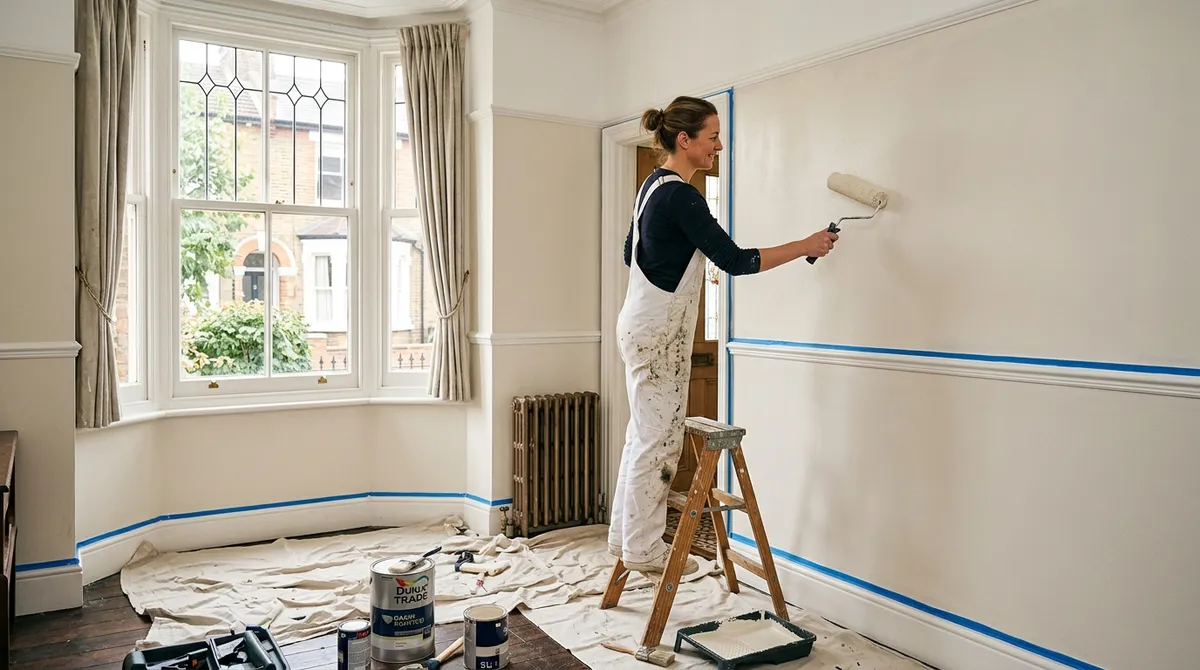
Quick answer
How much does a painter and decorator cost?
Most decorators charge £180 to £280 per day outside London, or £250 to £350 per day in the capital. Per room, expect to pay £200 to £500 for walls, ceiling, and woodwork with two coats. A full 3-bed house interior costs £2,500 to £4,500.
View the full painting & decorating cost guideWhat does a painter and decorator actually do?
A professional decorator handles far more than just rolling paint onto walls. The job involves surface preparation, colour advice, and a finish that lasts years rather than months.
Preparing surfaces: filling cracks, sanding woodwork, stripping old paint or wallpaper, and priming bare plaster or wood
Interior painting: walls, ceilings, woodwork (skirting, architraves, doors, window frames), and sometimes kitchen units or built-in furniture
Exterior painting: masonry walls, render, fascias, soffits, bargeboards, window frames, and front doors
Wallpapering: hanging new wallpaper, stripping old paper, and lining walls before papering for a smooth finish
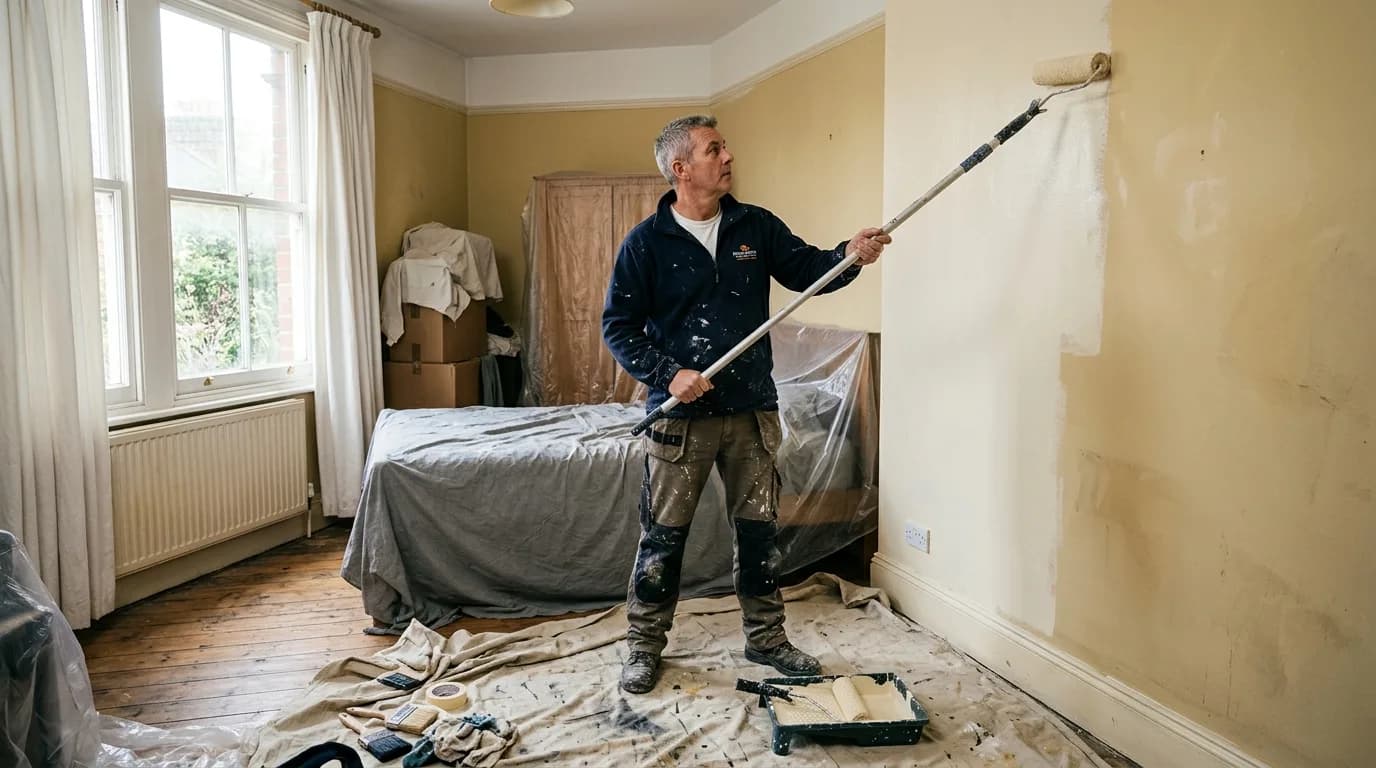
Things to think about before you hire
Interior or exterior?
Interior work can be done year-round, but exterior painting needs dry weather and temperatures above about 10 degrees Celsius for the paint to cure properly. Spring and early autumn are the best times for exterior work in the UK. If you are booking for summer, plan ahead - decorators get busy fast once the weather improves.
How much preparation is needed?
The condition of the surfaces determines the cost far more than the paint itself. New plaster just needs a mist coat and two top coats. Walls with multiple layers of old wallpaper, cracked plaster, or peeling paint need significant preparation before a drop of top coat goes on. Be honest about the state of the walls when getting quotes.
Paint vs wallpaper
Painting is cheaper and faster. Wallpapering costs more per room (labour and materials) but adds depth and texture that paint alone cannot match. For living rooms, dining rooms, and feature walls, wallpaper can look superb. For bedrooms, kitchens, and bathrooms, paint is usually the more practical choice.
Who supplies the paint?
Some decorators include paint in their quote, others charge labour only and expect you to supply materials. Buying your own trade paint can save money - but make sure you buy enough. A decorator will know exactly how much is needed based on the room size, colour change, and surface type.
How to find a good painter and decorator
Ask to see photos of recent work
Any decent decorator will have photos on their phone or social media. Look for clean cutting in (the sharp line where the wall meets the ceiling or woodwork), smooth woodwork without runs or drips, and even coverage on the walls. Avoid decorators who only show you photos of empty rooms - you want to see the detail.
Get a written quote, not a verbal estimate
A proper quote should list exactly what is included: number of coats, which rooms, whether ceilings are included, who supplies the paint, and any exclusions. Verbal estimates have a habit of drifting upwards once work starts.
Check they have public liability insurance
A decorator working in your home could damage flooring, furniture, or fixtures. Public liability insurance covers this. Most professional decorators have it as standard - if they do not, that is a warning sign.
Ask about preparation
A good decorator will spend as much time preparing as painting. If someone quotes a full room repaint in half a day including prep, the preparation is being skipped. Poor preparation means the paint will not last - you will see cracks, peeling, and uneven coverage within a year.
Get three quotes with matching specs
Decorator prices vary widely - the same room can be quoted at £200 by one and £500 by another. Get at least three written quotes that all cover the same rooms, number of coats, paint brand, and whether ceilings and woodwork are included. That way you are comparing like for like, not just picking the cheapest number.
Painting & decorating guides
Common questions about painting & decorating
How long does it take to paint a room?
A professional decorator can paint a standard double bedroom - walls, ceiling, and woodwork - in about a day. That includes preparation, two coats on the walls, and one or two coats on the woodwork. If the room needs significant prep work (stripping wallpaper, filling large cracks, sanding back old gloss), add half a day to a full day.
Should I paint or wallpaper?
Paint is cheaper, quicker, and easier to change later. Wallpaper adds texture and pattern that paint cannot match, but it costs more in materials and labour, and stripping it when you want a change is a messy job. For most rooms, paint is the practical choice. For a feature wall, dining room, or hallway, wallpaper can add real character.
Do I need to be home while the decorator works?
Not necessarily, but it helps to be around for the first hour or so to agree final details - colours, which rooms to start with, where to store dust sheets. After that, most decorators are happy to work on their own. Just make sure they have access to water and somewhere to make a cup of tea.
How often should you repaint the inside of a house?
Most rooms need repainting every 5 to 7 years. High-traffic areas like hallways and children's bedrooms may need doing more often. Bathrooms and kitchens tend to need repainting every 3 to 5 years due to moisture and grease. If the paint is still in good condition, there is no reason to repaint just for the sake of it.
What is the best paint to use?
For most rooms, a matt or silk emulsion on walls and ceiling, and a satinwood or eggshell on woodwork. Gloss is durable but shows every brush mark - satinwood gives a similar sheen with a more forgiving finish. Trade paints (Dulux Trade, Crown Trade, Johnstone's) offer the best balance of coverage, durability, and value. The Painting and Decorating Association (PDA) can help you find a vetted decorator in your area. Premium brands like Farrow & Ball and Little Greene have excellent colours but cost two to three times more.
Quote service coming soon
Get free quotes from painters & decorators near you
Free, no obligation. Check the cost guide first so you know what a fair price looks like before the quotes arrive.