Composite Front Door Cost 2026
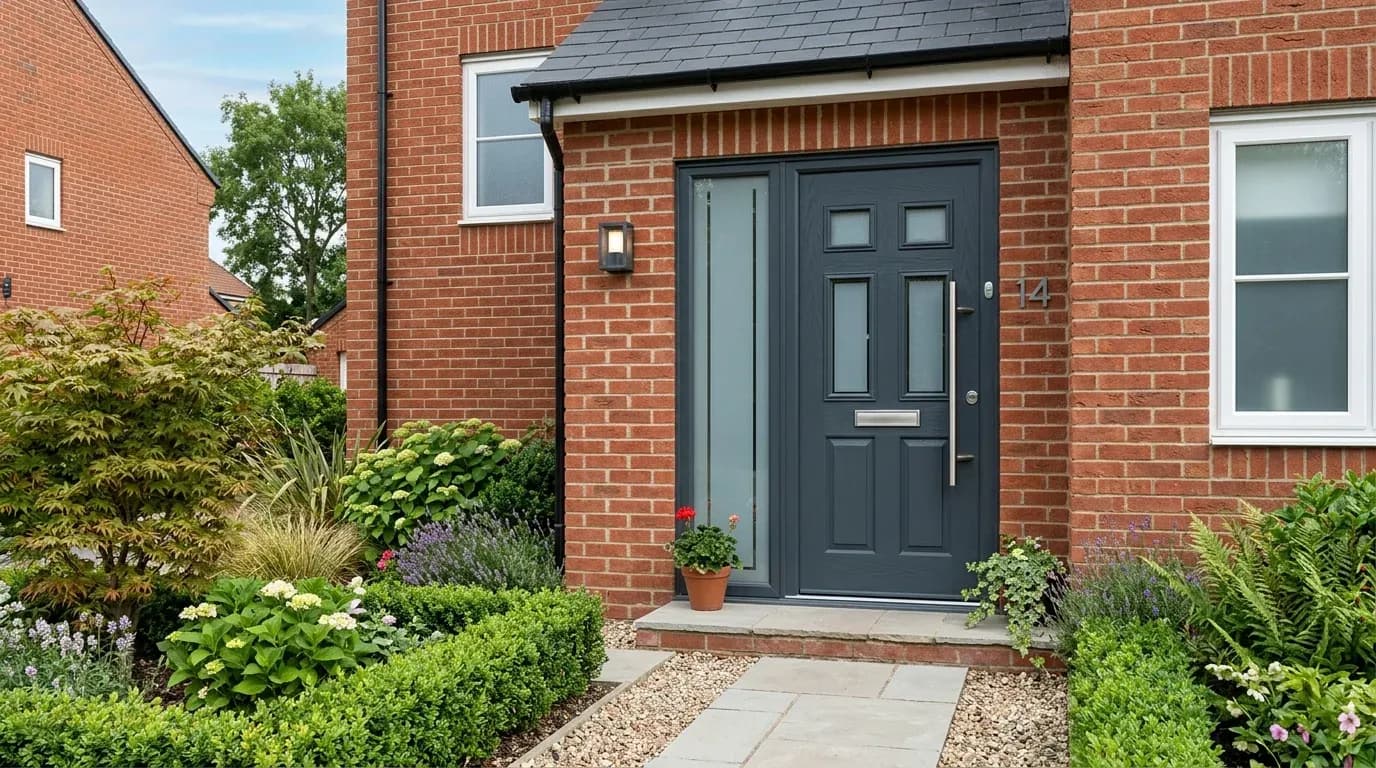
A standard composite front door costs £800 to £1,500 supplied and fitted. Premium brands like Solidor and Rockdoor run £1,500 to £2,500. Adding a sidelight pushes the price to £1,200 to £3,000. Fitting alone is typically £150 to £300 for a straightforward swap.
£800
Standard from
£1,500
Premium from
£150+
Fitting cost
30+ yrs
Lifespan
Prices updated April 2026 · Based on published trade rates and UK market data.
Composite Door Prices at a Glance
How much is a composite door in 2026? These prices cover the most common configurations, including supply and fitting.
| Door Type | Average Cost | Price Range |
|---|---|---|
| Standard composite door (supplied & fitted) | £1,100 | £800 to £1,500 |
| Premium composite door (Solidor, Rockdoor etc.) | £1,900 | £1,500 to £2,500 |
| Composite door with sidelight | £2,000 | £1,200 to £3,000 |
| Fitting only (straightforward swap) | £220 | £150 to £300 |
| Fitting with frame modification | £400 | £300 to £500 |
Prices include standard hardware (handle, letterbox, knocker). Upgraded hardware adds £50 to £200.
Get free composite door quotes
Tell us about the door you want and local door installers will get in touch with prices. Free, with no obligation to book.
Composite vs uPVC vs Timber Doors
How does a composite door compare to the alternatives? Here is a side-by-side comparison of the main front door materials.
| Material | Cost (fitted) | Lifespan | Security | Maintenance |
|---|---|---|---|---|
| Composite | £800 to £2,500 | 30 to 35 years | Excellent | Very low |
| uPVC | £400 to £800 | 15 to 20 years | Good | Low |
| Solid timber | £1,200 to £3,500 | 30+ years | Good | High (annual) |
| Aluminium | £1,500 to £3,000 | 30+ years | Excellent | Very low |
Best Composite Door Brands Compared
The UK composite door market is dominated by a handful of manufacturers. Here is how the leading brands compare on price, construction, and features.
| Brand | Price Range | Core | Thickness | Colours | Guarantee |
|---|---|---|---|---|---|
| Solidor | £1,500 to £2,200 | Solid timber | 44mm | 200+ | 12 years |
| Rockdoor | £1,400 to £2,000 | Carbon fibre reinforced | 44mm | 30+ | 10 years |
| Endurance | £1,600 to £2,500 | Solid timber (cross-laminated) | 48mm | 20+ | 10 years |
| Comp Door | £1,300 to £1,800 | Foam insulated | 44mm | 25+ | 10 years |
Prices are supply and fit through an authorised installer. Direct-to-consumer pricing may differ.
What Affects the Cost of a Composite Door?
Brand and build quality
Budget composite doors (£800 to £1,000) use a foam-filled core and thinner GRP skins. Premium doors from Solidor, Rockdoor, and Endurance use solid timber or reinforced cores, thicker skins, and higher-quality hardware. The difference is noticeable in weight, feel, and long-term durability.
Glazing options
A fully solid door is the cheapest option. Adding glazed panels (half-glazed, quarter-glazed, or sidelights) increases the price. Decorative glass designs, triple glazing, and obscure privacy glass all add cost. A half-glazed door typically costs £100 to £200 more than a solid equivalent.
Colour and finish
Standard colours are included in the base price. Dual colour (different inside and outside), woodgrain effect, and non-standard RAL colours cost extra, typically £50 to £150. The most popular colours (anthracite grey and black) are standard across all brands.
Hardware and accessories
Basic chrome or gold hardware is included. Upgrading to brushed stainless steel, black, or smart locks adds £50 to £200. Letterboxes, spy holes, door numbers, and security chains are usually included but check your quote carefully.
Frame and threshold modifications
If the new door fits the existing opening, fitting is straightforward. If the opening needs widening, narrowing, or the threshold height changing, expect to pay more for the structural work. This is common when replacing older doors with different standard sizes.
Composite Door Prices by Region
Average cost of a standard composite front door supplied and fitted across UK regions.
| Region | Average Cost | vs National |
|---|---|---|
| London | £1,500 | +25% |
| South East | £1,350 | +13% |
| East of England | £1,250 | +4% |
| South West | £1,200 | Average |
| Midlands | £1,200 | Average |
| Yorkshire | £1,100 | -8% |
| North West | £1,100 | -8% |
| North East | £1,050 | -13% |
| Scotland | £1,100 | -8% |
| Wales | £1,100 | -8% |
How to Get Your Composite Door for Less
Composite doors are a premium product, but there are straightforward ways to bring the cost down without sacrificing quality or security.
Get at least three quotes
Get at least three quotes and compare them line by line. Prices for the same job often vary by 20 to 40% between firms. Ask each firm to price the same door, glazing, colour and hardware, and check that the frame and fitting are included.
Buy during the sales
Door companies run significant promotions in January, Black Friday, and end-of-summer. Discounts of 30 to 40% on supply and fit packages are common during these periods. If your current door is not an emergency replacement, timing your purchase around a sale can save £300 to £600.
Choose a standard colour
Non-standard or bespoke colours cost an extra £50 to £150. The most popular colours (anthracite grey, black, white, dark blue) are standard across all manufacturers and available at the base price. Unless you have a very specific colour in mind, sticking with a standard option saves money without any compromise on quality.
Skip the sidelight if budget is tight
A sidelight (glazed panel next to the door) adds £400 to £1,500 to the cost and requires structural work to widen the opening if one is not already there. A composite door on its own makes a strong visual statement. You can always add a sidelight later when the budget allows.
Compare supply-only vs supply-and-fit
Some companies charge significantly more for fitting than an independent joiner would. Get the supply-only price and a separate fitting quote from a local carpenter. If the difference is more than £100, buying supply-only and arranging your own fitter can save money. Just make sure the guarantee is not voided by third-party fitting.
Negotiate, door companies expect it
The composite door market is competitive and most companies build negotiation room into their prices. If you have received a quote, call back and ask if they can do any better, or mention a competing quote. Discounts of 10 to 15% are commonly available just by asking.
Put the deposit on a credit card
Composite doors are usually ordered with a deposit of 25% to 50%, and the door trade has a long record of firms going bust between order and fitting. Pay any deposit over £100 by credit card and Section 75 makes the lender equally liable, so you can get the money back if the installer disappears. The protection runs up to £30,000 at no cost to you.
Free, with no obligation to book.
Useful resources
- FENSA, Registered installers can self-certify Building Regulations for doors
- Planning Portal: Doors and windows, Permitted development rules for replacing external doors
- Secured by Design, Police-approved security standards for doors
What to Expect: The Composite Door Fitting Process
A straightforward door swap typically takes half a day. If the full frame is being replaced, allow a full day. Here's what happens.
- 1
Survey and measure the opening
The installer measures the existing door frame to confirm the new door size. If you are replacing the full frame, the structural opening is measured to ensure the new frame fits with adequate clearance.
- 2
Remove the old door and frame
The old door is taken off its hinges and the frame is carefully removed. The reveal is cleaned of any old sealant, fixings, or debris. The lintel and brickwork are checked for soundness.
- 3
Fit the new frame
The new composite door frame is positioned in the opening, shimmed level, and fixed through the jambs into the brickwork using frame fixings. Packing pieces ensure the frame is perfectly square and plumb.
- 4
Hang the door and adjust hinges
The composite door slab is lifted onto the hinges and the flag hinges or butt hinges are adjusted for a smooth, even gap around the door. The door is checked for free movement and proper closing.
- 5
Install hardware and glazing
The multipoint lock, letterbox, handle, and knocker are fitted. If the door includes glazed sidelights or a fanlight, the sealed glass units are installed and beaded in.
- 6
Seal, trim, and test
Expanding foam fills any gaps between the frame and brickwork, then external silicone sealant and internal architrave or trim are applied. The lock is tested from both sides and the FENSA certificate is issued if the installer is registered.
Frequently Asked Questions
How much does a composite front door cost?
A standard composite front door costs £800 to £1,500 supplied and fitted. Premium brands like Solidor and Rockdoor typically cost £1,500 to £2,500. Adding a sidelight (glazed panel beside the door) pushes the price to £1,200 to £3,000. Fitting alone usually costs £150 to £300 on top of the door price.
How much is a composite door fitted?
Fitting a composite door typically costs £150 to £300 for a straightforward swap where the new door fits the existing opening. If the opening needs widening, narrowing, or the frame needs replacing, fitting costs rise to £300 to £500. Most door suppliers include fitting in their quoted price, so always clarify whether the price is supply only or supply and fit.
Is a composite door better than uPVC?
Composite doors are generally more secure, more thermally efficient, and longer-lasting than uPVC doors. They do not warp, fade, or discolour as much as uPVC over time. A composite door typically lasts 30 to 35 years compared to 15 to 20 years for uPVC. However, uPVC doors cost significantly less (£400 to £800 vs £800 to £2,500) and are perfectly adequate for many homes.
What is a composite door made of?
A composite door is made from a combination of materials, typically a solid timber core or insulating foam core, surrounded by a Glass Reinforced Plastic (GRP) outer skin that can be moulded to look like woodgrain. The frame is usually uPVC or aluminium. This combination gives the door the appearance of timber with the durability and low maintenance of modern materials.
Do composite doors come in different colours?
Yes, composite doors are available in a wide range of colours. The most popular colours in the UK are anthracite grey, black, dark blue, and racing green. Most manufacturers offer 20 to 30 standard colours, with some like Solidor offering 200+ including dual colour options (different colour inside and outside). Non-standard colours may cost an extra £50 to £150.
How secure is a composite door?
Composite doors are among the most secure domestic doors available. Most come with multi-point locking systems as standard and achieve Secured by Design accreditation from the police. Premium models are tested to PAS 24 security standards. The solid core makes them extremely difficult to force open compared to hollow uPVC doors.
How long does a composite door last?
A good-quality composite door lasts 30 to 35 years with minimal maintenance. Most manufacturers offer guarantees of 10 to 12 years, with some premium brands guaranteeing up to 20 years. The GRP skin does not rot, warp, or need repainting, though you may want to clean it and oil the hinges annually.
What are the best composite door brands in the UK?
The most popular composite door brands in the UK are Solidor (known for their solid timber core and 200+ colours), Rockdoor (noted for security with their S-Glaze system), Endurance (the thickest door on the market at 48mm), and Comp Door (a newer brand gaining popularity for modern designs). All produce high-quality doors, the best choice depends on your priorities around style, security, and budget.
Free, with no obligation to book.

Written by Chris Kervin, Co-Founder of Less.co.uk
Last updated: · Pricing based on published trade rates and UK market data · Methodology