How Much Does Rendering Cost in 2026?
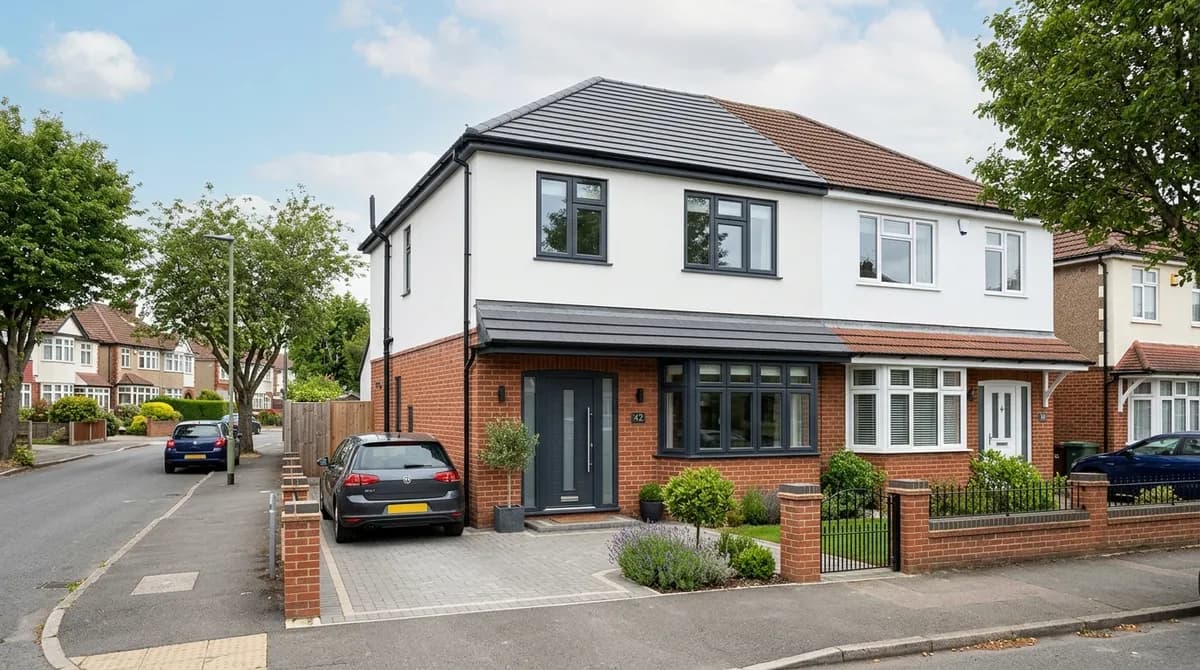
Most external rendering costs between £30 and £60 per m² depending on the render type. A typical 3-bed semi-detached house costs £3,500 to £7,000 for a full external render, including scaffolding.
£42
Average per m²
£3,500
3-bed semi from
£40/m²
K Rend from
25+ yrs
Lasts up to
Prices updated April 2026 · Based on industry data and contractor submissions.
Planning note. External rendering is usually permitted development and does not need planning permission. If your property is listed or in a conservation area, check with your local planning authority before starting work. Building Regulations approval is not normally required for rendering alone, but it is needed if you are adding external wall insulation at the same time.
Rendering Prices by Type
Prices per square metre including labour and materials. The right choice depends on your budget, the age of the property, and how long you want the finish to last.
Sand and cement render
Traditional two-coat system, needs painting
£38/m²
£30 to £45/m²
K Rend (silicone render)
Self-coloured, breathable, low maintenance
£55/m²
£45 to £65/m²
Monocouche render
Single-coat through-coloured cement render
£48/m²
£40 to £55/m²
Lime render
Breathable, suits older and listed properties
£60/m²
£50 to £70/m²
Pebbledash
Aggregate finish thrown into wet render coat
£38/m²
£30 to £45/m²
Prices based on industry data. Scaffolding typically adds £500 to £1,500 on top and is not always included in per-m² quotes.
Rendering Cost by House Type
Total costs for a full external render based on a mid-range silicone or monocouche system, including scaffolding. Your actual m² will vary depending on the number of windows and the layout of your house.
| House Type | Average Cost | Price Range |
|---|---|---|
| 2-bed terraced (approx. 60 m²) | £2,800 | £2,000 to £3,800 |
| 3-bed semi-detached (approx. 90 m²) | £5,000 | £3,500 to £7,000 |
| 3-bed detached (approx. 120 m²) | £6,500 | £4,800 to £9,000 |
| 4-bed detached (approx. 160 m²) | £8,500 | £6,500 to £12,000 |
Semi-detached figures are for exposed walls only. Terraced houses typically only need front and rear rendered.
What Is K Rend?
K Rend is a silicone-based rendering system that has become the most popular choice for new rendering work in the UK. The name comes from Kilwaughter Minerals, the Northern Ireland building materials company that manufactures it.
Self-coloured finish
The colour runs all the way through the render, not just on the surface. This means scratches and minor damage are far less visible than with painted cement render, and you never need to repaint.
Breathable but water-resistant
Silicone render allows moisture vapour to pass through from inside the wall (important for avoiding damp) while repelling rainwater on the outside. Traditional cement render traps moisture, which is one of the main reasons it cracks and fails over time.
Low maintenance
Unlike cement render, K Rend rarely needs repainting and resists algae and moss growth better than most alternatives. A pressure wash every few years is usually all it needs to look as good as new.
Higher upfront cost, lower lifetime cost
K Rend costs £40 to £55 per m² versus £25 to £40 for cement render. But factor in repainting costs every 5 to 8 years for cement render (£8 to £15/m² each time), and silicone render often works out cheaper over 15 to 20 years.
How Long Does Rendering Last?
Lifespan varies significantly by render type. Choosing the right system for your property and maintaining it properly makes the biggest difference.
| Render Type | Expected Lifespan |
|---|---|
| Silicone (K Rend etc.) | 25 to 30+ years |
| Monocouche | 20 to 25 years |
| Sand and cement | 15 to 25 years |
| Lime render | 30+ years |
| Pebbledash | 20 to 30 years |
Can You Render Over Existing Render?
It depends entirely on the condition of what is already there. Here is how to tell.
You can usually render over if...
- ✓ The existing render sounds solid when tapped (no hollow or drum-like sounds)
- ✓ There are no large cracks wider than a hairline
- ✓ The surface is firmly bonded to the wall behind
- ✓ A bonding agent or mesh is applied as preparation
The old render needs removing if...
- ✗ It sounds hollow when tapped (the render has blown away from the wall)
- ✗ Large sections are crumbling or flaking off
- ✗ There are wide cracks or signs of movement
- ✗ Damp is getting in behind the existing render
Additional Costs to Budget For
These extras come up regularly alongside rendering quotes. Ask about each one before comparing prices.
| Extra Item | Typical Cost |
|---|---|
| Scaffolding | £500 to £1,500 |
| Removing existing render | £10 to £20/m² |
| External wall insulation (EWI) | £40 to £80/m² |
| Repainting (cement render) | £8 to £15/m² |
| Minor brickwork repairs | £100 to £500 |
Scaffolding Costs for Rendering
Scaffolding is needed for virtually every rendering job beyond ground floor level. For a typical two-storey house, expect to pay £500 to £1,500 depending on the size and shape of the property.
Some rendering contractors include scaffolding in their quote; others price it separately. Always check before comparing quotes.
Rendering Costs by Region
Average price per m² for a mid-range silicone render system (labour and materials), by UK region.
| Region | Price per m² | vs National |
|---|---|---|
| London | £55/m² | +30% |
| South East | £48/m² | +14% |
| East of England | £45/m² | +7% |
| South West | £44/m² | +5% |
| Midlands | £42/m² | Average |
| Yorkshire | £38/m² | -10% |
| North West | £39/m² | -7% |
| North East | £36/m² | -14% |
| Scotland | £38/m² | -10% |
| Wales | £37/m² | -12% |
Based on industry data for silicone render systems. Cement render will be lower; lime render higher.
How to Get Your Rendering Done for Less
Smart choices on timing, materials, and how you bundle the work can bring the total cost down without sacrificing quality.
Choose silicone render to avoid repainting costs
Sand and cement render is cheaper upfront but needs repainting every 5 to 8 years at £8 to £15 per m². Over 20 years, that adds up to more than the extra cost of K Rend or similar silicone render, which comes pre-coloured and keeps its finish for decades. If you can stretch the budget, the long-term saving is real.
Combine rendering with insulation
If your walls are uninsulated solid masonry, adding external wall insulation (EWI) at the same time as rendering makes sense. The scaffolding is already up, and the insulation boards go on before the render coat - so the labour overlap saves money compared to doing them as two separate jobs. You may also qualify for government grants towards insulation costs.
Time it for spring or early autumn
Rendering needs dry weather for the finish coat to cure properly. Winter is risky - frost can ruin fresh render overnight, and cold temperatures slow curing. Most renderers are busiest in summer, so spring and early autumn tend to give you the best combination of decent weather and competitive pricing.
Get at least three quotes and check previous work
Rendering quality varies hugely between contractors. A poor render job is visible from across the street and expensive to fix. Ask to see recent completed work in person - not just photos. Three quotes from experienced renderers will quickly show you the going rate in your area and help you spot anyone cutting corners on price.
Check if old render really needs removing
Stripping existing render adds £10 to £20 per m² to the cost and generates a lot of waste. If the existing render is well-bonded and in reasonable condition, a skilled renderer can apply a new coat over the top with proper preparation. Get them to do the tapping test - hollow sounds mean it needs to come off, solid sounds mean you may be able to save on removal costs.
Useful resources
- Building Regulations Part L, External wall insulation and rendering requirements
- Sto, Major EWI and rendering system manufacturer with installer directory
What to Expect: The Rendering Process
Rendering a typical 3-bed semi takes 3-5 days depending on the system used and weather conditions. Here's what each stage involves.
- 1
Scaffolding and preparation
Scaffolding is erected around the property. Existing loose render, paint, or debris is removed. Cracks are repaired, and the wall surface is cleaned and dampened ready for the new coat.
- 2
Beading and mesh application
Stop beads, corner beads, and bellcast beads are fitted to create clean, straight edges. Reinforcing mesh is applied over joints, cracks, and areas where different substrates meet to prevent future cracking.
- 3
Base coat application
The first coat of render (the scratch coat) is applied by hand or machine, typically 10-15mm thick. It is scored with a scratch comb to provide a key for the top coat to grip.
- 4
Drying and curing
The base coat is left to cure for at least 24 hours, depending on weather. In hot or windy conditions, the render may need misting with water to stop it drying too quickly and cracking.
- 5
Top coat and finish
The final coat is applied and finished to the chosen texture: smooth, scraped, roughcast, or pebbledash. Monocouche (through-coloured) renders are finished in a single top coat with the colour built in, so no painting is needed.
- 6
Clean-up and scaffolding removal
Window frames, sills, and surrounding areas are cleaned of any render splashes. Scaffolding is dismantled once the render has cured sufficiently, typically after 3-5 days.
Frequently Asked Questions
How much does it cost to render a 3-bed semi-detached house?
Rendering a typical 3-bed semi costs between £3,500 and £7,000 depending on the render type. Sand and cement render sits at the lower end (around £3,500 to £5,000), while silicone-based renders like K Rend cost £5,000 to £7,000 but need far less maintenance over their lifespan.
What is K Rend and why is it so popular?
K Rend is a brand of silicone-based render that has become the go-to choice for modern rendering in the UK. It comes pre-coloured (so no painting needed), is breathable (allowing moisture to escape from the wall), and resists cracking better than traditional cement render. It costs more upfront but saves on repainting every few years, which is why most renderers now recommend it for new work.
Can you render over existing render?
Sometimes, but it depends on the condition of the existing render. If the current render is sound, well-bonded, and not cracked or blown, a new coat can go over the top with the right preparation and bonding agent. If the existing render is loose, crumbling, or hollow-sounding when tapped, it needs to come off first. Rendering over a bad surface just hides the problem temporarily and usually fails within a few years.
How long does external rendering last?
Silicone renders like K Rend typically last 25 to 30 years or more with minimal maintenance. Traditional sand and cement render lasts 15 to 25 years but will need repainting every 5 to 8 years and is more prone to hairline cracking. Lime render on older properties can last decades if maintained properly. Monocouche render sits between cement and silicone for longevity, usually around 20 to 25 years.
Does rendering a house need planning permission?
Rendering the exterior of your house is usually permitted development and does not need planning permission. The main exceptions are listed buildings (where you will need listed building consent) and properties in conservation areas (where changing the external appearance may require approval). If you are changing from bare brick to render for the first time, it is worth checking with your local planning authority before starting work.
Is rendering a house worth it?
Rendering can improve the appearance of a property significantly and provides an extra layer of weather protection. When combined with external wall insulation, it can also reduce heating bills. Whether it is worth the cost depends on the current state of your walls and what you are trying to achieve. For properties with poor or mismatched brickwork, rendering is often the most cost-effective way to improve kerb appeal.
Do I need scaffolding for rendering?
Yes, almost always. External rendering requires access to the full height of the walls, which means scaffolding for anything above ground floor level. Budget £500 to £1,500 for scaffolding depending on the size and shape of the property. Some quotes include scaffolding; others list it separately - always check before comparing prices.

Written by Chris Kervin, Co-Founder of Less.co.uk
Last updated: · Pricing based on industry data and verified contractor submissions · Methodology
Ready to get your rendering done for less?
Compare free quotes from local rendering specialists near you. Most homeowners save money by comparing at least three quotes before choosing.
Compare Free QuotesFree, no obligation · Local rendering contractors · Compare multiple quotes
More home improvement costs