Front Doors: Your Complete Guide
Your front door does more than keep the rain out. It sets the first impression of your home, affects your energy bills, and is the main barrier against break-ins. Whether you are replacing a tired uPVC door or upgrading to a composite, this guide walks you through materials, styles, security ratings, and what you should expect to pay.
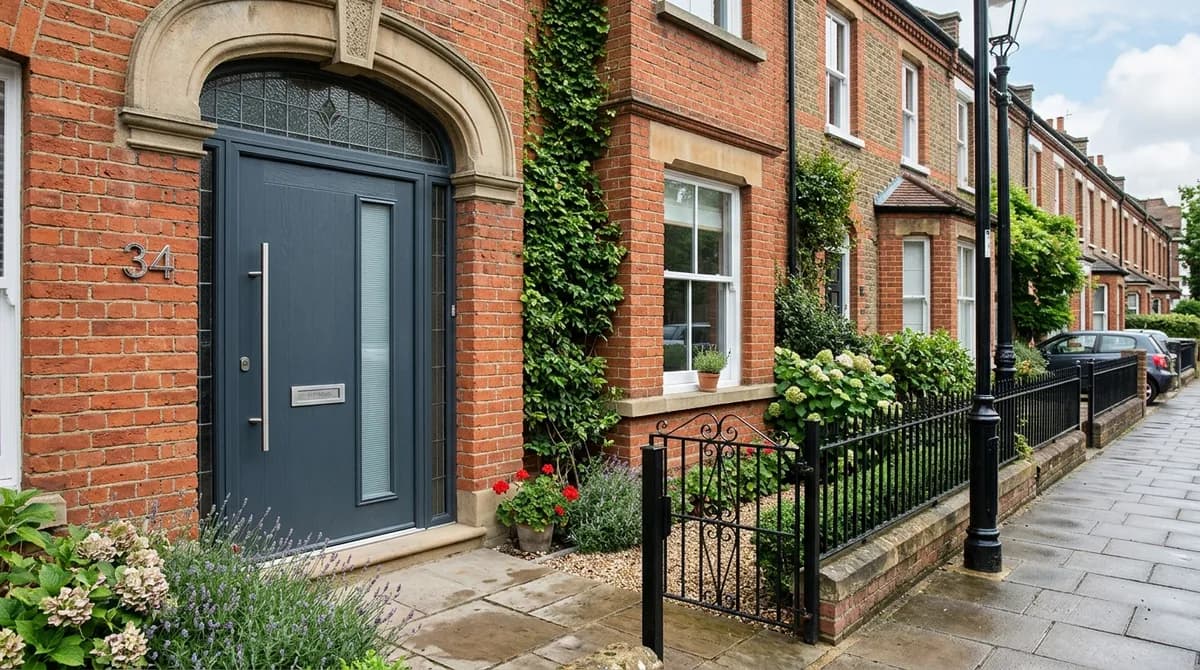
Front door materials compared
uPVC
The most affordable option. Low maintenance, decent insulation, and available in a wide range of colours and styles. The downside is that uPVC doors can look and feel less solid than composite or timber. They flex more, can yellow over time, and offer less security than composite alternatives.
Composite
The most popular upgrade choice. A composite door has a solid core (usually polyurethane foam or engineered timber) wrapped in a GRP skin. They look like wood but do not warp, crack, or need painting. Excellent insulation and security. Brands like Solidor and Endurance dominate the premium end.
Timber
The traditional choice and still the best-looking option for period properties. Softwood (usually Accoya or engineered pine) is more affordable; hardwood oak is the premium option. Timber doors need periodic sanding and painting or oiling - typically every 3 to 5 years - but a well-maintained hardwood door can last a lifetime.
Aluminium
Slim sightlines, a contemporary look, and exceptional strength. Aluminium doors suit modern builds and renovations where clean lines matter. They are thermally broken to prevent heat loss, extremely durable, and virtually maintenance-free. The most expensive option, but the look is hard to replicate with other materials.
Door styles
Panel door
The classic British front door - solid panels (usually four or six) with no glazing. Offers maximum privacy and security. Available in every material. The most popular choice for terraced and semi-detached homes where the front door faces the street.
Glazed door
Features one or more glass panels for natural light. Double or triple glazed for insulation and security. Obscure, patterned, or decorative glass options keep privacy while letting light into a dark hallway. The glass should be toughened or laminated as standard.
Stable door
A door split horizontally so the top and bottom halves open independently. Popular in cottages and rural properties. Practical if you want ventilation while keeping children or pets inside. Available in composite and timber.
French doors
A pair of doors that open outwards or inwards, typically used for back entrances or where you want a wider opening. Can be used as a front entrance on properties where the design suits it. Usually timber or aluminium.
Contemporary / flush door
Clean, flat-fronted designs with minimal detailing and long bar handles. The modern look that suits new builds and contemporary renovations. Usually aluminium or composite. Often features a large glazed panel offset to one side.
Security and energy efficiency
Security ratings
- PAS 24: The minimum British Standard for enhanced security. Required by Building Regulations for new door installations. Tests resistance to forced entry including lock snapping, drilling, and levering.
- Secured by Design: A police-backed standard that goes beyond PAS 24. The entire doorset - door, frame, glass, and hardware - is tested as a complete system. The gold standard for domestic security.
Energy efficiency
- Part L compliance: All replacement doors must meet Part L of the Building Regulations for thermal performance, as set out in Approved Document L (gov.uk). A U-value of 1.4 W/m²K or lower is required. Most composite and modern timber doors comfortably beat this.
- Energy rating: Doors are rated from A++ (best) to E (worst), similar to windows. A-rated doors cost more upfront but reduce heat loss and can lower your energy bills over time.
You can check whether a door meets the police-preferred specification on the Secured by Design website, which lists approved products and manufacturers. The full energy efficiency requirements are set out in Approved Document L of the Building Regulations.
How to find a good door installer
Use a FENSA or CERTASS registered installer
A registered installer self-certifies Building Regulations compliance and issues a certificate on completion. You need this certificate when you sell. Verify their registration online before agreeing to anything.
Get three quotes for the same door type
Front door prices differ hugely between suppliers. Get at least three written quotes for the same material and spec - same security rating, same energy rating, same colour, same furniture (handles, letterbox, knocker). Some quotes include the frame and fitting while others do not, so check what is actually covered.
Ask to see the door in person before buying
Colours and finishes look different on a screen. If you are spending £1,000 or more, visit a showroom or ask the supplier for a sample. Check the weight and feel of the door - a quality composite door should feel solid and heavy when you close it.
Check the guarantee is insurance-backed
A 10-year guarantee means nothing if the company goes out of business in year three. Ask whether the guarantee is insurance-backed, which means an independent insurer covers any claims if the installer closes down.
Front door guides
Front door cost guide
Full price breakdown for uPVC, composite, timber, and aluminium front doors in 2026.
Composite door cost guide
Composite front door prices from £800 to £2,500 installed. Styles, colours, and security ratings compared.
Double glazing costs
Window replacement prices that often pair well with a new front door.
Extension cost guide
Full extension costs including new external doors.
Common questions
What is the best material for a front door?
Composite doors are the best all-round choice for most UK homes. They combine a solid core with a weather-resistant GRP skin that does not warp, fade, or need painting. If budget is tight, uPVC works well. For period properties, timber is hard to beat.
Do I need Building Regulations approval to change my front door?
If the installer is registered with FENSA or Certass, no separate approval is needed. If they are not registered, you will need to apply for Building Control approval from your council. The door must meet Part L energy requirements either way.
What security rating should a front door have?
PAS 24 is the minimum standard required by Building Regulations. Secured by Design goes further and is backed by UK police. Most quality composite doors meet PAS 24 as standard.
How long does it take to fit a new front door?
A standard replacement takes 2 to 4 hours. If the frame needs replacing or brickwork needs adjusting, allow a full day.
Compare real quotes for your job
Prices move a lot with your postcode, the access on site and the spec you choose. Get up to 3 free quotes from vetted local tradespeople and see what yours actually comes to, with no obligation to book.