How Much Does Secondary Glazing Cost in 2026?
Secondary glazing costs £100 to £400 per window professionally fitted, or £30 to £100 per window if you go down the DIY route with magnetic or acrylic panels. For a whole house with 10 windows, expect to pay £1,500 to £4,000. That is a fraction of what full double glazing replacement costs, and for listed buildings and conservation areas, it is often the only option available.
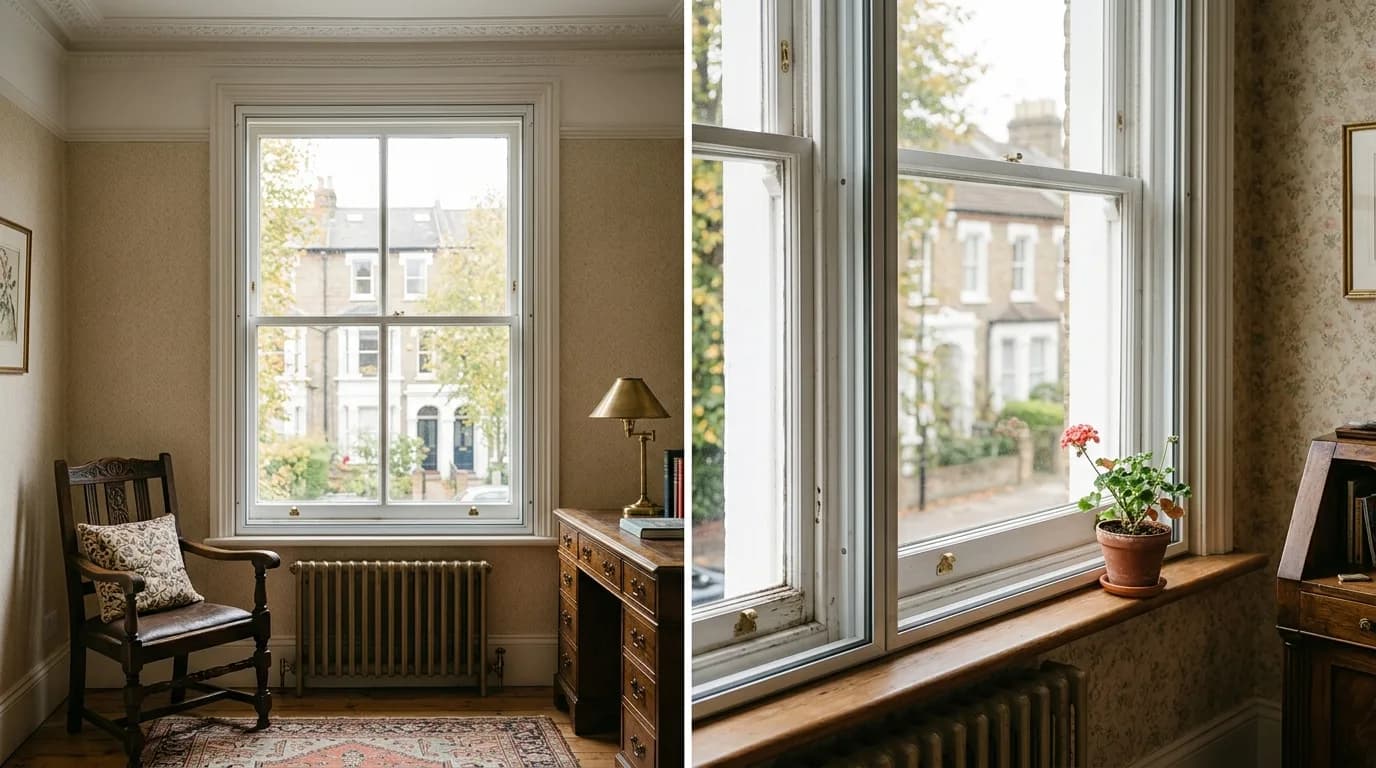
£100-£400
Per window (fitted)
£30-£100
DIY per window
£1,500-£4,000
10-window house
Up to 80%
Noise reduction
Prices updated April 2026 · Based on industry data and contractor submissions.
No FENSA certification or planning permission needed. Secondary glazing is fitted to the inside of existing windows, so it does not count as a window replacement. This means no Building Regulations sign-off is required, and you can fit it in conservation areas and listed buildings without altering the external appearance of the property.
Quick answer
How much does secondary glazing cost?
A professionally fitted secondary glazing panel costs £100 to £400 per window, depending on whether you choose a fixed, hinged, or sliding panel. DIY magnetic and acrylic panels cost £30 to £100 per window. For a full house with 10 windows, budget £1,500 to £4,000 professionally fitted, or £300 to £1,000 if you fit removable panels yourself. That makes it considerably cheaper than full double glazing replacement at £300 to £800 per window.
Secondary Glazing Prices at a Glance
Prices include supply and installation for professional options, and supply only for DIY panels. All figures are for standard-sized windows (roughly 1.2m x 1.0m).
| Type | Per Window | 10-Window House |
|---|---|---|
Fixed panel (budget) Non-opening, screwed or clipped to frame | £100 - £200 | £1,000 - £2,000 |
Hinged panel Opens for access to original window | £150 - £300 | £1,500 - £3,000 |
Sliding panel (sash windows) Slides vertically to match original sash operation | £200 - £400 | £2,000 - £4,000 |
Magnetic/removable (DIY) Clips on magnetically, easy to remove | £30 - £80 | £300 - £800 |
Lift-out acrylic (DIY) Lightweight acrylic panel, lifts out for cleaning | £40 - £100 | £400 - £1,000 |
Prices based on 2026 UK averages for standard-sized windows. Non-standard shapes, bay windows, and listed building specifications may cost more.
Secondary Glazing vs Double Glazing
The two are not really competing products. Double glazing replaces your windows entirely. Secondary glazing adds a second pane to the inside of your existing windows. But it helps to see how they stack up.
| Secondary Glazing | Double Glazing | |
|---|---|---|
| Cost per window | £100 - £400 | £300 - £800 |
| Heat loss reduction | 40 - 65% | 80%+ |
| Noise reduction | 50 - 80% | 30 - 50% |
| Planning permission needed | No | Sometimes (conservation/listed) |
| FENSA certification | Not required | Required |
| Suitable for listed buildings | Yes (often the only option) | Usually not permitted |
| Keeps original windows | Yes | No (replaces them) |
| Can be removed | Yes (DIY types easily) | No |
If you live in a listed building or conservation area, secondary glazing is often the only realistic option because replacing the original windows is either not permitted or requires expensive like-for-like replacements. The noise reduction is genuinely impressive. If road noise or aircraft noise is your main concern, secondary glazing with a wide air gap actually outperforms standard double glazing.
Types of Secondary Glazing
Secondary glazing comes in several forms. The right choice depends on your windows, your budget, and whether you need to open the original window regularly.
Fixed panels
The simplest and cheapest professional option. A glass or acrylic panel is fitted into a slim aluminium frame that screws or clips to the inside of your window frame. You cannot open the original window without removing the panel first, so these work best on windows you rarely open. Cost: £100 to £200 per window fitted.
Hinged panels
The secondary panel is hinged on one side so you can swing it open to access the original window for ventilation and cleaning. This is the most popular choice for casement windows. The hinge mechanism adds to the cost but the convenience is worth it if you open your windows regularly. Cost: £150 to £300 per window fitted.
Sliding panels (for sash windows)
Designed specifically for original sash windows. The secondary panel slides vertically on tracks, mimicking the operation of the sash behind it. This is the go-to option for period properties with sash windows and is what most heritage specialists like Selectaglaze recommend. The tracks and runners need to be precise, which is why these are the priciest option. Cost: £200 to £400 per window fitted.
Magnetic panels (DIY)
A lightweight acrylic or polycarbonate panel held in place by magnetic strips stuck to the window frame. You can pop them on in autumn and take them off in spring. They are surprisingly effective for the price and are completely reversible, leaving no permanent marks on the frame. Cost: £30 to £80 per window, supply only.
Lift-out acrylic panels (DIY)
Similar to magnetic panels but held in place by friction clips or turn buttons. Slightly more robust than magnetic types and easier to get a good seal. Cleaning is straightforward because you just lift the panel out. These are a popular choice for renters because they come out without a trace when you move. Cost: £40 to £100 per window, supply only.
What Affects the Cost of Secondary Glazing?
Window size and shape
Larger windows cost more because you need a bigger panel and more framing material. Standard rectangular casements are the cheapest to fit. Bay windows, arched windows, and other non-standard shapes push the price up because panels need to be made to measure rather than cut from stock sizes.
Panel type and opening mechanism
A fixed panel that screws directly to the frame is the cheapest option but you cannot open the original window without removing it. Hinged panels cost more but let you access the original window for cleaning and ventilation. Sliding panels for sash windows are the priciest professional option because the runners and mechanism need to be precise.
Frame material
Most secondary glazing uses slim aluminium frames powder-coated in white or a colour to match your woodwork. Timber sub-frames can be specified for heritage properties where the conservation officer wants a more traditional look, but this adds to the cost. Some DIY options use plastic or magnetic strips instead of a proper frame.
Glass vs acrylic
Professional installations typically use glass, which is heavier but clearer and more scratch-resistant. DIY panels usually use acrylic or polycarbonate, which is lighter, cheaper, and less likely to break, but can scratch and cloud over time. For a long-term solution, glass is the better choice.
Access and listed building requirements
If your windows are at height or awkward to reach, installation takes longer and costs more. Listed buildings sometimes require the secondary glazing to be fitted in a specific way to satisfy the conservation officer. Specialist heritage installers like Selectaglaze have experience with these requirements but charge accordingly.
How to Get Your Secondary Glazing for Less
Secondary glazing is already much cheaper than full window replacement, but here is how to keep the cost down further.
Start with DIY magnetic panels
If you are not sure whether secondary glazing is right for you, try magnetic or lift-out panels on your worst windows first. At £30 to £80 per window, it is low risk. You can always upgrade to professional sliding or hinged panels later if you like the results. Many people find that DIY panels are perfectly good enough and never bother upgrading.
Get quotes from specialists, not just window companies
General double glazing companies sometimes quote secondary glazing as an afterthought and price it high to steer you toward full replacement. Dedicated secondary glazing specialists like Selectaglaze, Storm Windows, and Granada know the product better and are often more competitive on price. Get at least one quote from a specialist alongside any general window company.
Combine with draught proofing for maximum effect
Secondary glazing tackles heat loss through the glass. Draught proofing tackles the gaps around the frame. Doing both together is cheaper than full window replacement and gets you surprisingly close to the same thermal performance. Budget an extra £5 to £15 per window for draught strips around the original frames.
Do not overspend on listed building installations
Some heritage glazing specialists charge a significant premium because they know listed building owners have fewer options. The reality is that most conservation officers are fine with standard slim-profile aluminium secondary glazing as long as the external appearance is unchanged. Get your conservation officer's requirements in writing before accepting quotes, and shop around.
Useful resources
- FENSA, Check installer registration for glazing compliance
- Building Regulations Part L, Thermal performance requirements for replacement glazing
What to Expect: The Secondary Glazing Process
Professional secondary glazing installation typically takes a day for a full house, with a 2 to 4 week lead time for manufacturing. Here's how it works.
- 1
Window survey and measurement
An installer measures each window opening precisely, checking for any irregularities in the frame or reveal. They discuss panel type options (fixed, hinged, or sliding) and whether glass or acrylic is more suitable for your property.
- 2
Panels manufactured to size
Secondary glazing panels are made to measure in a workshop, typically taking 2 to 4 weeks. Aluminium frames are powder-coated to match your existing window colour. Glass or acrylic is cut and sealed into the frames.
- 3
Fitting the sub-frame
The installer fixes a slim aluminium or timber sub-frame to the inside of the window reveal. This provides a secure mounting for the secondary panel without damaging the original window, particularly important in listed buildings.
- 4
Panel installation and sealing
The secondary glazing panel is clipped, screwed, or magnetically attached to the sub-frame. Brush seals or compression seals are fitted around the edges to create an airtight gap between the original window and the new panel.
- 5
Testing and handover
The installer checks each panel opens and closes smoothly, verifies the seals are airtight, and demonstrates how to remove or operate the panels for cleaning. No FENSA certification is required for secondary glazing.
Frequently Asked Questions
How much does secondary glazing cost per window?
Secondary glazing costs between £100 and £400 per window for a professionally fitted panel, depending on the type and size. Fixed panels are the cheapest at £100 to £200. Sliding panels designed for sash windows cost £200 to £400. If you go down the DIY route with magnetic or lift-out acrylic panels, expect to pay £30 to £100 per window. For a whole house with 10 windows, professional installation typically runs £1,500 to £4,000.
Is secondary glazing worth it?
For many homes, yes. Secondary glazing reduces heat loss by 40 to 65% and can cut noise by 50 to 80%, which is actually better than standard double glazing for sound insulation. It costs a fraction of full window replacement and does not need planning permission, even in conservation areas and listed buildings. If your existing windows are in decent condition but draughty or noisy, secondary glazing is often the smartest move.
Does secondary glazing need planning permission?
No. Secondary glazing does not need planning permission, even in conservation areas and listed buildings. It is fitted to the inside of the existing window, so the external appearance of the building stays exactly the same. This is one of the main reasons it is so popular with owners of period properties. You also do not need FENSA certification because you are adding a panel rather than replacing a window.
How does secondary glazing compare to double glazing?
Double glazing is better for thermal performance, reducing heat loss by 80% or more compared to single glazing. Secondary glazing manages 40 to 65%. But secondary glazing is significantly better for noise reduction, cutting sound by 50 to 80% versus 30 to 50% for standard double glazing. It is also much cheaper (£100 to £400 per window versus £300 to £800) and does not require planning permission or FENSA certification. For listed buildings, it is often the only option.
Can I fit secondary glazing myself?
Yes. Magnetic panels and lift-out acrylic sheets are designed for DIY fitting and cost £30 to £100 per window. They clip or stick to the existing window frame and can be removed easily for cleaning or during summer. Permanent hinged or sliding panels are more involved and usually best left to a professional, but even these are a straightforward job that takes 30 to 60 minutes per window.

Reviewed by Chris Kervin, Less.co.uk Home Improvement Costs Specialist
Last updated: · Pricing based on industry data · Methodology
Want to save more on energy bills?
Secondary glazing is a great start. Sign up to our newsletter for more ways to cut your heating costs and save money on home improvements.
Get Money-Saving TipsFree newsletter. Unsubscribe anytime.
Compare real quotes for your job
Prices move a lot with your postcode, the access on site and the spec you choose. Get up to 3 free quotes from vetted local tradespeople and see what yours actually comes to, with no obligation to book.