How Much Do Patio Doors Cost in 2026?
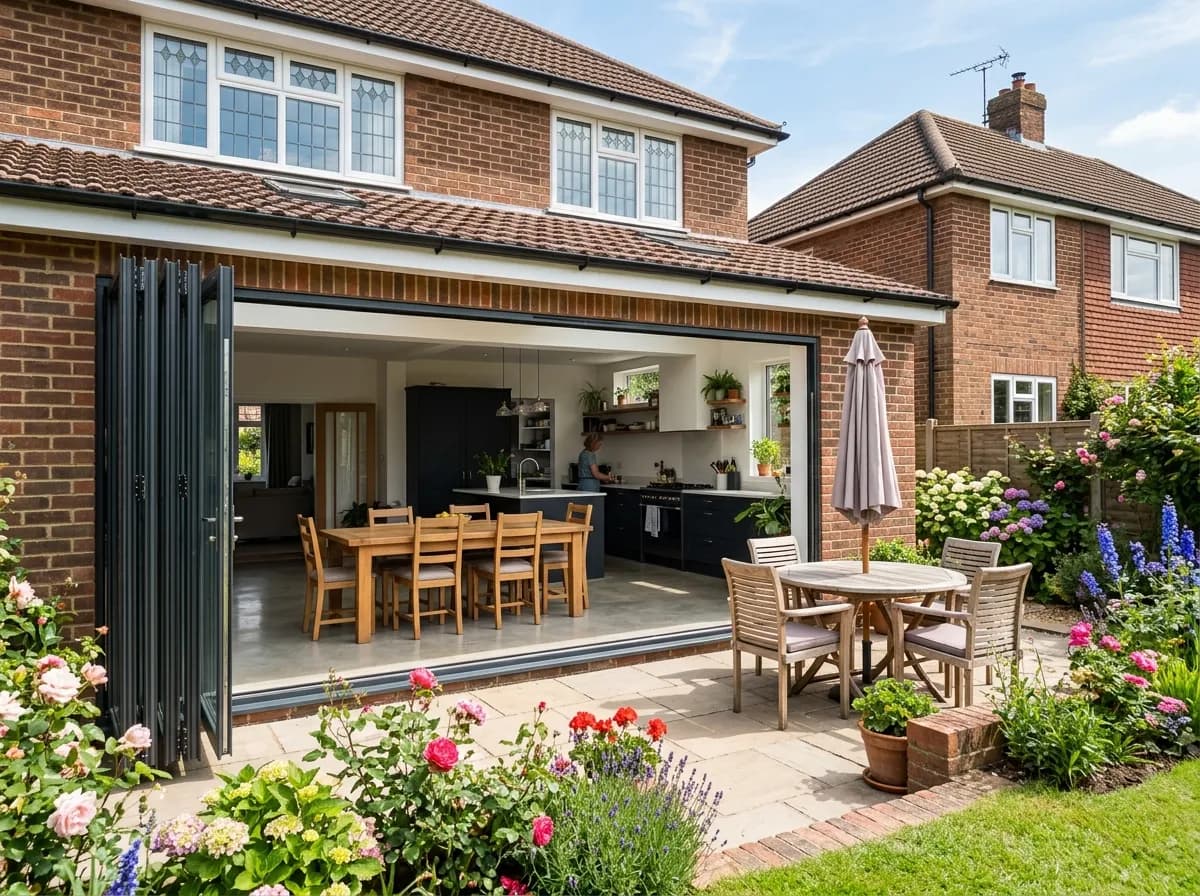
Patio doors cost £600 to £6,500 installed, depending on the type and material. French doors start from £600, sliding doors from £800, and bifolds from £2,000. Here is the full breakdown.
£600
French from
£800
Sliding from
£2,000
Bifold from
£300-£600
Installation
Prices updated April 2026 · Based on industry data and contractor submissions.
Patio Doors Cost: Full Price List
What do patio doors cost in 2026? Here is the cost of patio doors and installation, broken down by type and material. All prices include supply and professional fitting unless stated otherwise.
uPVC sliding patio door (2-panel)
Standard width, double glazed, white or grey
£1,150
£800 - £1,500
Aluminium sliding (2-panel)
Slim frames, double glazed, any RAL colour
£1,850
£1,200 - £2,500
French doors (uPVC)
Pair of hinged doors, double glazed
£900
£600 - £1,200
French doors (aluminium)
Pair of hinged doors, slim aluminium frames
£1,500
£1,000 - £2,000
Bifold doors (3-panel, uPVC)
Concertina fold, double glazed, standard colours
£2,750
£2,000 - £3,500
Bifold doors (3-panel, aluminium)
Slim frames, double glazed, any RAL colour
£4,000
£3,000 - £5,000
Bifold doors (4-panel, aluminium)
Wider opening, premium hardware
£5,250
£4,000 - £6,500
Inline slider (large format)
Lift-and-slide, premium glass, minimal frames
£3,750
£2,500 - £5,000
Installation only (no supply)
Fitting, sealing, and finishing only
£450
£300 - £600
Get Free Patio Door Quotes
Compare prices from trusted local patio door installers near you. Fill in a few details and receive up to 4 free, no-obligation quotes.
What Affects the Cost of Patio Doors and Installation?
Patio door prices vary widely. Whether you want sliding patio doors, double glazed patio doors, or bifolds, these are the main factors that determine what you will pay.
Door type
French doors are the most affordable option, starting from £600 installed. Sliding patio doors sit in the middle at £800 to £2,500. Bifold doors cost the most at £2,000 to £6,500 because of the more complex folding mechanism and additional hardware. Inline sliders (lift-and-slide) are a premium option that sits between sliders and bifolds in price.
Size and number of panels
A 2-panel sliding door is significantly cheaper than a 4 or 5-panel bifold. Every additional panel adds to the cost of glass, hardware, and fitting. Wider openings also need a longer structural lintel, which adds to the building work. Measure your opening carefully and get quotes for the specific configuration you want.
Frame material
uPVC frames cost 30% to 50% less than aluminium but are thicker, giving you less glass area. Aluminium frames are slimmer, stronger, and available in any RAL colour, but carry a premium. Timber frames are the most expensive and need regular maintenance. For most homes, the choice comes down to uPVC (budget) or aluminium (looks).
Glass specification
Standard double glazing is included in most quotes. Upgrading to triple glazing adds 15% to 25% to the price but improves thermal performance and noise reduction. Low-E coatings, argon gas filling, and toughened or laminated glass all affect the price. If your patio doors face south, consider solar control glass to prevent overheating.
Threshold type
A standard threshold costs less and provides a good weather seal. A low or flush threshold (level with the floor) costs more but improves accessibility and creates a seamless indoor-outdoor transition. Low thresholds are increasingly popular for modern designs and are required for wheelchair access under Part M of Building Regulations.
Removal and disposal of existing doors
If you are replacing existing patio doors with a like-for-like set, removal is straightforward and usually included in the fitting price. If the opening needs widening, you will need a structural engineer to specify a new lintel (£200 to £500 for the engineer, plus the cost of the lintel and building work). Disposing of old doors and any rubble may add £50 to £150.
uPVC vs Aluminium Patio Doors: Cost Comparison
A side-by-side comparison of double glazed patio doors in the two most popular materials.
| Feature | uPVC | Aluminium |
|---|---|---|
| 2-panel sliding (supplied and fitted) | £800 - £1,500 | £1,200 - £2,500 |
| French doors (supplied and fitted) | £600 - £1,200 | £1,000 - £2,000 |
| 3-panel bifold (supplied and fitted) | £2,000 - £3,500 | £3,000 - £5,000 |
| Frame width | 70-80mm (wider) | 35-55mm (slimmer) |
| Lifespan | 20-30 years | 30-45 years |
| Maintenance | Virtually none | Virtually none |
Cost of Patio Doors by Region
Average total cost of sliding patio doors and bifold doors, supplied and fitted, by UK region.
| Region | Average Cost | vs National |
|---|---|---|
| London | £4,200 | +20% |
| South East | £3,850 | +10% |
| South West | £3,600 | +3% |
| Midlands | £3,500 | Average |
| East of England | £3,600 | +3% |
| Yorkshire | £3,150 | -10% |
| North West | £3,250 | -7% |
| North East | £3,050 | -13% |
| Scotland | £3,150 | -10% |
| Wales | £3,200 | -9% |
How to Get Your Patio Doors for Less
Choose uPVC if budget is the priority
uPVC patio doors cost 30% to 50% less than aluminium and require no maintenance. A uPVC 2-panel sliding door starts from £800 installed, compared to £1,200 for aluminium. The main trade-off is thicker frames (less glass area) and fewer colour options. If you are not set on the slim contemporary look, uPVC is perfectly good and will last 20 to 30 years.
Get patio doors fitted alongside other window work
If you are replacing windows elsewhere in the house, adding patio doors to the same order can save you money. Installers offer better rates when there is more work in a single visit, and you pay one delivery charge instead of two. The saving is typically 10% to 15% compared to having the doors fitted as a separate job. Get quotes for the combined project and for the doors alone, then compare.
Consider sliding doors instead of bifolds
A 2-panel aluminium sliding door costs £1,200 to £2,500. A 3-panel aluminium bifold for the same opening costs £3,000 to £5,000. Sliding doors give you a clear view, good ventilation, and no floor space lost to opening panels. Unless you regularly need to open the entire wall (for parties, barbecues, or indoor-outdoor living), sliders are better value and have fewer mechanical parts to go wrong.
Order in autumn or winter for the best deals
Spring and summer are peak season for patio door installations - everyone wants them fitted before the warm weather. Ordering in October to February often gets you 10% to 20% off because installers are quieter. Lead times are shorter too, so you may get the doors fitted within 2 to 3 weeks instead of the 4 to 8 weeks typical in summer.
Pay your deposit on a credit card
Glazing firms usually ask for a deposit up front, and a few go under before the fitting date. Pay at least part of it on a credit card: under Section 75 of the Consumer Credit Act, the card provider is jointly liable for anything you buy costing over £100 and up to £30,000, so you can reclaim your money if the company folds or never turns up. Keep the deposit as small as the installer will accept, and never hand over a large sum in cash.
Watch out for national-firm doorstep discounts
Large national window and door companies tend to quote well above a local FENSA-registered installer for the same door, then knock off a big 'discount' if you sign that evening. The high opening figure is an anchor, not a real price, and the same deal will still be there next week. Get two or three local quotes before you sign anything, and never agree a price under time pressure on the doorstep.
Comparing quotes is the simplest way to pay less
Getting three or four quotes and comparing them is how most homeowners avoid overpaying. It takes a couple of minutes, with no obligation.
Get my free quotesWhat to Expect: The Installation Process
A patio door replacement is a straightforward job for an experienced installer. Here is how the process typically works.
- 1
Site survey and measurement
The installer visits to measure the opening precisely, check for any structural issues, and confirm the door specification. They assess whether the existing lintel is adequate for the new doors - important if you are widening the opening or switching to heavier bifolds. This visit is usually free and takes 30 to 60 minutes.
- 2
Remove existing doors
On installation day, the old doors and frame are carefully removed. The opening is squared off and cleaned, and any damaged brickwork is repaired. This is the messiest part of the job, so cover nearby flooring and furniture.
- 3
Prepare structural opening
If the opening needs widening, a structural engineer specifies a new lintel. The opening is prepared to the correct dimensions for the new frame. Any brickwork or blockwork is made good. For a like-for-like replacement, this stage is minimal.
- 4
Install new frame and doors
The new frame is positioned, levelled, and secured to the brickwork with fixings. The door panels are hung and adjusted until they open, close, and lock smoothly. For bifolds, each panel is aligned so the concertina action works cleanly.
- 5
Seal weatherproof and adjust
The gap between the frame and brickwork is sealed with expanding foam and finished with silicone or trim. Internal and external trims are fitted, any making good to plasterwork or sills is completed, and the installer checks the weatherseal, drainage, and locking mechanisms. You receive the FENSA certificate (or confirmation it is being processed). A straightforward replacement takes 4 to 6 hours; structural work takes 2 to 3 days.
Frequently Asked Questions
How much do patio doors cost to install?
Patio doors cost £600 to £6,500 installed, depending on the type and material. uPVC sliding patio doors start from £800. Aluminium sliding doors cost £1,200 to £2,500. French doors in uPVC cost £600 to £1,200. Bifold doors are the most expensive - a 3-panel uPVC bifold costs £2,000 to £3,500, and a 3-panel aluminium bifold costs £3,000 to £5,000. A 4-panel aluminium bifold can reach £6,500. Installation adds £300 to £600 on top if not included in the supply price.
Are bifold doors worth the extra cost?
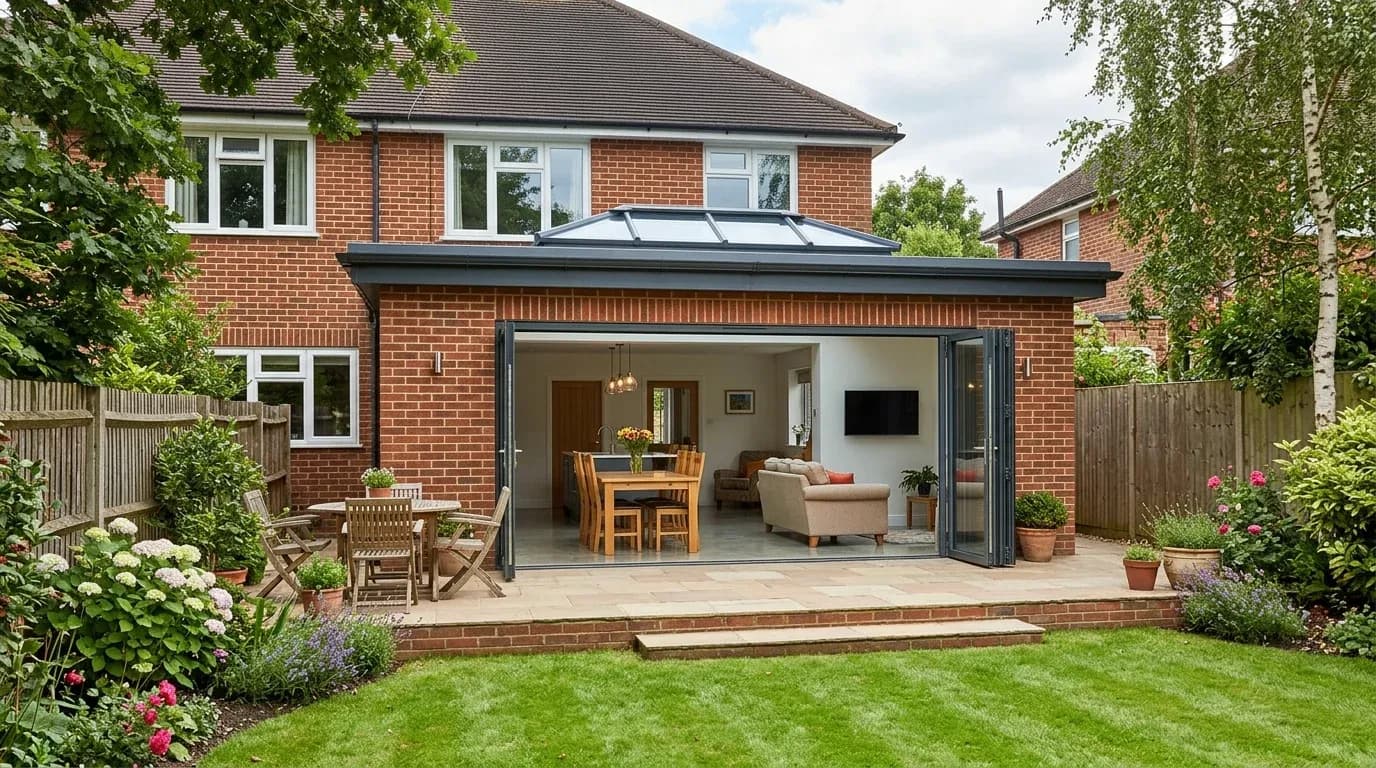
Bifold doors cost roughly double the price of standard sliding patio doors, but they open up almost the entire wall width. For a kitchen-diner that leads onto a garden or patio, they transform the space and are popular with buyers when you come to sell. If you rarely open the doors fully and just want a view and some ventilation, standard sliding doors give you 90% of the benefit at half the cost. Bifolds are worth it if you genuinely use the full opening regularly - for entertaining, barbecues, or bringing the garden into the room.
Do I need a FENSA certificate for patio doors?
Yes. Replacing patio doors counts as replacement glazing, which must comply with Building Regulations Part L. A FENSA-registered installer self-certifies the work and issues a certificate at no extra cost. If your installer is not FENSA registered, you need to arrange a Building Regulations inspection through your local council, which costs £200 to £400. You will need the FENSA certificate (or Building Regs sign-off) when you sell your property - solicitors check for it during conveyancing.
How long does it take to fit patio doors?
A straightforward replacement of existing patio doors with a like-for-like set takes 4 to 6 hours for one installer or a small team. If the opening needs widening or a structural lintel needs fitting (common when upgrading from a window to patio doors, or from a standard patio door to wider bifolds), the work takes 2 to 3 days. This includes removal, structural work, fitting, sealing, and finishing. Your fitter should leave you weathertight by the end of each working day.
What size patio doors can I get without planning permission?
You do not need planning permission to replace existing patio doors with new ones of the same size, or to install new patio doors in an existing opening. If you are creating a new opening in a wall, you generally do not need planning permission either, provided the work does not affect a party wall, is not on a listed building, and does not change the front elevation in a conservation area. However, you will always need Building Regulations approval for any structural changes (removing sections of wall, adding lintels). Your installer or a structural engineer can advise.

Written by Chris Kervin, Co-Founder of Less.co.uk
Last updated: April 2026 · Pricing based on industry data and verified contractor submissions · Methodology
FENSA Certification
FENSA certification required. All replacement glazing work in England and Wales must be either carried out by a FENSA-registered installer (who self-certifies) or separately approved by your local Building Control. Without certification, you may have difficulty selling your property. Always confirm your installer is FENSA-registered before work begins.