Resin Driveways: Are They Worth It?
Resin driveways have gone from niche to mainstream in just a few years. They look sharp, they're permeable, and installers will tell you they last for decades. But are they actually worth the money? Here's what nobody tells you.

Chris Kervin
Written by Chris Kervin, Co-Founder of Less.co.uk
The short answer
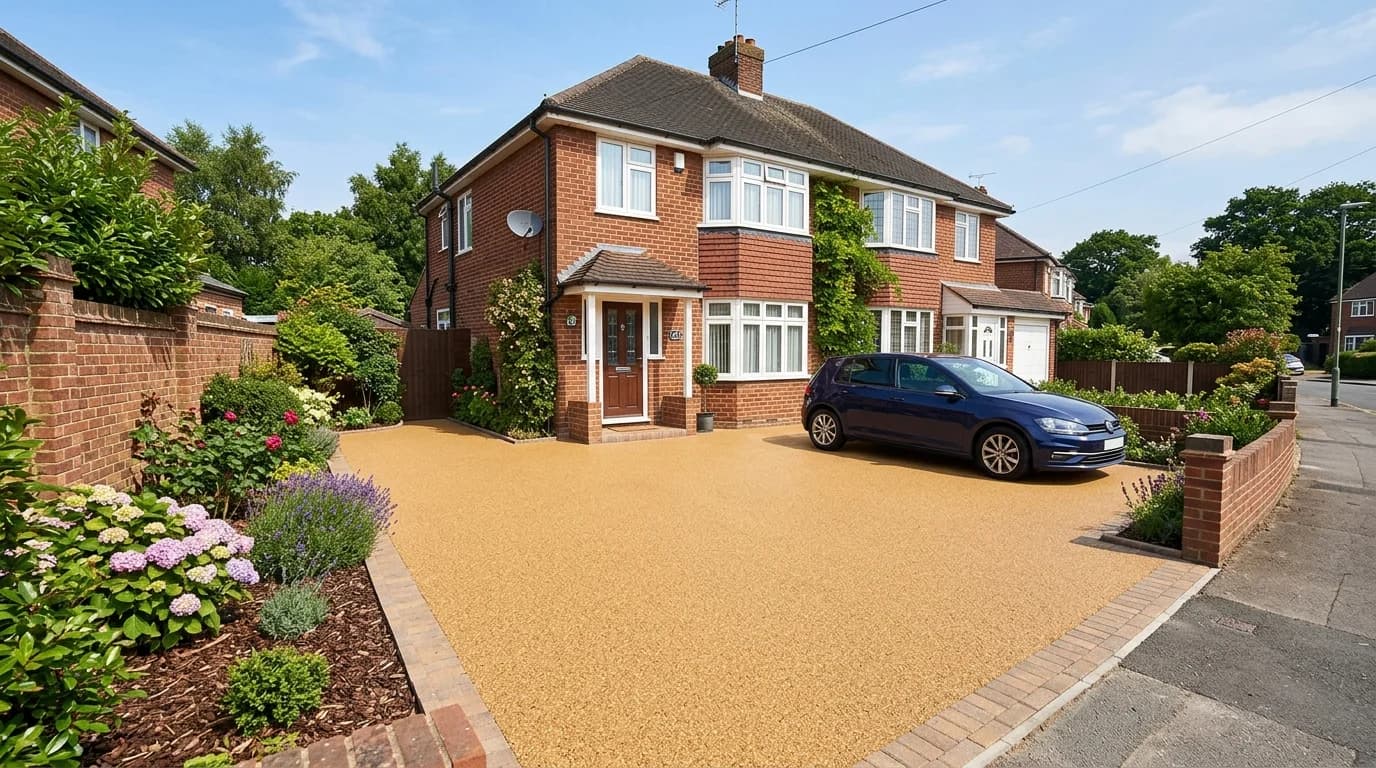
Resin-bound driveways are worth it for most homeowners - they look good, drain properly (no planning permission needed), and require very little maintenance. The main caveat: they're only as good as the installer. A cheap job on a poor sub-base will crack and fail within a few years. Spend the money on preparation, not just the surface.
First things first: resin-bound vs resin-bonded
This is the single most important thing to understand about resin driveways, and it's where a lot of confusion starts.
Resin-bound means the stones (aggregate) are mixed with resin before being trowelled onto the surface. Every stone is coated and bonded together, creating a smooth, porous surface that water drains straight through. The Paving Expert guide covers the technical differences in detail. This is what you want for a driveway.
Resin-bondedmeans resin is spread onto an existing surface and loose stones are scattered on top, like icing sugar on a cake. It looks similar at first, but it's not permeable, the stones can come loose over time, and it won't last as long. Some cheaper installers push resin-bonded because it's quicker and uses less material.
For the rest of this article, we're talking about resin-bound driveways - the proper version.
The honest pros
- Fully permeable - rainwater drains straight through the surface, so you don't need planning permission and you're not contributing to surface water flooding. This is a genuine environmental benefit.
- Low maintenance - no weeding between joints (like block paving), no resealing every few years (like tarmac), no topping up (like gravel). An occasional brush or gentle wash is all it needs.
- Looks sharp - the range of aggregate colours and blends means you can match almost any property style. It looks clean and modern, and stays that way for years.
- Smooth, flat surface - no loose stones to kick about, no uneven blocks to trip on, no puddles forming in low spots. Wheelchair and pushchair-friendly too.
- Quick installation - a standard driveway can be laid in 1 to 2 days once the sub-base is prepared. You're usually driving on it within 24 hours.
- UV-stable (if you choose the right resin) - quality UV-resistant resins won't yellow or discolour in sunlight. Always check this with your installer.
The honest cons
- Totally dependent on the sub-base - if the ground underneath moves, cracks, or isn't properly compacted, the resin surface will crack too. The surface layer is only 15 to 18mm thick; it can't hide problems underneath.
- Not a DIY job - unlike gravel or even basic block paving, resin must be mixed and laid by someone who knows what they're doing. The resin cures quickly, so there's no room for hesitation. A bad install is obvious and expensive to fix.
- Staining - oil, fuel, and some chemicals can stain resin surfaces. Most stains can be cleaned if dealt with quickly, but old oil stains may be permanent.
- Repairs can be tricky - if a section cracks or gets damaged, patching is possible but the repair may be visible. A colour match on the aggregate isn't always perfect, especially after the rest of the surface has weathered.
- Not the cheapest option - resin-bound costs more per m² than tarmac or gravel. If budget is the main priority, there are cheaper ways to surface a driveway.
- Can soften in extreme heat - on very hot days (30°C+), some resin surfaces can become slightly soft. This is rare in the UK, but worth knowing about if you live in a south-facing spot.
Resin vs block paving vs tarmac vs gravel
How does resin stack up against the main alternatives? Here's a side-by-side comparison.
| Feature | Resin-bound | Block paving | Tarmac | Gravel |
|---|---|---|---|---|
| Cost per m² | £40 to £70 | £50 to £100 | £25 to £50 | £15 to £30 |
| Lifespan | 15 to 25 years | 20 to 30 years | 15 to 20 years | 10 to 15 years |
| Maintenance | Very low | Low-medium | Low | Medium-high |
| Permeable | Yes (bound) | Depends on jointing | No | Yes |
| Weed growth | Minimal | Can be an issue | Edges only | Frequent |
| Planning permission | Not needed (if bound) | May be needed | Usually needed | Not needed |
| Appearance | Modern, smooth | Traditional | Basic | Rustic |
| DIY-friendly | No | Possible | No | Yes |
The drainage question
Since 2008, if you're paving over more than 5m² of your front garden, the surface must either be permeable or drain to a permeable area (like a lawn or border). If it doesn't, you need planning permission from your local council.
This rule exists because impermeable driveways contribute to surface water flooding - a growing problem in many UK towns and cities, as highlighted by the Susdrain sustainable drainage initiative. Rain that used to soak into front gardens now runs straight into the road and overwhelms the drainage system.
Resin-bound driveways are inherently permeable, which is one of their biggest selling points. Water drains through the surface into the sub-base below, and from there into the ground. No planning permission required, no separate drainage to install, and you're doing your bit for flood prevention.
How to avoid a bad resin driveway
The complaints you see online about resin driveways almost always come down to poor installation. Here's how to protect yourself:
- Check the sub-base plan. Any reputable installer will survey the existing ground and explain what preparation is needed. If they say they can lay resin straight over your cracked concrete without any prep, walk away.
- Ask for resin-bound, not resin-bonded. Make sure it's specified in the quote. If an installer can't explain the difference, find someone else.
- Check the resin brand. Quality resins (like those from Vuba, Clearstone, or SureSet) come with UV stability and performance guarantees. Ask what brand they use.
- Ask for a minimum 18mm depth. Some cheaper installers lay at 12mm, which is too thin for a driveway that takes regular vehicle traffic.
- Get a written guarantee. Most good installers offer 10 to 15 years on the surface, sometimes with separate guarantees on the sub-base work.
- Look at their previous work. Ask for addresses of recent jobs you can drive past and see for yourself. Photos on a website aren't enough.
Frequently asked questions
How long does a resin driveway last?
A properly installed resin-bound driveway should last 15 to 25 years with minimal maintenance. The key factors are the quality of the resin, the depth of the aggregate layer (at least 15 to 18mm), and the condition of the sub-base underneath. Resin-bonded surfaces tend to have a shorter lifespan of 8 to 12 years, as the loose stones can detach over time.
Do resin driveways need planning permission?
If your resin driveway is permeable (resin-bound surfaces are), you don't need planning permission - even if it's at the front of your house. This is because permeable surfaces comply with the rules introduced in 2008 to manage surface water drainage. Resin-bonded driveways are not permeable, so they would need planning permission for an area over 5m² at the front of a property, unless the water drains to a lawn or border rather than the road.
What is the difference between resin-bound and resin-bonded?
Resin-bound driveways mix the aggregate (stones) with resin before laying, creating a smooth, permeable surface. Resin-bonded driveways spread resin onto an existing surface, then scatter loose stones on top - creating a textured, non-permeable finish that can shed stones over time. Resin-bound is the better option for driveways in almost every way: it's more durable, permeable, smoother to walk on, and doesn't require planning permission.
Can you power wash a resin driveway?
Yes, but carefully. Use a low-pressure setting (no more than 120 bar) and keep the nozzle at least 30cm from the surface. High-pressure washing can dislodge the aggregate or damage the resin bond. For routine cleaning, a stiff brush and warm soapy water are usually enough. Most resin driveway installers recommend a gentle clean once or twice a year.
How much does a resin driveway cost?
A resin-bound driveway typically costs £40 to £70 per m² for the surface layer, on top of sub-base preparation. For a standard 40m² driveway, expect to pay £2,500 to £4,500 all in, depending on the existing base condition and the aggregate you choose. If the existing sub-base needs replacing, costs can rise to £4,000 to £6,000.
Compare driveway costs
See a full breakdown of driveway costs by material, size, and region - including resin, block paving, tarmac, and gravel.
Related articles
How to Find a Good Contractor
Practical guide to finding reliable UK tradespeople.
Building Regs for Internal Works
Which projects need Building Regulations approval?
Full House Renovation Cost
Room-by-room cost breakdown for a typical UK home.
Loft Conversion Under £30k
What you actually get at each budget level.