What Does a Full House Renovation Cost in the UK?
A full house renovation in the UK costs between £30,000 and £80,000 for a typical 3-bed semi in 2026, depending on the spec level. A basic refresh sits at the lower end; add structural work or premium materials and you're at the higher end. Here's the complete room-by-room breakdown.

Chris Kervin
Written by Chris Kervin, Co-Founder of Less.co.uk
The short answer
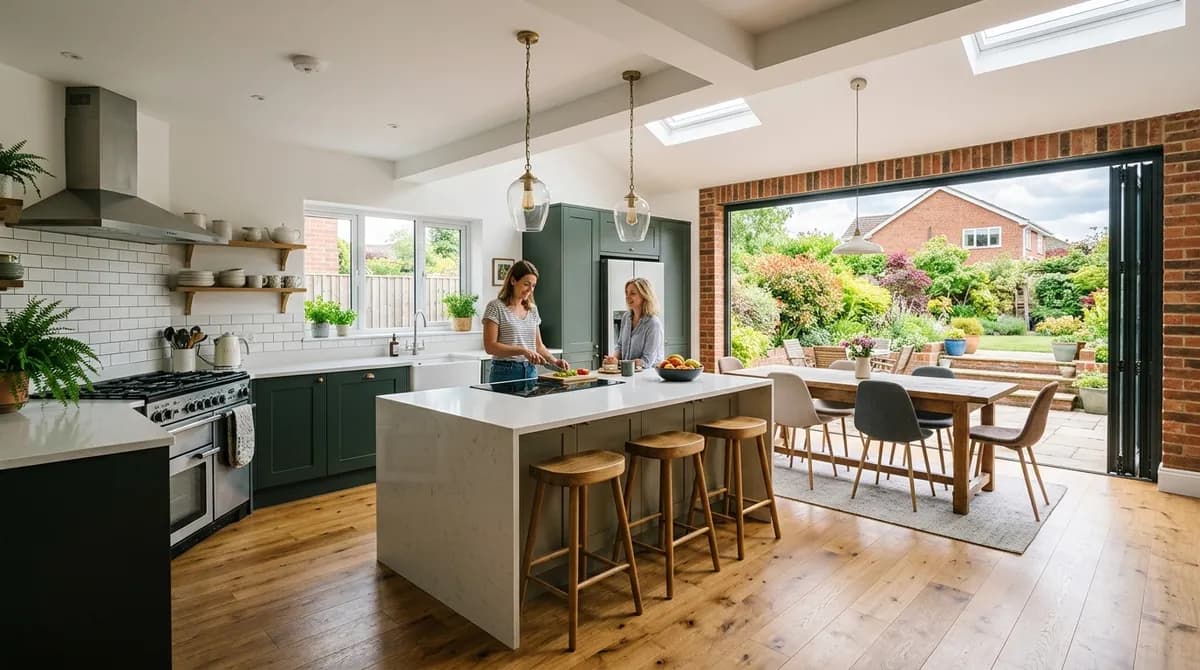
A full renovation of a typical 3-bed semi costs £30,000 to £80,000 depending on the spec. A basic refresh (new kitchen, bathroom, boiler, rewire, decoration) sits at the lower end. Add structural work, premium materials, or an extension and you're at the higher end. London and the South East are 20 to 40% more expensive than the national average.
Full house renovation cost breakdown by room
The best way to estimate a full renovation is to break it down by job. Here's what each element typically costs for a standard 3-bedroom semi-detached house in 2026, at three different specification levels.
| Item | Basic | Mid-range | High-spec |
|---|---|---|---|
| Kitchen (mid-range) | £6,000 | £12,000 | £20,000+ |
| Bathroom (full refit) | £3,000 | £6,000 | £12,000+ |
| Boiler replacement | £2,500 | £3,500 | £5,000+ |
| Full rewire (3-bed) | £3,000 | £4,500 | £6,000 |
| Central heating (full system) | £3,000 | £5,000 | £8,000 |
| Replastering (whole house) | £2,500 | £4,000 | £6,000 |
| New windows (full set) | £3,500 | £6,000 | £10,000+ |
| Flooring (whole house) | £2,000 | £4,000 | £8,000+ |
| Decoration (whole house) | £1,500 | £3,000 | £6,000 |
| External work (roof, fascias, guttering) | £2,000 | £4,000 | £8,000 |
| Contingency (10 to 15%) | £3,000 | £5,000 | £9,000 |
| Total estimate | £32,000 | £57,000 | £98,000+ |
These figures don't include extensions, loft conversions, or major structural work - those are separate projects that can add £20,000 to £60,000+ on top.
Get a personalised cost estimate in under 2 minutes
What "basic", "mid-range", and "high-spec" actually mean
These terms get thrown around a lot, so let's be specific about what you're getting at each level.
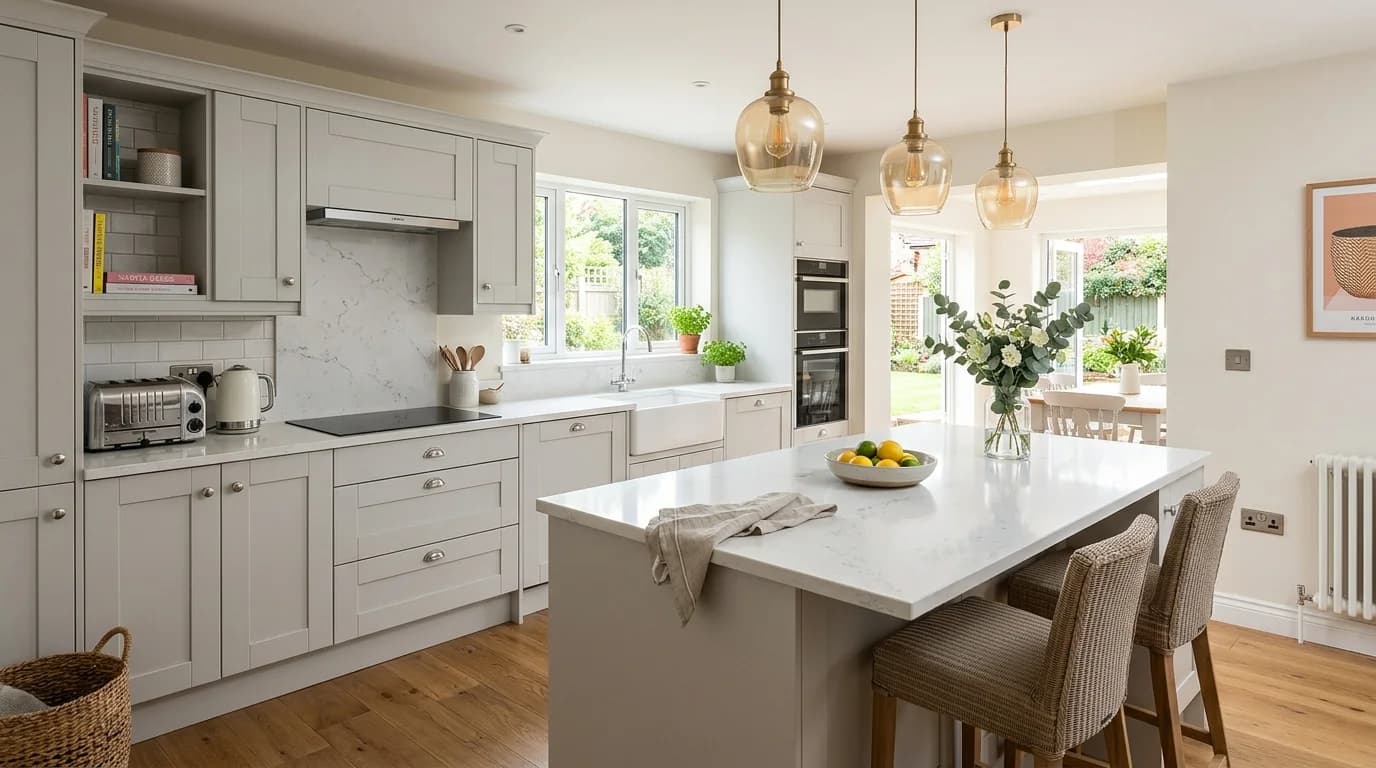
Basic (£30,000 to £45,000)means functional, clean, and modern - but nothing fancy. Think Howdens kitchen with laminate worktops, a standard white bathroom suite from a trade supplier, budget radiators, standard double-glazed windows, and trade-quality paint throughout. Everything works, everything looks decent, but nobody's going to feature it in a magazine.
Mid-range (£45,000 to £65,000) steps things up. A kitchen with quartz or solid timber worktops, soft-close drawers, and integrated appliances. A bathroom with a walk-in shower, wall-hung vanity, and better tiles. Higher-quality flooring (engineered wood instead of laminate). A combi boiler from a premium brand. The sort of finish that feels properly nice to live in.
High-spec (£65,000 to £80,000+) is where you start making design choices. Bespoke or German kitchen, underfloor heating, luxury bathroom with freestanding bath, Crittall-style windows, bespoke joinery, and premium materials throughout. At this level, you're probably working with a designer or architect. The Royal Institution of Chartered Surveyors (RICS) can help you find a qualified professional to manage the project.
What order should you renovate a house in?
Getting the sequence wrong is one of the most expensive mistakes in a renovation. Here's the order most experienced builders follow, and why.
1. Structural work
Knock through walls, install steels, shore up foundations. You can't plaster over structural problems, so do this first.
2. Roof and external work
Fix the roof, replace fascias and guttering, deal with any damp. The building needs to be watertight before interior work begins.
3. Windows and doors
New windows go in before plastering, so the plaster can finish neatly around the new frames.
4. First-fix electrics and plumbing
This means running cables and pipes through walls and floors before they're covered up. The electrician and plumber need bare walls to work with.
5. Plastering
Once all the cables and pipes are in place, the plasterer can cover everything with a smooth finish. This is one of the messiest jobs - you don't want it happening after new flooring is down.
6. Second-fix electrics and plumbing
Fitting sockets, switches, light fittings, taps, and sanitaryware onto the freshly plastered walls.
7. Kitchen fitting
The kitchen goes in after plastering and second-fix, but before final decoration.
8. Bathroom fitting
Tiling, sanitaryware, screens, accessories. Same stage as the kitchen.
9. Flooring
Almost last. You don't want tradespeople tramping over new floors.
10. Decoration
Painting, wallpapering, and final touches. The very last job, when everything else is finished.
Phasing the work to spread the cost
Not everyone has £50,000 sitting in a savings account. If you need to spread the cost, here's a sensible way to phase a whole-house renovation:
Phase 1: The essentials (£15,000 to £25,000). Rewire, new boiler, central heating, and any urgent structural or damp work. These are the things that affect safety and the fundamental functioning of the house. Get them done first, even if everything still looks shabby.
Phase 2: Kitchen and bathroom (£10,000 to £25,000).These are the rooms you use most and the ones that make the biggest difference to daily life. They're also the rooms that add the most value if you're planning to sell.
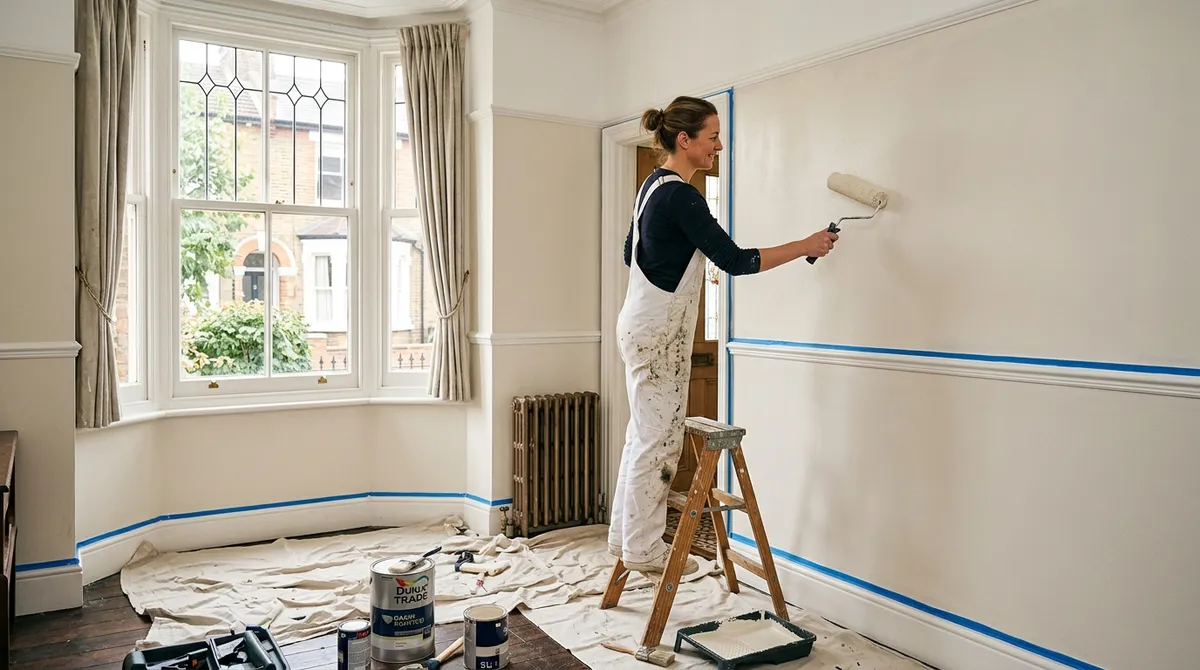
Phase 3: Cosmetics (£5,000 to £15,000). Plastering, flooring, decoration, and any remaining updates. This is the phase you can spread over months, doing room by room, even doing some of the work yourself. Use our painting cost calculator to estimate what the decorating will run to, and try the budget explorer to see how far your money will stretch across the whole project.
The advantage of phasing is that you can live in the house while the work happens (just about). The disadvantage is that it takes longer and you lose some efficiency - trades mobilising multiple times, protective sheeting going up and down. Budget 10 to 15% more for a phased renovation compared to doing everything in one go.
Regional price differences
Labour costs vary significantly across the UK. The same renovation in London can cost 20 to 30% more than in the North of England. Here's a rough guide to regional multipliers (taking the Midlands as 1.0):
London
1.20 to 1.30x
South East
1.10 to 1.20x
South West
1.00 to 1.10x
Midlands
0.95 to 1.05x
North West
0.90 to 1.00x
North East
0.85 to 0.95x
Yorkshire
0.90 to 1.00x
Wales
0.85 to 0.95x
Scotland
0.90 to 1.00x
Hidden renovation costs people forget to budget for
Every renovation has costs that aren't on the builder's quote. Budget for these separately:
- Skip hire - a full renovation generates a lot of waste. Budget £250 to £400 per skip, and you'll likely need 3 to 6 skips for a whole-house job.
- Building Regulations fees - if you're doing structural work, electrical work, or changing the heating system, expect £200 to £600 in Building Control fees.
- Temporary accommodation - if the house is uninhabitable during major work, factor in the cost of staying elsewhere. Even a few weeks in a rental can cost £1,000 to £3,000.
- Storage - if you need to clear rooms for work, a storage unit costs £80 to £150 per month.
- Surveys and professional fees - structural engineer (£300 to £500), architect (£2,000 to £5,000), or party wall surveyor (£700 to £1,500 per neighbour) if needed. You can find a chartered surveyor through RICS at rics.org.
- Furnishings - a newly renovated house often makes your existing furniture look tired. People regularly spend £2,000 to £5,000 on new furniture after a renovation, even when they hadn't planned to.
The contingency question
Every renovation guide tells you to add a contingency. The standard advice is 10 to 15% of the total budget. Is that really necessary?
In a word: yes. Older houses especially have a habit of revealing problems once walls come off and floors come up. Rotten joists, asbestos in old artex, hidden damp, dodgy wiring that needs replacing instead of just extending - these are all common discoveries in a renovation. The Federation of Master Builders advises setting aside a contingency fund for every renovation project.
On a £50,000 renovation, a 10% contingency is £5,000. That might feel like a lot to set aside, but it's better than running out of money halfway through the kitchen installation. If you don't use it, brilliant - you've got £5,000 to spend on furniture, or to put back in savings.
Frequently asked questions
How much does it cost to fully renovate a 3-bed semi in the UK?
A full renovation of a typical 3-bed semi-detached house costs between £30,000 and £80,000, depending on the specification and your location. A basic renovation (new kitchen, bathroom, boiler, rewire, replastering, and decoration) comes in at £30,000 to £45,000. A mid-range renovation with better materials and some structural changes costs £45,000 to £65,000. A high-spec renovation with premium finishes, extensions, or loft conversions can exceed £80,000.
What order should you renovate a house in?
The general rule is: work from the outside in, and from the top down. Start with structural work and the roof, then windows, then first-fix electrics and plumbing, then plastering, then second-fix (sockets, lights, taps), then kitchen and bathroom fitting, then flooring and decoration. Getting the order wrong means trades working over each other and finished surfaces getting damaged.
Is it cheaper to renovate or move house?
For most people, renovating is significantly cheaper than moving. The costs of selling and buying (estate agent fees, stamp duty, solicitors, surveys, removal costs) typically add up to £15,000 to £40,000 depending on property values. That money pays for a substantial renovation. Moving only makes financial sense if you need to relocate to a different area, or if your property is fundamentally unsuitable for your needs (e.g., you need a bigger garden or an extra bedroom that can't be added).
Do I need an architect for a full house renovation?
Not always. If you're doing cosmetic work, replacing a kitchen and bathroom, and updating electrics and plumbing, you don't need an architect. If you're making structural changes (removing walls, adding an extension, converting a loft), an architect or architectural technologist is worth the investment. They typically charge 5 to 10% of the build cost, or a fixed fee of £2,000 to £5,000 for domestic projects. They'll produce drawings for Building Regulations and help you avoid expensive mistakes.
Get detailed costs for each part of your renovation
We have individual cost guides for every major home improvement, with regional breakdowns and money-saving tips.