Is Underfloor Heating Worth It? Costs vs Benefits
Underfloor heating sounds luxurious. Warm tiles on a cold morning, no radiators cluttering your walls, even heat distribution across the room. But is it worth the cost, or is it one of those nice-to-haves that doesn't make financial sense? We've done the sums.

Chris Kervin
Written by Chris Kervin, Co-Founder of Less.co.uk
The short answer
Wet underfloor heating in a new build or major renovation? Absolutely worth it, it's efficient, comfortable, and adds value. Electric UFH in a single bathroom or kitchen? A nice luxury at a reasonable cost. Retrofitting wet UFH throughout an existing house? Probably not worth the disruption unless you're gutting the place anyway.
Electric vs wet: two very different things
Before we talk costs, it's important to understand that “underfloor heating” covers two completely different systems. They share a name, but they work differently, cost differently, and suit different situations.
Electric underfloor heatinguses thin heating mats or cables laid under the floor. It's cheap to install (£50 to £100 per m²), easy to retrofit, and ideal for individual rooms like bathrooms and kitchens. But it runs on electricity at 24.5p per kWh, so it's expensive to use as your main heating.
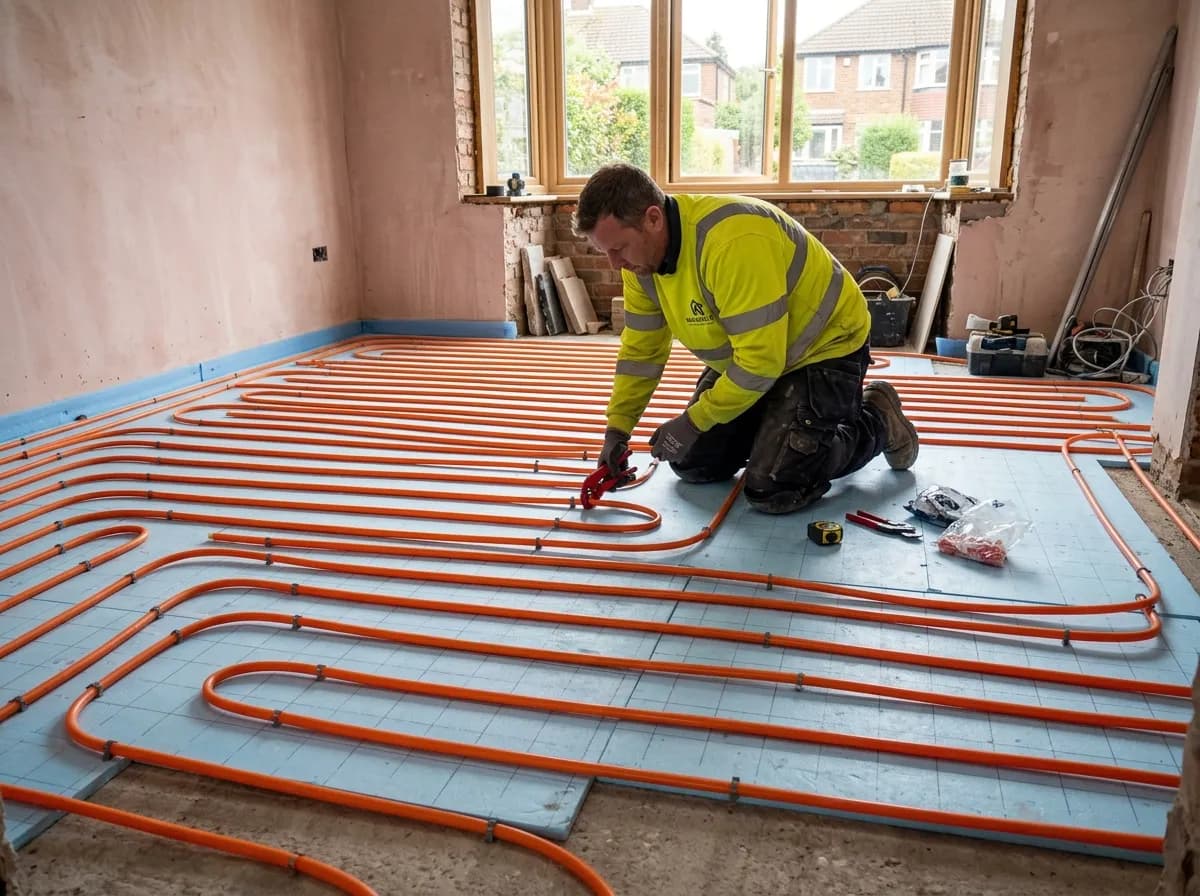
Wet underfloor heating (also called hydronic) uses warm water flowing through pipes embedded in or under the floor. It's more expensive to install (£80 to £150 per m²) and much harder to retrofit, but it's connected to your boiler or heat pump, so running costs are the same as radiators, or lower. If you're considering pairing it with a heat pump, the Boiler Upgrade Scheme offers £7,500 towards installation.
Installation costs
| System type | Cost per m² | Typical bathroom (5m²) | Whole house (80m²) |
|---|---|---|---|
| Electric mat (retrofit) | £50 to £100 | £250 to £500 | £4,000 to £8,000 |
| Electric cable (retrofit) | £40 to £80 | £200 to £400 | £3,200 to £6,400 |
| Wet UFH (new build) | £80 to £120 | £400 to £600 | £6,400 to £9,600 |
| Wet UFH (retrofit) | £120 to £200 | £600 to £1,000 | £9,600 to £16,000 |
Prices include installation and materials but exclude floor coverings and screed. Wet UFH retrofit assumes floor needs lifting. New build assumes screeded floor.
Running costs: where the real savings are
This is where wet underfloor heating really earns its keep. Because UFH runs at lower water temperatures than radiators (35 to 45°C versus 55 to 75°C), your boiler or heat pump works more efficiently. For a typical 3-bed semi:
| Heating system | Annual cost with radiators | Annual cost with wet UFH |
|---|---|---|
| Gas boiler | £850 to £1,100 | £750 to £950 |
| Air source heat pump | £700 to £1,000 | £500 to £750 |
| Ground source heat pump | £600 to £850 | £400 to £650 |
Based on a 3-bed semi with 12,000 kWh annual heating demand. Energy prices based on the Ofgem price cap: gas at 6.8p/kWh, electricity at 24.5p/kWh. Heat pump COPs assume UFH's lower flow temperatures improve efficiency by 15 to 25%.
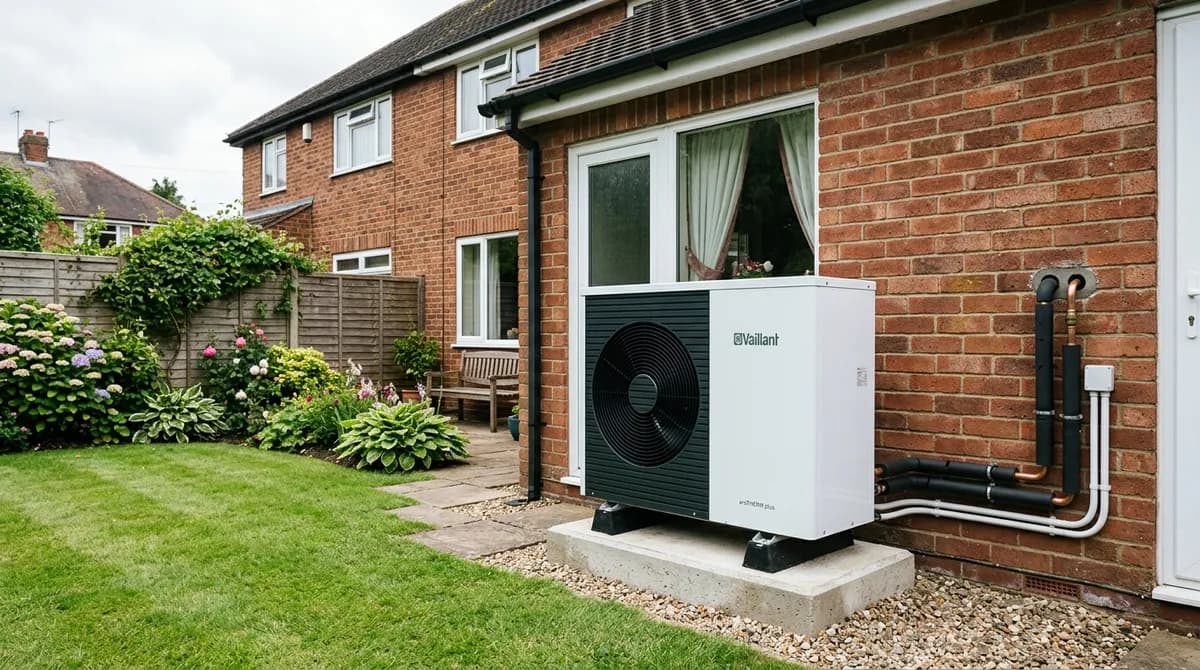
The savings are modest with a gas boiler, about £100 to £150 per year. But with a heat pump, the difference is more significant: £200 to £350 per year. That's because heat pumps are much more efficient at the low temperatures UFH uses, as the Energy Saving Trustexplains in their guide. It's one of the reasons heating engineers always recommend UFH when fitting a heat pump.
See how UFH improves heat pump efficiency for your home
When underfloor heating makes sense
- New builds. This is where UFH is a no-brainer. It's cheap to install during construction (the pipes go in before the screed is poured), and it pairs perfectly with a heat pump. Most new-build developers now offer it as standard on the ground floor.
- Major renovations. If you're stripping a room back to the joists or pouring a new floor, adding UFH at the same time is cost-effective. The marginal cost is much lower when the floor is already up.
- Extensions. Building an extension? Put UFH in from the start. It's the ideal heating solution for open-plan kitchen-diners where radiators would break up the wall space.
- Bathrooms and en-suites. Electric UFH under tiles costs £250-£500 for a typical bathroom and transforms the room. Warm tiles on a winter morning are a genuine quality-of-life upgrade.
- Pairing with a heat pump. If you're installing a heat pump, UFH should be top of your list. The lower flow temperatures make the heat pump significantly more efficient, saving you money every year.
When it probably isn't worth it
- Retrofitting through an existing house without other renovation work. The cost of lifting every floor, installing pipes, pouring screed, and relaying flooring is enormous - £15,000-£20,000+ for a whole house. That's hard to justify on running cost savings alone.
- Rooms with thick carpet. Carpet and underlay act as insulators, blocking heat from reaching the room. If you want carpet, you'd need a thin, low-tog option - and even then, efficiency drops.
- If you're selling soon. You won't recoup the installation cost on a sale unless it's a whole-house wet system in a premium property. Electric UFH in a bathroom won't move the needle on asking price.
- Period properties with suspended timber floors. Fitting UFH under old floorboards without raising the floor level is tricky and expensive. It can be done with low-profile systems, but they're less efficient.
Property value impact
Estate agents consistently rate whole-house wet underfloor heating as a premium selling feature. In a competitive market, it can add 3 to 5% to your asking price, which on a £300,000 home is £9,000 to £15,000. That more than covers the installation cost if you fit it during a build or renovation.
The value comes from two things: the comfort factor (buyers love the idea of warm floors) and the freed-up wall space. Without radiators, rooms feel bigger and you have complete freedom with furniture placement. Open-plan living spaces benefit the most.
Electric UFH in a single bathroom doesn't meaningfully affect property value, but it does make the room more appealing during viewings. A warm bathroom floor is the kind of detail that sticks in a buyer's mind.
Our verdict
If you're building or doing a major renovation, wet underfloor heating is one of the best investments you can make. The install cost is reasonable when the floor is already being worked on, the running cost savings are real (especially with a heat pump), and it adds genuine value to your home.
For a quick upgrade to your bathroom or kitchen, electric UFH is a small luxury that's absolutely worth the £250 to £500 investment. You'll notice the difference every single morning.
What we wouldn't recommend: ripping up perfectly good floors throughout your house purely to install UFH. The disruption and cost don't stack up unless you're renovating anyway. Save it for when you're already doing the work.
Frequently asked questions
Is underfloor heating expensive to run?
It depends on the type. Wet (water-based) underfloor heating is very efficient and costs roughly the same or less than radiators to run - around £600-£900 per year for a whole 3-bed house when connected to a gas boiler or heat pump. Electric underfloor heating is more expensive to run because electricity costs about 3.5 times more than gas per kWh. Running electric UFH in a single bathroom costs about £30-£50 per year, but heating a whole house electrically would be very expensive.
Can underfloor heating be fitted in an existing house?
Yes, but it's more disruptive and expensive than fitting it in a new build. Electric mat systems can be laid directly over an existing solid floor and tiled over, adding only 3-5mm of height. Wet systems in existing houses usually require the floor to be dug up or built up by 50-75mm, which affects door heights and step levels. The most cost-effective approach is to fit UFH when you're already renovating a room and lifting the floor.
Does underfloor heating work with all floor types?
Most floor types work, but some are better than others. Stone, ceramic tiles, and porcelain are ideal - they conduct heat well and feel warm underfoot. Engineered wood works well too. Solid hardwood can dry out and warp over time with UFH, so check with the manufacturer. Laminate is fine if it's rated for UFH use. Thick carpet and underlay act as insulators and reduce efficiency significantly - if you want carpet, use a thin, low-tog option.
Does underfloor heating add value to a house?
Whole-house wet underfloor heating is considered a premium feature and can add 3-5% to property value according to estate agents. It's particularly valued in open-plan living spaces and kitchens where radiators would otherwise take up wall space. Electric UFH in a single bathroom doesn't add measurable value, but it does make the room more attractive to buyers. The real value is in the combination of comfort and freed-up wall space.
Is underfloor heating better with a heat pump?
Yes, it's an excellent combination. Heat pumps work most efficiently at low flow temperatures (35-45°C), which is exactly what underfloor heating needs. Radiators typically need 55-75°C water, which forces the heat pump to work harder and reduces its efficiency. A heat pump paired with UFH can achieve a COP of 3.5-4.0, compared to 2.5-3.0 with radiators. If you're installing a heat pump, underfloor heating is the ideal distribution system.
Planning underfloor heating?
Check our detailed cost guides for underfloor heating and related projects.
Related articles
Heat Pump vs Gas Boiler: Honest Comparison
Detailed 10-year cost comparison for UK homeowners.
Cheapest Ways to Heat Your Home
Every heating system compared on running costs.
Building Regulations for a Bathroom
When you need approval and when you don't.
How to Find a Good Contractor
Practical guide to finding and vetting UK tradespeople.