Heat Pumps: Types, Grants & How to Choose 2026
This guide walks you through the different types of heat pump, how they actually work, whether one suits your home, and how to find a good MCS-certified installer. The £7,500 Boiler Upgrade Scheme grant can bring an air source system down to around £2,500 out of pocket, with running costs on a par with gas. For full prices, see our heat pump cost guide.
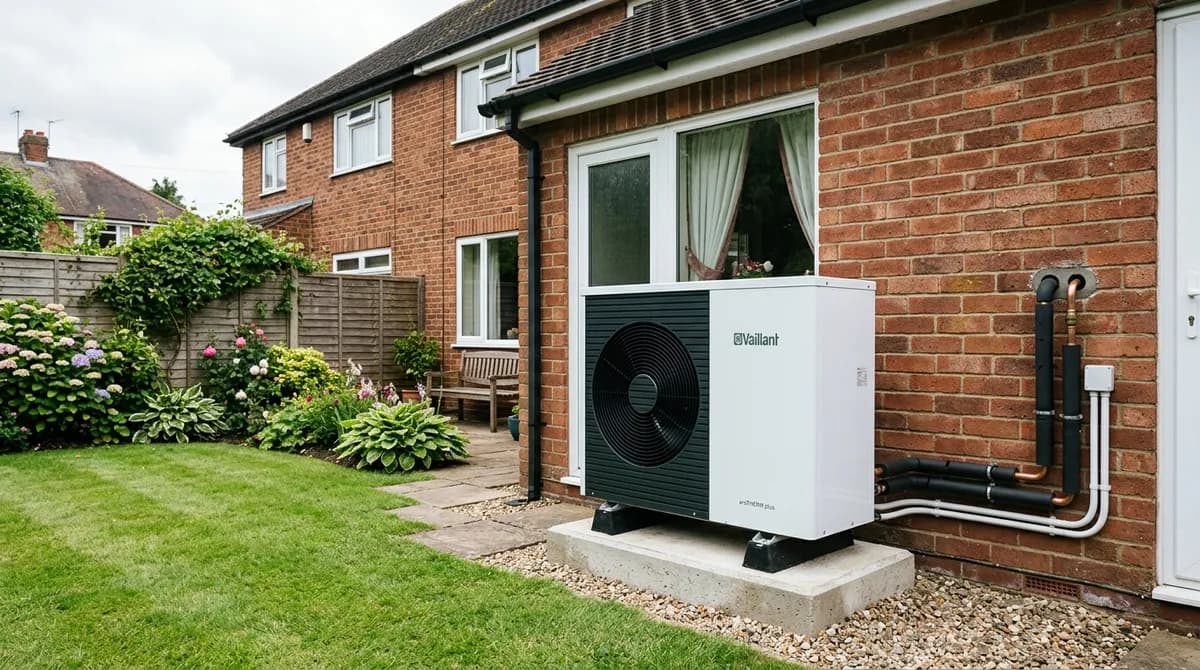
Heat pumps must be installed by an MCS-certified installer. MCS certification is required for the Boiler Upgrade Scheme grant and ensures the system is correctly sized and installed to industry standards.
Quick answer
How much does a heat pump cost?
An air source heat pump costs between £8,000 and £18,000 fully installed. A ground source heat pump costs £15,000 to £35,000. After the £7,500 Boiler Upgrade Scheme grant, an air source system can cost as little as £2,500 out of pocket. Running costs are similar to gas - roughly £850 to £1,200 per year for a typical 3-bed semi.
View the full heat pump cost guide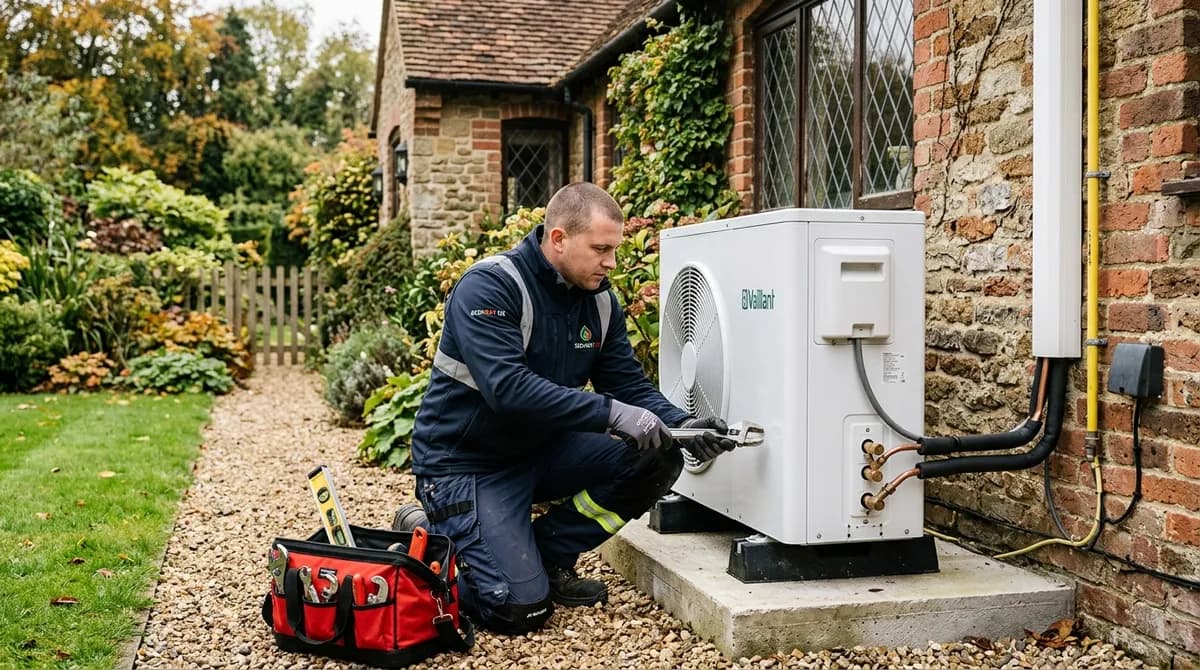
Types of Heat Pump
There are four main types. Most UK installations are air source heat pumps because they cost less, require no groundwork, and work well in the British climate.
Air source heat pump (ASHP)
Most popularThe most common type in the UK. An outdoor unit about the size of a large suitcase absorbs heat from the outside air and transfers it to your central heating and hot water. Works down to -20°C. Costs £8,000 to £18,000 installed. Eligible for the £7,500 BUS grant.
Ground source heat pump (GSHP)
Highest efficiencyUnderground loops buried in your garden absorb heat from the ground, where the temperature stays at 8 to 12°C year-round. More efficient than air source (COP 3.5 to 4.5 vs 2.5 to 3.5) but significantly more expensive because of the groundwork - either horizontal trenches or vertical boreholes. Costs £15,000 to £35,000 installed. Also eligible for the £7,500 BUS grant.
Hybrid heat pump
Stepping stoneCombines a small air source heat pump with your existing gas or oil boiler. The heat pump handles most of the heating, and the boiler kicks in when temperatures drop or demand spikes. A good stepping stone if your home is not well enough insulated for a full heat pump. Costs £4,000 to £8,000. Not eligible for the BUS grant.
Air-to-air heat pump
Heating + coolingProvides heating and cooling but does not heat water. Uses wall-mounted indoor units (like air conditioning). Common in commercial buildings and warmer climates. Less common in UK homes because most people want hot water from their heating system. Costs £2,000 to £5,000. Not eligible for the BUS grant.
How Does a Heat Pump Work?
A heat pump does not generate heat - it moves it. Even cold air contains heat energy, and a heat pump extracts that energy, concentrates it, and uses it to warm your home. The process is the same one your fridge uses, but in reverse.
- 1
Absorb
A refrigerant fluid circulates through an outdoor heat exchanger (air source) or underground loops (ground source), absorbing low-grade heat from the surrounding environment.
- 2
Compress
A compressor increases the pressure of the refrigerant, which raises its temperature significantly - from a few degrees above ambient to 45 to 55°C or more.
- 3
Transfer
The hot refrigerant passes through a heat exchanger inside your home, transferring the heat to your central heating water and hot water cylinder.
- 4
Repeat
The cooled refrigerant expands back to low pressure and returns to the outdoor unit to absorb more heat. The cycle runs continuously whenever heating or hot water is needed.
The key metric is COP (Coefficient of Performance). A COP of 3.0 means the heat pump produces 3 kWh of heat for every 1 kWh of electricity it uses - making it roughly 300% efficient. By comparison, the best gas boiler is about 92% efficient.
Are Heat Pumps Worth It?
This depends on your property, your current heating system, and your outlook. Here is a balanced view.
Arguments for a heat pump
- £7,500 grant brings the upfront cost close to a new boiler for many properties
- Running costs are comparable to gas - and much cheaper than oil, LPG, or direct electric
- Heat pumps last 20 to 25 years, roughly double the lifespan of a gas boiler
- Zero direct carbon emissions - increasingly important for EPC ratings and property value
- New-build homes are being built without gas heating - heat pumps are the long-term direction
- 0% VAT on heat pump installations saves an additional £1,500 to £3,000
Arguments against (or reasons to wait)
- Still more expensive upfront than a gas boiler, even with the grant
- Poorly insulated homes may need costly upgrades before a heat pump makes sense
- You lose instant hot water if switching from a combi boiler - a cylinder is needed
- Some radiators may need upgrading to work at lower flow temperatures
- Running costs are not dramatically cheaper than gas at current energy prices
- Outdoor unit produces some noise - planning and placement need thought
Our take: If your home is reasonably well-insulated, you are replacing an ageing boiler, and you plan to stay for 10+ years, a heat pump is likely the better long-term investment - especially with the £7,500 grant. If your insulation is poor and you need a boiler urgently, a new gas boiler is a more practical short-term solution.
Grants available
£7,500 Boiler Upgrade Scheme Grant
The government's Boiler Upgrade Scheme offers £7,500 towards the cost of an air source or ground source heat pump. Available to homeowners in England and Wales who are replacing fossil fuel heating. Your MCS-certified installer applies on your behalf and the grant is deducted from your invoice. Combined with 0% VAT, the total saving can exceed £10,000.
Full guide to heat pump grantsHow to find a good heat pump installer
Check MCS certification
Only an MCS-certified installer can apply for the £7,500 Boiler Upgrade Scheme grant on your behalf. MCS certification also means the installer has been assessed for competence in heat pump design and installation. Verify their registration at mcscertified.com before inviting them to quote.
Get three quotes with matching surveys
Heat pump pricing varies a lot because every installation is different. Get at least three quotes, each based on a proper home survey and room-by-room heat loss calculation - not a rough estimate over the phone. Make sure each quote covers the same scope: heat pump unit, hot water cylinder, any radiator upgrades, pipework, controls, and commissioning.
Ask about their design process
A good installer will carry out a full heat loss calculation for every room, recommend the right size heat pump, and tell you which radiators (if any) need upgrading. If they skip the survey or suggest a unit size without measuring your property, that is a serious red flag.
Check reviews from heat pump customers specifically
An installer who has fitted 50 boilers and two heat pumps is not the same as one who installs heat pumps every week. Ask how many heat pump installations they have completed in the last 12 months and check Google or Trustpilot reviews that mention heat pumps specifically.
Heat pump guides
Common questions about heat pumps
How does a heat pump actually work?
A heat pump works like a fridge in reverse. It absorbs low-grade heat from the outside air (air source) or the ground (ground source) and compresses it to a higher temperature using a refrigerant cycle. That heat is then transferred to your central heating system and hot water cylinder. Even when it is freezing outside, there is enough heat energy in the air for an air source heat pump to work - modern units operate down to -20°C or lower.
Are heat pumps worth it in the UK?
For most homeowners in well-insulated properties, yes. With the £7,500 Boiler Upgrade Scheme grant, the upfront cost gap between a heat pump and a gas boiler has narrowed significantly. Running costs are comparable to gas and much lower than oil or LPG. Heat pumps last 20 to 25 years (vs 12 to 15 for a boiler), produce zero direct emissions, and shield you from future gas price rises. There is no ban on gas boilers in existing homes, but new-build homes are moving to low-carbon heating under the Future Homes Standard. They are less suited to poorly insulated homes where insulation upgrades are not practical.
Can a heat pump heat my whole house?
Yes. A correctly sized heat pump replaces your boiler entirely - it provides all your space heating and hot water. The key is proper sizing: your installer should carry out a room-by-room heat loss calculation to determine the right size unit. Some radiators may need to be upgraded to larger ones because heat pumps run at lower flow temperatures (35 to 45°C) than gas boilers (60 to 70°C).
Do I need to rip out my radiators?
Not necessarily. Many existing radiators work fine with a heat pump, especially if your home is well-insulated. Your installer will check each room during the survey. Rooms where the existing radiators are too small for the lower flow temperatures will need larger replacements. Bathrooms and hallways are the most common rooms to need an upgrade. If you have underfloor heating, it works perfectly with a heat pump with no changes needed.
What happens during a power cut?
A heat pump stops working during a power cut - there is no backup heating unless you have a battery storage system or a generator. This is the same as a modern gas boiler, which also needs electricity to run. When the power comes back on, the heat pump restarts automatically.
Quote service coming soon
Get free quotes from heat pump installers near you
Free, no obligation. Compare quotes from MCS-certified installers. The £7,500 Boiler Upgrade Scheme grant is applied directly to your invoice.
Compare real quotes for your job
Prices move a lot with your postcode, the access on site and the spec you choose. Get up to 3 free quotes from vetted local tradespeople and see what yours actually comes to, with no obligation to book.