Cheapest Ways to Heat Your Home in the UK (2026)
Energy prices have settled down since the crisis years, but heating still accounts for over half the average UK energy bill. We've compared every major heating option, gas, heat pumps, electric, infrared, even log burners, to find out what genuinely costs the least to run right now.

Chris Kervin
Written by Chris Kervin, Co-Founder of Less.co.uk
The short answer
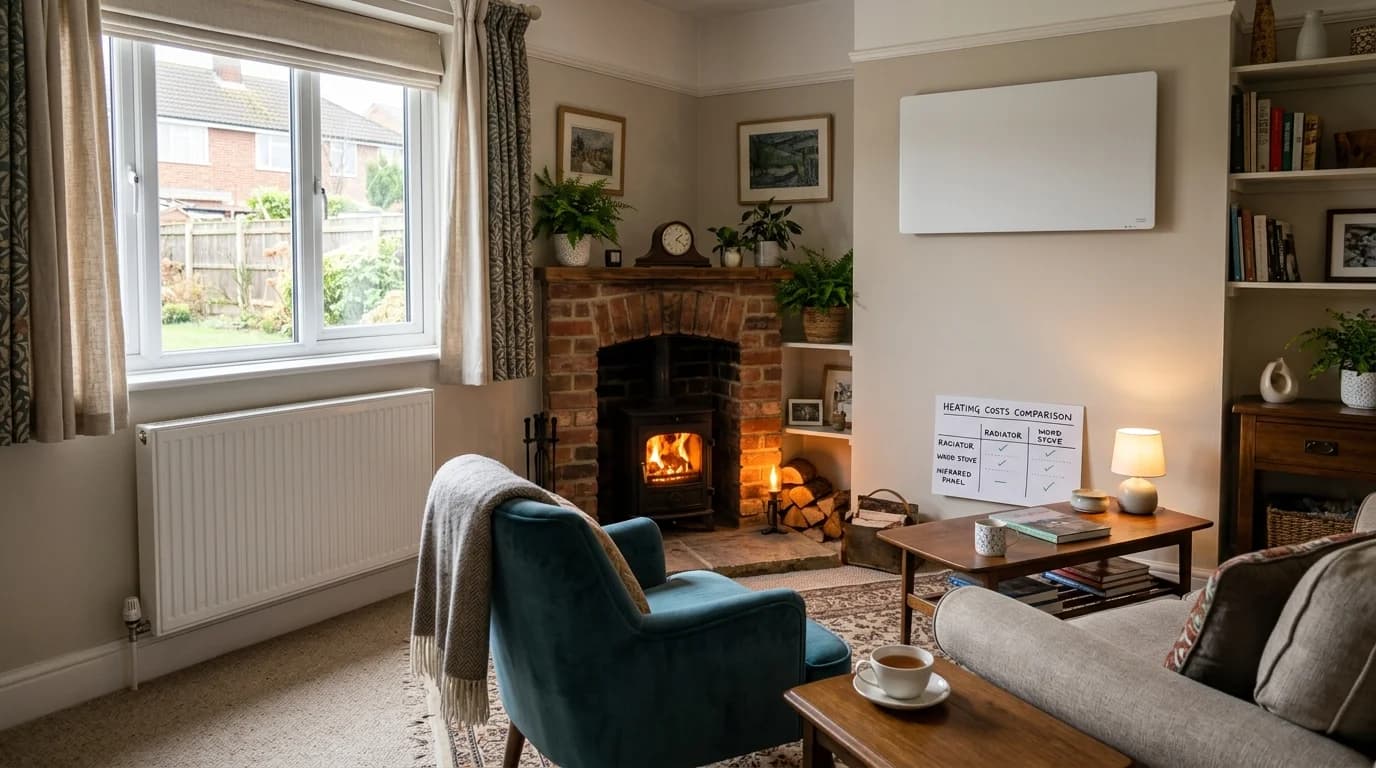
Gas central heating is still the cheapest option for most UK homes at £850 to £1,100 per year. Heat pumps come a close second at £600 to £900, but only if your home is well insulated. Electric heating is the most expensive option by a long way.
The running cost comparison
We've worked out what each heating system costs to run in a typical 3-bed semi-detached house with average insulation (EPC D) and an annual heating demand of about 12,000 kWh. These figures use April 2026 energy prices.
| Heating system | Cost per kWh | Annual cost | Install cost |
|---|---|---|---|
| Gas boiler (combi) | 6.8p | £850 to £1,100 | £1,500 to £2,500 |
| Air source heat pump | ~8p (effective) | £600 to £900 | £8,000 to £14,000 |
| Oil boiler | ~7.5p | £900 to £1,200 | £3,000 to £5,000 |
| LPG boiler | ~10p | £1,100 to £1,400 | £2,500 to £4,000 |
| Log burner (whole house) | 7 to 10p | £900 to £1,300 | £2,000 to £5,000 |
| Infrared panels | 24.5p | £1,800 to £2,500 | £2,000 to £4,000 |
| Electric radiators | 24.5p | £2,500 to £3,200 | £1,500 to £3,000 |
| Storage heaters | ~12p (off-peak) | £1,200 to £1,800 | £1,500 to £3,500 |
Based on April 2026 Ofgem price cap rates: gas at 6.8p/kWh, electricity at 24.5p/kWh. Heat pump effective rate assumes COP of 3.0. Oil at 55p/litre. Log prices based on kiln-dried hardwood at retail.
Gas boilers: still the default for a reason
For all the talk of heat pumps and green energy, gas central heating remains the cheapest option for the 23 million UK homes connected to the gas grid. The fuel is cheap, the technology is mature, and installation costs are low.
A modern condensing combi boiler runs at 92 to 94% efficiency, meaning very little energy is wasted. Annual running costs for a 3-bed semi sit around £850 to £1,100 depending on how warm you like it and how well insulated your home is.
The elephant in the room is the Future Homes Standard, which will prevent new-build homes from installing gas boilers once fully implemented. But for existing homes, there's no ban on the horizon. You can replace your gas boiler with a new gas boiler for the foreseeable future.
Get a personalised cost estimate in under 2 minutes
Heat pumps: cheaper to run, expensive to fit
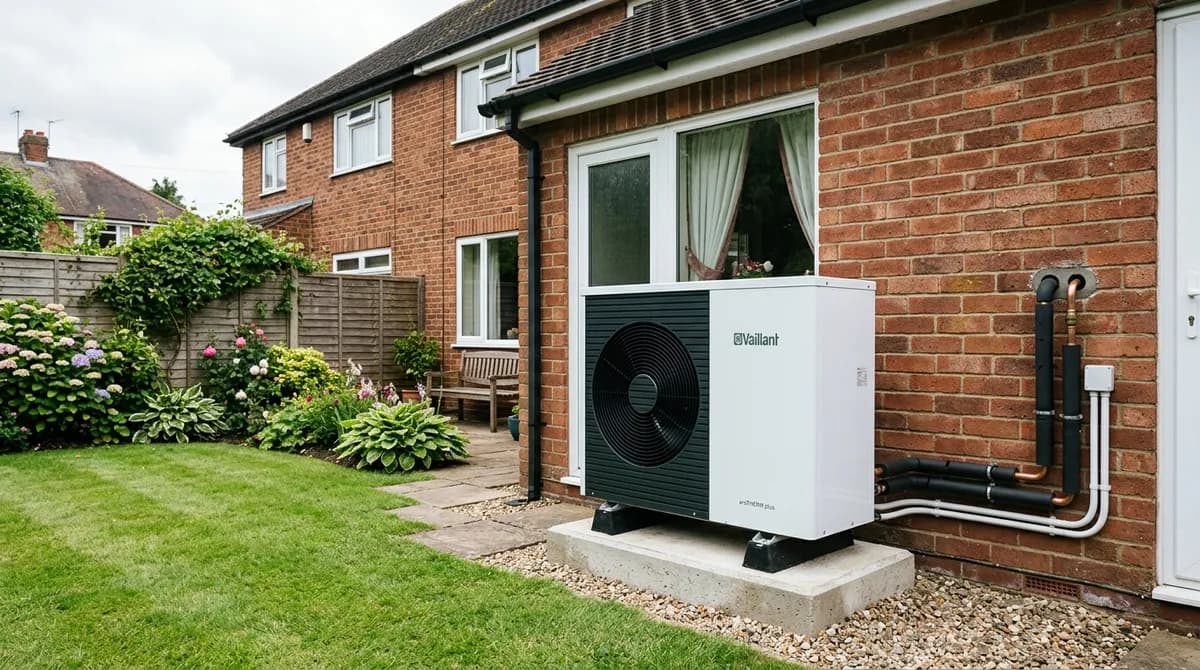
Here's the thing about heat pumps that catches people off guard: they're genuinely cheaper to run than gas boilers in many homes. According to the Energy Saving Trust, an air source heat pump with a COP (coefficient of performance) of 3.0 produces 3 kWh of heat for every 1 kWh of electricity. That brings the effective cost per kWh of heat down to about 8p, not far off gas.
The problem is the upfront cost. At £8,000 to £14,000 before the grant, or £2,000 to £7,000 with the £7,500 Boiler Upgrade Scheme grant, it's a big outlay compared to a £2,000 boiler swap. The payback period is 8 to 15 years depending on your situation.
But if you've got solar panels, the maths changes dramatically. Heating your home with free solar electricity during the day, topped up with off-peak electricity overnight, can bring annual heating costs below £400. Nothing else gets close to that.
Electric heating: only if you have no choice
Let's be blunt. If you're heating your whole house with electric radiators or fan heaters, you're paying through the nose. At 24.5p per kWh, electric heating costs roughly 3.5 times more than gas per unit of heat.
For a 3-bed semi, that's £2,500 to £3,200 per year. That's a lot of money, and it's the main reason energy poverty disproportionately affects homes without gas central heating.
If you're stuck with electric heating (no gas connection, no budget for a heat pump), your best move is to invest heavily in insulation. Draught-proofing, loft insulation, and cavity wall insulation can cut your heating demand by 30 to 50%, which takes a much bigger bite out of your bill than anything else.
Infrared panels: the trendy option
Infrared panels have had great marketing. They look sleek, they're easy to install, and they heat objects directly rather than heating the air. Some manufacturers claim they're 60% cheaper than conventional electric heating. That claim is... generous.
The reality: infrared panels still use electricity at 24.5p per kWh. They can be more efficient in specific situations, heating one person in one room, for example, but as a whole-house solution, they're expensive. Annual costs for a 3-bed semi come in at £1,800 to £2,500, which is cheaper than electric radiators but still far more than gas or a heat pump.
Where infrared panels make sense: as supplementary heating in a conservatory, home office, or bathroom. Somewhere you want instant warmth for a few hours without heating the whole house. They're not a replacement for central heating.
Log burners: romantic but limited
A wood-burning stove in the living room is lovely. There's nothing quite like it on a cold evening. But as a primary heating system? It's hard work.
The cost per kWh depends entirely on what you pay for wood. Free wood from your own land or a friendly tree surgeon brings costs to near zero. Retail kiln-dried logs cost £300 to £400 per cubic metre, which works out at 7 to 10p per kWh, competitive with gas. But you need a lot of wood to heat a whole house, and you need somewhere dry to store it.
There's also the smoke control issue. If you live in a smoke control area (most towns and cities), you can only burn approved smokeless fuels or use a Defra-approved stove. And since 2022, you can only buy kiln-dried wood with less than 20% moisture content.
The single biggest way to cut heating costs
Whatever heating system you use, the cheapest energy is the energy you don't use. Insulation is boring, but it has the best return on investment of any home improvement.
- Loft insulation (270mm): £300-£600 installed, saves £150-£250 per year. Pays for itself in 2-3 years.
- Cavity wall insulation: £500-£1,500 installed, saves £150-£300 per year. Pays for itself in 3-5 years.
- Draught-proofing: £100-£300 DIY, saves £50-£100 per year. The cheapest improvement with the fastest payback.
- Double glazing: £3,000-£7,000 for a whole house, saves £100-£200 per year. Takes 15-35 years to pay back on energy savings alone (but adds comfort and value).
- Turn down the boiler flow temperature: free to change yourself on the controls, saves roughly £70 to £120 a year. Setting a combi to about 50 to 55C cuts gas use by 6 to 9% with no drop in comfort in most homes.
- Switch to a heat pump tariff if you have a heat pump: dedicated tariffs such as Cosy Octopus give cheaper electricity at set times, which lowers what your heat pump costs to run.
- Warm Home Discount: £150 off the electricity bill for eligible low-income households. Check with your energy supplier whether you qualify.
See if a heat pump would save you money based on your home
Our verdict
For a straight answer: if you're on the gas grid, a gas boiler is still the cheapest way to heat your home in 2026. It's cheap to install, cheap to run, and you can get one fitted in a day.
If you're thinking longer term, 10+ years, and your home is reasonably well insulated, a heat pump with the BUS grant is a serious contender. Add solar panels to the mix and it becomes the cheapest option by a comfortable margin.
Whatever you do, don't rely on plug-in electric heaters as your main heating. It's the most expensive way to stay warm, and investing the same money in insulation would actually fix the problem rather than just paying more to mask it.
Frequently asked questions
What is the cheapest way to heat a house in the UK in 2026?
For most UK homes, a gas boiler is still the cheapest heating system to run at roughly £850-£1,100 per year for a 3-bed semi. However, if you can get the £7,500 Boiler Upgrade Scheme grant, an air source heat pump comes very close - around £600-£900 per year. If you have solar panels, a heat pump becomes the cheapest option outright.
Are electric heaters cheaper than gas central heating?
No. Electric heaters cost roughly 3-4 times more to run than gas central heating per unit of heat produced. Electricity costs about 24.5p per kWh versus 6.8p for gas. Electric heaters can be useful for heating a single room occasionally, but running them as your main heating source will result in very high bills.
Are infrared heating panels any good?
Infrared panels are efficient in that they heat objects and people directly rather than heating the air. They work well as supplementary heating in specific rooms. However, as a whole-house solution they're expensive to run because they still use electricity at 24.5p per kWh. They're best suited to well-insulated rooms where you want instant, targeted warmth.
Is it cheaper to heat your home with a log burner?
A log burner can be cost-effective if you have access to cheap or free wood. Buying kiln-dried logs at retail prices works out at roughly 7-10p per kWh - comparable to gas. But a log burner only heats one room efficiently, you need somewhere dry to store logs, and there are now smoke control restrictions in many urban areas. It's a great supplement to central heating, but rarely works as your only heat source.
Should I switch from gas to a heat pump?
It depends on your home. If your house is well insulated (EPC rating C or above), you can get the £7,500 BUS grant, and your gas boiler needs replacing anyway, a heat pump makes strong financial sense over 10+ years. If your home is poorly insulated or you can't get the grant, sticking with gas is still the cheaper option for now.
Compare heating costs for your home
Use our cost guides and calculators to see real prices for boilers, heat pumps, and insulation in your area.
Related articles
Heat Pump vs Gas Boiler: Honest Comparison
Detailed 10-year cost comparison for UK homeowners.
When Should You Replace Your Boiler?
The repair vs replace decision, made simple.
Is Underfloor Heating Worth the Money?
Running costs, install costs, and the honest verdict.
How Much Does Insulation Cost?
Loft, cavity, and solid wall insulation prices compared.