Does a Conservatory Add Value to Your House?
The honest answer is: it depends entirely on what kind of conservatory you build. A proper, well-insulated room with heating and a solid roof? That can genuinely boost your property value. A cheap lean-to with a polycarbonate roof that's freezing in winter and unbearable in summer? That might actually put buyers off.

Chris Kervin
Written by Chris Kervin, Co-Founder of Less.co.uk
The short answer
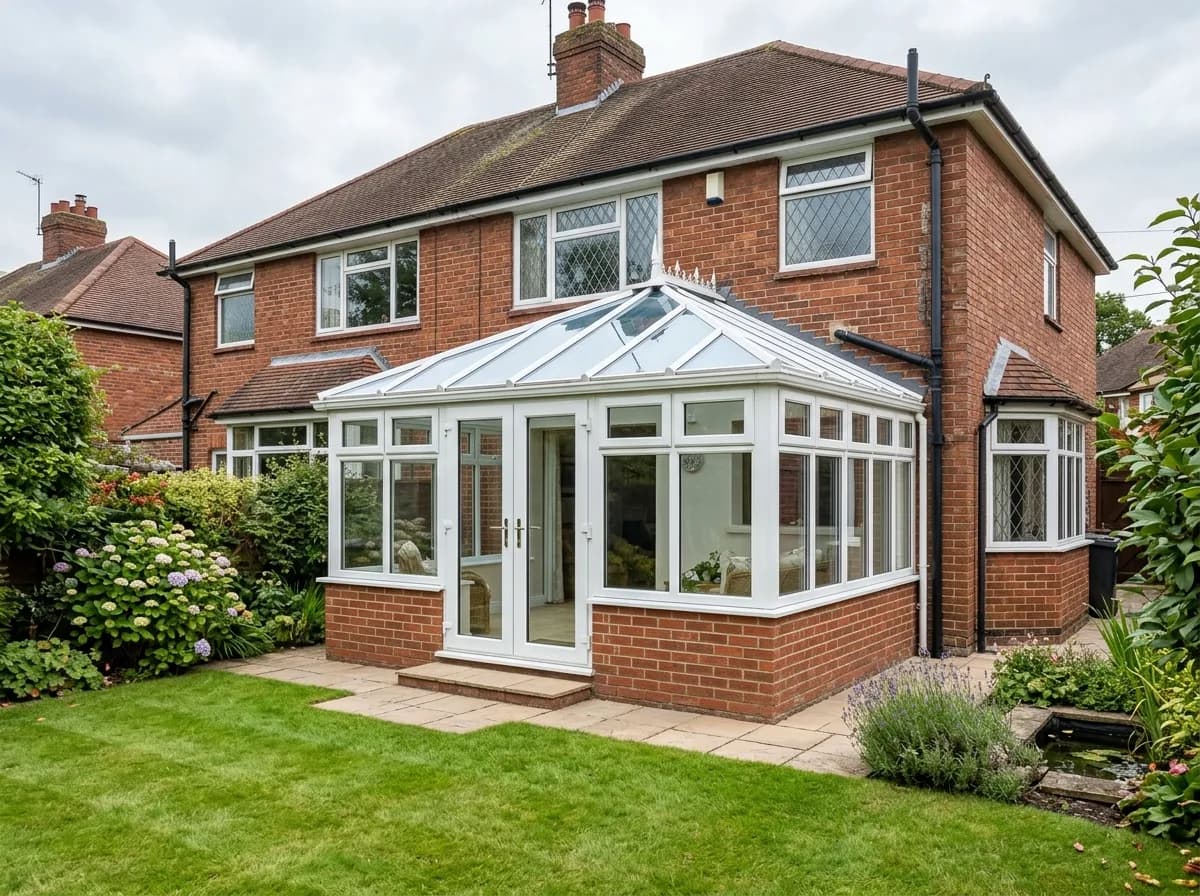
A well-built conservatory typically adds 5-10% to a property's value. On a £250,000 home, that's potentially £12,500 to £25,000. But quality matters enormously. Cheap conservatories with polycarbonate roofs can actually reduce buyer interest, while modern, properly heated extensions with solid roofs are genuinely desirable.
The 5-10% figure: where it comes from
You'll see the "5-10% value increase" figure quoted everywhere, and broadly speaking it holds up. The Royal Institution of Chartered Surveyors (RICS) and various estate agent surveys have consistently found that a conservatory or orangery adds between 5% and 10% to the value of a typical UK property.
But that range is massive. On a £300,000 house, the difference between 5% and 10% is £15,000. What determines where you land on that scale comes down to a handful of things: the quality of the build, whether it's usable all year round, how well it integrates with the rest of the house, and honestly, whether the garden is still a decent size afterwards.
The critical distinction that estate agents make is whether the conservatory counts as "habitable space." If it does, it gets included in the property's measured floor area, which directly affects the price per square foot calculation that valuers use. If it doesn't, it's essentially an outdoor feature that happens to have a roof on it.
What makes a conservatory add value
Estate agents and surveyors are looking for specific things when they decide whether a conservatory counts as genuine living space. None of this is arbitrary. It comes down to whether someone could realistically use the room 12 months of the year.
A solid or insulated roof
This is the single biggest factor. Old-style polycarbonate roofs let in too much heat in summer and lose too much in winter. Modern solid roofs (tiled or insulated panel systems) transform a conservatory from a seasonal space into a proper room. If you're building new, go solid. If you have an existing conservatory, replacing the roof is often the best investment you can make.
Proper heating
A conservatory with no heating is a three-season room at best. Radiators connected to your central heating system, underfloor heating, or even a well-positioned electric heater makes an enormous difference. Bear in mind that if you extend your central heating into the conservatory, Building Regulations apply.
Good foundations and building quality
A conservatory built on a proper concrete base with dwarf walls and quality frames will last decades. A budget conservatory bolted onto a patio on minimal foundations will start showing problems within a few years. Buyers notice. Surveyors definitely notice.
Seamless integration with the house
The best conservatories feel like a natural extension of the home, not something that was stuck on as an afterthought. Matching flooring that flows through from the main house, consistent interior finishes, and wide openings between the conservatory and the existing room all help.
When a conservatory reduces value (or adds nothing)
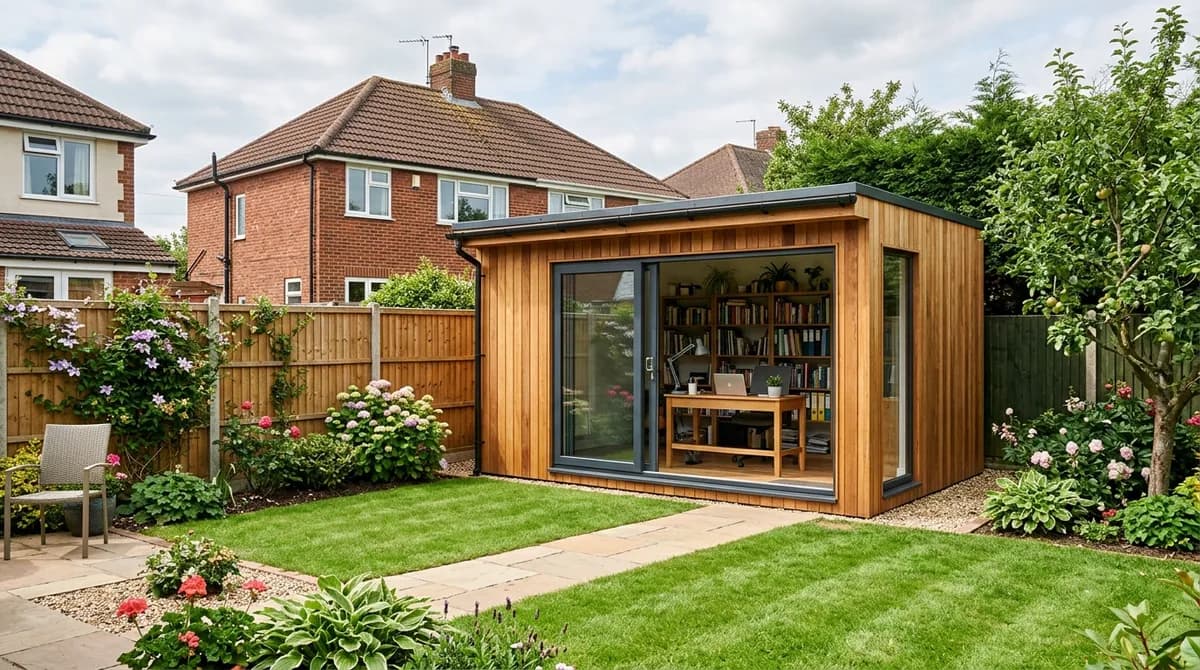
This is the bit nobody wants to hear, but it's important. Not every conservatory is an asset. Some are actively off-putting to buyers.
- Cheap polycarbonate roofs that have gone yellow or opaque over time
- No heating, making the space unusable from October to April
- Poor build quality with visible leaks, condensation, or blown double glazing
- A conservatory that swallows the entire garden, leaving no usable outdoor space
- Dated styles that clash with the property (a PVCu lean-to on a period cottage, for example)
- Structural issues like cracking where the conservatory meets the house
Estate agents have a phrase for conservatories like these: "money off the asking price." A buyer looks at a tired conservatory and immediately starts calculating what it would cost to either fix it or demolish it. That calculation comes straight off their offer.
The numbers: conservatory cost vs. value added
Let's look at some realistic scenarios. These are based on average UK property values and typical conservatory costs in 2026. You can also use our conservatory cost calculator to get a personalised estimate for your build.
| Scenario | Cost | Value added | Return |
|---|---|---|---|
| Budget lean-to on a £250k house | £5,000 | £0 - £2,500 | Poor |
| Mid-range with glass roof on a £250k house | £10,000 | £7,500 - £15,000 | Mixed |
| Quality build, solid roof, heated, on a £250k house | £15,000 - £20,000 | £12,500 - £25,000 | Good |
| Orangery with bi-folds on a £400k house | £25,000 - £35,000 | £20,000 - £40,000 | Good |
The pattern is clear. Spending more on quality tends to give a better return than going cheap. A £5,000 lean-to rarely pays for itself, while a £15,000-£20,000 properly built conservatory on a mid-value property can break even or turn a profit.
Conservatory vs. extension: which adds more value?
A full house extensiontypically adds more value than a conservatory. Extensions are always counted as habitable space, they're built to full Building Regulations, and buyers view them as permanent, high-quality additions to the property.
But extensions cost significantly more. A single-storey rear extension might run to £30,000-£60,000 depending on size and specification. A good conservatory at £15,000-£20,000 can give you a similar amount of extra space for half the price, even if the value uplift isn't quite as strong.
If your primary goal is adding value and you have the budget, an extension is the stronger investment. If you want extra living space at a lower cost and you plan to enjoy it yourself for years before selling, a quality conservatory is a perfectly sensible choice.
Use our extension cost calculator to compare the numbers for your property.
What about planning permission and Building Regulations?
Most conservatories fall under permitted development rights, which means you don't need planning permission. The key limits are:
- No more than 4 metres projection from the rear wall (detached houses) or 3 metres (semi-detached/terraced)
- No higher than 4 metres at the highest point
- No more than half the garden area covered by extensions (including any previous ones)
- Not extending forward of the principal elevation facing a highway
- Materials must be similar in appearance to the existing house
Building Regulations are a separate matter. Traditionally, conservatories were exempt from Building Regulations provided they were separated from the house by external walls and doors, and the heating system wasn't extended into the new space. In practice, if you want a conservatory that's properly heated and open to the house (the kind that actually adds value), you'll almost certainly need Building Regulations approval.
The garden trade-off
This catches people out more often than you'd think. A conservatory takes up garden space, and if it leaves you with a garden that feels cramped, you might actually reduce the property's appeal rather than increase it.
Families with children want outdoor space. Buyers who enjoy gardening want outdoor space. Even people who barely use their garden still want to look out at something pleasant. If your conservatory means the garden is reduced to a strip of grass barely wide enough to dry washing on, you've solved one problem and created another.
As a rough guide, your remaining garden should be at least as deep as the house is tall. On a typical two-storey semi, that means keeping at least 6-7 metres of garden behind the conservatory.
Old conservatories: upgrade or demolish?
If you've inherited a tired conservatory from the 1990s or 2000s, you have three options: upgrade it, live with it, or pull it down.
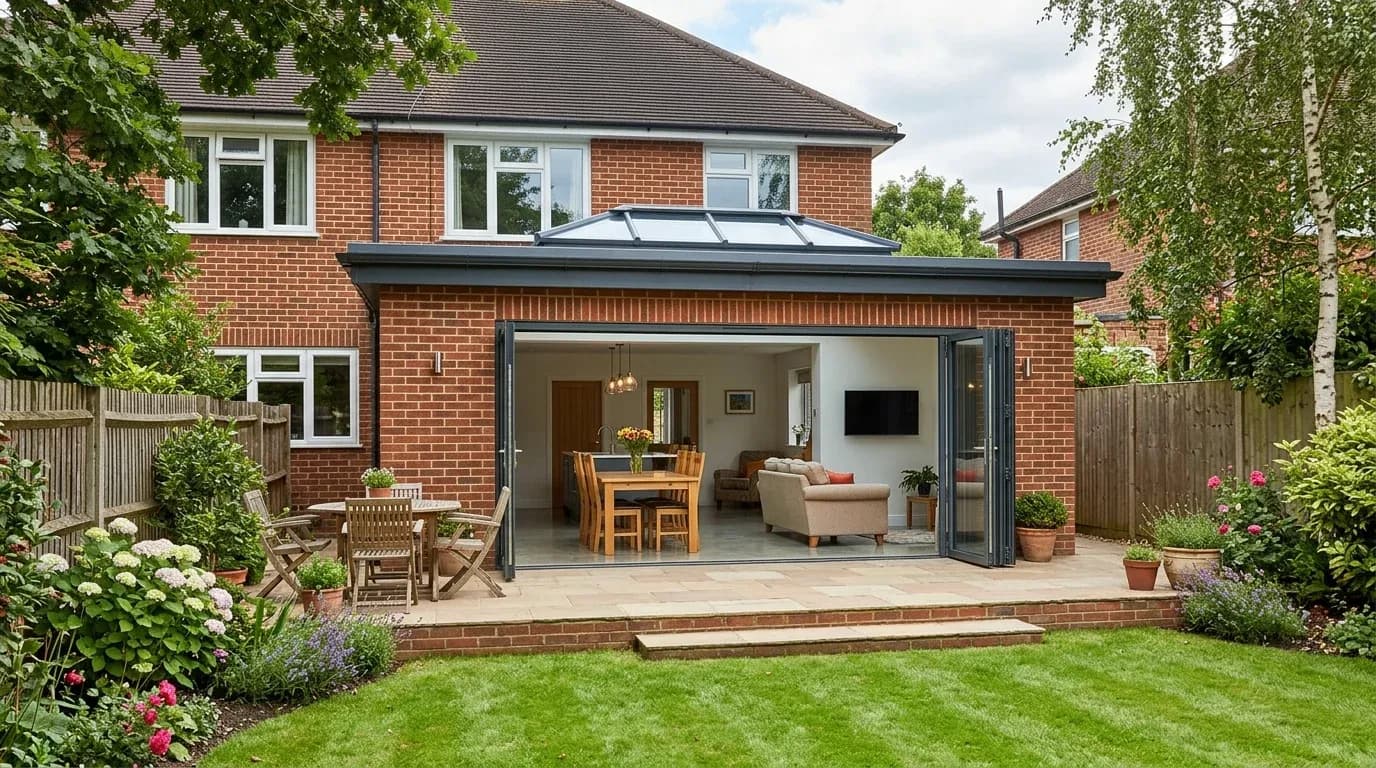
Upgrading usually means replacing the roof. Swapping a polycarbonate roof for a solid, insulated tiled roof typically costs £3,000-£7,000 depending on size. It transforms the space. You go from a room that's too hot in June and too cold in November to something genuinely comfortable year-round. If the base structure, walls, and frames are still sound, this is often the smartest investment.
Demolishing makes sense if the conservatory has structural problems, is poorly positioned, or is so dated that no amount of work will make it attractive. Removing a bad conservatory and restoring the garden can actually increase your property's value more than leaving it there.
What estate agents actually think
Talk to any estate agent in the UK and they'll tell you the same thing: the market has moved on from the conservatory boom of the 1990s and 2000s. Back then, any conservatory was seen as a positive. Today, buyers are far more discerning.
What agents consistently say adds value:
- Orangeries and garden rooms with solid roofs and lantern windows
- Conservatories with bi-fold or sliding doors that open the space to the garden
- Well-insulated spaces with proper heating that feel like part of the house
- Clean, modern designs that complement the property's style
What they say adds nothing (or reduces interest):
- Old polycarbonate-roofed conservatories, especially if they're yellowing or leaking
- Conservatories used as dumping grounds (storage, laundry, junk)
- Poorly maintained structures with blown seals, mould, or condensation
- Oversized conservatories that have swallowed the garden
How to get your conservatory for less
If you've decided a conservatory is the right move, here are some practical ways to keep costs down without cutting corners on quality:
- Get at least three quotes and make sure they're all pricing the same specification
- Order in autumn or winter when conservatory companies are quieter and more willing to negotiate
- Consider a local builder rather than a national conservatory company (the overheads are lower, so the price usually is too)
- Keep the design simple: rectangular footprints are cheaper to build than Victorian or P-shaped designs
- Choose quality where it matters (roof, foundations, glazing) and save on things that are easy to upgrade later (flooring, blinds, lighting)
Check our full conservatory cost guide for a detailed breakdown of what you should expect to pay in 2026.
Thinking about adding space to your home?
Use our calculators to compare the cost of a conservatory against a full extension or loft conversion.
The bottom line
A conservatory can absolutely add value to your home, but only if you treat it as a proper building project rather than a bolt-on accessory. The days of throwing up a cheap PVCu conservatory and expecting it to boost your asking price are over.
If you're building for resale value, invest in a solid roof, proper heating, and quality glazing. Make sure it integrates with the house, leaves enough garden space, and feels like a room you'd actually want to spend time in. Do that, and you're looking at a genuine 5-10% uplift.
If you're building primarily for your own enjoyment, the value calculation matters less. A conservatory you love using every day is worth the money regardless of what it does to the asking price. Just don't overspend relative to your property value, and avoid the false economy of going too cheap.
Frequently asked questions
How much value does a conservatory add to a house?
A well-built, properly insulated conservatory typically adds 5-10% to the value of a UK home. On a £250,000 property, that could mean an extra £12,500 to £25,000. However, a cheap or poorly maintained conservatory can actually reduce buyer interest and add nothing at all.
Do estate agents include conservatory floor space in property measurements?
It depends on the quality. Most estate agents will only include a conservatory in the measured floor area if it has a solid or insulated roof, proper heating, and is usable year-round. A basic polycarbonate-roofed conservatory is usually listed separately and not counted as part of the main living space.
Do I need planning permission for a conservatory?
Most conservatories fall under permitted development and don't need planning permission, provided the extension doesn't project more than 4 metres from the rear wall of a detached house (or 3 metres for semi-detached and terraced homes). You'll still need to comply with Building Regulations if you're extending the heating system into the conservatory or removing an external wall.
What type of conservatory adds the most value?
Modern conservatories with solid insulated roofs, underfloor heating or radiators, and proper foundations add the most value. Orangeries and garden rooms with tiled roofs and bi-fold doors are particularly popular with buyers. The key factor is whether the space feels like a proper room rather than a greenhouse.
Get the full picture on conservatory costs
Our detailed cost guide covers every type of conservatory, regional price differences, and what you should budget for in 2026.
Related articles
Is a Loft Conversion Worth It?
How much value a loft conversion adds to your home.
Extension vs. Loft Conversion
Comparing the two most popular ways to add space.
When Do You Need Planning Permission?
A plain-English guide to what you can build without permission.
Full House Renovation Cost
What a complete renovation actually costs in the UK.