How Much Does a Conservatory Cost in 2026?
Conservatory costs in the UK run from £8,000 to £25,000fully installed, and the average conservatory cost lands at around £15,000. A small lean-to in uPVC starts from around £8,000, while a large orangery with a solid roof and underfloor heating can reach £40,000 or more.
£15,000
Average cost
£8,000+
Small lean-to
£40,000+
Large orangery
2 to 4 weeks
Build time
Prices updated April 2026 · Based on industry data and contractor submissions.
Most conservatories are permitted development and do not need planning permission, provided the extension does not cover more than half the garden, is not higher than the existing roof, and does not extend more than 4m from the rear wall (3m for semi-detached/terraced). Listed buildings and conservation areas have additional restrictions. Check the Planning Portal if you are unsure.
Conservatory Prices by Style
The average conservatory cost in the UK is around £15,000, but the style you choose moves that figure by thousands in either direction. Prices below are for a fully installed conservatory including foundations, dwarf walls, frame, glazing, electrics, and basic flooring. All prices are for uPVC frames with double-glazed glass roofs.
Lean-to
Simple single-slope roof, suits bungalows and properties with low eaves
£9,000
£8,000 - £13,000
Victorian
Bay-fronted with ornate ridge, 3 or 5 faceted front
£14,000
£9,000 - £20,000
Edwardian
Square or rectangular footprint, maximises internal floor space
£15,000
£10,000 - £22,000
P-shaped
Combines lean-to and Victorian/Edwardian for an L-shaped room
£22,000
£16,000 - £30,000
T-shaped
Central projection creating a T-footprint, suits wide properties
£24,000
£18,000 - £35,000
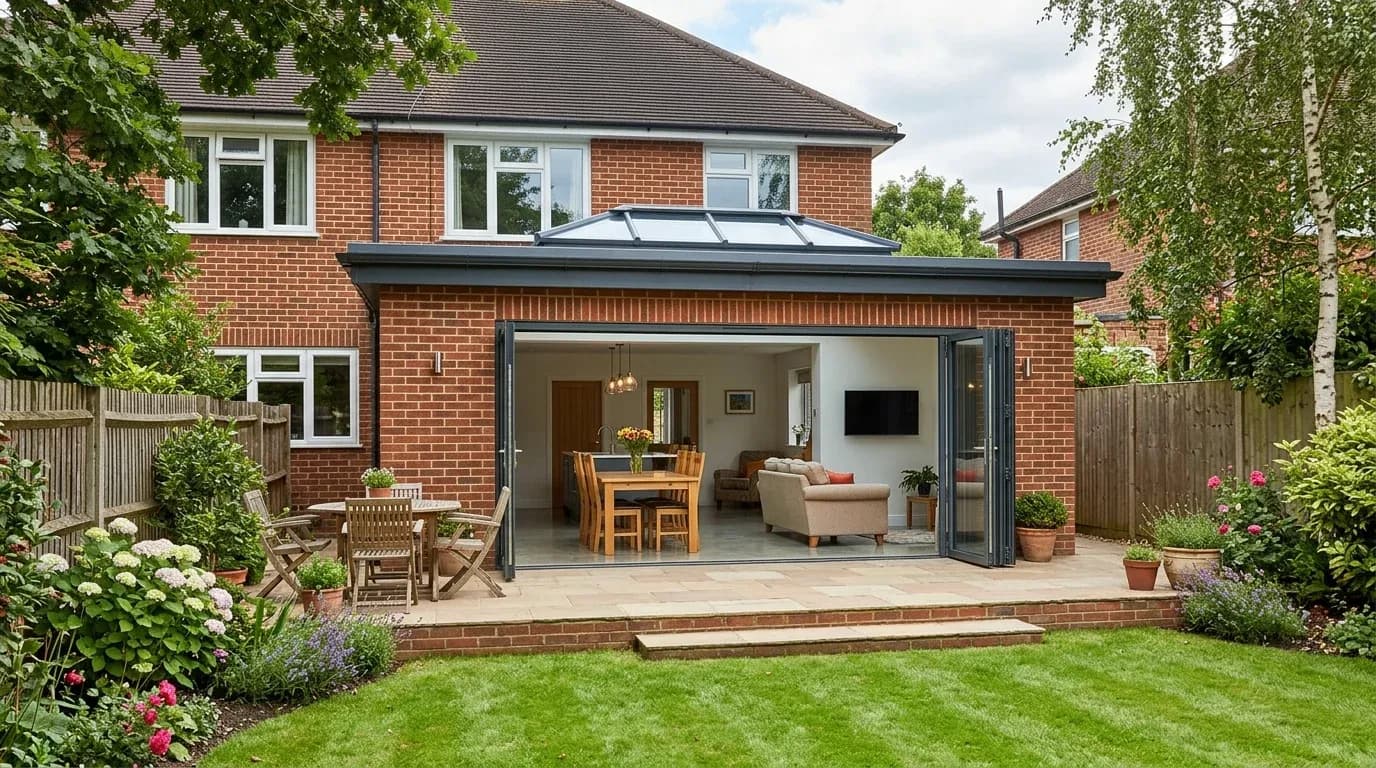
Orangery
Brick pillars, flat roof perimeter with lantern roof, feels like an extension
£28,000
£20,000 - £40,000
Get Free Conservatory Quotes
Compare prices from trusted local conservatory installers near you. Fill in a few details and receive up to 4 free, no-obligation quotes.
Conservatory Costs by Size
Size has a big impact on the final bill. Here is what to expect for the three most common conservatory styles at each size, all in uPVC.
| Size | Lean-to | Victorian | Edwardian |
|---|---|---|---|
| Small (3×3m / 9m² / about 10ft × 10ft) | £8,000 - £13,000 | £9,000 - £13,000 | £10,000 - £14,000 |
| Medium (4×3m / 12m² / about 13ft × 10ft) | £10,000 - £15,000 | £12,000 - £18,000 | £13,000 - £19,000 |
| Large (5×4m / 20m² / about 16ft × 13ft) | £12,000 - £18,000 | £18,000 - £25,000 | £19,000 - £27,000 |
All prices include foundations, dwarf walls, uPVC frame, double-glazed glass roof, basic electrics, and tiled flooring.
Conservatory cost by size in feet
Installers quote in metres, but most people still picture a room in feet. Here is how the sizes people ask about line up with the table above.
10ft × 10ft conservatory
Roughly 3m by 3m, which is the small row above. Budget £8,000 to £13,000 for a lean-to, £9,000 to £13,000 for a Victorian, or £10,000 to £14,000 for an Edwardian in uPVC.
12ft × 12ft conservatory
Roughly 3.6m by 3.6m, so a little larger than the 4×3m medium row. The medium ranges are the right guide, but expect to sit near the top of them: £10,000 to £15,000 for a lean-to, £12,000 to £18,000 for a Victorian, £13,000 to £19,000 for an Edwardian.
13ft × 10ft conservatory
Almost exactly 4m by 3m, the medium row and the size most quotes are built around. It is the footprint our regional averages are based on.
16ft × 13ft conservatory
Close to 5m by 4m, the large row. That is £12,000 to £18,000 for a lean-to, £18,000 to £25,000 for a Victorian, and £19,000 to £27,000 for an Edwardian.
Imperial sizes are rounded to the nearest sensible metric equivalent. Aluminium frames add 20 to 40% to these figures and hardwood adds 40 to 70%.
Conservatory Costs by Material
The frame material is the single biggest factor in price after size. Here is how the three main options compare for a medium (4×3m) conservatory.
uPVC
Cheapest option, low maintenance, good thermal performance
Baseline
£5,000 - £20,000
Aluminium
Slimmer frames, more glass area, modern look, very durable
+20 to 40%
£10,000 - £30,000
Hardwood (oak/accoya)
Traditional appearance, excellent insulation, long lifespan
+40 to 70%
£15,000 - £40,000+
Labour Cost Breakdown
Most conservatory companies include labour in their quoted price. If you are managing the project yourself, here is what each trade typically costs.
| Trade | Cost |
|---|---|
| Groundworks and foundations | £1,500 - £3,500 |
| Bricklayer (dwarf walls) | £800 - £1,500 |
| Frame and glazing installation | £1,200 - £2,500 |
| Roofing and flashing | £500 - £1,200 |
| Electrician (sockets, lighting) | £300 - £700 |
| Flooring (tiling or LVT) | £400 - £1,000 |
| Plastering and finishing | £300 - £700 |
Total labour for a medium conservatory typically runs £5,000-£10,000. Materials (frame, glass, bricks, flooring) are in addition.
Conservatory Roof Replacement Cost
Replacing an old polycarbonate or single-glazed roof is one of the most worthwhile upgrades you can make to an existing conservatory. A new roof can turn a room you avoid for half the year into one you use every day.
Polycarbonate to glass
Self-cleaning, solar-control double glazed units
£2,500 - £5,000
Polycarbonate to solid (tiled)
Lightweight tiled system (Guardian, Supalite, Leka)
£3,500 - £7,500
Glass to solid (tiled)
Strip existing glass and fit insulated tiled roof
£4,000 - £8,000
New polycarbonate roof
Replace damaged or yellowed polycarbonate panels
£1,500 - £3,000
Building Regulations warning:Fitting a solid roof to an existing conservatory may require Building Regulations approval because it changes the structure from a conservatory (exempt) to an extension (not exempt). Your installer should handle the application, but check this is included in the quote. Budget £300-£700 for the application if needed.
Orangery vs Conservatory: Which Is Better Value?
An orangery sits between a conservatory and a full brick extension. It costs more than a standard conservatory but adds more to your property value and feels like a permanent part of the house.
| Feature | Conservatory | Orangery |
|---|---|---|
| Typical cost (4×3m) | £12,000-£18,000 | £20,000-£35,000 |
| Walls | Mostly glazed with dwarf wall | Brick pillars with glazing between |
| Roof | Fully glazed or polycarbonate | Flat perimeter with central lantern |
| Insulation | Moderate (depends on roof type) | Good (solid roof perimeter) |
| Year-round use | Depends on roof spec | Yes, by design |
| Value added | 5 to 8% | 7 to 10% |
| Planning permission | Usually not required | Usually not required |
Bottom line: If your budget stretches to it, an orangery is generally a better long-term investment. The solid roof perimeter means better insulation, the brick pillars give it a more permanent feel, and it adds more value when you come to sell. If budget is tight, a well-specified conservatory with a glass or solid roof is still a worthwhile addition.
Is There a Cheaper Alternative to a Conservatory?
If £15,000 is more than you want to spend, there are three routes worth pricing up before you commit to a full conservatory build.
Replace the roof on the conservatory you already have
If the problem is that the room is unbearable in July and freezing in January, a new roof fixes it for a fraction of a new build. New polycarbonate panels run £1,500 to £3,000 and going from polycarbonate to glass runs £2,500 to £5,000. See the full conservatory roof replacement costs for what each option involves.
Scale down to a small uPVC lean-to
The cheapest conservatory you can buy properly installed is a small uPVC lean-to conservatory, at £8,000 to £13,000. The single-slope roof needs less framework than a Victorian or Edwardian, and there is no faceted front to pay for. You lose the shape, not the space.
Price up a garden room instead
A garden room is a standalone insulated building rather than an extension of the house, so there is no lead flashing into the existing wall, no dwarf walls tied into the property, and usually no internal opening to form. It is insulated as standard, which is the main thing a cheap conservatory gets wrong.
Going the other way:a brick extension is the one option that costs more, not less. A 4×3m conservatory is £12,000 to £18,000 against £25,000 to £45,000 for a single-storey extension of the same footprint. The extension is usable in every season without a second thought, so the question is whether you want the cheaper room now or the better room later.
What Affects the Cost of a Conservatory?
Base and foundations
Every conservatory needs proper foundations. A standard strip foundation for a 4×3m conservatory costs £1,500-£3,500, including excavation, concrete, and dwarf walls. If the ground is sloped, has poor drainage, or contains tree roots, the groundwork costs more. Existing patios usually need to be broken up rather than built on top of.
Glazing specification
Basic double glazing is standard. Upgrading to self-cleaning glass adds 5 to 10% to the glazing cost. Solar-control glass (which reduces heat gain in summer) adds 10 to 15%. Triple glazing costs 20 to 30% more than double but significantly improves thermal performance. For the roof, the choice between polycarbonate (£800-£2,000), glass (£2,000-£5,000), and solid (£3,500-£7,500) has the biggest impact on both cost and comfort.
Style and complexity
A lean-to has the simplest structure and costs least. Victorian and Edwardian styles require more complex framework for the faceted or square bay frontage. P-shaped and T-shaped designs are essentially two conservatories joined together, which roughly doubles the structural work. Orangeries require more brickwork and a different roof structure, pushing the price higher still.
Heating and electrics
A conservatory without heating is unusable for much of the year. Extending your existing central heating costs £300-£800 per radiator. Electric underfloor heating costs £500-£1,200 but works well with tiled floors. You will also need electrical sockets, lighting, and possibly a consumer unit upgrade, budget £300-£700 for a basic electrical installation.
Internal opening
Removing the existing external wall or window to create an open-plan connection between the house and conservatory adds £1,000-£2,500. If the wall is load-bearing, you will need a steel beam (RSJ) and a structural engineer’s calculations. This is worth doing if you want the conservatory to feel like part of the house rather than a bolt-on room.
Location
Labour rates vary significantly across the UK. A conservatory in London or the South East costs 20 to 30% more than the same build in the North East or Wales. Material costs are broadly the same everywhere, it is the labour, skip hire, and sub-contractor rates that drive the regional difference.
Additional Costs to Budget For
These extras are not always included in the headline quote. Ask about each one before you sign anything.
| Extra Item | Typical Cost |
|---|---|
| Building Regulations application (if solid roof) | £300 - £700 |
| Underfloor heating (electric) | £500 - £1,200 |
| Radiator extension from existing system | £300 - £800 |
| Bi-fold or French doors to garden | £1,000 - £3,000 |
| Internal opening (removing existing wall) | £1,000 - £2,500 |
| Blinds or window film | £300 - £1,500 |
| Drainage and guttering | £200 - £600 |
| Electrical consumer unit upgrade | £200 - £500 |
Planning Permission & Building Regulations
Most conservatories do not need planning permission because they fall under permitted development rights. However, there are rules you must follow, and Building Regulations apply in certain situations.
Permitted development conditions
Size limit
The conservatory, together with any other extensions, must not cover more than half the area of land around the original house (as it was first built or as it stood on 1 July 1948).
Height limit
The conservatory must not be higher than the highest part of the existing roof. Eaves height must not exceed 3 metres if within 2 metres of a boundary.
Depth limit
Single-storey rear extensions (including conservatories) must not extend more than 4 metres from the original rear wall for detached houses, or 3 metres for semi-detached and terraced properties.
When Building Regulations apply
Solid roof conversions
Replacing a glazed conservatory roof with a solid insulated roof changes the structure from a conservatory to an extension under Building Regulations. You will need to submit a Building Regulations application and the work must be inspected.
Floor area over 30m²
Conservatories over 30m\u00b2 that have a fixed heating system connected to the house must comply with Building Regulations for energy efficiency.
Electrical work
Any new electrical circuits must comply with Part P. This is usually handled by a registered electrician who can self-certify the work.
Structural openings
Removing an existing wall between the house and conservatory requires Building Regulations approval, particularly if the wall is load-bearing.
Listed buildings and conservation areas: If your property is listed or in a conservation area, you will almost certainly need planning permission for a conservatory. Contact your local planning authority before doing anything else. Unauthorised work on a listed building is a criminal offence.
Conservatory Costs by Region
Average prices for a mid-range uPVC Edwardian conservatory (4×3m) with a glass roof, fully installed, by UK region.
| Region | Average Cost | vs National |
|---|---|---|
| London | £19,500 | +30% |
| South East | £17,000 | +13% |
| East of England | £16,000 | +7% |
| South West | £15,500 | +3% |
| Midlands | £15,000 | Average |
| Yorkshire | £13,500 | -10% |
| North West | £14,000 | -7% |
| North East | £12,500 | -17% |
| Scotland | £13,000 | -13% |
| Wales | £13,000 | -13% |
Based on industry data. Prices for a mid-range uPVC Edwardian conservatory (4×3m), fully installed.
How to Get Your Conservatory for Less
A conservatory is a significant purchase, and the difference between a good deal and a poor one can be thousands of pounds.
Get at least three quotes from different installers
Conservatory prices vary enormously between companies. National firms with big marketing budgets often charge 30 to 50% more than smaller local installers for identical materials. Get quotes from at least one national company and two local firms so you can see where the markup sits.
Stick with uPVC unless you have a strong reason not to
Modern uPVC frames are thermally efficient, virtually maintenance-free, and look far better than they did 20 years ago. Aluminium is worth the premium if you want slimmer sightlines and a contemporary look, but uPVC will do the job well for thousands less. Hardwood is beautiful but requires regular treatment.
Choose an Edwardian over Victorian for more usable space
Edwardian conservatories have a square or rectangular footprint, which means you can furnish them more easily than the bay-fronted Victorian design. The difference in price is minimal, but the usable floor space is noticeably better. You will fit a proper dining table or sofa arrangement more comfortably.
Invest in a decent roof, it determines whether you actually use the room
A cheap polycarbonate roof makes the conservatory unbearably hot in summer and freezing in winter. A glass roof with solar-control coating or a solid insulated roof costs more upfront but turns the conservatory into a room you will actually use 12 months a year. This is the single most important decision you will make.
Build in winter for better availability and sometimes lower prices
Conservatory installers are busiest from March to September. If you can schedule the build for late autumn or winter, you may find installers more willing to negotiate on price. The groundworks are weather-dependent, but the frame and glazing go up regardless of rain.
Handle the base yourself if you know a builder
The foundations and dwarf walls account for £2,000-£4,000 of a typical conservatory quote. If you know a reliable local builder, getting the base done independently and then having the conservatory company fit the frame and glazing can save £500-£1,500. Just make sure the base is built to the exact specification the conservatory supplier provides.
Keep it a true conservatory to stay exempt from Building Regulations
A conservatory under 30m² at ground level is usually exempt from Building Regulations as long as it is separated from the house by external-quality doors and has its own heating controls. Staying exempt means you skip the building-control application, which runs £300 to £700. A solid or tiled roof normally tips the structure into building-control scope and adds that cost, so only go solid if you want the year-round room enough to justify it.
Check whether the installer is VAT-registered before comparing quotes
A sole trader or small firm with turnover under £90,000 does not charge VAT, so their labour can come in up to 20% cheaper than a VAT-registered national company for the same work. That gap is easy to miss when one quote shows VAT separately and another does not, so ask each installer to confirm their VAT status in writing. The reduced 5% rate only applies to special cases such as a home that has been empty for two years or more, so it will not usually apply to a conservatory on a house you live in.
Size the conservatory to stay within permitted development
Going bigger than permitted development allows means a full planning application, which adds a fee and several weeks of waiting before anyone can start on site. For a rear conservatory the usual limit is 4m from the original back wall on a detached house, or 3m on a semi or terrace, without covering more than half the garden. If you are close to those limits, a slightly smaller footprint often saves you both the application cost and the delay, so weigh the extra space against what it triggers.
Comparing quotes is the simplest way to pay less
Getting three or four quotes and comparing them is how most homeowners avoid overpaying. It takes a couple of minutes, with no obligation.
Get my free quotesWhat to Expect: The Conservatory Build Process
A standard conservatory takes 2 to 4 weeks from first day on site to handover. Here is the typical sequence.
- 1
Survey and design
The installer visits to measure the site, check the ground conditions, and discuss the design. They will confirm whether the project falls under permitted development or needs a planning application. Most companies provide a detailed 3D rendering of the finished conservatory before you commit.
- 2
Groundworks and foundations (days 1 to 5)
The existing patio is broken up if necessary. Trenches are dug for strip foundations and filled with concrete. Dwarf walls are built from brick or block, typically 600 to 900mm high. A damp-proof course is laid on top. The floor is prepared, either a solid concrete slab or a beam-and-block floor depending on the installer’s preference.
- 3
Frame installation (days 5 to 8)
The uPVC, aluminium, or timber frame is assembled on site and fixed to the dwarf walls and the house wall. This goes up surprisingly quickly, most frames are pre-fabricated and the on-site work is mainly assembly and fixing. The roof framework goes up at the same time.
- 4
Glazing and roofing (days 8 to 12)
Double-glazed units are fitted into the frame. The roof panels (glass, polycarbonate, or solid) are installed and sealed. Lead flashing is dressed into the existing house wall to prevent water ingress. This is a critical joint, poor flashing is the most common cause of conservatory leaks.
- 5
Electrics, heating, and flooring (days 12 to 16)
Electrical sockets, lighting, and any heating are installed. The floor is tiled, or LVT is laid. Internal walls are plastered or lined, and skirting boards are fitted. If you are removing the existing house wall, the structural work happens during this phase.
- 6
Finishing and handover (days 16 to 18)
Final silicone sealing, door and window adjustments, and a thorough clean. The installer should walk you through any locking mechanisms, drainage points, and ventilation features. You should receive certificates for any electrical and structural work carried out.
Frequently Asked Questions
How much does a conservatory cost in the UK?
A conservatory in the UK typically costs between £8,000 and £25,000 fully installed. A small lean-to in uPVC starts from around £8,000. A mid-range Victorian or Edwardian conservatory runs £12,000 to £18,000. Larger P-shaped or T-shaped conservatories and orangeries can cost £20,000 to £40,000 or more depending on materials and specification.
What is the average cost of a conservatory?
The average conservatory cost in the UK is around £15,000 for a mid-range uPVC build, fully installed. That average hides a wide spread: a lean-to averages £9,000, a Victorian £14,000, an Edwardian £15,000, and an orangery £28,000. Where you live moves it too, with London averaging £19,500 against £12,500 in the North East.
How much would a 12x12 conservatory cost?
A 12ft by 12ft conservatory is roughly 3.6m by 3.6m, a little larger than the standard 4x3m size most quotes are built around. In uPVC, expect £10,000 to £15,000 for a lean-to, £12,000 to £18,000 for a Victorian, and £13,000 to £19,000 for an Edwardian, sitting near the top of each range because of the extra floor area. Aluminium frames add 20 to 40% and hardwood adds 40 to 70%.
Is there a cheaper alternative to a conservatory?
Yes. If you already have a conservatory that is too hot in summer and too cold in winter, replacing the roof costs £1,500 to £3,000 for new polycarbonate or £2,500 to £5,000 to go from polycarbonate to glass, which is far less than building again. For a new build, a small uPVC lean-to is the cheapest conservatory at £8,000 to £13,000. A garden room is also worth pricing up, because it is a standalone insulated building rather than an extension of the house, so there is no flashing into the existing wall and no internal opening to form.
Do I need planning permission for a conservatory?
Most conservatories fall under permitted development and do not need planning permission, provided they meet three key conditions: the conservatory must not cover more than half the garden area, it must not be higher than the highest part of the existing roof, and single-storey rear extensions must not extend beyond 4 metres from the original rear wall (or 3 metres for semi-detached and terraced houses). Listed buildings and properties in conservation areas may have additional restrictions. If in doubt, contact your local planning authority.
How long does it take to build a conservatory?
A standard conservatory takes 2 to 4 weeks to build from groundworks to completion. A simple lean-to can be finished in under 2 weeks. Larger styles like P-shaped or T-shaped conservatories, and orangeries with brick pillars, typically take 4 to 6 weeks. The base and foundations usually take 3 to 5 days, with the frame and glazing going up relatively quickly after that.
What is the cheapest type of conservatory?
A lean-to conservatory in uPVC is the cheapest style, starting from around £8,000 to £13,000 for a small 3x3m structure. The simple single-slope roof design requires less framework and glazing than Victorian or Edwardian styles. Lean-to conservatories also suit bungalows and properties with limited eaves height.
How much does a conservatory roof replacement cost?
Replacing a polycarbonate roof with glass costs £2,500 to £5,000. Replacing any conservatory roof with a solid insulated roof (such as Guardian or Supalite) costs £3,500 to £7,500 depending on size. A solid roof makes the conservatory usable year-round by improving insulation, but it may require Building Regulations approval as it changes the structure from a conservatory to an extension.
Is it cheaper to have a conservatory or an extension?
A conservatory is the cheaper of the two, by a wide margin. A conservatory costs roughly 40 to 60% less than a brick extension of the same size. A 4x3m conservatory typically costs £12,000-£18,000, while a single-storey extension of the same footprint runs £25,000-£45,000. However, extensions add more value to a property and are usable in all seasons without additional heating. An orangery sits between the two in both cost and value added.
What is the difference between a conservatory and an orangery?
A conservatory has mostly glazed walls and roof with a lightweight frame. An orangery has more substantial brick or rendered pillars with glazing between them and a flat roof perimeter (lantern roof in the centre). Orangeries cost 30 to 50% more than conservatories of the same size but feel more like a permanent room and generally add more value to the property.
Does a conservatory add value to a house?
A well-built conservatory can add 5 to 8% to a property’s value. The key factor is whether the space is usable year-round. A conservatory that overheats in summer and freezes in winter adds very little. One with a solid or high-performance glazed roof, underfloor heating, and proper ventilation is far more attractive to buyers. Orangeries tend to add more value than standard conservatories because they feel like a proper extension of the house.

Written by Chris Kervin, Co-Founder of Less.co.uk
Last updated: · Pricing based on industry data and verified contractor submissions · Methodology