Solar Panels: How They Work, Sizing & Savings 2026
This guide walks you through everything before you go solar: how the panels work, what size system suits your home, the planning rules, finding an MCS-certified installer, and the savings to expect. A typical installation runs between £5,000 and £11,000 and saves £500 to £900 a year, with payback in 9 to 13 years for most homes. For the full breakdown, see our solar panel cost guide.
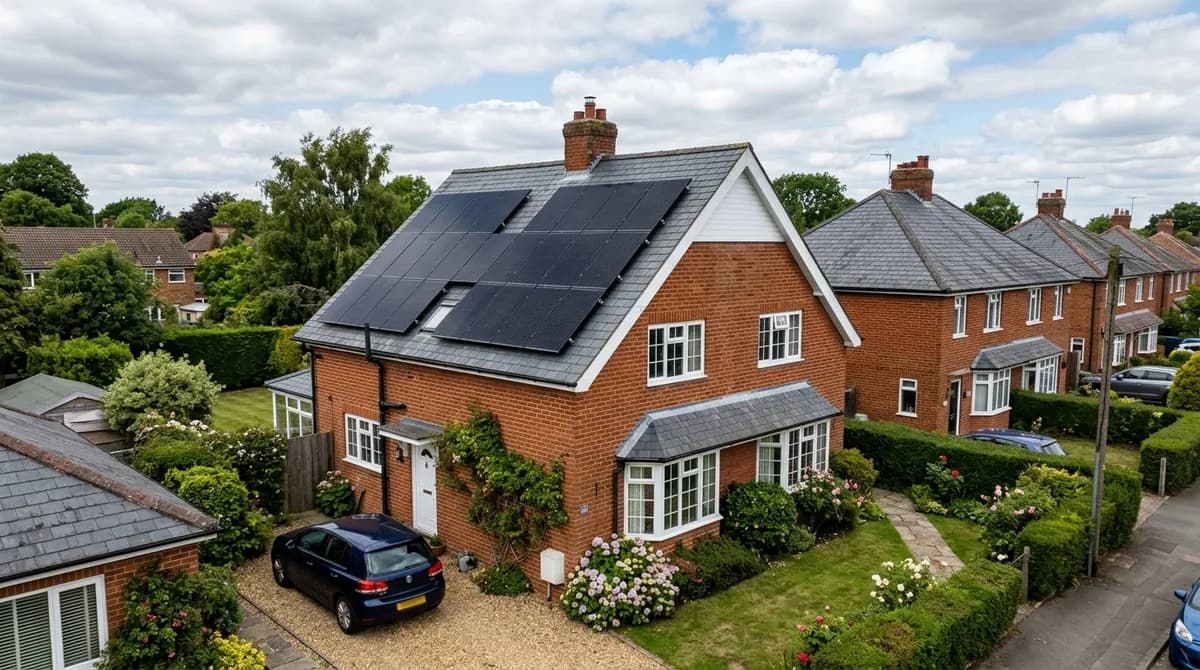
Always use an MCS-certified installer. MCS certification is required for the Smart Export Guarantee and 0% VAT rate. It also ensures the installation meets industry standards and is covered by a consumer code. Check the MCS installer database before accepting any quote.
Quick answer
How much do solar panels cost?
A fully installed solar panel system costs between £5,000 and £11,000 depending on the system size. A 4kW system - the most common size for a 3-bed house - typically costs £6,000 to £8,000. Adding battery storage costs an extra £2,000 to £8,000. With 0% VAT on residential installations, these prices are roughly 15% lower than they would be otherwise.
View the full solar panel cost guide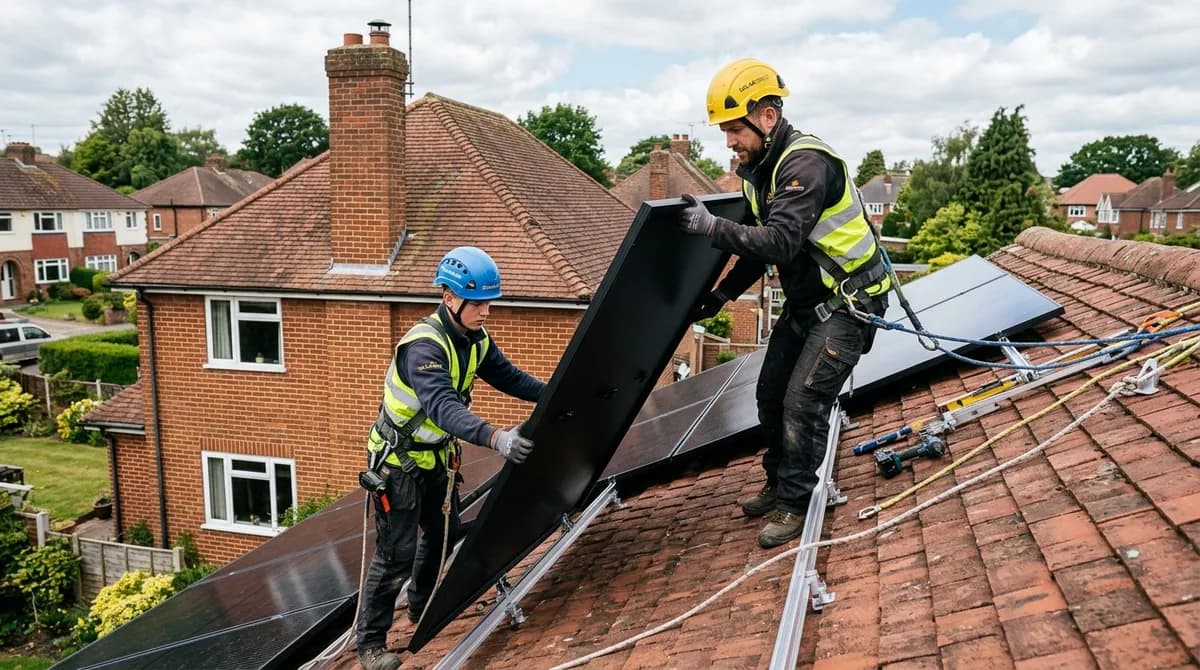
How do solar panels work?
Solar photovoltaic (PV) panels convert sunlight into electricity. The process is straightforward, and there are no moving parts - which is why solar panels require so little maintenance.
Sunlight hits the photovoltaic cells in the panel, which generates a direct current (DC) electrical charge
An inverter converts the DC electricity into alternating current (AC) that your home appliances can use
Your home uses the solar electricity first - any surplus is either stored in a battery or exported to the grid
You earn money for exported electricity through the Smart Export Guarantee (SEG) - typically 3 to 15p per kWh
Are solar panels worth it in 2026?
The short answer is yes - for most UK homeowners with a suitable roof, solar panels are a solid investment. But the return depends on several factors.
The numbers in favour
A 4kW system costing around £7,000 saves £500 to £900 per year and pays for itself in 9 to 13 years. With panels lasting 25 to 30 years, that is 12 to 20 years of near-free electricity. The 0% VAT rate saves you £1,000 to £1,500 compared to the standard rate. Electricity prices are unlikely to fall significantly, so the savings grow in real terms over time.
When it works best
Solar panels give the best return if you have a south-facing roof, you use a reasonable amount of electricity during the day (working from home, electric vehicle, heat pump), and you plan to stay in the property for at least 8 to 10 years. Adding a battery increases self-consumption but extends the payback period.
When to think twice
If your roof faces north, is heavily shaded, or needs replacing in the next few years, solar may not make financial sense right now. If you are planning to move within 3 to 5 years, you probably will not recoup enough of the investment - though solar panels do add to property value.
Property value
Research suggests solar panels add around 1 to 2% to a property's value, though this varies. A well-maintained MCS-certified system with transferable warranties is an attractive feature for buyers who understand the savings. Some estate agents report faster sales on properties with solar installations.
Best solar panels in the UK
The best panel for your home depends on your roof space, budget, and how much output you need. Here are the panel types and brands that UK installers recommend most often.
Monocrystalline panels (most popular)
Made from a single silicon crystal. Higher efficiency (20 to 23%) means more electricity per panel - so you need fewer panels to hit your target output. Slightly more expensive per panel but the best option for most UK roofs, especially where space is limited. Top brands: SunPower, LG, Jinko Solar, JA Solar, Canadian Solar.
Polycrystalline panels (budget option)
Made from multiple silicon crystals. Lower efficiency (15 to 18%) and slightly less output per panel. Cheaper per unit but you need more panels for the same system size, so the overall saving is smaller than the per-panel price suggests. Less common in new UK installations now that monocrystalline prices have dropped.
Half-cut cell panels
A newer design that splits each cell in half, reducing internal resistance and improving output - especially in partial shade. Most premium monocrystalline panels now use half-cut cell technology. They cost a small amount more but offer better performance in real-world UK conditions where partial shading from clouds is common.
Our recommendation: For most UK homes, a monocrystalline system from a well-known manufacturer (Jinko, JA Solar, or Canadian Solar) paired with a quality inverter (SolarEdge, Enphase, or GivEnergy) offers the best balance of performance, reliability, and value.
Grants & incentives
Solar panel grants and financial incentives
There are several government-backed schemes that reduce the cost of going solar. The 0% VAT rate saves over £1,000, the Smart Export Guarantee pays you for surplus electricity, and the ECO4 scheme can fund installations for qualifying low-income households. The old Feed-in Tariff and Green Homes Grant are no longer available for new applicants.
View the full grants and incentives guideSolar panel maintenance costs
Solar panels need very little maintenance - one of the reasons the ongoing cost of ownership is so low. Here is what to budget for.
Annual cleaning
Not always necessary - rain does a decent job. Worth doing if you notice a drop in output, or if your panels are under trees that drop sap or leaves.
£100 to £200
Inverter replacement
Inverters typically last 10 to 15 years. Budget for one replacement during the life of the panels. String inverters cost less to replace than microinverter systems.
£500 to £1,200
Annual inspection
Optional but recommended every 3 to 5 years. The installer checks connections, mounting integrity, and panel output to catch any issues early.
£80 to £150
Monitoring system
Most modern inverters come with free app-based monitoring. Some premium monitoring services charge an annual fee for detailed analytics.
Free - £100/year
Total annual maintenance cost: roughly £50 to £100 per year averaged over the lifetime of the system, including the inverter replacement. That is well under the annual savings from the panels themselves.
How to find a good solar installer
Check MCS certification
This is non-negotiable. MCS certification is required for the Smart Export Guarantee and 0% VAT. It also means the installer follows a consumer code that protects you if something goes wrong. Search the MCS database at mcscertified.com to verify.
Get at least three quotes
Solar installation prices vary by 20 to 30% between companies for the same system. Get three quotes on the same specification - same panel brand, same inverter, same system size - so you can compare fairly. Be wary of any company that pressures you into signing on the day.
Check the survey is thorough
A good installer will visit your property, inspect the roof from inside and outside, check for shading throughout the day, assess the consumer unit, and explain exactly how many panels will fit and where the inverter will go. If anyone quotes over the phone without visiting, move on.
Ask about the warranty
Panels should come with at least a 25-year performance warranty. The inverter warranty should be at least 10 years (some premium inverters offer 25). The installer should also provide a workmanship warranty covering the installation itself - typically 5 to 10 years. Get all of this in writing.
Solar panel guides
Common questions about solar panels
Are solar panels worth it in the UK?
For most homeowners, yes. A typical 4kW system costs around £6,000 to £8,000 and saves £500 to £900 per year on electricity bills, giving a payback period of roughly 9 to 13 years. With panels lasting 25 to 30 years, you get 12 to 20 years of near-free electricity after the system pays for itself. The 0% VAT rate and Smart Export Guarantee make the numbers more attractive than they have been in years.
How do solar panels work?
Solar panels contain photovoltaic (PV) cells that convert sunlight into direct current (DC) electricity. An inverter converts this to alternating current (AC) that your home appliances can use. Any surplus is either stored in a battery (if you have one) or exported to the grid through the Smart Export Guarantee. The panels work in daylight - not just direct sunshine - so they generate electricity on cloudy days too, just at a lower rate.
How long do solar panels last?
Most solar panels come with a 25-year performance warranty and typically last 25 to 30 years or longer. Output gradually decreases over time - most manufacturers guarantee at least 80% of original output after 25 years. The inverter has a shorter lifespan of 10 to 15 years, so budget for one replacement during the life of the system.
Do solar panels work on cloudy days?
Yes. Solar panels generate electricity from daylight, not direct sunshine. On a cloudy day, panels still produce around 10 to 25% of their peak output. The UK receives enough annual sunlight hours for solar panels to be a worthwhile investment even in Scotland and Northern Ireland.
Can I get free solar panels?
Free solar panel schemes do exist, but they typically involve a third party owning the panels on your roof and selling you the electricity at a discounted rate, or taking the export payments themselves. You save on your electricity bill, but you do not own the system and cannot claim the SEG income. In most cases, buying your own system outright gives a better return over the long term.
Do I need planning permission for solar panels?
Most residential solar panel installations in England and Wales fall under permitted development rights and do not need planning permission. Exceptions include listed buildings, conservation areas, panels that project more than 200mm from the roof surface, and panels higher than the highest point of the roof. Scotland has similar but slightly different rules. Always check with your local planning authority if you are unsure.
Quote service coming soon
Get free quotes from solar installers near you
Free, no obligation. Read the cost guide first so you know what a fair price looks like before anyone gives you a number.
Compare real quotes for your job
Prices move a lot with your postcode, the access on site and the spec you choose. Get up to 3 free quotes from vetted local tradespeople and see what yours actually comes to, with no obligation to book.