Roofing: Types, Repairs & How to Choose 2026
Sorting out your roof is a big decision, so this guide walks you through the choices: tile and flat roof options, whether a repair will do or you need a full re-roof, and how to find a reliable roofer who will not cut corners. A typical re-roof runs from £6,000, with our cost guide covering the full breakdown.
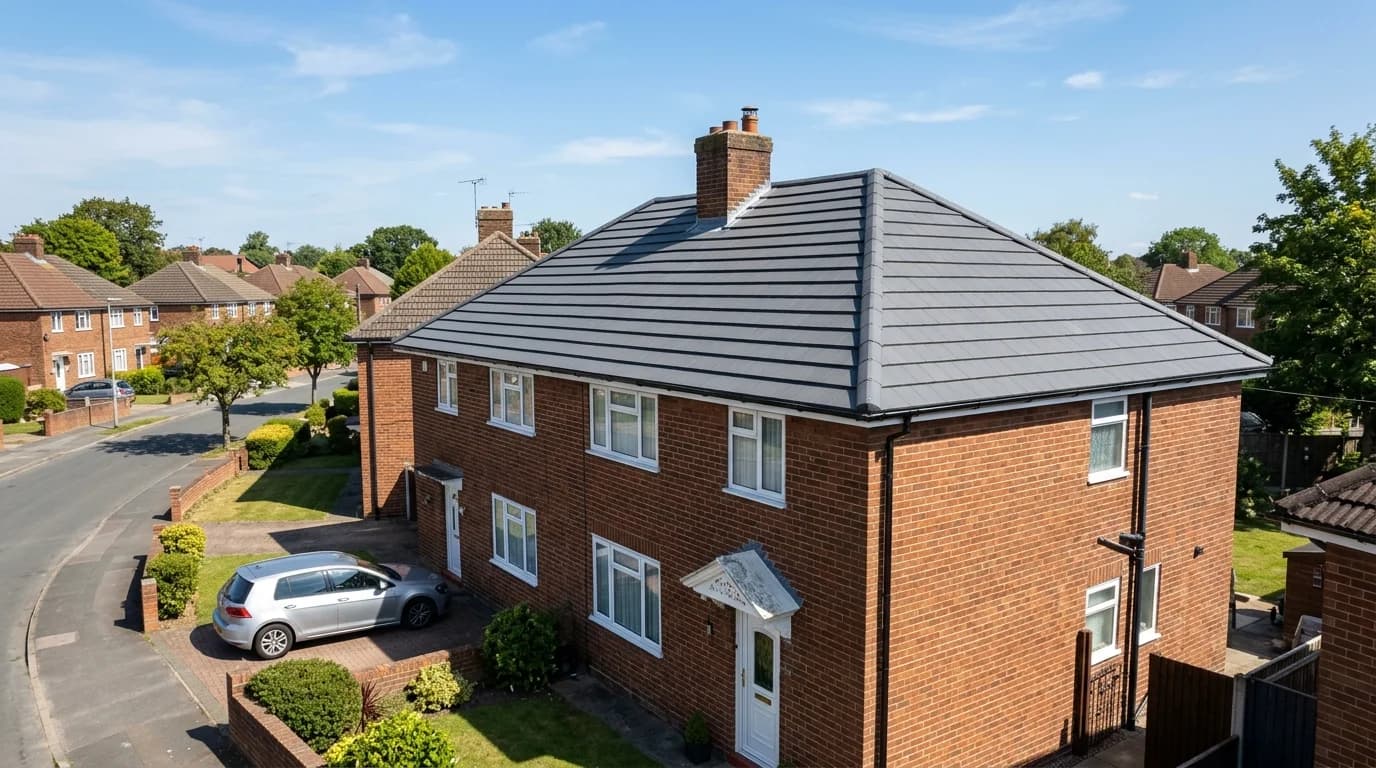
Quick answer
A full re-roof on a typical semi-detached house costs £6,500 to £11,000. The work runs at roughly £90 to £135 per m² for concrete tiles before scaffolding, and more for clay or slate. A detached house costs £10,000 to £18,000, and a large one in slate can cost more. Repairs are a fraction of that: minor patch jobs start from around £150.
See full roofing cost guideGet free roofing quotes
Prices move a lot with your postcode, the access on site and the spec you choose. Get free quotes from local roofers and see what yours actually comes to, with no obligation to book.
What the job involves
What does a roofer actually do?
Full strip and re-roof
The existing tiles or slates are removed along with the old felt underlay and battens. A new breathable membrane is fitted, new timber battens are fixed, and fresh tiles are laid from the eaves up. Ridge tiles are re-bedded or dry-fixed. Most full re-roofs take 3 to 7 days depending on the property size.
Repairs and patch work
Slipped or broken tiles can usually be replaced individually without disturbing the rest of the roof. Ridge tile re-bedding, lead flashing repairs around chimneys and dormers, and valley repairs are common patch jobs. A roofer should be able to quote for repairs after a visual inspection, ideally with photos taken from up on the scaffolding. Our chimney repair costs cover repointing, flashing and pots.
Flat roof replacement
Flat roofs over garages, extensions, and bay windows have a shorter lifespan than pitched roofs and typically need replacement every 10 to 25 years depending on the system. A lead-covered bay lasts far longer, often 50 to 100 years (see our bay window roof costs). Modern GRP fibreglass flat roofs are seamless and very long-lasting. Torch-on felt is a cheaper option but needs more maintenance. A good contractor will advise which system suits your situation.
Fascia, soffit, and guttering
Most roofers also carry out fascia, soffit, and guttering replacements. These are often quoted alongside a re-roof as the scaffolding is already up, making it more cost-effective to do everything at the same time. New uPVC fascia and soffit boards on a semi-detached typically add £1,500 to £3,000 to the job (see fascia and soffit costs).
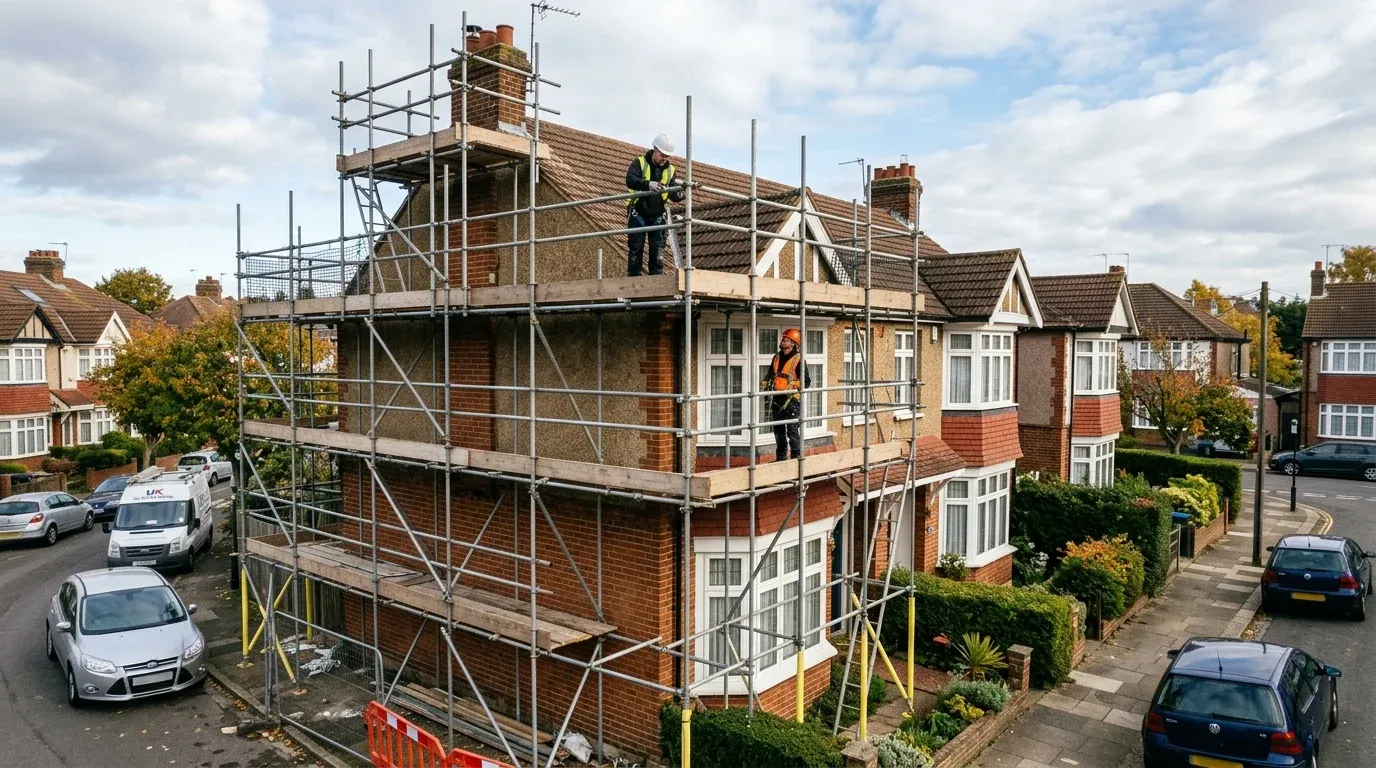
Get at least 3 quotes. Roofers are one of the most targeted trades for overcharging. Never pay more than 25% upfront, and be wary of anyone who knocks on your door after a storm offering to check your roof.
Before you hire
Key things to consider
Tile type affects both cost and lifespan
Concrete interlocking tiles are the most common choice. They last 30 to 50 years and are significantly cheaper than clay or slate. Clay tiles are more traditional in appearance and can outlast concrete. Natural Welsh slate is the premium option and can last over a century. On a semi, Welsh slate adds about two thirds to the cost of a concrete tile re-roof and Spanish slate about a quarter (see our slate roof costs). Your choice may also be restricted by local planning policy, particularly in conservation areas.
Check whether the felt underlay needs replacing
On older roofs, the original bitumen felt underlay often becomes brittle and tears. If a contractor is quoting to re-tile over existing felt, make sure you understand why. On most roofs over 25 years old, the right approach is to strip everything back and start fresh. New breathable roofing membrane is better than old-style felt in any case.
Make sure scaffolding is in the quote
Ask for scaffolding on its own line in every quote, so you can compare like with like. Some roofers price access separately, especially on repairs, and a quote that looks unusually low has often left it out. Once scaffolding is added, the final price can be well above what it first appeared.
Older properties may contain asbestos
Homes built before 2000 can contain asbestos in various locations, including some roof valley materials and insulation products. If there is any doubt, ask your roofer to check before stripping out. A professional asbestos survey costs around £100 to £200. Removing asbestos requires a licensed specialist and adds to the project cost.
Finding a contractor
How to find a good roofer
- 1
Look for NFRC membership
The National Federation of Roofing Contractors (NFRC) at nfrc.co.uk is the main trade body for UK roofers. Members sign up to a code of practice and can be verified on the NFRC website. It is not a guarantee, but it is a useful starting filter.
- 2
Get a minimum of three written quotes
Roofing prices vary enormously between contractors. Three quotes gives you a sense of the going rate and lets you spot if anyone is pricing unusually high or, equally, suspiciously low. Ask each contractor to quote like-for-like so you can compare properly.
- 3
Ask to see their guarantee in writing
A credible roofing contractor will offer a written guarantee covering both materials and workmanship. Ten years on workmanship is reasonable. Manufacturer guarantees on materials can be longer. Ask what the guarantee actually covers and how they handle claims before you sign anything.
- 4
Confirm scaffolding is in the quote
A professional re-roof always requires scaffolding. Make sure the quote includes it. Also check whether the quote covers skip hire for the old tiles, or whether that is separate.
- 5
Check their public liability insurance
Ask for proof of public liability insurance before work starts. Any reputable contractor will provide this without hesitation. Two million pounds is a reasonable minimum; many good contractors carry five million.
Guides
Roofing guides
New Roof Cost Guide
Full price breakdown by roof type, property size, and region.
£5,000 to £18,000
Free Roofing Calculator
Get a free instant roofing estimate for your property.
Free instant estimate
Roof Repair Cost Guide
Repair prices job by job, leaking roof costs, and when a repair stops being worth it.
£150 to £700
Flat Roof Cost Guide
Felt, EPDM rubber, and GRP flat roof prices per m².
£60 to £150 per m²
Flat Roof Repair Cost
Patches, leaks and flashings on felt, rubber and fibreglass roofs, with a repair calculator.
£150 to £450
Garage Roof Replacement Cost
Felt, rubber, fibreglass and steel, for single and double garages.
£1,200 to £3,000
Roof Cleaning Cost Guide
Moss removal prices by house type, from 31 firms, and whether your roof needs it at all.
About £650 for a semi
Fibreglass (GRP) Roof Cost Guide
GRP fibreglass flat roof prices, lifespan, and comparison with felt and EPDM.
£105 to £150 per m²
Rubber (EPDM) Roof Cost
EPDM prices per m² and for garages, extensions and dormers, with what's included and how it compares with felt and fibreglass.
£80 to £120 per m²
Chimney Repair Cost
Repointing, lead flashing, pots, cowls and rebuilding the stack, with what the scaffold adds.
£450 to £1,100
Slate Roof Cost
Welsh, Spanish and fibre cement slate by house type, plus slipped slate repairs.
£9,500 to £16,000
Bay Window Roof Cost
Lead, fibreglass, felt and tiled bay roofs, and what a repair to the flashing costs.
£600 to £2,000
Garage Roof Replacement Cost
What you should expect to pay to replace a garage roof, with felt, EPDM and GRP options compared.
Read the full article
Official Resources
Trusted sources for further reading and professional guidance.
NFRC: National Federation of Roofing Contractors
Find NFRC-accredited roofing contractors and check member credentials.
HSE: Working at height guidance
Health and Safety Executive guidance on roof work safety requirements.
Planning Portal: Roof work planning rules
Check if your roofing project needs planning permission under permitted development rules.
FAQ
Common roofing questions
How do I know if a roofer is reputable?
Look for NFRC membership and check it on their website. Beyond that, look for a contractor that has traded locally for several years, gives you a written guarantee on materials and workmanship, and includes scaffolding in the quote without being asked. Get at least three quotes and be cautious of anyone who cold-calls you after a storm.
When is it better to repair rather than replace?
If the structure is sound and only a few tiles are damaged, a repair is almost always the right decision. A full re-roof makes sense when the felt underlay has deteriorated, the timber battens are rotten, large sections of tiles are failing, or the roof is 40 or more years old and has never been replaced. A good roofer should give you an honest steer on this.
Do I need Building Regulations approval for a new roof?
A like-for-like re-roof usually needs no planning permission, but in England a whole re-roof does need Building Regulations approval, or a roofer registered with the NFRC or NAPIT scheme can certify it for you. Small repairs affecting less than half the roof normally need no application. Structural changes to the roof timbers, altering the roof shape or converting a flat roof to a pitched roof also need approval. Listed buildings need listed building consent, and in a conservation area check whether an Article 4 direction controls roof materials.
Should I be concerned about asbestos?
Asbestos cement was used in garage and outbuilding roofing right up until it was banned in the UK in 1999, and occasionally appears in other materials on older properties. If your home was built before 2000, ask your roofer to check before stripping out. A professional survey costs around £100 to £200. Removal must be carried out by a licensed contractor.
How much deposit should I pay a roofer?
No more than 25% upfront. A contractor asking for 50% or more before work starts should raise your eyebrows. Pay by card where possible for chargeback protection. Paying by credit card for anything costing over £100 and up to £30,000 also gives you Section 75 protection, and if you agreed the work at home you have 14 days to cancel. Roofers are one of the trades most commonly cited by Trading Standards for deposit-related complaints.
Free, with no obligation to book.