How Much Does a Flat Roof Cost in 2026?
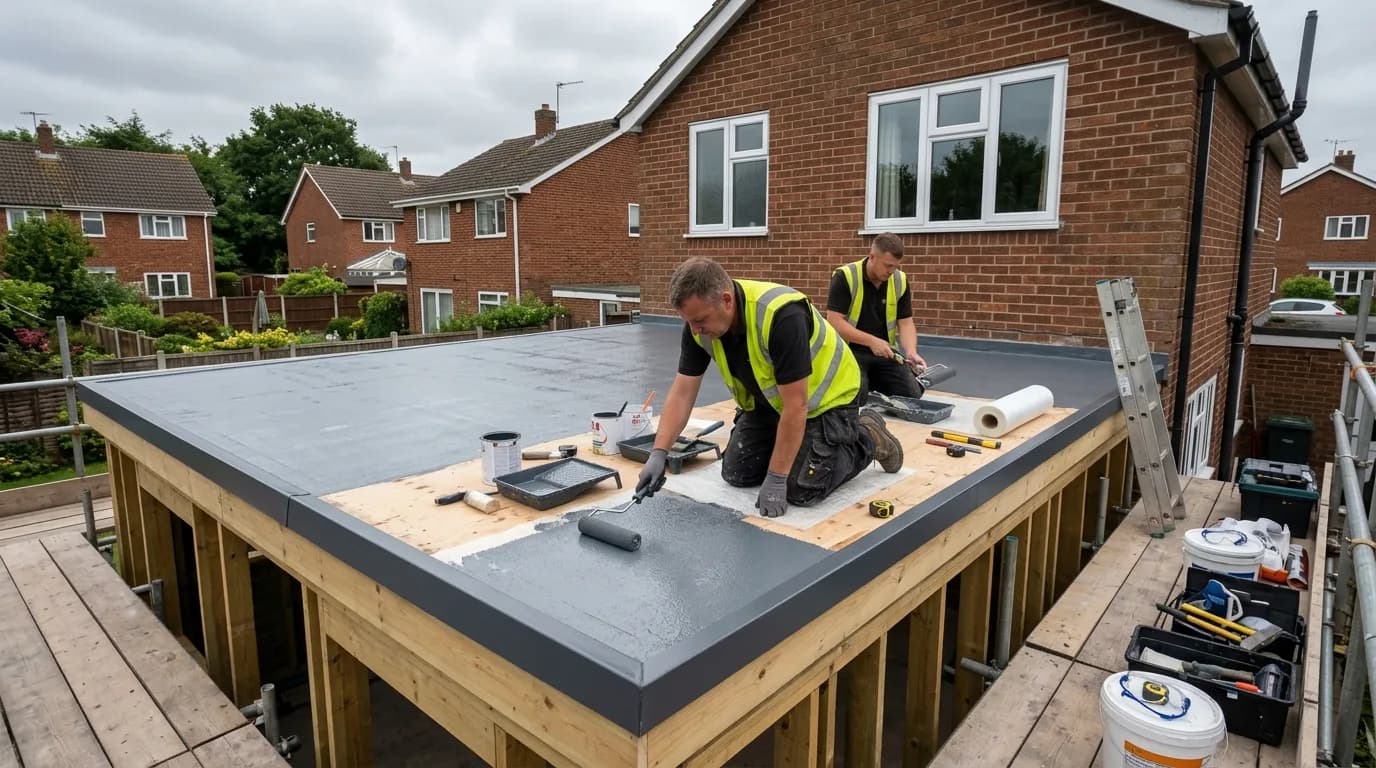
Flat roof costs run between £40 and £80 per m² depending on the material. A typical garage flat roof (15 m²) costs £1,200 to £2,500. A single-storey extension flat roof (25 m²) costs £2,000 to £4,000.
£60
Average per m²
£1,200
Garage roof from
£2,000
Extension from
30 to 50 yrs
EPDM lifespan
Prices updated April 2026 · Based on industry data and contractor submissions.
Building Regulations. Most flat roof replacements need to meet current insulation standards under Part L of the Building Regulations. Your roofer should handle the compliance, but check this is included in the quote. Structural changes to the roof need Building Control sign-off. Use an NFRC-registered contractor for peace of mind.
Flat Roof Prices by Material
Prices per square metre including labour and materials. The material you choose is the single biggest factor in both the upfront cost and how long the roof lasts.
Felt (torch-on)
Multi-layer bitumen felt, heat-bonded
£48/m²
£40 to £55/m²
EPDM rubber
Single-ply synthetic rubber membrane
£65/m²
£55 to £75/m²
GRP fibreglass
Glass-reinforced polyester, seamless finish
£70/m²
£60 to £80/m²
Lead
Traditional sheet lead, longest-lasting option
£100/m²
£80 to £120/m²
Prices include stripping old covering, new decking boards if needed, and fitting. Insulation upgrade may add £20 to £40/m².
Flat Roof Cost by Application
Total project costs based on an EPDM rubber or GRP system, including stripping the existing covering. Felt will be cheaper; lead will be more.
| Application | Average Cost | Price Range |
|---|---|---|
| Garage roof (approx. 15 m²) | £1,800 | £1,200 to £2,500 |
| Single-storey extension (approx. 25 m²) | £3,000 | £2,000 to £4,000 |
| Dormer roof (approx. 8 m²) | £1,200 | £800 to £1,800 |
| Porch roof (approx. 5 m²) | £750 | £500 to £1,200 |
| Large flat roof (approx. 40 m²) | £4,500 | £3,200 to £6,000 |
Felt vs Rubber vs GRP: Which Is Best?
Each material has its place. The right choice depends on your budget, how long you want it to last, and whether the roof needs to bear foot traffic.
| Factor | Felt | EPDM | GRP |
|---|---|---|---|
| Cost per m² | £40 to £55 | £55 to £75 | £60 to £80 |
| Lifespan | 10 to 20 yrs | 30 to 50 yrs | 25 to 40 yrs |
| Maintenance | Regular | Very low | Low |
| Walkable? | Limited | Light use | Yes |
| Seamless? | No (joints) | Yes (small) | Yes |
| Warranty | 5 to 10 yrs | 15 to 25 yrs | 15 to 25 yrs |
Why EPDM Rubber Is the Most Recommended Option
EPDM (ethylene propylene diene monomer) rubber has become the default recommendation from most flat roof specialists for domestic work. Here is why.
Single-sheet coverage
For roofs up to around 50 m², EPDM can be laid as a single continuous sheet. No joints means no seams to fail, which is the most common cause of flat roof leaks. Larger roofs need joined sheets, but modern adhesive systems make these joints extremely reliable.
Temperature tolerance
EPDM stays flexible in temperatures from -40°C to +120°C. Felt becomes brittle in cold weather and can crack; GRP resin needs warmth to cure. In the UK climate, EPDM handles everything from a January frost to a July heatwave without degrading.
Proven longevity
EPDM has been used on flat roofs since the 1960s in North America and has a well-documented track record of lasting 40 to 50 years in real-world conditions. It is not a new or untested material - there are roofs from the 1970s still going strong.
Straightforward repairs
If damage does occur - from a fallen branch or accidental puncture - EPDM can be patched with a self-adhesive repair piece. You do not need to call a specialist or strip the whole roof. GRP damage is harder to repair invisibly.
How Long Does Each Type of Flat Roof Last?
Installation quality matters as much as material choice. A well-laid felt roof will outlast a badly installed GRP one. That said, the material sets the ceiling on how long you can reasonably expect the roof to perform.
Torch-on felt
10 to 20 yearsThe most affordable option but the shortest-lived. Quality varies hugely between installers. A good felt job can last 20 years; a poor one might fail in under 10.
EPDM rubber
30 to 50 yearsThe best balance of cost and longevity for most domestic flat roofs. Manufacturer warranties of 20 to 25 years are standard, and real-world performance regularly exceeds this.
GRP fibreglass
25 to 40 yearsHard-wearing and walkable, making it ideal for balconies and roof terraces. The seamless finish eliminates leak points, but it must be installed in dry, warm conditions to cure properly.
Lead
50 to 100 yearsThe traditional choice for dormer cheeks, bay tops, and small flat areas. Exceptionally long-lasting when properly laid by an experienced leadworker. The cost is two to three times higher than EPDM.
Repair or Replace? How to Decide
Not every flat roof problem means a full replacement. Here is a rough guide to when a repair makes sense and when it does not.
A repair is likely enough if...
- ✓ The leak is from a single, identifiable point (a lifted seam, cracked joint, or blocked outlet)
- ✓ The rest of the roof surface is in good condition
- ✓ The decking boards underneath are still solid (no sagging or soft spots)
- ✓ The roof is less than 10 years old
Typical repair cost: £150 to £500
A replacement makes more sense if...
- ✗ The felt is cracking, blistering, or splitting in multiple areas
- ✗ Water is ponding (pooling) because the falls are wrong
- ✗ The decking boards are soft, rotten, or sagging
- ✗ You have had it repaired more than twice in the past two years
At that point, patching is throwing good money after bad.
Additional Costs to Budget For
These extras regularly appear alongside flat roof quotes. Ask about each one before work begins.
| Extra Item | Typical Cost |
|---|---|
| Decking board replacement (OSB/plywood) | £15 to £25/m² |
| Fascia and drip edge trim | £150 to £400 |
| Insulation upgrade to Building Regs | £20 to £40/m² |
| Scaffolding or tower | £200 to £600 |
| Outlet and drainage work | £100 to £300 |
| Skip hire for old materials | £200 to £350 |
Flat Roof Costs by Region
Average price per m² for an EPDM rubber flat roof replacement (labour and materials), by UK region.
| Region | Price per m² | vs National |
|---|---|---|
| London | £78/m² | +30% |
| South East | £68/m² | +13% |
| East of England | £64/m² | +7% |
| South West | £62/m² | +3% |
| Midlands | £60/m² | Average |
| Yorkshire | £54/m² | -10% |
| North West | £55/m² | -8% |
| North East | £50/m² | -17% |
| Scotland | £54/m² | -10% |
| Wales | £52/m² | -13% |
Based on industry data for EPDM rubber systems. Felt will be lower; lead and GRP may differ.
How to Get Your Flat Roof Done for Less
A few practical decisions around material choice, timing, and bundling work can reduce the total cost without cutting corners.
Choose EPDM for the best lifetime value
Felt is cheapest upfront but lasts half as long as EPDM rubber. On a 15 m² garage roof, the difference between felt and EPDM is roughly £200 to £400 extra now versus replacing the whole thing again in 12 to 15 years. The maths almost always favours EPDM unless you are planning to sell the property within the next few years.
Check whether a repair is enough first
A flat roof that is leaking in one spot does not always need a full replacement. Small felt repairs, resealing a joint, or clearing a blocked outlet can cost £150 to £500 and buy years of extra life. Ask a roofer to assess the full roof and decking condition before agreeing to a replacement - some will push for a full job when a repair would do.
Bundle it with other roof or fascia work
If your guttering, fascias, or soffits also need attention, do it all at the same time. The roofer is already on site with access equipment, and the overlap in labour saves money compared to two separate jobs. A fascia and gutter replacement alongside a flat roof job typically saves £200 to £400 versus booking them separately.
Avoid winter installations
GRP fibreglass needs dry conditions and temperatures above 5°C to cure properly. EPDM adhesives also perform best in warmer weather. A flat roof laid in freezing or wet conditions is more likely to fail early. Spring and early autumn give the best balance of decent weather and roofer availability.
Ask about the warranty in writing
A proper flat roof installation should come with a manufacturer-backed warranty - typically 10 to 20 years for EPDM and GRP. Get this in writing, not just a verbal promise. Some installers offer their own labour guarantee on top. A roofer who will not provide a written warranty is not one you want on your roof.
What to Expect: The Flat Roof Replacement Process
Whether you're replacing a garage roof or re-covering an extension, here's how the job typically unfolds from start to finish.
- 1
Strip the existing roof covering
The old felt, EPDM, or GRP membrane is stripped back to the deck boards. Any rotten or water-damaged timber is replaced at this stage.
- 2
Inspect and repair the deck
The plywood or OSB decking is checked for structural soundness. Damaged boards are cut out and replaced with marine-grade plywood to create a solid, flat base.
- 3
Lay insulation and vapour barrier
Rigid insulation boards are fitted on top of the deck to meet current Building Regulations (Part L). A vapour control layer goes underneath to prevent condensation.
- 4
Install the new membrane
The chosen covering, felt (torch-on), EPDM rubber, or fibreglass (GRP), is laid and bonded to the deck. Joints are sealed and edges are dressed into drip trims.
- 5
Fit edge trims and flashings
Metal drip edges, verge trims, and lead flashings are installed where the roof meets walls or parapets. These prevent water ingress at vulnerable points.
- 6
Final inspection and clean-up
The roofer checks all seams, overlaps, and flashings for watertightness. Gutters are cleared of debris and a final visual inspection confirms the job is complete.
Frequently Asked Questions
How much does a flat roof cost for a garage?
A typical single garage flat roof (around 15 m²) costs £1,200 to £2,500 depending on the material. Felt is at the lower end, EPDM rubber in the middle, and GRP fibreglass at the top. Most roofers now recommend EPDM or GRP for garages because they last significantly longer than felt and rarely need the kind of patching that felt roofs tend to require after 10 to 15 years.
What is the best material for a flat roof?
EPDM rubber has become the most recommended flat roof material for most domestic applications. It lasts 30 to 50 years, comes in a single seamless sheet for smaller roofs (so no joints to fail), and handles temperature extremes well. GRP fibreglass is the other popular choice - it is harder-wearing and can be walked on, making it the better option for balconies or roof terraces. Felt is the cheapest but has the shortest lifespan at 10 to 20 years.
How long does a flat roof last?
Torch-on felt lasts 10 to 20 years depending on quality and installation. EPDM rubber membrane typically lasts 30 to 50 years. GRP fibreglass lasts 25 to 40 years with minimal maintenance. Lead is the longest-lasting option at 50 to 100 years but costs significantly more. The single biggest factor in how long any flat roof lasts is the quality of the installation - a poorly laid GRP roof will fail faster than a well-laid felt one.
Can I repair a flat roof instead of replacing it?
Sometimes. If the damage is localised - a small area of felt that has lifted, a single split, or a blocked outlet causing ponding - a repair is often enough and can cost as little as £150 to £500. If the roof is leaking in multiple places, the felt is brittle and cracking across its surface, or the timber decking underneath has started to rot, a full replacement is the better long-term decision. Patching a roof that is past its life just delays the inevitable.
Does a flat roof need planning permission?
Replacing a flat roof covering like-for-like is permitted development and does not require planning permission. If you are changing the roof structure, raising the height, or converting a flat roof into a terrace or balcony, you will likely need planning permission and Building Regulations approval. Flat roofs on extensions that adjoin the original house may need Building Regulations sign-off regardless, particularly for insulation requirements.
Why do flat roofs leak more than pitched roofs?
Flat roofs are not actually flat - they have a slight fall (typically 1:40 to 1:80) to direct water towards an outlet or gutter. When that fall is insufficient, or when the membrane develops even a small crack or lifted seam, water pools rather than running off. On a pitched roof, gravity does most of the work. On a flat roof, the waterproof membrane has to do all of it. That is why material quality and installation skill matter so much more with flat roofs.
Is EPDM rubber better than felt for a flat roof?
For most domestic flat roofs, yes. EPDM lasts two to three times longer than felt (30 to 50 years versus 10 to 20), stays flexible in freezing temperatures (felt can crack), and is laid as a single sheet on smaller roofs so there are no seams to fail. It costs more upfront - roughly £55 to £75 per m² versus £40 to £55 for felt - but the lifetime cost is lower because you are not replacing it every 15 years.

Written by Chris Kervin, Co-Founder of Less.co.uk
Last updated: · Pricing based on industry data and verified contractor submissions · Methodology
Ready to get your flat roof done for less?
Compare free quotes from local roofing contractors near you. Getting three quotes is the single best way to make sure you are paying a fair price.
Get Free QuotesFree, no obligation · Local roofing contractors · Compare multiple quotes
More home improvement costs
Compare real quotes for your job
Prices move a lot with your postcode, the access on site and the spec you choose. Get up to 3 free quotes from vetted local tradespeople and see what yours actually comes to, with no obligation to book.