Plastering: Types, Finish & How to Choose 2026
This guide walks you through the whole job, from working out whether you need a re-skim, a full replaster, dot and dab or old artex removing, to spotting a good finish and finding a plasterer you can trust. For full prices by room, wall and whole house, see our plastering cost guide.
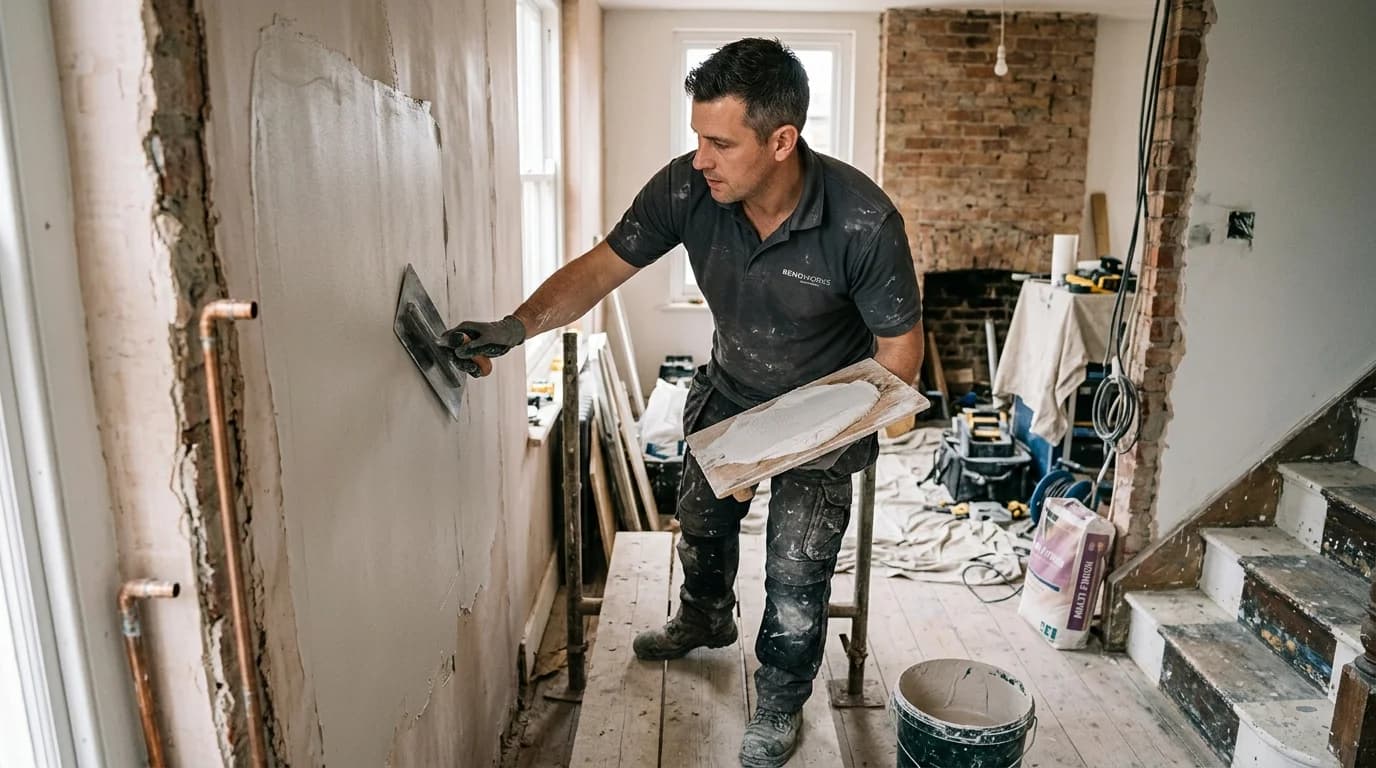
Artex warning: Textured coatings in homes built before 2000 may contain asbestos. Get it tested (around £30) before any sanding, scraping, or removal. See the HSE asbestos guidance.
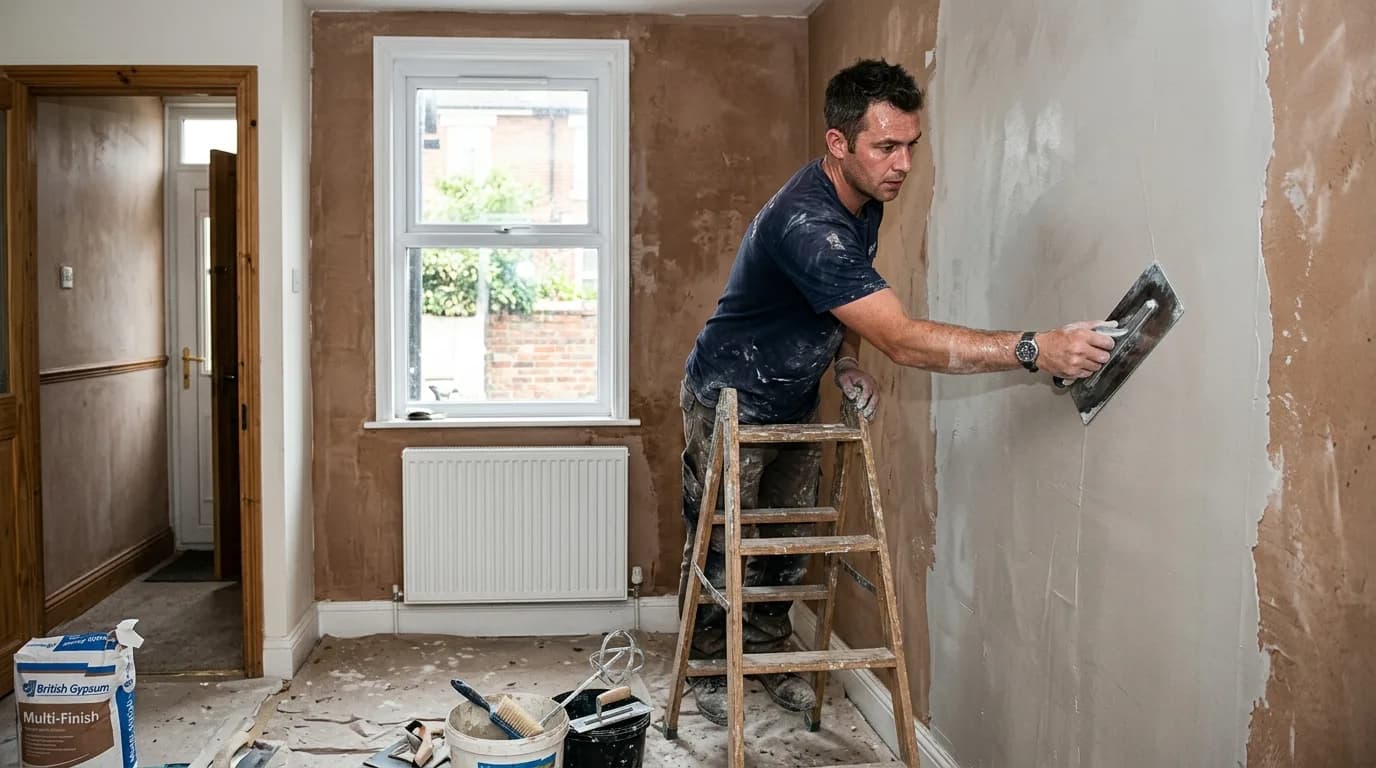
Types of plastering work
Skim coat (re-skim)
A thin finish coat of plaster over existing plasterboard or old plaster that is still sound. The quickest and cheapest option - a single room takes 1 day.
Full replaster
Removing old plaster back to the brick or block and applying scratch coat, brown coat, and finish. Used when plaster is blown, damp-damaged, or crumbling.
Artex removal and skim
Removing textured ceiling or wall finish, then skimming over. If artex contains asbestos (pre-2000 properties), specialist removal is required before any plastering.
Dot and dab (dry lining)
Fixing plasterboard directly to the wall with adhesive dots and bands, then skimming the board. Faster and less messy than wet plastering on solid walls.
How to find a good plasterer
Look for finish quality, not just price
Plastering is a skill where experience shows clearly. Ask to see previous work or references from similar jobs. A cheap skim that needs sanding for days before painting isn't a saving.
Get quotes by the room, not just a day rate
Day rates vary (£150 to £250) but an experienced plasterer will work faster than a less experienced one. A fixed-price quote by room gives you clearer cost certainty.
Confirm the drying time plan
Fresh plaster needs 4 to 6 weeks to fully dry before painting. Ask whether they use a moisture meter to check before handing over. Painting too early causes problems.
Clarify what prep is included
PVA bonding agent, fixing loose areas, filling cracks - check whether prep work is included in the quote or priced separately.
Get at least three quotes
Plastering prices vary significantly between tradespeople, especially between day rates and fixed-price quotes. Get at least three written quotes for the same scope of work so you can compare like for like. Make sure each quote specifies whether it covers materials, prep, and clearing up.
Plastering guides
Plastering cost calculator
Get an instant estimate for your plastering job based on room sizes and plaster type.
Plastering cost guide
Prices per room, per wall, and for whole-house replastering in 2026.
Rendering cost guide
External rendering prices per m², silicone render, K Rend, pebbledash, and monocouche costs.
All home improvement costs
Browse cost guides for all 10 home improvement topics.
Common questions
How long does plaster take to dry before I can paint?
New plaster typically takes 4 to 6 weeks to fully cure. You can usually apply a mist coat (heavily diluted emulsion) after 2 to 3 weeks, but full painting should wait until the plaster is completely dry. A pink/grey colour change indicates drying - use a moisture meter to be certain.
My walls are old lime plaster - can I skim over them?
Skimming directly over old lime plaster with modern gypsum plaster can cause adhesion problems and cracking. An experienced plasterer should assess the substrate and may recommend a suitable bonding agent or use a compatible lime-based finish instead.
Do I need to move furniture out?
Yes - the room needs to be cleared, and dust is significant during preparation work. Plasterers will usually lay dust sheets, but moving everything out beforehand makes the job faster and protects your belongings.
How do I know if my artex contains asbestos?
There is no safe way to tell by looking. If your property was built or renovated before 2000, have it tested before any work begins. Sample testing costs around £25 to £40 per sample through a UKAS-accredited lab. Several postal kits are available.